 Bellingham Roofing
 Roofing in Sehome: A Neighborhood That's Hard on Roofs
Sehome sits close to the water and close to the hill, which means homes here catch a bit of everything Whatcom County's weather has to offer. Salt-laden air drifts up from Bellingham Bay, driving rain comes in sideways off the water for months at a time, and the tree cover around Sehome Hill keeps roofs shaded and damp long after a storm has passed. None of that is unusual for this part of Washington, but it adds up differently depending on the age of the home, the roofing material, and how well the roof has been maintained.
We've worked on plenty of roofs in this part of Bellingham, from older homes near the university area to newer builds tucked into the surrounding streets. The mix of housing stock means the mix of roofing problems varies block to block: some homes need a straightforward repair, others are due for a full replacement, and a lot of them just need an honest inspection so the owner knows which situation they're actually in.
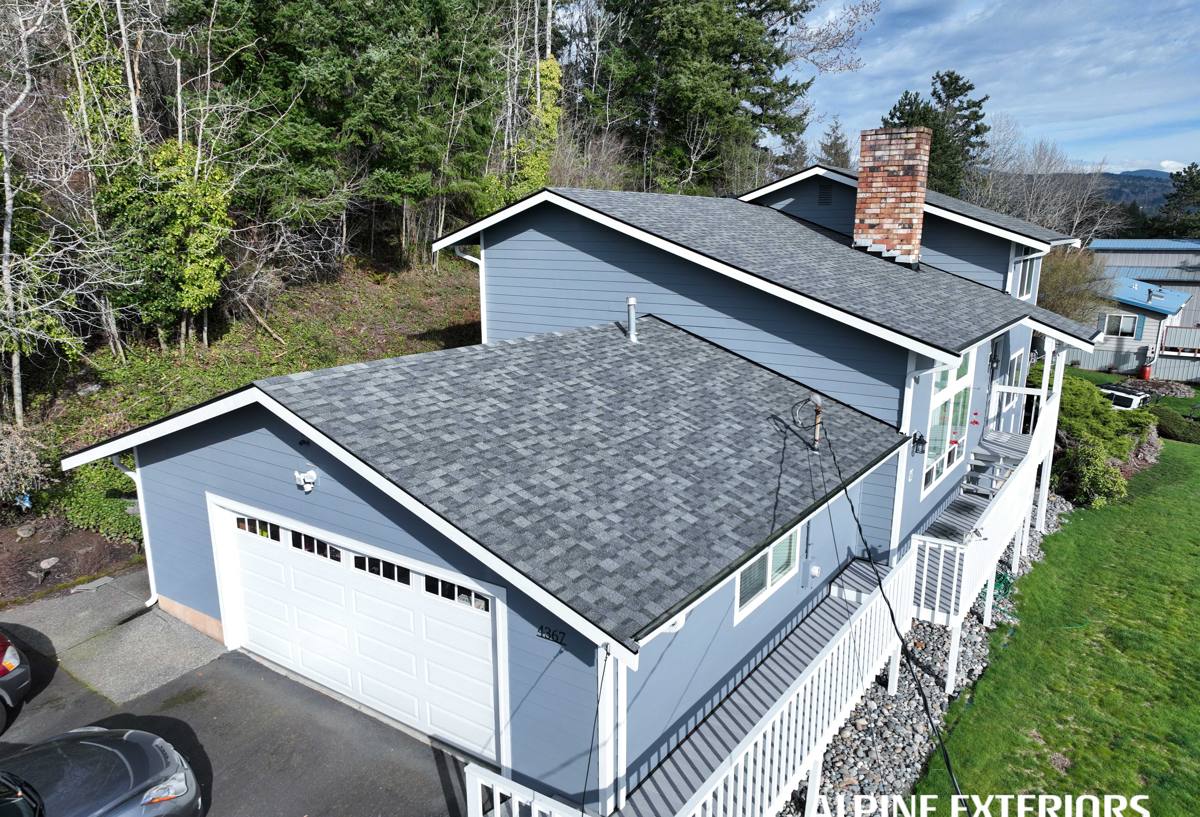
What Sehome's Climate Actually Does to a Roof
Salt Air and Metal Fasteners
Being close to Bellingham Bay means airborne salt settles on roofing materials over time. It's not dramatic, but it's persistent. Exposed metal fasteners, flashing, and vents that aren't rated for coastal exposure corrode faster here than they would further inland. This is one of the most common issues we find on older roofs during an inspection — not a failed roof system, just fasteners and flashing that have quietly deteriorated years ahead of schedule.
Driving Rain and Wind-Driven Water
Bellingham gets a lot of rain, but it's the direction it comes from that matters more than the volume. Wind-driven rain off the bay pushes water sideways under shingle edges, around poorly sealed flashing, and into any gap that wouldn't be a problem in a calmer climate. Roofs installed without enough attention to underlayment, ice-and-water shield at vulnerable points, and properly lapped flashing tend to develop leaks in exactly these conditions — often years after installation, when the original crew is long gone.
Moss, Shade, and a Long Wet Season
Sehome's tree cover and the general dampness of a Pacific Northwest fall through spring keep roofs wet for extended stretches. That's ideal growing conditions for moss and algae. Moss isn't just cosmetic — as it grows, it lifts shingle edges, holds moisture against the roof deck, and accelerates granule loss on asphalt shingles. Left unchecked over several seasons, a mossy roof will wear out well before its rated lifespan.
Roofing Materials: What Works Well in This Climate
There's no single "best" roofing material — it depends on the home, the budget, and how much maintenance the owner wants to take on. Here's how the common options compare for a wet, moss-prone, salt-air environment like Sehome.
| Material | Typical Lifespan Here | Moss Resistance | Maintenance Level |
|---|---|---|---|
| Asphalt composition shingle (standard) | 20-25 years | Low — needs regular cleaning | Moderate |
| Asphalt composition shingle (algae-resistant) | 25-30 years | Better, not immune | Moderate |
| Standing seam metal | 40-50+ years | High — moss struggles to grip | Low |
| Cedar shake | 20-30 years with upkeep | Low without treatment | High |
| Low-slope membrane (TPO/EPDM) | 20-30 years | Moderate | Low to moderate |
Algae-resistant shingles have become a common upgrade for homes in this area specifically because of the moss and algae pressure. They cost a bit more up front, but for a roof that's shaded most of the year, the difference in how long it stays clean and performs is usually worth it. Metal roofing has also gained traction in Whatcom County for homeowners who want to minimize maintenance over the long run, though it's a bigger upfront investment.
Signs a Sehome Roof Needs Attention
Most roof failures don't happen overnight — they show warning signs first. If you own a home in this area, it's worth walking the exterior a couple times a year and checking for the following:
- Visible moss or dark streaking on shingles, especially on shaded north- and west-facing slopes
- Granules collecting in gutters or at downspout outlets
- Curling, cupping, or cracked shingle edges
- Rusted or lifting flashing around chimneys, vents, and skylights
- Sagging areas or soft spots on the roof deck
- Water stains on interior ceilings or in the attic, particularly after a heavy windstorm
- Daylight visible through the roof deck from inside the attic
- Gutters pulling away from the fascia or overflowing during normal rain
Catching these early is almost always cheaper than waiting. A roof with a small flashing leak is a repair; the same roof left alone for two more wet seasons can turn into a deck replacement.
Repair or Replace? How We Help You Decide
Not every roof problem in Sehome means a full replacement, and we don't push one when a repair will genuinely do the job. The decision usually comes down to a few honest factors.
| Factor | Leans Toward Repair | Leans Toward Replacement |
|---|---|---|
| Roof age | Under 15 years | Approaching or past rated lifespan |
| Extent of damage | Isolated, single area | Widespread across multiple slopes |
| Underlying deck condition | Solid, no rot | Soft spots or water damage present |
| Moss/algae coverage | Light, surface-level | Heavy, with granule loss underneath |
| Prior repair history | First issue reported | Repeated patches in different spots |
When we inspect a roof, we walk you through what we actually see — not a worst-case sales pitch. If a repair will hold up for years, we'll say so. If the roof is genuinely at the end of its service life, we'll explain why, in plain terms, so the decision is yours to make with full information.
Our Roofing Process
Inspection First
Every project starts with a real inspection — on the roof, not just from the ground with binoculars. We check the shingles or panels, the flashing, the vents, the gutters, and where possible, the attic side of the deck for moisture or staining.
A Clear, Written Scope
You get a written explanation of what we found and what we recommend, broken into what's urgent versus what can wait. No pressure to sign the largest package on the spot.
Proper Installation Detailing
For replacements, that means correct underlayment, ice-and-water shield at eaves and valleys, properly lapped and sealed flashing, and fasteners suited to a marine-influenced climate — not just a fast shingle-over job.
Cleanup and Walkthrough
We clear debris, run a magnetic sweep for stray nails where relevant, and walk the finished work with you before calling the job done.
Beyond the Roof: Siding, Windows, and Decks
Roofs rarely fail in isolation from the rest of the exterior. The same wind-driven rain and salt air that wear on shingles and flashing also work on siding seams, window flashing, and exposed deck framing. If you're already having your roof inspected, it's worth a quick look at these areas too:
- Siding — check for gaps, warping, or moisture staining near roof lines and window trim, where water often finds its way in first
- Windows — older window flashing is a common source of hidden leaks that get blamed on the roof
- Decks — uncovered ledger boards and fasteners take the same wet-season beating as a roof, just lower to the ground
Handling roofing, siding, windows, and decks under one roof (so to speak) means fewer contractors pointing fingers at each other when a leak shows up at a shared seam — like where a roofline meets siding, or where a deck ties into the house.
Why a Local Bellingham Crew Matters
Whatcom County's building codes and typical construction details reflect this region's weather for a reason — a roof detailed for a dry climate simply doesn't hold up the same way here. A crew that works in Sehome, Fairhaven, downtown Bellingham, and the surrounding Whatcom County neighborhoods week in and week out knows which details actually matter locally: how much ice-and-water shield to use at eaves, how flashing needs to be lapped against wind-driven rain, and which materials hold up against salt air versus which ones just look fine for the first few years.
It also matters for accountability. A local company is still here next year, and the year after, if a warranty issue comes up. That's worth more than a slightly lower bid from a crew that won't be back in the area.
Get a Straightforward Roof Estimate
If you're dealing with moss buildup, a suspected leak, or you just want an honest read on how much life is left in your roof, we're happy to take a look. Use the form below to request a free, no-pressure estimate — we'll tell you what we actually find, whether that means a simple repair, a maintenance plan, or a full replacement.