 Bellingham Roofing
 Roofing in Sudden Valley: A Different Set of Conditions Than Downtown Bellingham
Sudden Valley sits apart from the rest of Bellingham in a way that matters for exterior work. It's a wooded, hilly community wrapped around Lake Whatcom, with a lot of homes tucked under mature fir and cedar canopy and set back on sloped lots. That combination of shade, elevation, and tree cover changes how a roof, a wall of siding, or a set of windows ages compared to a house sitting out in the open a few miles away in town. We work across Whatcom County, and Sudden Valley is one of the areas where we adjust our approach based on what the property actually faces, not just a generic "Pacific Northwest roof" checklist.
The short version: this is a wet, shaded, moisture-holding environment for a good chunk of the year, and the materials and workmanship that hold up here aren't always the same ones that make sense on a bare, sun-exposed lot closer to the water.
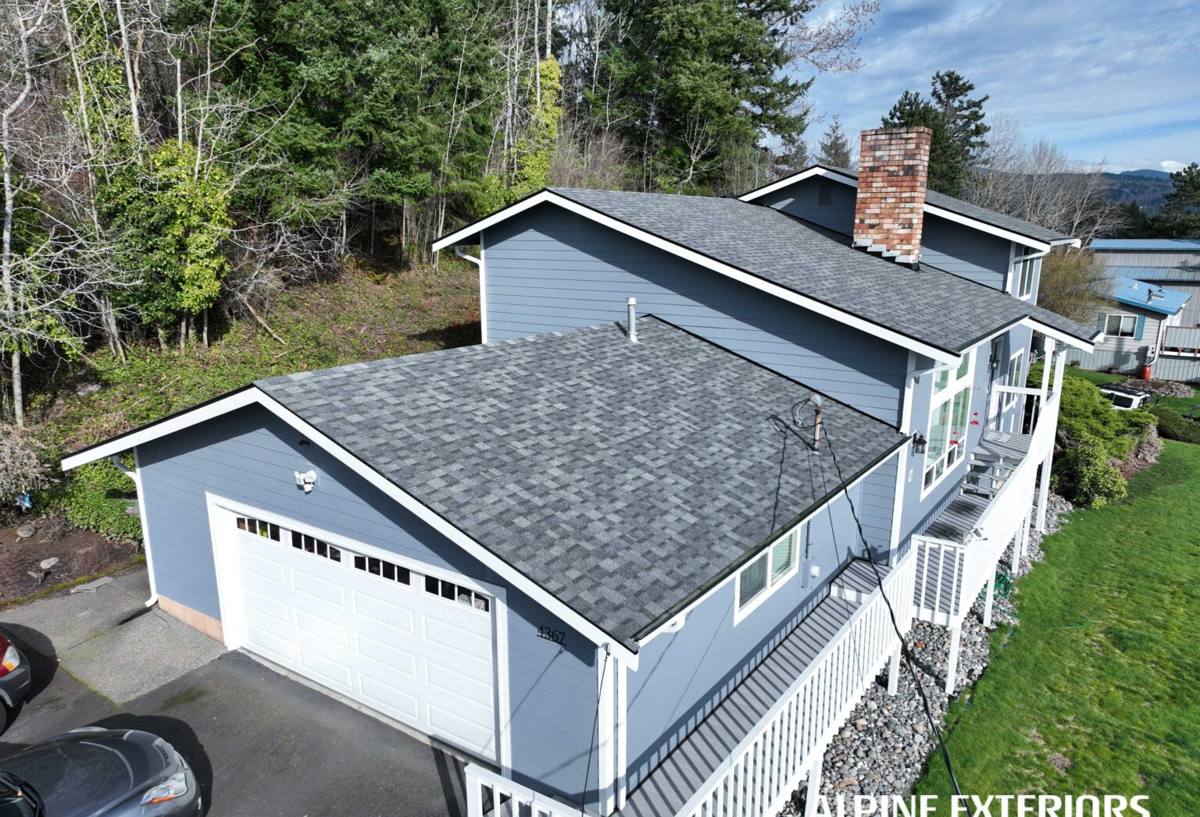
How Lake Whatcom and Tree Cover Shape Wear on a Roof
Shade and slow drying
A roof's biggest enemy in Whatcom County usually isn't wind or hail — it's moisture that never fully dries out between storms. Homes under heavy tree cover, which describes a lot of Sudden Valley, stay damp longer after rain than a roof in full sun. That extended damp period is exactly what moss, algae, and lichen need to get established, and once they take hold they hold water against the shingle or shake surface even longer, accelerating granule loss and rot at the deck below.
Needle and debris load
Conifer needles and cones collect in valleys, behind chimneys, and along lower roof edges faster here than in more open parts of the city. Left alone, that debris dams water at the exact spots where it needs to shed cleanly, which is a common source of hidden leaks that show up as a ceiling stain months after the actual damage started.
Driving rain and the wider regional pattern
Across Bellingham and the Whatcom County coastline, homes closer to the water deal with salt-tinged marine air that speeds up corrosion on exposed metal — flashing, fasteners, gutter hardware. Sudden Valley is set back from Bellingham Bay, so that salt exposure is lighter here, but the driving rain and long moss season that come with the same weather systems hit just as hard. Wind-driven rain during fall and winter storms tests every seam, flashing detail, and fastener on a roof, and a marginal install that would survive a drier climate tends to get found out here.
Siding, Windows, and Decks Face the Same Moisture Pressure
Roofing gets the most attention, but the same conditions that wear on a roof in Sudden Valley work on the rest of the exterior too.
- Siding under tree cover stays damp longer, which is where you'll see mildew staining, paint failure, or — on wood and some fiber cement installs — soft spots at butt joints and bottom edges first.
- Windows in a shaded, humid setting are more prone to seal failure (visible as fogging between panes) and, on older wood-frame units, sill rot where water sits instead of running off.
- Decks built under a tree canopy deal with the double hit of constant moisture and organic debris — pine needles and leaf litter trap water against boards and around fasteners, which is the most common reason we see ledger board and joist rot on lake-adjacent decks before the surface boards even look bad.
Because these systems interact — a leaking roof edge can rot the fascia and siding below it, a failed deck ledger connection can let water into the wall — we look at the whole exterior on a service call, not just the one component someone called about.
Signs a Sudden Valley Home Needs a Closer Look
Most exterior damage in this climate develops slowly and quietly. These are the signs worth acting on before they turn into a bigger repair:
- Visible moss or dark streaking on the roof, especially on north-facing or shaded slopes
- Granules collecting in gutters or at downspout outlets (a sign of asphalt shingle wear)
- Soft, spongy decking underfoot, particularly near the house or around post bases
- Peeling paint, bubbling, or dark staining on siding, especially low on the wall or under overhangs
- Window condensation between panes, or drafts and sticking sashes on older units
- Ceiling stains, musty smells in an attic, or daylight visible through the roof deck from inside
- Gutters overflowing during normal rain, which usually means a clog rather than undersized gutters
Roofing Materials That Actually Hold Up Locally
There's no single "right" roofing material for Whatcom County — it depends on the home, the budget, and how much shade and tree debris the roof deals with. Here's how the common options compare for a shaded, moisture-heavy setting like Sudden Valley:
| Material | Typical lifespan here | How it handles shade & moss | Maintenance burden |
|---|---|---|---|
| Architectural asphalt shingle | 20–30 years | Moss-resistant granule options help; still needs periodic cleaning under heavy tree cover | Low to moderate |
| Standing seam metal | 40–50+ years | Sheds moss and debris well due to smooth, steep-shedding surface | Low |
| Cedar shake | 20–30 years with upkeep | Attractive but holds moisture readily in shade; needs regular treatment and cleaning to avoid premature rot | High |
| Composite/synthetic shake | 30–50 years | Resists moisture absorption much better than natural wood in the same conditions | Low to moderate |
For heavily shaded lots specifically, we tend to steer homeowners away from natural cedar unless they're committed to the upkeep it needs to perform well under a tree canopy — not because the product is bad, but because the maintenance schedule that keeps it healthy is a real, ongoing commitment in this kind of moisture environment. Metal and modern architectural shingles with algae-resistant granules generally give a better lifespan-to-maintenance ratio on shaded lake-area lots.
Why a Local Crew Matters in a Community Like Sudden Valley
Sudden Valley has its own private roads, gate access, and HOA guidelines that differ from working on a standard city lot in Bellingham proper. A crew that's worked in the neighborhood before knows to plan for that ahead of time — coordinating gate access, being mindful of narrow private roads for material delivery, and working within whatever exterior guidelines the community has in place — rather than figuring it out on the day of the job.
Beyond logistics, local experience means knowing which failure patterns show up on which sides of which lots. A roof on a sun-exposed lot near the lake's open water ages differently than one buried under fir canopy a few streets back. That's the kind of judgment that comes from doing the work here repeatedly, not from a generic regional playbook.
What to Expect From an Inspection and Estimate
A proper roof or exterior inspection isn't a quick look from the driveway. On a Sudden Valley property, that typically means:
- A physical walk of the roof surface (weather and pitch permitting) to check for granule loss, moss coverage, soft spots, and flashing condition around chimneys, vents, and skylights
- A check of the attic or crawlspace for moisture staining, daylight gaps, or inadequate ventilation, which accelerates rot from the inside
- A look at gutters, downspouts, and drainage paths, since clogged or undersized drainage is behind a large share of the moisture damage we find
- An assessment of siding, trim, window seals, and any deck structures for the same shade-and-moisture wear patterns
- A written estimate that separates urgent repairs from things worth monitoring, so a homeowner isn't pressured into replacing something that still has useful life left
Maintenance Habits That Extend the Life of a Shaded-Lot Exterior
Homeowners can head off a lot of the damage above with a few habits suited to this kind of lot:
- Clear roof valleys and gutters of needles and debris at least twice a year, more often under heavy conifer cover
- Trim back branches that overhang the roofline to cut down on shade, debris, and abrasion against the roof surface
- Have moss treated (not pressure-washed, which can strip granules) as soon as it appears rather than letting it spread
- Keep deck boards and the area beneath the deck clear of leaf litter and standing debris
- Check window seals and sills each fall before the wet season sets in
Ready When You Are
If you're dealing with moss, a slow leak, siding that's starting to look tired, or a deck that doesn't feel as solid as it used to, we're happy to take a look and give you an honest read on what's actually going on — no pressure, no upsell. Fill out the form below for a free estimate, and we'll work around Sudden Valley's access and scheduling on our end.