 Bellingham Roofing
 Roofing for the Puget Area: Built for Water on Every Side
Puget sits close enough to the water that the climate isn't background noise here, it's a design input. Homes in this part of Whatcom County deal with salt-laden marine air, rain that comes in sideways as often as it falls straight down, and a moss season that can run most of the year on shaded roof planes. A roof that would be fine in a drier inland town can start failing here within a few seasons if it wasn't installed, flashed, and maintained with this specific exposure in mind. We work throughout the Bellingham area, and Puget's waterfront-adjacent conditions are exactly the kind of job we build our process around.
That process covers roofing, siding, windows, and decks, because on a lot of these homes the four systems fail for related reasons. Water that gets past a roof edge shows up later as a stained soffit or a soft spot in siding. A window that isn't properly flashed lets moisture track down into the wall assembly below it. Treating the exterior as one connected system, rather than four separate trades that don't talk to each other, is a big part of why repairs hold up out here instead of coming back in two years.
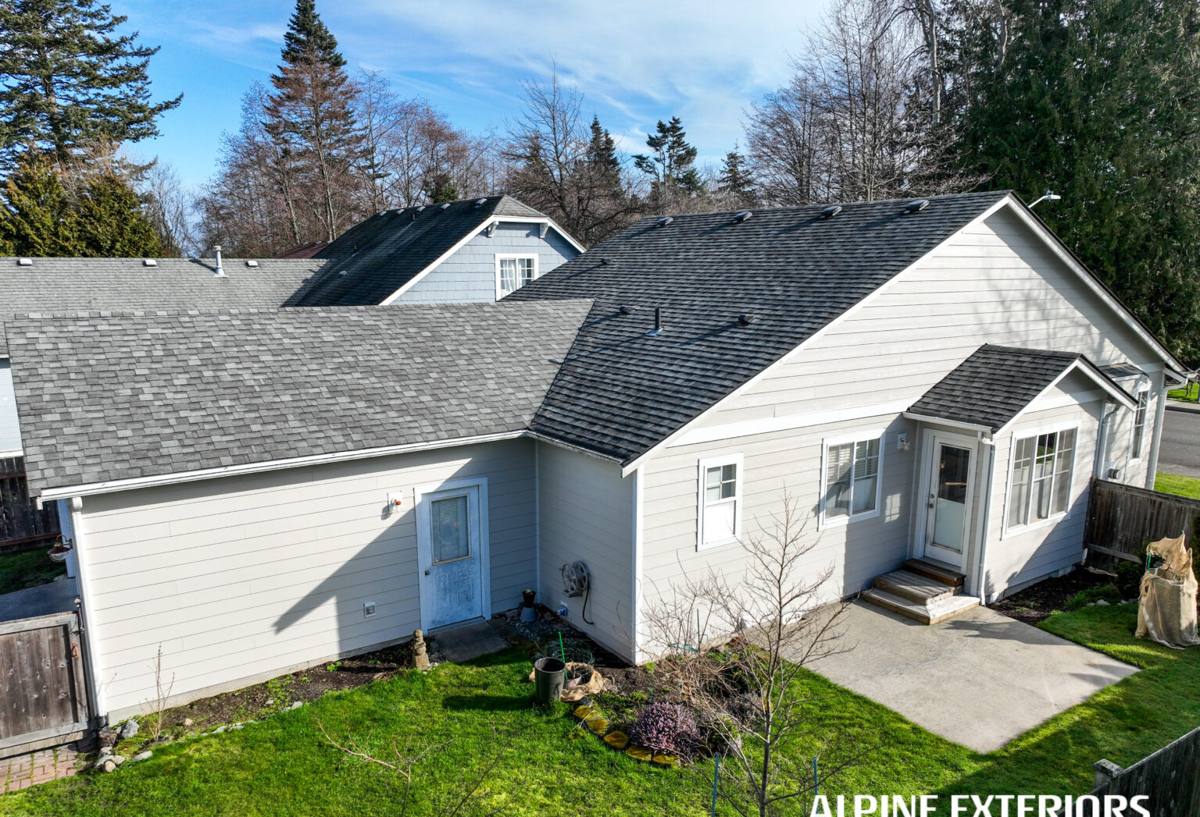
What the Puget Climate Actually Does to a Roof
Salt Air and Slow Metal Fatigue
Proximity to the water means a steady drift of salt-tinged, moisture-heavy air across roof surfaces, not just during storms. That kind of sustained exposure is hard on exposed fasteners, flashing, and any metal component that isn't properly rated for a marine environment. It's a slow process, corrosion doesn't announce itself, which is exactly why it tends to get discovered as a leak instead of caught early.
Driving Rain and Wind-Loaded Water
Rain in this part of Whatcom County frequently arrives at an angle, pushed by wind off the Sound rather than falling straight down. That matters at every horizontal transition on a roof: valleys, step flashing along walls, chimney and vent penetrations, and the edges where a roof meets siding. A detail that would shed straight rainfall fine can still let wind-driven water track sideways underneath shingles or behind flashing that isn't lapped correctly for this specific weather pattern.
A Long Moss and Algae Season
Mild temperatures, shade from tree cover, and near-constant dampness add up to extended moss and algae growth on north-facing and shaded roof slopes, often for most of the year rather than a short seasonal window. Moss isn't just cosmetic. Its root structure holds moisture directly against the roofing material and can lift shingle edges over time, giving wind and rain a place to get underneath. Left unaddressed, what starts as a cosmetic issue becomes a leak path.
Roofing Materials That Hold Up Out Here
We install and repair a range of roofing systems, and which one makes sense depends on the home, the roof's slope and exposure, and what the homeowner is trying to balance between upfront cost and long-term maintenance.
| Material | How It Handles This Climate | Maintenance Reality |
|---|---|---|
| Architectural asphalt shingle | Good performance for the cost when installed with proper underlayment and flashing; algae-resistant granules help in shaded areas | Periodic moss treatment and gutter clearing; typical lifespan in this climate runs shorter than in drier regions without upkeep |
| Standing seam metal | Sheds wind-driven rain and moss growth better than most materials due to its smooth, low-friction surface | Low ongoing maintenance, but fastener and coating quality matter more here given salt air exposure |
| Synthetic/composite shingle | Resists moisture absorption better than wood-based products; holds color and shape through wet-dry cycling | Occasional cleaning; generally lower maintenance than natural wood alternatives |
| Cedar shake | Traditional look, but natural wood is more moisture-sensitive in a marine climate with this much sustained dampness | Requires more frequent treatment and inspection to manage moss and rot risk than manufactured materials |
We'll walk you through which option fits your roof's actual exposure and slope rather than defaulting to whatever's cheapest to quote. A roof on a shaded, north-facing slope near mature trees has different real-world needs than one that gets full sun and wind exposure off the water.
Flashing and Detail Work: Where Most Leaks Actually Start
Most roof leaks in this area don't come from failed shingles in the open field of the roof. They come from flashing details: where a roof meets a chimney, where two roof planes intersect in a valley, where a roof transitions into a wall, or around vent and pipe penetrations. In a climate with driving rain and sustained moisture, these details need to be done correctly the first time, because a marginal flashing job can look fine for a year or two before it starts leaking.
Valleys
Open or closed valley construction both work when done correctly, but valleys are one of the highest-volume water paths on any roof, and wind-driven rain out here can push water sideways into a poorly lapped valley that would perform fine under straight-down rainfall.
Step Flashing Along Walls
Where a roof meets a sidewall, each course of step flashing needs to be individually woven with the siding or wall covering above it, not caulked as a shortcut. Caulk fails over time; properly lapped metal doesn't rely on a sealant staying intact for decades.
Penetrations
Vent boots, pipe jacks, and chimney flashing are common failure points because the seal around them ages faster than the roofing material itself. We check these specifically during any roof inspection, since they're often the source of a leak that seems to be coming from somewhere else entirely.
Siding, Windows, and Decks: The Rest of the Exterior
Roofing problems in a wet climate rarely stay contained to the roof. We handle the connected exterior systems for that reason.
Siding
Siding on Puget-area homes takes the same salt air and driving rain the roof does, plus the long moss season on shaded walls. We look at siding condition during roof work because a failure at the roofline, like a missing kick-out flashing where a roof edge meets a wall, is a common and often-overlooked source of hidden siding and sheathing rot below it.
Windows
Window flashing integration matters as much as the window unit itself. A well-built window installed without correct head flashing and a drainage path will still let wind-driven rain track into the wall assembly. We check window-to-wall transitions as part of broader exterior work, not as an afterthought.
Decks
Decks in this climate face constant wet-dry cycling, standing water on horizontal surfaces, and moss growth on shaded boards. Proper spacing, drainage, and material choice matter more here than in a drier climate, where a marginal deck build might go unnoticed for years longer.
Signs Your Roof Needs Attention
- Moss or dark algae streaking that returns quickly after cleaning, especially on north-facing or shaded slopes
- Granules collecting in gutters or at downspout outlets, a sign of asphalt shingle wear
- Staining on interior ceilings or in the attic near roof penetrations, valleys, or chimneys
- Curling, cracked, or missing shingles, particularly after a windstorm off the water
- Soft or spongy spots when walking the roof, indicating trapped moisture in the decking below
- Daylight visible through the roof deck from inside the attic
- Gutters pulling away from the fascia or showing rust and standing water
Maintenance That Actually Extends Roof Life Here
A roof in a marine climate needs more attention than one in a dry inland region, and skipping basic maintenance is one of the fastest ways to shorten a roof's real-world lifespan regardless of what material it's made from.
- Clear gutters and downspouts at least twice a year, more often near mature evergreen trees
- Have moss and algae treated before it establishes a heavy root structure, not after
- Get an annual or biannual inspection focused on flashing, valleys, and penetrations, not just shingle condition
- Trim back tree limbs that hold shade and moisture against the roof surface
- Address small leaks immediately rather than waiting for a bigger, more obvious failure
Why a Local Whatcom County Crew Matters
Roofing crews that don't work this specific coastline regularly tend to under-detail flashing for wind-driven rain, or spec materials and fastener grades that are fine inland but undersized for sustained salt air exposure. We work this climate day in and day out, which means we've seen what fails here specifically and what actually holds up over years, not just through one dry summer. That local pattern recognition, more than any single product choice, is what tends to separate a roof that lasts from one that needs revisiting in a few years.
We also don't push a one-size-fits-all recommendation. A roof's slope, sun exposure, tree cover, and age all change what the right approach is, and we walk each property before quoting rather than pricing off square footage alone.
Get a Straightforward Estimate
If you're dealing with a leak, planning ahead for a roof that's getting older, or just want an honest read on where your roof, siding, windows, or deck actually stand, we're happy to take a look. Fill out the form below for a free, no-pressure estimate, and we'll give you a straight answer about what your home actually needs.