 Bellingham Roofing
 When a Repair Isn't Enough Anymore
Most roofs don't fail all at once. They wear down over years, and the trick is knowing when patching a problem area stops making sense and a full replacement becomes the smarter investment. In Whatcom County, where roofs deal with near-constant moisture for much of the year, that line tends to arrive sooner than homeowners expect.
A few signs point toward replacement rather than another repair visit:
- Granule loss heavy enough that you're finding sand-like debris in gutters and downspouts every season
- Shingles that are cupping, curling, or cracking across multiple areas of the roof, not just one spot
- Soft or spongy decking underfoot, which usually means water has already gotten past the roofing layer
- Daylight visible through the attic roof boards, or staining on interior ceilings that keeps returning after repairs
- A roof that's 20+ years old with two or more prior repair visits in the last five years
If you're only seeing one isolated issue — a few damaged shingles after a windstorm, a cracked pipe boot, a small flashing leak — a repair is usually the right call. Replacement makes sense when the roofing material itself is reaching the end of its useful life across the whole roof, not just in one section.
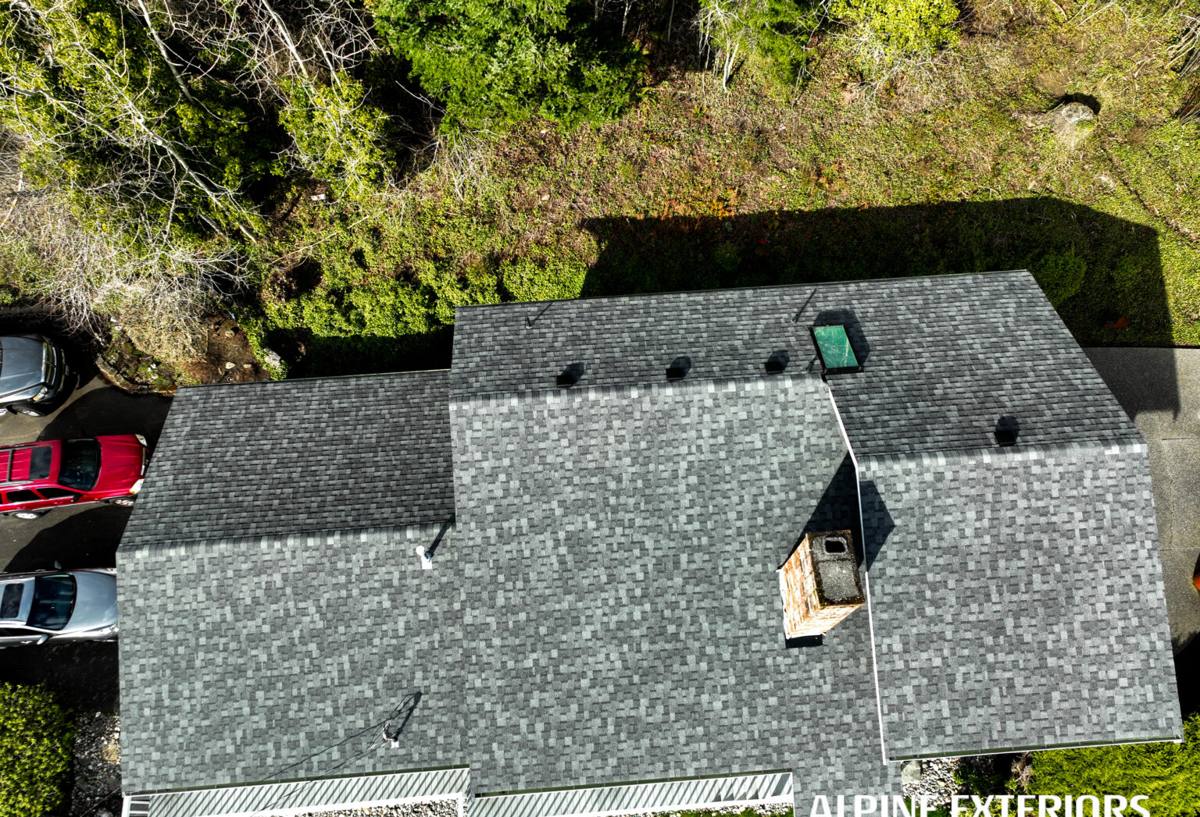
How Long Roofs Actually Last Here
Manufacturer lifespan ratings are written for average conditions, and Bellingham isn't average. Salt air drifting in off Bellingham Bay accelerates corrosion on fasteners, flashing, and any exposed metal. Long stretches of driving rain push water into every seam and lap that isn't sealed correctly. And our moss season — realistically stretching from fall through spring in shaded, north-facing, or tree-covered roof sections — holds moisture against the roofing surface far longer than a drier climate would.
The practical effect is that roofing materials in this region tend to fall toward the shorter end of their rated lifespan unless the roof was installed well and has been reasonably maintained. A 30-year architectural shingle roof that would last three decades in a dry inland climate might realistically give you 20-25 good years here, especially on shaded slopes where moss gets a foothold early.
What Shortens a Roof's Life Locally
Beyond the material itself, three regional factors do the most damage over time: sustained moisture exposure that never fully dries out between rain events, moss and moss-related debris holding water against shingles, and salt-influenced corrosion on metal components closer to the water. None of these are dramatic, single-event failures — they're slow, cumulative wear that shows up as a roof approaching 18-20 years old.
Choosing a Roofing Material for This Climate
There's no single "best" roofing material — the right choice depends on your budget, your roof's slope and shading, and how much long-term maintenance you're willing to take on. Here's how the common options compare for a wet, moss-prone climate like ours.
| Material | Typical Lifespan Here | Moisture & Moss Behavior | Maintenance Level |
|---|---|---|---|
| Asphalt composition shingle | 18-25 years | Moderate moss risk on shaded slopes; algae-resistant granule options help | Low to moderate |
| Architectural/dimensional shingle | 22-28 years | Similar to standard comp, thicker profile sheds water slightly better | Low to moderate |
| Standing seam metal | 40-50+ years | Sheds water and moss debris very well; smooth surface resists growth | Low |
| Cedar shake/shingle | 20-30 years with upkeep | Higher moisture absorption; needs active moss and moisture management | High |
| TPO/flat roofing (low-slope sections) | 15-20 years | Good if properly drained; ponding water is the main risk | Moderate |
For most Bellingham homes, a quality architectural asphalt shingle with algae-resistant granules is the practical middle ground — reasonable upfront cost, solid performance against our rain, and a maintenance routine most homeowners can keep up with. Standing seam metal costs more initially but performs exceptionally well against moss and moisture over the long run, which is worth considering on steep or heavily shaded roofs where moss has been a recurring fight.
We install cedar shake when a homeowner specifically wants that look and understands the maintenance commitment, but we're upfront that it demands more attention in our climate than in drier regions — it's a legitimate product, it just asks more of the owner here.
The Replacement Process, Step by Step
Knowing what happens on a replacement job helps you evaluate contractor proposals and know what to expect once work starts.
1. Inspection and Estimate
A thorough inspection covers more than the shingles — it should include the decking, flashing, ventilation, and any signs of moisture intrusion in the attic. A written estimate should spell out materials, scope, and what happens if decking replacement is needed once the old roof comes off.
2. Material Selection and Permitting
Once you've settled on a material, your contractor should pull the required permit through the City of Bellingham or Whatcom County, depending on your address. Skipping this step is a red flag — permitted work protects you if there's ever a dispute or an insurance claim down the line.
3. Tear-Off and Deck Inspection
The old roofing comes off down to the decking, which then gets inspected for rot or soft spots — common in older roofs here where moisture has been sitting under damaged shingles. Any compromised decking should be replaced before new roofing goes down; this is the single most important quality step in the whole job.
4. Underlayment, Flashing, and Ventilation
A synthetic or felt underlayment goes down as the roof's real waterproofing layer, with new flashing at every valley, chimney, and penetration. Proper attic ventilation gets addressed here too — it's what keeps moisture from condensing under the roof deck during our cooler, wetter months.
5. New Roofing Installation
The new material goes on according to manufacturer specifications, with attention to nailing patterns, exposure, and overlap — details that matter more in a high-rain climate than they would somewhere drier.
6. Cleanup and Final Walkthrough
A magnetic sweep for stray nails, gutter cleanout, and a final walkthrough should close out the job, along with paperwork for your warranty.
Moss, Moisture, and Ventilation: The Real Local Battle
If there's one issue that separates roofing in Whatcom County from roofing in most of the country, it's the combination of persistent moisture and moss. Moss isn't just cosmetic — its root structure lifts shingle edges and holds water against the roofing surface long after a storm has passed, which accelerates granule loss and, eventually, leaks.
Good moss management starts at installation: zinc or copper strips near the ridge release trace metals with each rainfall that inhibit moss growth over time, and adequate attic ventilation reduces the temperature and moisture differential that helps moss take hold in the first place. After installation, periodic gentle cleaning — never pressure washing, which can strip granules and shorten shingle life — keeps shaded and north-facing slopes from building up the kind of moss mat that traps water.
Ventilation deserves its own mention because it's so often overlooked. A roof can be installed correctly and still fail early if the attic underneath isn't venting properly, because trapped warm, moist air condenses on the underside of the decking and slowly rots it from the inside. This is a bigger factor here than in drier climates, where that condensation cycle simply doesn't happen as often.
What Affects the Cost of a Roof Replacement
Every roof is different, so exact pricing depends on your specific home, but the major cost drivers are consistent across most jobs.
| Factor | Why It Matters |
|---|---|
| Roof size and number of stories | More square footage and steeper access both increase labor time |
| Roof pitch and complexity | Steep slopes, multiple valleys, and dormers all add labor and material waste |
| Material choice | Standard asphalt shingle sits at the lower end; metal and cedar cost more upfront |
| Decking condition | Rot discovered during tear-off adds material and labor not visible in the original estimate |
| Tear-off layers | Removing multiple existing layers costs more than a single-layer tear-off |
| Ventilation and flashing upgrades | Bringing older ventilation or flashing up to current standards adds scope but reduces future problems |
Because decking condition is often unknown until tear-off, ask any contractor how they handle surprises — a fair contract should spell out a per-sheet rate for decking replacement rather than leaving it open-ended.
Permits, Warranties, and Insurance
Roof replacements in Bellingham and unincorporated Whatcom County both require permits, and a legitimate contractor will handle that as part of the job rather than treating it as optional. Beyond the permit, pay attention to two separate types of warranty: the manufacturer's warranty on the material itself, and the contractor's workmanship warranty covering installation. They're not the same thing, and a roof can fail from poor installation even with a great material warranty still intact.
If a windstorm or falling limb damaged your roof and you're filing an insurance claim, get a written, itemized estimate before any repair work begins — insurers generally want documentation of the damage and scope, not just a verbal description.
Choosing a Contractor: What to Actually Check
Roofing draws more than its share of storm-chasing outfits that show up after bad weather and vanish once the check clears. A few checks go a long way toward avoiding that outcome.
- Confirm active Washington State contractor licensing and current liability insurance — ask for proof, don't just take their word
- Get a written estimate that itemizes materials, labor, and how decking surprises are priced
- Ask specifically how they handle moss prevention and attic ventilation, not just shingle installation
- Check that they pull permits themselves rather than asking you to do it
- Clarify workmanship warranty length and what it actually covers, separate from the manufacturer's material warranty
- Be cautious of anyone pressuring you to sign same-day, especially right after a storm
Getting Your Home Ready for Replacement Day
A little preparation makes the job go smoother. Move vehicles out of the driveway and away from the house, since materials and equipment need staging room close to the roofline. Take down anything fragile hanging on interior walls, as the hammering and vibration from tear-off can occasionally jostle picture frames loose. If you have pets, plan for a few noisy days — roof work isn't a quiet process. And expect some debris in the yard despite cleanup efforts; a magnetic nail sweep is standard, but garden beds and soft landscaping right against the house are worth covering ahead of time.
If you're weighing repair versus replacement, or just want a straight answer about where your roof actually stands, we're happy to take a look and walk you through it. Reach out below for a free, no-pressure estimate — no obligation, just an honest assessment of what your roof needs.