 Bellingham Roofing
 Roofing in Ferndale: A Climate That Doesn't Let Up
Ferndale sits close enough to the water and low enough in the valley that homes here deal with a specific combination of weather stresses: salt-laced air moving in off the coast, driving rain that comes in sideways during winter storms, and a moss season that can run most of the year if a roof doesn't get enough sun or airflow. None of these things are dramatic on their own. What they do is compound. A roof that would last two decades in a dry inland climate might show real wear in twelve or fifteen years here if it wasn't installed with this specific climate in mind.
We work on homes throughout Ferndale and the surrounding parts of Whatcom County, and the patterns repeat from house to house: moss creeping in on the north-facing slopes, gutters that overflow during heavy rain events, fascia and trim that soften faster than homeowners expect, and siding that takes on a different kind of punishment than it would a few miles inland. None of this means Ferndale is a hard place to keep a home in good shape — it just means the work has to account for what the weather actually does here, not what a generic roofing checklist assumes.
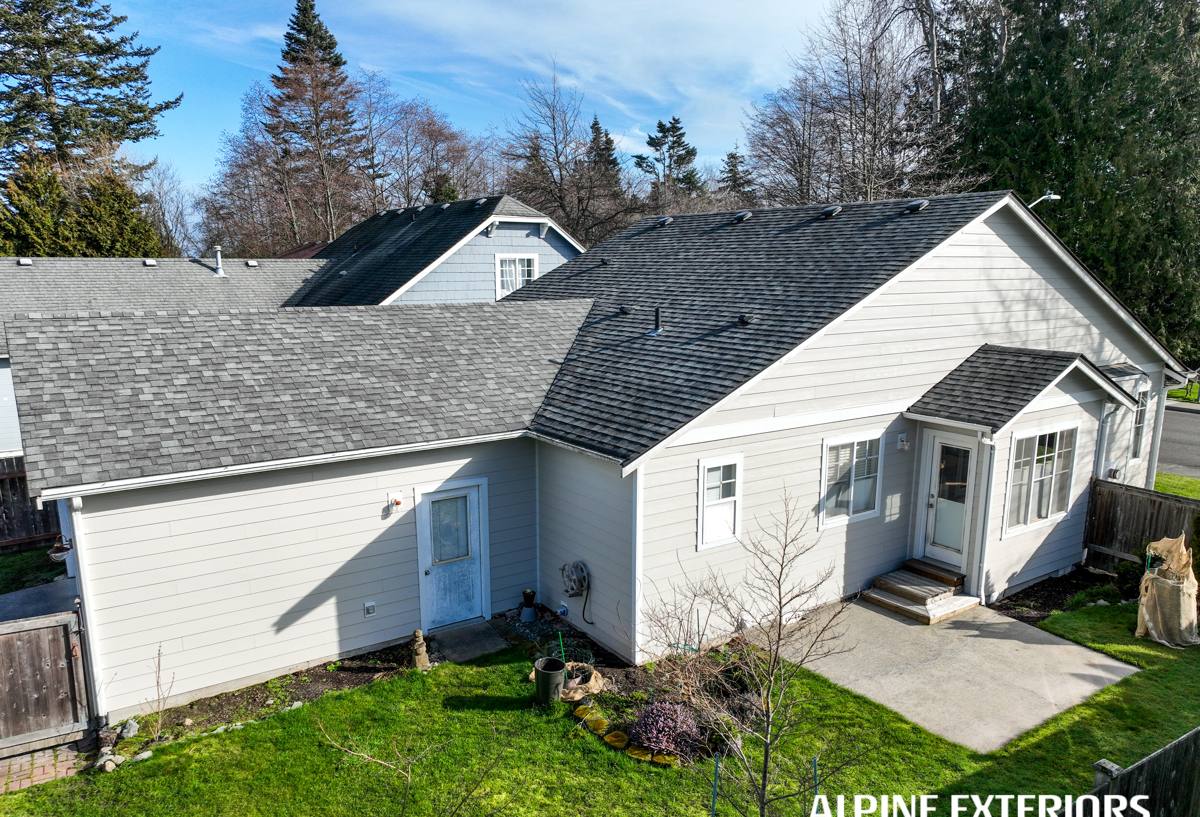
Moss, Moisture, and the Long Wet Season
Moss is the most visible sign of Whatcom County's wet season, and it's more than a cosmetic issue. Moss holds moisture directly against roofing material, and over time that trapped moisture works its way under shingles, into fastener lines, and along ridge caps. On shaded roofs, or roofs with limited attic ventilation, moss can re-establish within a year or two of a cleaning if the underlying conditions aren't addressed.
Where Moss Actually Causes Damage
The moss itself isn't what destroys a roof — it's what moss allows to happen underneath it. Once moisture is held in place instead of shedding off, granule loss accelerates, wood sheathing can begin to soften, and metal flashing corrodes faster. By the time moss is thick enough to be an eyesore, there's usually already been some quiet damage happening underneath it.
What Actually Helps Long-Term
- Zinc or copper control strips near the ridge, which release trace metals with rainfall to discourage regrowth
- Keeping overhanging branches trimmed back so shaded, damp sections of roof get more airflow and light
- Proper attic and roof ventilation, so warm, moist air isn't condensing against the underside of the deck
- Gentle, low-pressure moss removal rather than aggressive pressure washing, which can strip granules and shorten shingle life
- Annual or biannual gutter clearing, since clogged gutters hold water against the lower roof edge and fascia
Salt Air and Coastal Exposure
Ferndale's proximity to the water means salt-laden air is a constant, low-grade factor in how exterior materials age. Salt air accelerates corrosion on exposed metal — flashing, fasteners, gutter hardware, and any unprotected steel components. It also tends to leave a fine residue on siding and trim that, combined with regular rain, can affect paint and finish longevity over time.
This is one of the reasons material choice matters more here than it might in a drier or more inland part of the state. Stainless or coated fasteners, properly sealed flashing details, and finishes rated for coastal exposure aren't upgrades for their own sake — they're the difference between hardware that holds up and hardware that needs attention again in a few years.
Roof Repair, Replacement, and Maintenance
Not every roofing concern in Ferndale means a full replacement. A lot of what we see is targeted repair work: a section of flashing that's failed around a chimney or skylight, a soft spot from long-term moss damage, or granule loss on a slope that gets more sun and weather exposure than the rest of the roof. We assess the whole roof honestly before recommending anything, because a full replacement isn't the right call just because a homeowner is worried about their roof — and a patch isn't the right call when the underlying decking has already been compromised.
Signs It's Time to Have a Roof Looked At
- Granules collecting in gutters or at the base of downspouts
- Visible moss or dark streaking on north-facing or shaded slopes
- Soft spots or slight sagging when walking the roof (assessed by a professional, not a homeowner)
- Daylight visible through the attic decking, or damp insulation after a storm
- Curling, cracked, or missing shingles, especially after a windstorm
- Water stains on interior ceilings, particularly near chimneys, vents, or valleys
When replacement is the right call, we talk through material options honestly, including the maintenance and moisture trade-offs of each, rather than defaulting to whatever's easiest to install.
Siding That Holds Up to Driving Rain
Wind-driven rain is a different challenge than straight-down rain. It finds its way into laps, seams, and trim joints that would stay dry in calmer weather, which means siding installation detail — not just material choice — matters a great deal here. Poorly lapped siding, under-flashed windows, or gaps at trim boards can let water in behind the surface material, where it does damage slowly and often invisibly for years before it shows up as a soft spot or stain indoors.
We install and repair fiber cement, engineered wood, and vinyl siding, and we're upfront about the maintenance realities of each. Fiber cement holds paint well and resists moisture intrusion but is heavier and requires correct fastening. Engineered wood products vary widely in quality and moisture tolerance, so we're selective about which lines we'll stand behind. Vinyl is low-maintenance and budget-friendly but has its own limits in high-wind, high-moisture applications, particularly around seams and corners. The right choice depends on the home, its exposure, and the homeowner's priorities — not on whichever product is fastest to install.
Windows: Comfort, Condensation, and Moisture Control
In a climate this consistently damp, windows do more than let in light — they're a major factor in how much moisture and cold air a home deals with. Older single-pane or poorly sealed windows are a common source of condensation, drafts, and, over time, soft or rotting sills and trim. We see this often in older Ferndale homes where original windows are still in place, or where a previous window replacement wasn't properly flashed.
Window replacement isn't purely a comfort upgrade in this climate — it's also a moisture-management decision. Properly flashed, well-sealed windows keep water from working its way into wall cavities, which matters just as much as the energy efficiency gains most homeowners are focused on.
Decks Built for a Damp Climate
Decks take a beating in Whatcom County weather. Between standing water after heavy rain, moss and algae growth on horizontal surfaces, and the freeze-thaw cycles that happen even in a relatively mild coastal climate, deck boards, ledger connections, and fasteners all need to be built with drainage and drying time in mind. A deck that looks fine from a distance can have a compromised ledger board connection or trapped moisture between boards that isn't obvious until it's a real problem.
We build and repair decks with attention to proper spacing for drainage, correct flashing at the ledger board where the deck meets the house, and fastener choices that won't corrode prematurely in salt-influenced air. Composite decking is a popular option here because it resists moss and moisture absorption better than untreated wood, though it still requires proper substructure and drainage to perform well long-term.
Why a Local Crew Matters
A lot of exterior work fails not because the wrong material was chosen, but because it was installed the way it would be in a drier, calmer climate. Flashing details that are "good enough" inland aren't good enough here. Ventilation that works fine in a sunny climate can trap moisture under a Ferndale roof deck. A crew that works across Whatcom County day in and day out knows which details actually matter here, because we see the failures that come from skipping them.
That's the value of hiring a local contractor over a crew passing through the area: we're not guessing at what the climate does, and we're still around if something needs attention after the job is done.
What to Expect: Process and Cost Factors
Every project starts with an honest, in-person assessment — no pressure, no inflated scope. Cost depends heavily on the specifics of the home and the work involved, but the table below outlines the main factors that typically drive pricing on roofing, siding, window, and deck projects in this area.
| Factor | Why It Matters Here |
|---|---|
| Roof pitch and complexity | Steeper or multi-valley roofs take longer to work safely and need more detailed flashing |
| Existing moisture damage | Hidden rot from moss or trapped water often isn't visible until tear-off or removal begins |
| Material choice | Fiber cement, composite, and coated fasteners cost more upfront but hold up better to salt air and rain |
| Ventilation and flashing detail | Correcting inadequate ventilation or flashing adds labor but prevents repeat problems |
| Access and site conditions | Tree cover, slope, and property access affect equipment and labor time |
We walk through these factors on-site so homeowners understand not just the price, but why it is what it is.
If you're noticing moss buildup, a drafty window, aging siding, or a deck that's seen better days, we're happy to take a look. Reach out for a free, no-pressure estimate using the form below, and we'll give you a straight answer about what your home actually needs.