 Bellingham Roofing
 Window Installation Built for Ferndale's Weather
Ferndale sits close enough to the water that homes here take a different kind of beating than houses further inland. The salt-tinged air off the Strait, the steady wet-season rain that can settle in for days, and a moss season that seems to start earlier every year all work against window openings that aren't sealed and flashed correctly. Window installation isn't just a carpentry job in this part of Whatcom County — it's a weather-sealing job first, and a lot of the problems homeowners eventually call us about started with a window that was installed fast instead of installed right.
This page covers what we look at specifically for Ferndale properties: what the climate does to windows over time, what a correct installation actually involves, and how to tell the difference between a contractor who's passing through and one who actually knows this area.
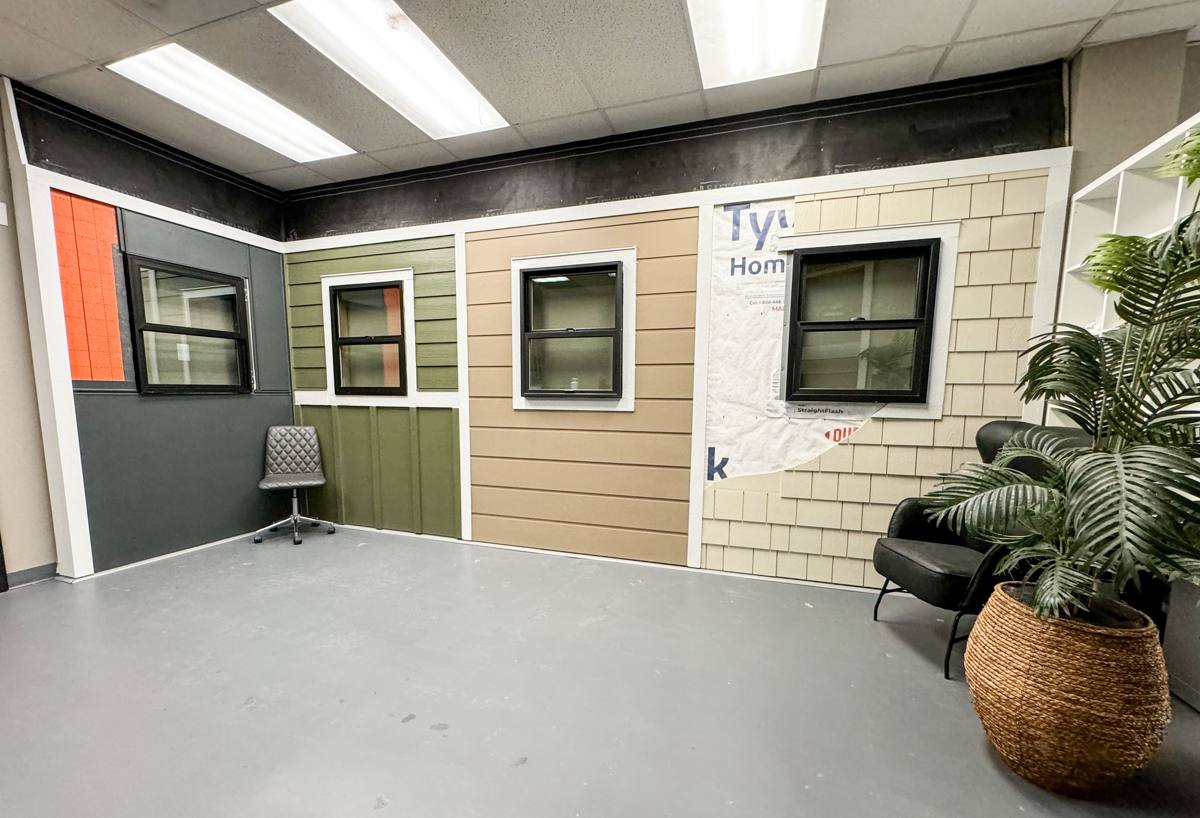
What Salt Air, Rain, and Moss Do to Windows Over Time
Every coastal-adjacent town in this region deals with some version of these three factors, but they show up in specific ways on windows:
Salt-Laden Air
Airborne salt is corrosive to metal hardware — hinges, cranks, locking mechanisms, and especially older aluminum frames. It doesn't take a house right on the water to be affected; prevailing winds carry it further inland than people expect. Over years, it can pit unprotected metal and cause seals around hardware to fail faster than they would in a drier inland climate.
Driving, Wind-Driven Rain
Ferndale doesn't just get rain — it gets rain pushed sideways by wind often enough that any weak point in a window's flashing or sealant becomes a leak point eventually, not just a theoretical risk. Water doesn't need a big gap to get in. A quarter-inch of bad flashing detail, repeated through enough storms over enough winters, is how you end up with rot inside a wall that looked fine from outside.
Moss and Sustained Dampness
On north- and west-facing walls that don't get much sun, moisture sits longer, and moss and mildew find a foothold on sills, trim, and anywhere caulk has started to crack. That sustained dampness is exactly what wood rot needs to get going, and it's often worse around window openings because that's where the building envelope already has a seam.
Signs a Ferndale Home Needs Window Replacement, Not Just Repair
- Visible gaps, soft spots, or discoloration in the trim or sill around a window
- Condensation building up between panes (a sign the seal on a double-pane unit has failed)
- Windows that are difficult to open, close, or lock — often a sign of a warped frame or corroded hardware
- Noticeable draft near the window frame even when it's fully closed
- Moss or dark staining developing on exterior trim below or beside the window, especially on shaded sides of the house
- A visible daylight gap or old, cracked exterior caulk that hasn't been maintained
- Rooms that feel noticeably colder or damper near windows than the rest of the house
Any one of these on its own might just need caulking or a hardware repair. Several of them together, especially on an older home, usually means the window and its flashing have reached the end of their useful life.
What a Correct Window Installation Actually Involves
The window unit itself matters, but in this climate the installation detail matters more. A quality product installed with sloppy flashing will leak. A modest product installed correctly will outperform it. Here's what we treat as non-negotiable on every job:
Removing Down to the Rough Opening
For full-frame replacements, that means pulling the old unit out completely and inspecting the rough opening — sill, jack studs, header — for rot or damage before anything new goes in. Covering up a soft sill with a new window is one of the most common shortcuts that causes problems a few years later.
Proper Flashing, Not Just Caulk
Correct window flashing is layered so water is directed out and down, shingle-style, the same way roofing works. A bead of caulk around the outside of a window is not a substitute for a properly lapped sill pan and flashing tape. This is the single biggest factor in whether a window leaks during a hard, wind-driven rain — which is a normal Tuesday in Ferndale during the wet months.
Sealing and Insulating the Gap Around the Frame
The space between the new window frame and the rough opening needs to be insulated and air-sealed without over-packing it, which can bow the frame and affect how the window operates. Done right, this is a big part of what stops drafts and condensation issues.
Hardware and Finish Choices That Handle Salt Air
For homes closer to the water or exposed to prevailing coastal wind, we pay attention to hardware finishes and materials that hold up better against corrosion, and we're upfront when a particular style of hardware is going to need more upkeep in this environment.
Choosing Window Materials for Ferndale's Conditions
There's no single "best" window material — the right choice depends on the home, the exposure, and the budget. Here's how the common options generally hold up in this climate:
| Material | How It Handles This Climate | Maintenance |
|---|---|---|
| Vinyl | Handles moisture well, doesn't corrode from salt air, good insulating properties | Low — occasional cleaning, no repainting |
| Fiberglass | Very stable in temperature and moisture swings, holds paint well, strong against warping | Low to moderate |
| Wood (unclad) | Good insulator but needs consistent upkeep to resist the rot and moss issues common here | High — regular painting/sealing required |
| Wood with aluminum or vinyl cladding | Combines wood's interior look with better exterior weather resistance | Moderate — exterior is protected, interior wood still needs occasional attention |
| Aluminum (older/uncoated) | Prone to corrosion and condensation in salt-air, high-moisture conditions | Moderate to high; we typically don't recommend it for exposed sites here |
We'll walk through these trade-offs honestly during an estimate rather than pushing whatever happens to be on the truck. For most Ferndale homes, vinyl or clad-wood ends up being the practical middle ground between upfront cost and long-term maintenance.
Glass Packages: What Actually Helps in This Climate
Beyond the frame material, the glass package affects comfort and condensation resistance more than people expect:
- Low-E coatings reduce heat transfer and help control condensation on the interior glass surface during cold, damp stretches
- Argon or krypton gas fill between panes improves insulation without adding bulk
- Warm-edge spacers (versus older metal spacers) reduce the cold spot at the edge of the glass where condensation and frost tend to start first
None of these are exotic upgrades anymore — they're standard on most quality windows — but it's worth confirming what's actually in the unit you're quoted rather than assuming.
Our Window Installation Process
- On-site assessment — we look at existing windows, framing condition, and exposure (sun, wind, water) specific to your property
- Honest recommendation — full-frame replacement, insert replacement, or repair, depending on what the opening actually needs
- Written estimate — clear on materials, scope, and what's included, no vague allowances
- Removal and inspection — old units come out, rough openings get checked for hidden rot before new windows go in
- Installation with proper flashing and sealing — the step that determines whether the window performs for the next 20+ years
- Interior and exterior finish work — trim, caulking, and cleanup so the job looks as good as it performs
- Final walkthrough — we test operation, locks, and seals with you before we consider the job done
What Window Installation Typically Costs
Costs vary based on window count, size, material, and whether it's a straightforward insert replacement or a full-frame job with hidden repairs. Broadly, here's what tends to move the price:
| Factor | Effect on Cost |
|---|---|
| Insert vs. full-frame replacement | Full-frame costs more but is necessary when the existing frame or sill is compromised |
| Window material (vinyl vs. fiberglass vs. clad-wood) | Vinyl is typically the most budget-friendly; fiberglass and clad-wood run higher |
| Hidden rot or framing repair | Adds labor and material cost once the opening is exposed |
| Number and size of windows | Larger openings and specialty shapes cost more per unit |
| Glass package upgrades | Better Low-E/gas-fill packages add a modest premium for meaningfully better performance |
We give straightforward, itemized estimates so you know what you're paying for and why — including flagging upfront if we expect hidden repair costs based on what we see from the outside.
Why It Matters That We Already Work in Ferndale
A crew that mostly works in drier, inland conditions can install a technically fine window and still get the flashing detail wrong for what this specific stretch of Whatcom County throws at a house. Working regularly in Bellingham and the surrounding communities, including Ferndale, means we're used to sizing up how close a given property is to salt exposure, how much a particular wall takes on driving rain, and where moss and moisture problems tend to start first on homes in this area. That local pattern-recognition is part of what keeps a window installation from becoming a callback three winters later.
If your Ferndale home has windows showing their age — drafts, fogging, sticking, or visible wear around the frames — we're happy to take a look and give you a straightforward assessment. There's no pressure and no obligation; just an honest read on whether you need replacement, repair, or nothing at all right now. Use the form below to request a free estimate.