 Bellingham Roofing
 Roofing and Exterior Care for Cordata Homes
Cordata sits on the north side of Bellingham, close enough to the water and the low-lying wetlands around it that homes here deal with a specific mix of weather stress. It's not the same as a house up on a sunny hillside a few miles away. Between the marine air rolling in off Bellingham Bay, the long stretches of drizzle that settle in for days at a time, and the shade cover from mature trees in a lot of the neighborhood's yards, roofs and siding here take on moisture in ways that shorten their working life if nobody's paying attention. We've worked on homes throughout this part of Whatcom County long enough to know what that combination does to a house over ten or twenty years, and we build our approach around it.
Bellingham Roofing Co handles roofing, siding, windows, and decks. We mention all four because on a lot of Cordata properties, these systems aren't separate problems — they're one weather envelope. A roof that's shedding water poorly will eventually show up as a siding or trim issue. A deck built without the right flashing at the ledger board will rot the band joist behind it. We look at the whole exterior, not just the piece you called about.
What the Cordata Climate Actually Does to a House
Salt Air and Corrosion
Being close to Bellingham Bay means airborne salt is a real factor, even a few miles inland. Salt-laden moisture accelerates corrosion on exposed metal — fasteners, flashing, gutter hardware, and any lower-grade hardware used in siding or trim installation. Over years, this is the kind of thing that causes small failures (a rusted nail head, a corroded flashing seam) that let water in long before anyone notices a leak inside the house.
Driving Rain
Whatcom County doesn't just get a lot of rain — a good portion of it comes in sideways during fall and winter storms, driven by wind off the Strait. Driving rain finds every weak point in a building envelope: undersized roof overhangs, poorly lapped siding, window flanges that weren't sealed correctly. A roof or siding job that would hold up fine in a calmer climate can fail here specifically because of wind-driven moisture intrusion.
Moss and Shade
Cordata has plenty of mature tree cover, which is part of what makes it a nice place to live, but shaded, moisture-retaining roof surfaces are exactly what moss wants. Once moss establishes on a roof, it holds water against the shingles far longer than the surface would otherwise stay wet, and it can work its way under shingle tabs and lift them. Left unchecked over a full moss season, this shortens the life of an otherwise sound roof.
Roofing Services in Cordata
Most of our roofing work in this neighborhood falls into a few categories:
- Roof replacement for homes reaching the end of their asphalt shingle service life, typically in the 20-30 year range depending on original installation quality and sun/shade exposure
- Moss treatment and removal, done carefully to avoid granule loss on asphalt shingles
- Leak diagnosis and repair, often traced to flashing around chimneys, vents, and valleys rather than the shingle field itself
- Gutter and drip edge work, since poor water management at the roof edge is a major contributor to fascia and siding rot in wet climates
- Ventilation assessment, because a roof deck that can't breathe traps moisture from inside the house and rots from underneath, which is invisible until it's a bigger repair
We install the roofing systems we do specifically because they hold up to sustained wet-climate exposure with predictable maintenance needs and warranty coverage we can stand behind. When we steer a homeowner away from a particular product or shortcut, it's because we've seen what long-term moisture exposure does to it here, not because of brand loyalty.
Siding for Wet, Shaded Lots
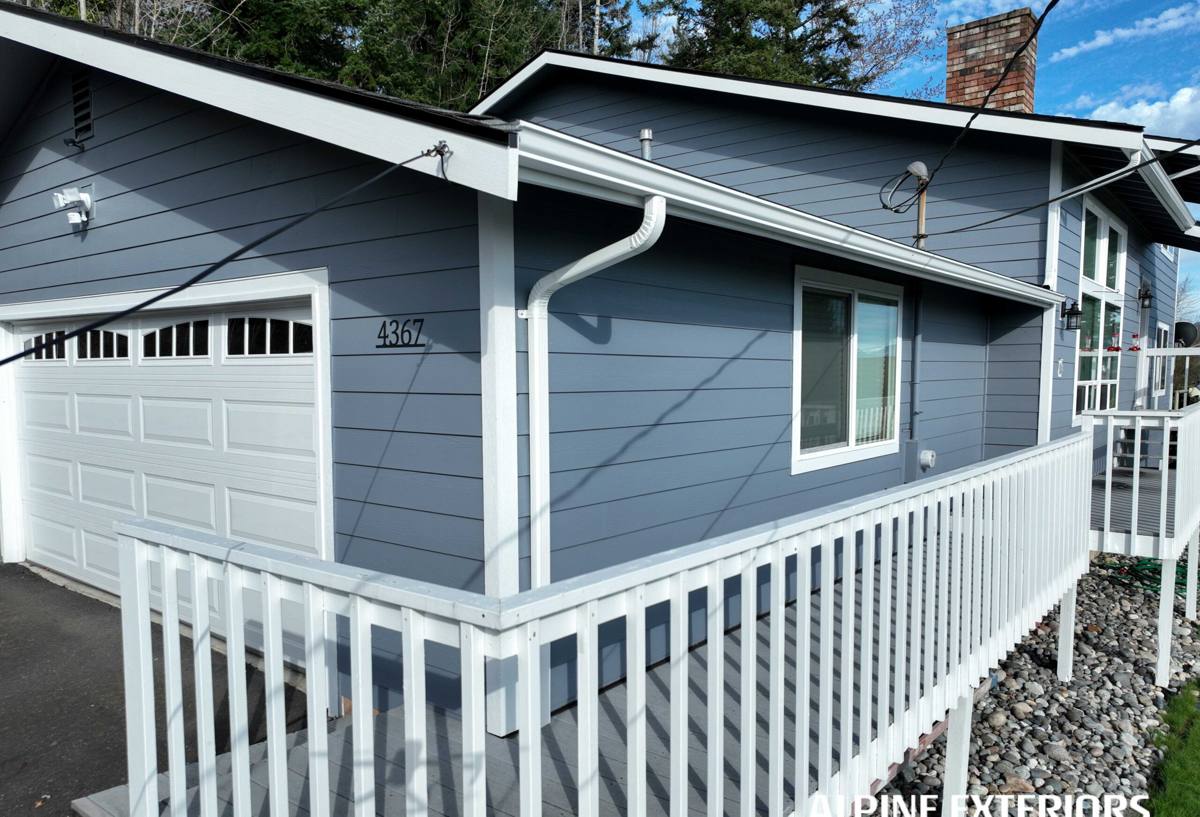
Siding takes a different kind of abuse than roofing — less about pooling water, more about constant dampness and slower drying times when a lot is shaded. Wood-based siding products, in particular, need consistent drying cycles to stay healthy, and homes tucked under tree cover don't always get that. We evaluate each home's actual sun exposure and drainage before recommending a siding approach, rather than defaulting to whatever's easiest to install.
Key things we check on a siding job in this area:
- Whether the existing water-resistive barrier and flashing details are actually doing their job, since siding is only as good as what's behind it
- Ground clearance and grading near the foundation, since splashback is a common cause of bottom-course rot
- Caulking and sealant condition at windows, corners, and trim — the first places driving rain gets in
- Whether trim and fascia boards show early signs of moisture damage that should be addressed before new siding goes over them
Windows
Window failures in this climate are rarely about the glass itself — they're about the seal between the window and the wall. A poorly flashed window frame lets wind-driven rain track down into the wall cavity, where it can sit for months before it shows up as a stain or soft spot inside. When we replace windows, proper flashing integration with the existing wall assembly matters as much as the window unit itself. We also look at overall window condition during roofing or siding projects, since failing seals are often found incidentally once we're already up close to the exterior.
Decks Built for the Pacific Northwest
A deck in Cordata spends a lot of the year wet, then goes through freeze-thaw cycles in the colder months. The details that matter most are the ones you don't see once the deck is finished: proper ledger board flashing where the deck meets the house, joist protection, and adequate gapping between boards for drainage and airflow. We build and repair decks with those details treated as non-negotiable, because a deck that looks fine on day one but was flashed poorly at the ledger is a rot problem waiting a few years out.
Comparing Common Exterior Materials for This Climate
| Material | Where It Fits Well Here | Maintenance Consideration |
|---|---|---|
| Asphalt shingle roofing | Most homes; wide warranty and cost range | Needs periodic moss management in shaded lots |
| Metal roofing | Steep or hard-to-maintain roofs, longer-term ownership | Fastener and coating quality matters more near the bay |
| Fiber cement siding | Consistent, low-maintenance option for damp, shaded lots | Caulking and paint maintenance at joints and trim |
| Wood siding | Homes with good sun exposure and airflow | Requires more frequent finish maintenance in shade |
| Vinyl siding | Budget-conscious projects | Can trap moisture behind it if house wrap details are wrong |
Why a Local Crew Matters Here
A lot of exterior problems in this climate aren't dramatic — they're slow. A little bit of standing moisture, a shaded corner that never quite dries, a fastener that starts corroding two years before it fails. Crews who work all over the region, or who fly in a crew from somewhere dry, don't always build in the margin this weather demands, because they're not the ones coming back for the callback five years later. We are local to Bellingham and Whatcom County, and we price and build jobs assuming the driving rain, the moss season, and the salt air are all going to show up every year, because they will.
Being local also means we can get to a Cordata property quickly for an inspection or an emergency tarp, and we're familiar with the kind of lot conditions common in this neighborhood — mature tree cover, established landscaping close to the house, and the drainage patterns that come with being near lower-lying ground.
A Simple Pre-Winter Checklist for Cordata Homeowners
- Look at north- and shade-facing roof slopes for visible moss growth before wet season sets in
- Check gutters for debris buildup, especially under overhanging trees
- Look for gaps or cracked caulk around window trim and siding corners
- Check deck ledger boards and support posts for soft or discolored wood
- Confirm downspouts are directing water away from the foundation, not just off the roof edge
What to Expect When You Call Us
We start with an honest look at what's actually going on, not a sales pitch. For roofing and siding, that usually means a visual inspection and, where needed, checking for soft spots or moisture intrusion. We'll tell you plainly if something's a minor maintenance item versus a job that needs to happen this season versus something you can reasonably wait on. Costs vary a lot based on roof pitch, material choice, square footage, and existing damage, so we don't quote blind — we look first.
If you're in Cordata and noticing moss buildup, a slow leak, aging siding, drafty windows, or a deck that's seen better days, we're happy to come take a look. Reach out for a free, no-pressure estimate using the form below — we'll walk the property, tell you what we see, and give you options without any obligation to move forward.