 Bellingham Roofing
 Exterior Contracting for Lynden Homes
Lynden sits in the heart of Whatcom County's agricultural belt, a few miles south of the Canadian border and a short drive north of Bellingham. It's a different kind of place to own a home than the denser parts of the county — bigger lots, older farmhouses next to newer subdivisions, long driveways, and a lot of exterior square footage exposed to the weather on all sides. That combination means roofs, siding, windows, and decks here take a steady beating from moisture year after year, even when the storms themselves aren't dramatic.
We work across Whatcom County, and Lynden is a regular stop for us. That matters more than people think. A crew that only shows up here once or twice a year doesn't have a feel for how a Lynden roofline actually holds up through a wet November, or which siding details tend to fail first on a farmhouse that's been added onto twice. We do.
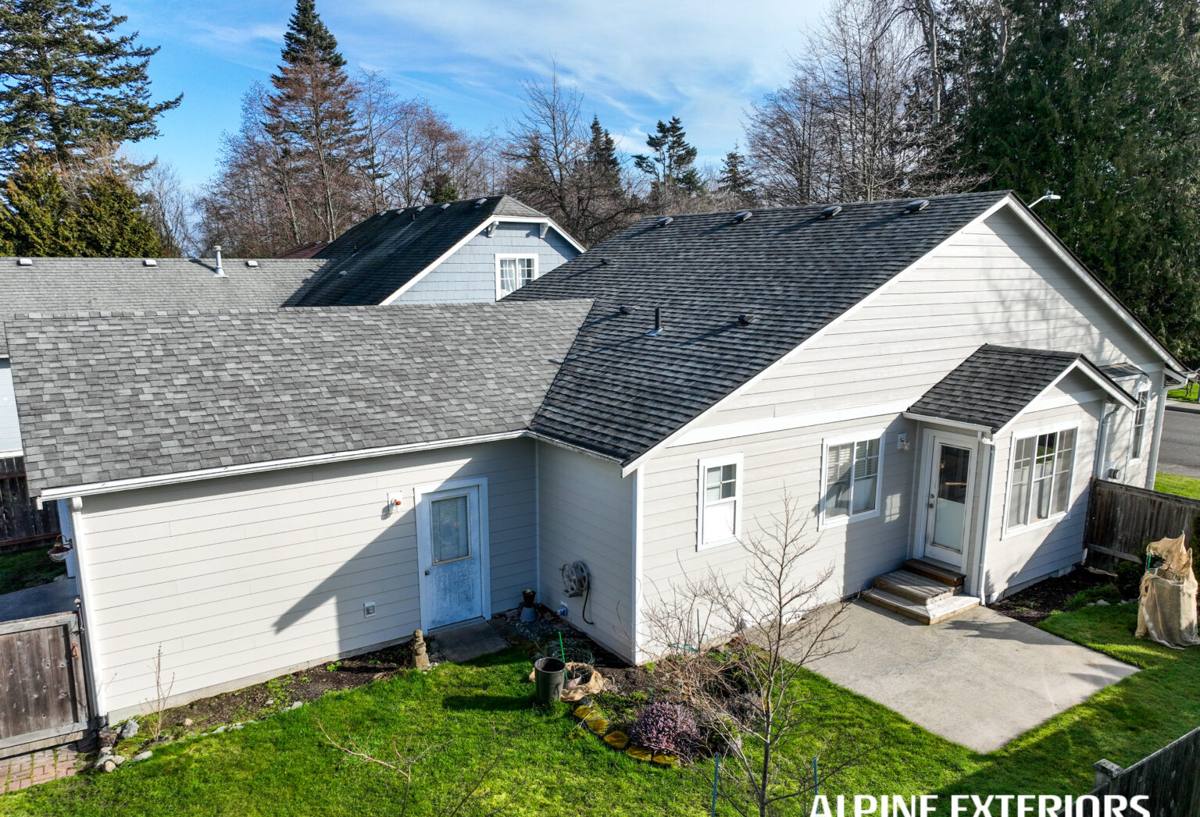
What the Local Climate Does to a House
Whatcom County's marine climate is generally mild, but "mild" doesn't mean easy on a building. The real stress comes from duration and moisture, not extreme temperatures.
Driving Rain and Wind-Driven Moisture
Storms coming off the Pacific and funneling through the county often bring rain sideways, not straight down. That's a different problem than a simple downpour — driving rain gets pushed up under lap siding, around window flanges, and into roof valleys and flashing that would be perfectly fine in calmer weather. Flashing details and proper overlap matter more here than in drier climates, because the margin for error is smaller.
The Long Moss Season
Cool temperatures, shade from mature trees, and months of damp weather add up to a long moss season on roofs throughout this area. Moss isn't just cosmetic — it holds moisture against the roofing material, lifts shingle edges as it grows, and can shorten the life of a roof significantly if it's left unchecked. Homes with north-facing slopes or tree cover tend to see it worst, and that describes a lot of Lynden properties with mature landscaping or tree lines along property edges.
Salt-Influenced Air
Whatcom County as a whole sits close enough to Bellingham Bay and the Salish Sea that salt-laden air is part of the regional picture, particularly for metal components — fasteners, flashing, gutter hardware, and hinges. Lynden is further inland than the immediate waterfront, so the effect is milder here than right on the water, but it's still worth accounting for when we spec hardware and fasteners, especially on the west-facing side of a structure.
Freeze-Thaw Swings
Lynden's winters aren't brutal, but they do dip below freezing more often than the coastal parts of the county, and the swings between freezing nights and wet days can stress caulking, sealants, and any spot where water has already found its way into a gap. Small cracks that would sit dormant in a milder climate get worked open here.
Roofing
Roofing is usually the first thing that shows wear in this area, and it's the system doing the most work against the weather described above. Common issues we see on Lynden roofs include moss buildup on shaded slopes, worn-out flashing around chimneys and roof-to-wall transitions, and granule loss on older asphalt shingles that have been sitting under damp conditions for years.
Repairs vs. Replacement
Not every roof problem means a full tear-off. If the decking is sound and the issue is isolated — a flashing failure, a section of damaged shingles, a moss problem caught early — a targeted repair is the honest answer. We'll tell you plainly when a roof still has useful life left versus when repeated patching stops making financial sense.
- Asphalt composition shingles — the most common choice locally, good value, wide color range
- Metal roofing — strong performance against driving rain and moss, longer lifespan, higher upfront cost
- Flashing and valley detail work — often the actual point of failure, even when shingles look fine
- Moss treatment and prevention — physical removal plus zinc or copper strip installation to slow regrowth
Siding
Siding on Lynden homes has to manage wind-driven rain without trapping moisture behind it. That's the core tension in every siding decision: the outer material has to shed water, but the assembly behind it — house wrap, flashing, proper drainage gaps — has to let any moisture that does get in escape again.
Material Options
| Material | Moisture Behavior | Maintenance | Typical Lifespan |
|---|---|---|---|
| Fiber cement | Very stable, resists swelling and rot | Repaint every 10-15 years | 30-50 years |
| Vinyl | Sheds water well, doesn't absorb moisture | Occasional cleaning | 20-40 years |
| Wood | Handsome but sensitive to sustained damp | Regular painting/staining, more upkeep | Varies widely with maintenance |
| Engineered wood | Good stability if installed and sealed correctly | Periodic repainting | 25-30 years |
On older Lynden farmhouses we often find original wood siding that's been painted many times over — sometimes it's worth preserving and re-siding around, and sometimes decades of moisture exposure mean it's better to start fresh with a lower-maintenance material. We'll look at the actual condition before recommending either direction; we're not going to push a full re-side on a house that doesn't need one.
Windows
Window failure in this climate is rarely about the glass itself — it's almost always about the seal around it. Old flashing, failed caulking, or a window that was never properly integrated with the house wrap will let water in slowly, often for years before it shows up as a stain or soft spot on an interior wall.
When we replace windows, the flashing and integration with the surrounding wall assembly gets as much attention as the window unit itself. A high-end window installed with poor flashing will leak just as surely as a budget window — the installation detail is what actually keeps water out here.
Signs a Window Needs Attention
- Fogging or condensation between panes (seal failure in the glass unit)
- Soft or discolored trim around the frame
- Drafts you can feel even when the window is fully latched
- Difficulty opening or closing due to frame swelling
- Visible daylight or gaps at the frame edges
Decks
Outdoor living space matters on the bigger lots common around Lynden, and a deck here needs to be built — or maintained — with the wet season in mind. Ledger board attachment, joist flashing, and the gap between deck boards all affect how well a deck sheds water instead of holding it against the structure.
Composite decking has become popular locally because it doesn't need the yearly staining that wood decking does, and it holds up well through repeated wet-dry cycles. Wood decking still has a place for homeowners who prefer the look and are willing to keep up with sealing and staining on a regular schedule — it's a legitimate choice, just a higher-maintenance one.
Why a Local Crew Matters in Lynden
Lynden isn't downtown Bellingham — it's a more spread-out community, and that changes a few practical things. Response time for a warranty check or a storm-damage look matters more when you're not the closest job on the map for every contractor in the county. We schedule Lynden work as a real part of our route, not an afterthought tacked onto a Bellingham job.
Local familiarity also means we're used to working with Whatcom County and City of Lynden permitting requirements, and we understand the mix of older agricultural-era construction and newer builds you find here. A farmhouse from decades ago and a house built five years ago don't have the same underlying assemblies, and treating them the same is how mistakes happen.
What to Check Before Hiring Anyone for Exterior Work
- Washington state contractor license, current and in good standing
- General liability insurance and, if applicable, workers' compensation coverage
- A written estimate that specifies materials, not just a lump-sum number
- Clear answers about flashing and moisture-management details, not just the visible finish material
- Willingness to explain why a repair vs. replacement recommendation was made
Getting Started
If you're dealing with a moss-covered roof, siding that's showing its age, windows that let in more draft than they should, or a deck that needs a real look before another wet season sets in, we're glad to come take a look. We offer free, no-pressure estimates for Lynden homeowners — use the form below to get started, and we'll walk the property with you and give you a straight assessment of what actually needs attention.