 Bellingham Roofing
 Windows Built for Lynden's Climate, Not Just Any Climate
Lynden sits inland from Bellingham Bay in the agricultural heart of Whatcom County, just a few miles south of the Canadian border. It doesn't get the direct waterfront exposure that homes right on the bay deal with, but it still sits inside the same marine weather system — damp air moves inland off the Sound and settles into the Nooksack River valley for days at a time. That means Lynden homes deal with a version of the same problems every window in Whatcom County eventually faces: constant moisture, wind-driven rain, and long stretches of gray, still air that never quite dries a house out. A window that was installed to a generic national standard, without much thought for this specific climate, tends to show its age here faster than it would somewhere drier.
This page covers what custom window work actually means for a Lynden property — what the climate does to windows over time, what a correct installation looks like, which materials hold up and which don't, and what to expect when you bring in a crew that already knows this area.
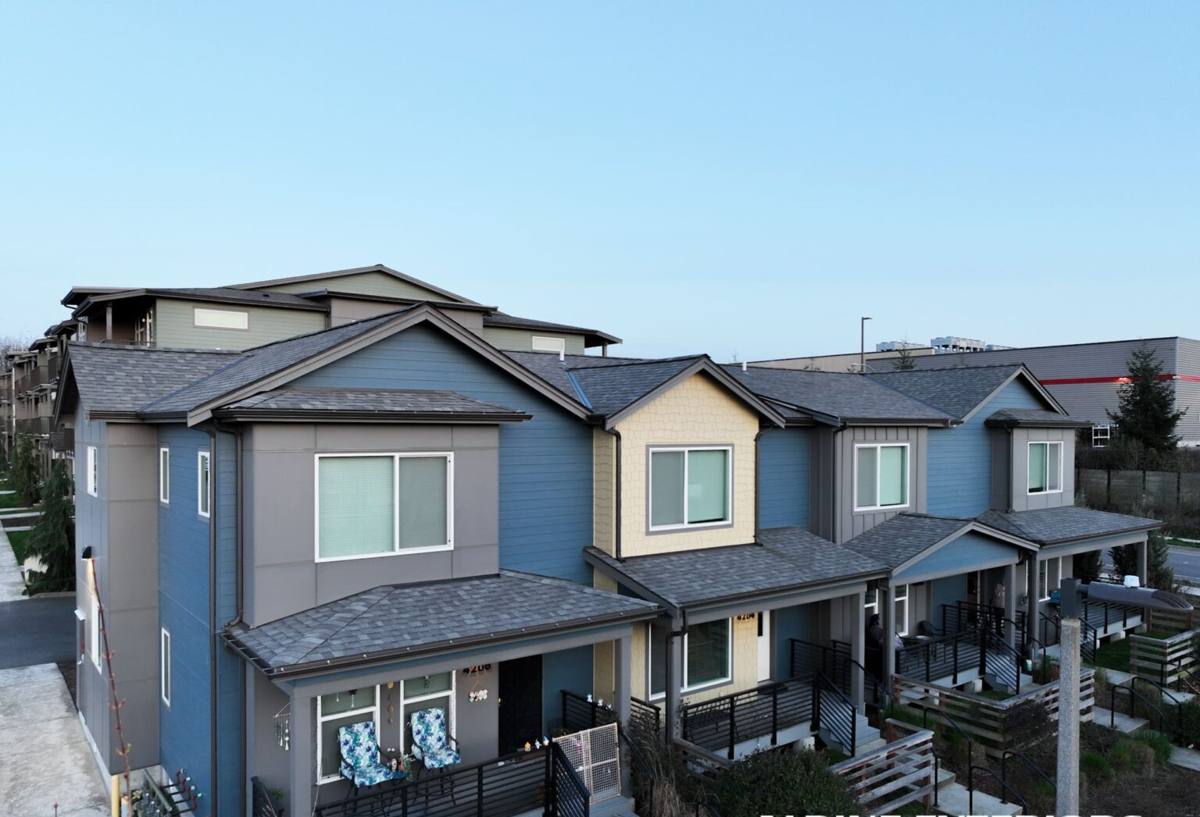
What Whatcom County Weather Does to Windows Over Time
Salt-Tinged Marine Air
Even away from the immediate shoreline, the air moving through Whatcom County carries trace salt and moisture off the Strait of Georgia and Bellingham Bay. Over years, that air works on anything metal — window hardware, screen frames, aluminum sills, and older steel fasteners are the first to show it. It's rarely dramatic; it shows up as sticky locks, corroded weep hole screens, and hardware that used to move smoothly and now doesn't.
Driving, Wind-Blown Rain
Rain here doesn't fall straight down as often as people assume. Storms moving through the valley push rain sideways against west- and southwest-facing walls, and that's exactly where window flashing and sealant get tested the hardest. A window that's watertight in a light, vertical rain can still leak under wind-driven rain if the flashing details or sill pan weren't done correctly. This is one of the most common causes of hidden rot we find behind older windows in this area — not a bad window, but a window that was installed without accounting for how rain actually hits a wall here.
The Long Moss and Mildew Season
Whatcom County's moss season runs long — shaded, north-facing walls and window sills can stay damp for weeks without a real drying window in between. Moss and mildew don't just look bad on wood sills and trim; they hold moisture against the surface and accelerate rot in anything that isn't sealed or finished well. Vinyl and fiberglass frames don't feed mold the way bare wood does, but even those need clean drainage paths so water isn't sitting against the frame or sill for days at a stretch.
Signs Your Lynden Home's Windows Are Falling Behind
Most window failure is gradual, and homeowners usually notice the symptoms years before they connect them to the windows themselves. Watch for:
- Fogging or a permanent haze between panes of double-glazed windows — the seal has failed and the gas fill is gone
- Soft or spongy wood at the sill or lower frame corners, especially on the sides of the house that face prevailing weather
- Visible moss, algae, or black staining collecting on sills, tracks, or exterior trim
- Drafts or a noticeable temperature difference near the window even with it fully closed and latched
- Paint that keeps peeling or bubbling on interior or exterior trim, even after repainting
- Windows that are hard to open, close, or lock — swollen frames or corroded hardware are common causes
- Condensation forming on the inside of the glass regularly, which often points to poor seals or inadequate glazing for the humidity here
- Visible daylight or gaps around the frame where it meets the siding or trim
Any one of these on its own isn't necessarily urgent. Several of them together, especially on the same window or wall, usually means it's time for a real look rather than another round of caulk.
What a Correct Custom Window Installation Actually Involves
Removal and Inspection
Every installation starts with pulling the old window and actually looking at what's behind it — the sheathing, the framing, and any sign of past water intrusion. This step gets skipped by crews in a hurry, and it's the single biggest reason window jobs fail early. If there's soft framing or old rot back there, it needs to be addressed before a new window ever goes in, not covered over.
Flashing and Weatherproofing
This is where a window either becomes part of your home's water management system or becomes a weak point in it. Correct flashing means a sloped sill pan so any water that gets past the window drains back out, not into the wall; flashing tape integrated with the house wrap in the right shingled order (so upper layers overlap lower ones); and head flashing above the window to break up water running down the wall. In a climate with as much wind-driven rain as this one, this step matters more than the window brand does.
Insulation and Air Sealing
The gap between the window frame and the rough opening needs to be filled with a proper low-expansion window foam or backer rod and sealant — not stuffed with fiberglass insulation, which does little to stop air movement and nothing to stop bulk water. Done right, this step is what actually eliminates the draft complaints and cold spots homeowners notice near older windows.
Trim and Finish Work
Interior and exterior trim gets reinstalled or replaced, caulked at the right joints (and left open at others so water can still drain), and finished to match the rest of the house. On older Lynden farmhouses with painted wood trim, this is also a good moment to address any trim that's already showing rot, since it's already exposed.
Choosing Window Materials and Types That Hold Up Here
There's no single "best" window material — the right choice depends on the house, the budget, and how much upkeep you want to take on. Here's how the common options compare for a Whatcom County climate specifically:
| Material | Moisture Resistance | Maintenance | Typical Lifespan | Best Fit |
|---|---|---|---|---|
| Vinyl | Very good — won't rot, doesn't need painting | Low — occasional cleaning | 20–30 years | Budget-conscious replacements, rental or resale-focused projects |
| Fiberglass | Excellent — dimensionally stable in wet/dry swings | Low | 30–40+ years | Long-term owners who want minimal upkeep and a straighter frame over time |
| Wood-clad | Good on the exterior (clad side); interior wood needs care | Moderate — interior finish maintenance | 20–30 years, clad-dependent | Homeowners who want a real wood interior look and are willing to maintain it |
| Aluminum | Fair — prone to condensation and corrosion near salt air without thermal breaks | Moderate | 20–30 years | Specific architectural or commercial-style applications |
We steer most Lynden homeowners toward vinyl or fiberglass for straightforward replacements, simply because neither one gives moss, mildew, or salt air anything to work with. Wood-clad is a legitimate choice when the look matters more than minimizing maintenance, and we're honest about that trade-off going in — it's not that wood-clad is a bad product, it's that it asks more of the homeowner over time in a climate like this one.
Custom Shapes and Configurations for Lynden Homes
"Custom" windows aren't only about material — a lot of the work in Lynden is matching a window to a house that wasn't built to a modern standard size, or upgrading a plain opening into something more functional. Common requests we see include:
- Bay and bow windows added to older farmhouse-style homes to bring in more light without a full room addition
- Arched or specialty-shaped windows matched to an existing architectural detail
- Egress windows added or enlarged in basements and lower levels to meet current safety requirements
- Picture windows replacing smaller, multi-pane originals to open up a view or a living space
- Casement or awning windows swapped in on walls that take heavy wind-driven rain, since their compression seal generally resists driving rain better than a slider
Custom sizing and shapes take more precise measuring and often custom flashing details, since they're rarely a drop-in replacement for what's already there. That's a bigger part of the job than picking the glass package, and it's where experience with older, non-standard construction actually shows.
Our Process, Start to Finish
- On-site assessment. We look at the existing windows, the framing behind them where visible, and how weather actually hits each wall of your specific house.
- Honest recommendation. We'll tell you which windows genuinely need replacement now, which can wait, and which material and style make sense for your budget and the wall they're going on.
- Precise measurement. Especially for custom shapes or older openings that were never quite square, this step gets done carefully rather than rushed.
- Removal and inspection. Old windows come out, and we check the framing and sheathing behind them before anything new goes in.
- Installation. Proper flashing, sill pan drainage, air sealing, and fastening — done to hold up under this area's wind and rain, not just to pass a quick visual check.
- Trim, finish, and cleanup. Interior and exterior trim finished to match, job site cleaned up, old windows hauled away.
- Final walkthrough. We test every window with you before we call the job done.
What Affects the Cost of Custom Windows in Lynden
Costs vary a fair amount project to project, but the factors that actually move the price are consistent:
| Factor | Why It Matters |
|---|---|
| Standard replacement vs. custom size/shape | Custom openings require made-to-order units and more precise installation work |
| Frame material | Vinyl is typically the most affordable; fiberglass and wood-clad cost more upfront but differ in longevity and upkeep |
| Glass package | Double vs. triple pane, and low-E or gas-fill upgrades, change both comfort and price |
| Condition behind the old window | Rot or water damage found during removal adds repair work before the new window can go in |
| Number and configuration of windows | Whole-house projects typically bring a better per-window cost than one-off replacements |
| Access and second-story work | Upper-level or hard-to-reach windows take more time and equipment |
We give straightforward, itemized estimates so you can see what you're actually paying for — the window unit, the labor, and any repair work — rather than one lump number.
Why a Crew That Already Works Lynden Matters
A lot of window problems in this area trace back to installation shortcuts that don't show up for a few years — missing sill pans, flashing lapped the wrong direction, or foam sealant used in place of real weatherproofing. Those mistakes tend to be invisible at first and expensive later, once water's had time to work behind the wall. A crew that installs windows regularly in Whatcom County has already seen what wind-driven rain, marine air, and a long wet season do to a shortcut, and builds the job around avoiding it from the start rather than fixing it in five years.
There's also a practical side to hiring local: someone who already knows the housing stock in and around Lynden — the mix of older farmhouses, mid-century homes, and newer builds — isn't guessing at what's behind your walls or how your specific style of house was likely built.
If your windows in Lynden are drafty, fogged, sticking, or just older than you'd like to admit, we're happy to take a look and give you a straight, no-pressure estimate. Use the form below to get started.