 Bellingham Roofing
 Why Blaine's Marine Climate Is Hard on Windows
Blaine sits right on the water near the Canadian border, which means homes here take a different kind of weathering than houses even a few miles inland. Salt-laden air off the bay works on metal hardware and fasteners year-round. Wind-driven rain off the Strait finds any gap in a window's seal and pushes water sideways, not just down. And Whatcom County's long, damp moss season keeps humidity levels high against exterior walls for months at a time, which is exactly the condition that lets wood sills and old glazing compounds start to fail quietly, behind trim that still looks fine from the outside.
None of that is unique to any one house — it's just what a marine climate does to a building over fifteen or twenty years. Windows that were a reasonable builder-grade choice when a home went up are often the first thing to show it, usually as drafts, fogged glass, or a heating bill that keeps climbing even though nothing else about the house has changed.
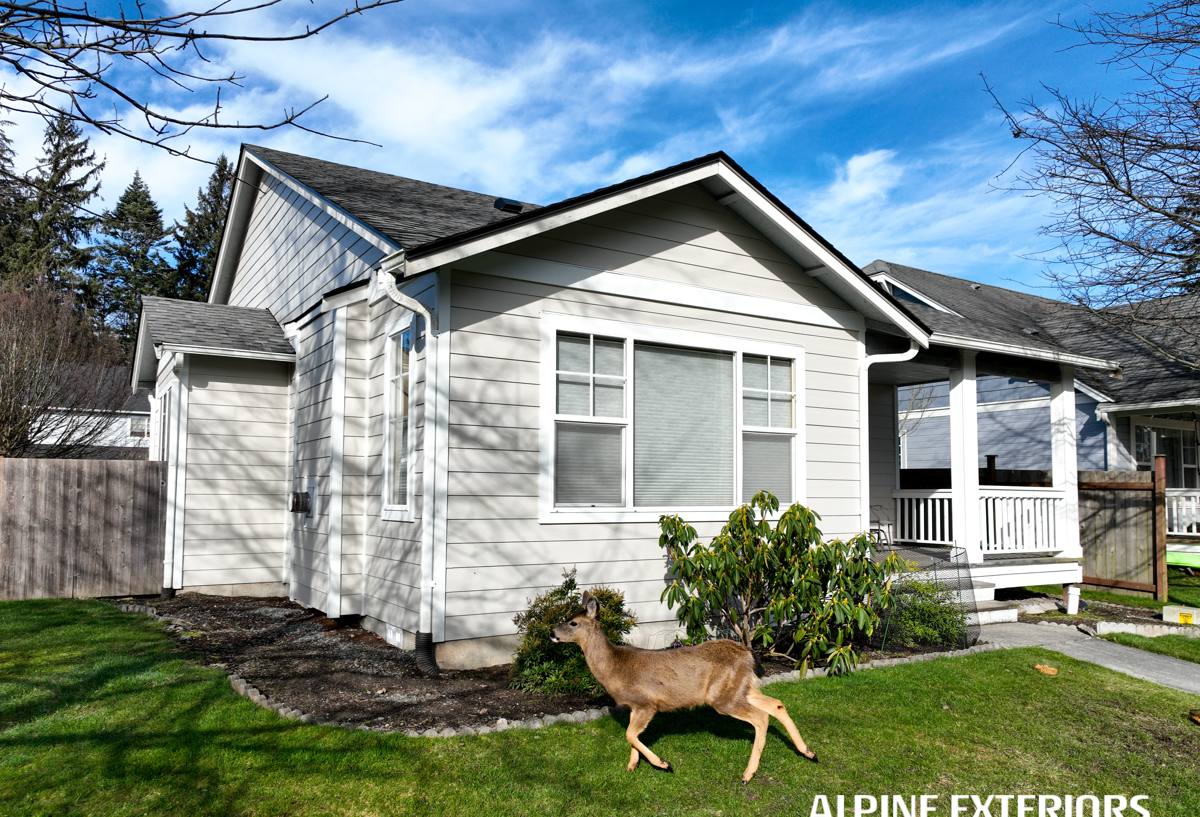
What "Energy-Efficient" Actually Means for a Whatcom County Home
Energy-efficient windows aren't just about keeping heat in during winter. In Blaine's climate, the bigger issue most of the year is stopping moist air from finding its way in and stopping conditioned air from escaping through a poorly sealed frame. A few numbers on the label matter more than marketing language:
U-Factor
This measures how well a window resists heat flow — lower is better. For our winters, a lower U-factor keeps interior surfaces warmer, which matters because cold glass and cold frames are where condensation forms first.
Solar Heat Gain Coefficient (SHGC)
This tells you how much solar heat passes through the glass. Blaine doesn't get the intense summer sun some inland areas do, so this rating is less about blocking heat and more about balance — enough gain to help with natural warmth on clear days, without turning south- and west-facing rooms into greenhouses on the handful of hot afternoons we do get.
Air Leakage Rate
Given how much wind-driven rain this area sees, a tight air leakage rating isn't a bonus feature — it's the difference between a window that sheds weather and one that slowly lets it in around the frame.
Signs Your Blaine Home's Windows Are Costing You Money
Most homeowners don't replace windows because one broke — they replace them because a handful of small symptoms finally add up. Worth checking for:
- Condensation or fogging between the panes of a double-pane window (a failed seal — the gas fill is gone and it won't come back)
- Visible daylight or a noticeable draft around the frame when the wind is up
- Soft, discolored, or swelling wood at the sill or lower frame corners
- Hardware — locks, cranks, hinges — that's pitted, stiff, or corroded from salt air exposure
- Rooms near windows that feel noticeably colder than the rest of the house in winter
- Paint or caulking around the exterior trim that's cracking or pulling away faster than elsewhere on the house
- Noticeably higher heating costs compared to a similar-sized home nearby
Any one of these on its own might just mean a caulk touch-up. Two or three together, especially on the weather-facing side of the house, usually means the window assembly itself is due for replacement.
Frame Materials: What Holds Up in a Coastal Climate
Frame material matters more here than in a drier, inland climate, because whatever you choose is going to spend years next to salt air and standing moisture. Here's how the common options compare for a Blaine home specifically:
| Frame Material | Coastal Durability | Maintenance | Notes for This Climate |
|---|---|---|---|
| Vinyl | Good — won't rust or rot | Low | Solid value option; quality varies a lot by manufacturer and reinforcement |
| Fiberglass | Very good — dimensionally stable, resists salt corrosion | Low | Holds paint well and handles temperature swings without warping |
| Aluminum | Fair — prone to corrosion near salt air unless well-coated | Moderate | Conducts cold, which can invite condensation in our damp winters |
| Wood | Poor to fair without diligent upkeep | High | Beautiful, but sill and joint rot is the most common failure we see in coastal homes |
| Wood-Clad | Good if cladding is fully sealed at every joint | Moderate | Interior wood warmth with an exterior shell — installation quality at the seams is everything |
We generally steer homeowners in Blaine toward vinyl or fiberglass for anything on the weather side of the house. It's not that wood or clad-wood windows can't work here — it's that they demand a level of ongoing sealant and paint maintenance that most people underestimate until they're dealing with soft trim ten years in. We'll always tell you honestly which option fits your home, your budget, and how much upkeep you actually want to sign up for.
Glass Packages That Make Sense Here
Double-pane windows with a low-E coating and an argon gas fill are the baseline for energy performance today, and for most Blaine homes they're the right call. Triple-pane glass adds another layer of insulation and can be worth it for north-facing rooms, homes right along the water where wind exposure is constant, or anyone prioritizing sound dampening from road or marine traffic noise — but it adds cost and weight, and isn't always the better dollar-for-dollar choice over a well-installed double-pane unit. We'll walk through the trade-off honestly rather than upselling glass you don't need.
Low-E coatings matter year-round here, not just in summer — they help hold interior warmth during our long, gray, wet stretch of the calendar, which is most of the year.
The Installation Details That Actually Matter
The glass and frame get the attention, but in a climate like this, the installation is what determines whether a window performs for twenty years or starts failing in five. A correct job includes:
Flashing and Water Management
Proper flashing directs any water that gets behind the trim back out and away from the wall assembly, rather than letting it pool at the sill. This is the single most common shortcut we see in poorly done window replacements, and it's the one most responsible for hidden rot.
Air Sealing Around the Frame
The gap between the window unit and the rough opening needs to be sealed with the right materials — not just caulked shut, which can trap moisture, but properly insulated and sealed to let the assembly breathe correctly while blocking drafts.
Level, Plumb, and Square Setting
A window that's slightly out of square won't seal evenly, which means one corner ends up doing all the work of keeping weather out. This shows up years later as a leak that seems to come from nowhere.
Exterior Trim and Sealant Detailing
Given how much driving rain this area gets, the caulking and trim work on the outside isn't cosmetic — it's a functional part of the weather barrier.
Our Process
- Free on-site assessment — we look at your current windows, note any signs of moisture intrusion or rot, and talk through what's actually driving your energy costs
- Honest recommendation on frame material, glass package, and options, matched to your home and budget, not a one-size-fits-all pitch
- Clear, written estimate with no vague allowances
- Careful removal of old units, with attention to what the opening looks like underneath — this is often where we catch hidden water damage before it gets worse
- Proper flashing, insulation, and air sealing at every window, not just the ones that are easiest to reach
- Finish work and cleanup, with a final walkthrough so you know exactly what was done and why
Why a Crew That Already Works in Blaine Matters
Window replacement done right depends on understanding the conditions a specific house faces — wind exposure, sun angle, how close it sits to open water, and how the local weather patterns actually move through Whatcom County over a year. A crew that works this area regularly has already seen how salt air treats different hardware finishes, how driving rain finds weak spots in trim, and what moss-season humidity does to sills that weren't flashed correctly the first time. That's the kind of knowledge that shows up in the quality of the install, not just in the sales pitch.
We also handle any local permitting and code requirements that apply to window replacement in Blaine and the surrounding county, so you're not left sorting that out on your own.
Questions to Ask Before You Hire
- Are you licensed and insured to do window installation in Washington State?
- Will you handle flashing and air sealing, or just set the window and caulk the outside?
- What happens if you find rot or water damage once the old window is out?
- What's the warranty on both the product and your labor, and who do I call if something goes wrong?
- Can you walk me through why you're recommending this frame material and glass package for my house specifically?
A contractor who answers these clearly and without hesitation is one who does this work correctly and often.
If your windows are drafty, fogged, or just older than they should be for the kind of weather Blaine sees every winter, we're happy to take a look. Use the form below to request a free, no-pressure estimate — we'll give you a straight answer about what your home actually needs.