 Bellingham Roofing
 Why Birch Bay Roofs Wear Differently Than Roofs Inland
Birch Bay sits right on the water, and that changes what a roof has to deal with every single day. Homes a few miles inland in Bellingham or Ferndale get some of the same Whatcom County weather, but they don't get the constant salt-laden air coming off the bay, the wind-driven rain that hits shingles sideways instead of straight down, or the deep shade and standing moisture that let moss take hold faster near the water and tree lines. A roof built for a typical Pacific Northwest home isn't automatically the right roof for a Birch Bay home. The materials, the flashing details, and the ventilation all need to account for a coastal, marine-influenced microclimate.
That's the lens we use on every new roof installation in Birch Bay: not "what roof works in Bellingham," but "what roof holds up on this specific waterfront street, with this specific exposure."
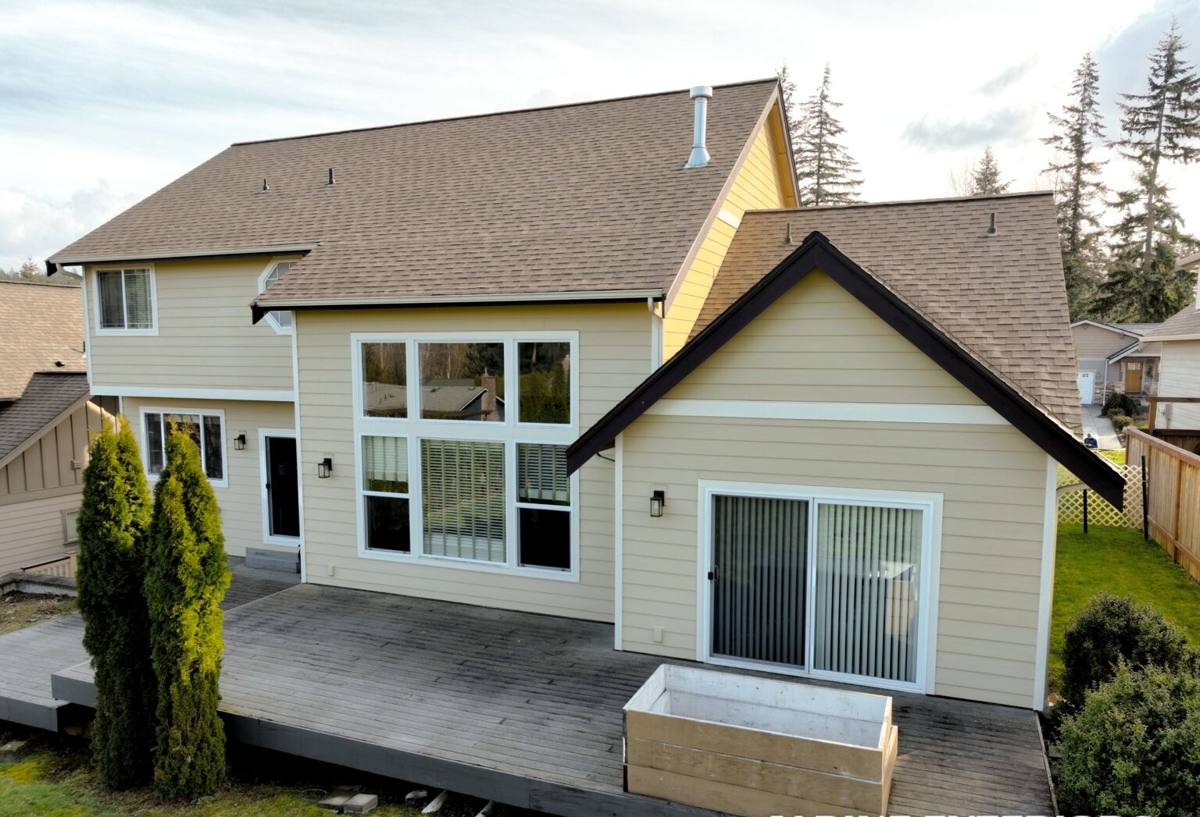
How Salt Air and Wind-Driven Rain Wear Down a Roof
Salt air is corrosive. It accelerates the breakdown of exposed metal fasteners, flashing, and vent components, and it can shorten the service life of lower-grade hardware significantly compared to the same materials used a few miles inland. On a new roof installation, this means fastener and flashing choices matter more in Birch Bay than they do elsewhere in the county — using marine-grade or corrosion-resistant hardware isn't an upsell, it's a requirement for the roof to reach its expected lifespan.
Wind-driven rain is the other half of the equation. When storms come off the Strait of Georgia and Birch Bay itself, rain doesn't just fall on a roof — it gets pushed under shingle tabs, into open valleys, and around penetrations that would stay dry in a calmer inland rain event. That's why the underlayment system, valley treatment, and flashing overlap on a coastal new roof installation need to be more robust than a builder-grade install would call for.
What This Looks Like in Practice
- Corrosion-resistant fasteners and flashing at all exposed metal points
- Fully sealed, high-quality synthetic underlayment rather than minimal felt coverage
- Extra attention to valley and eave flashing, where wind-driven rain concentrates
- Sealed penetrations at every vent, pipe boot, and chimney flashing
Moss: The Slow, Constant Threat in Whatcom County
Moss season in this part of Washington isn't a season so much as most of the year. Cool temperatures, high humidity, and shaded roof sections — common on tree-lined Birch Bay lots — give moss exactly what it needs to establish itself. Once moss gets a foothold on a roof, it does two kinds of damage. First, it holds moisture directly against the roofing material, which shortens the life of asphalt shingles and can lead to wood rot on the decking underneath over time. Second, as moss grows, it physically lifts shingle edges and works its way under tabs, which opens a path for water even before the shingles themselves are worn out.
A new roof installation is the best opportunity to get ahead of this. Roof design choices — like keeping valleys and low-slope sections properly flashed, choosing shingle products with algae- and moss-resistant granules, and making sure the roof sheds water efficiently instead of holding it in shaded areas — all reduce how aggressively moss establishes itself in the years after installation. No roof in this climate is moss-proof, but a well-installed one is far easier to keep clean and far more resistant to the damage moss causes when it does show up.
Choosing a Roofing System Built for a Birch Bay Property
There's no single "best" roofing material for every Birch Bay home — the right choice depends on the home's exposure to wind and salt spray, roof pitch, budget, and how much long-term maintenance the homeowner wants to take on. Here's how the common options compare for this specific coastal, moss-prone environment:
| Material | Moss & Moisture Resistance | Salt Air / Coastal Wind Durability | Maintenance in Birch Bay |
|---|---|---|---|
| Architectural asphalt shingle (algae-resistant) | Good, especially with copper or zinc-infused granules | Good with proper fastening and flashing | Periodic moss treatment and gutter clearing recommended |
| Standard 3-tab asphalt shingle | Fair — more prone to moss holding moisture at tab edges | Fair; lighter profile is more vulnerable to wind-driven rain intrusion | More frequent inspection needed in shaded, damp areas |
| Standing seam metal | Very good — moss struggles to establish on a smooth, sloped metal surface | Very good when fasteners and flashing are corrosion-resistant | Low; occasional rinse and gutter check |
| Synthetic/composite shingle | Good — resistant to moisture absorption | Good, but installation quality is critical for wind resistance | Low to moderate |
For most Birch Bay homes, we lean toward architectural asphalt with algae-resistant granules or standing seam metal, because both hold up well against the specific combination of moisture, moss, and salt exposure this location sees. That said, roof pitch, existing structure, and budget all factor into the final recommendation — which is why we walk the roof in person before suggesting a specific system.
What a Correct New Roof Installation Actually Involves
A roof is a system, not a single product laid on top of your house. Skipping any layer of that system undermines the rest, no matter how good the shingles or metal panels are. A correct installation includes:
Tear-Off and Deck Inspection
We remove the old roofing down to the deck rather than layering over it. This lets us actually see the condition of the roof deck — critical in a climate where trapped moisture under old shingles can quietly rot sheathing for years without any visible sign from inside the house. Any soft or water-damaged decking gets replaced before anything new goes down.
Underlayment
Given how much wind-driven rain and prolonged damp weather this area sees, we don't treat underlayment as an afterthought. A full synthetic underlayment system, with extra protection at eaves and valleys, is standard on every install — not an optional upgrade.
Flashing
Flashing around chimneys, skylights, vent pipes, and roof-to-wall transitions is where most roof leaks actually start, regardless of how good the shingles are. We install new flashing rather than reusing old pieces, and pay particular attention to any spot where wind-driven rain from off the water could get pushed uphill under a flashing edge.
Ventilation
Proper intake and exhaust ventilation keeps the attic space at a stable temperature and humidity level, which reduces condensation buildup on the underside of the deck — a real issue in a consistently damp marine climate. Good ventilation also reduces the conditions that let moss and mildew take hold from underneath.
Our Installation Process, Step by Step
- On-site assessment — we walk the roof and attic, check the deck condition, note wind exposure and shaded/moss-prone areas specific to your property
- Material recommendation — we recommend a system based on your home's actual exposure, pitch, and budget, not a one-size-fits-all package
- Permitting — we handle the permit process through Whatcom County so you don't have to
- Tear-off and deck repair — old roofing removed, deck inspected, any damaged sheathing replaced
- Underlayment and flashing installation — full underlayment system with reinforced valley and eave protection, new flashing throughout
- Roofing material installation — installed to manufacturer specifications with corrosion-resistant fasteners
- Ventilation check — intake and exhaust ventilation confirmed adequate for the attic space
- Final walk-through — we review the completed roof with you and answer any questions before we consider the job done
Signs You Need a New Roof, Not Another Repair
Repairs make sense for isolated issues on a roof that's otherwise sound. But in a climate this hard on roofing materials, repeated patchwork can end up costing more than replacement — and can mask a bigger problem underneath. Signs it's time to talk about full replacement rather than another repair:
- Moss or algae growth covering large sections of the roof, not just isolated patches
- Shingles that are curling, cracking, or losing granules across multiple areas
- Soft spots in the roof deck, felt underfoot from inside the attic or on the roof itself
- Recurring leaks in different locations after previous repairs
- Visible daylight through the roof deck from inside the attic
- A roof approaching or past the manufacturer's expected service life for this climate
- Flashing that's rusted, lifted, or separating from chimneys, vents, or walls
What Drives the Cost of a New Roof in Birch Bay
Every property is different, so we don't quote sight-unseen. But the main factors that affect cost on a Birch Bay new roof installation are consistent from job to job:
| Cost Factor | Why It Matters |
|---|---|
| Roof size and pitch | More surface area and steeper pitches mean more material and labor time |
| Material choice | Standing seam metal and premium architectural shingles cost more upfront than standard asphalt but often need less maintenance in this climate |
| Deck condition | Water-damaged sheathing found during tear-off adds material and labor to repair before installation continues |
| Roof complexity | Valleys, dormers, chimneys, and skylights each add flashing detail work |
| Access and site conditions | Waterfront lots, steep driveways, or limited staging space can affect labor time |
We give straightforward, itemized estimates so you know exactly what you're paying for and why — no vague lump-sum numbers.
Why Local Experience in Birch Bay Matters
A crew that primarily works inland Bellingham neighborhoods can absolutely install a roof, but they may not think through salt-air fastener corrosion, wind-driven rain paths off the water, or the specific moss patterns that show up on shaded, waterfront-adjacent lots. Working regularly in Birch Bay means we've seen how roofs actually perform here over time — which materials hold up, which flashing details matter most, and where standard installation practices need to be adjusted for this location. That local pattern recognition is part of what you're paying for when you hire a crew that knows the area, not just the trade.
If you're weighing repair versus replacement, or just want an honest read on your roof's condition, we're glad to take a look. Reach out for a free, no-pressure estimate using the form below.