 Bellingham Roofing
 Roofing in Blaine: A Different Kind of Wear
Blaine sits about as close to salt water and the Canadian border as a Washington roof can get, and that location shapes everything about how a roof ages here. Homes near the waterfront and along the bluffs catch salt-laden air coming off the Strait of Georgia and Semiahmoo Bay, while properties set back into the trees deal with heavy shade, damp ground, and constant moss pressure. Add in Whatcom County's long wet season and the wind that comes with open water exposure, and you've got a roof that's working harder than one in a drier, more sheltered part of the state.
We've worked on roofs across Whatcom County long enough to know that a one-size-fits-all approach doesn't hold up out here. A roof three blocks from the water needs different fastener and flashing choices than one tucked into a wooded lot a mile inland, even though both are technically "Blaine roofs." That's the kind of distinction that matters when you're picking materials and planning maintenance.
What Blaine's Climate Actually Does to a Roof
Salt Air and Metal Fatigue
Airborne salt is corrosive to exposed metal — flashing, fasteners, gutters, and vent caps all take the brunt of it. On homes closer to the water, we see accelerated rusting on lower-grade fasteners and flashing metals years before you'd expect it inland. This doesn't mean metal roofing or metal components are off the table; it means material grade and fastener selection matter more here than in most parts of the state, and cutting corners on hardware shows up early.
Driving Rain and Wind-Driven Water
Blaine's exposure to open water means rain doesn't always fall straight down — wind pushes it sideways, up under shingle edges, and into places a roof designed for calmer conditions might not account for. This is where underlayment quality, proper shingle nailing patterns, and correctly lapped flashing at valleys, chimneys, and wall intersections make the difference between a roof that sheds water and one that slowly lets it in.
Moss, Shade, and a Long Wet Season
Between the marine layer and tree cover on many Blaine lots, roofs here can stay damp for extended stretches, especially on north-facing slopes or under overhanging branches. Moss doesn't just look bad — it holds moisture against the roofing material, lifts shingle edges as it grows, and works its way under the surface over time. Left unchecked for a few seasons, moss growth can shorten the usable life of an otherwise sound roof.
Roofing Materials That Make Sense for This Area
| Material | How It Handles Blaine's Climate | General Considerations |
|---|---|---|
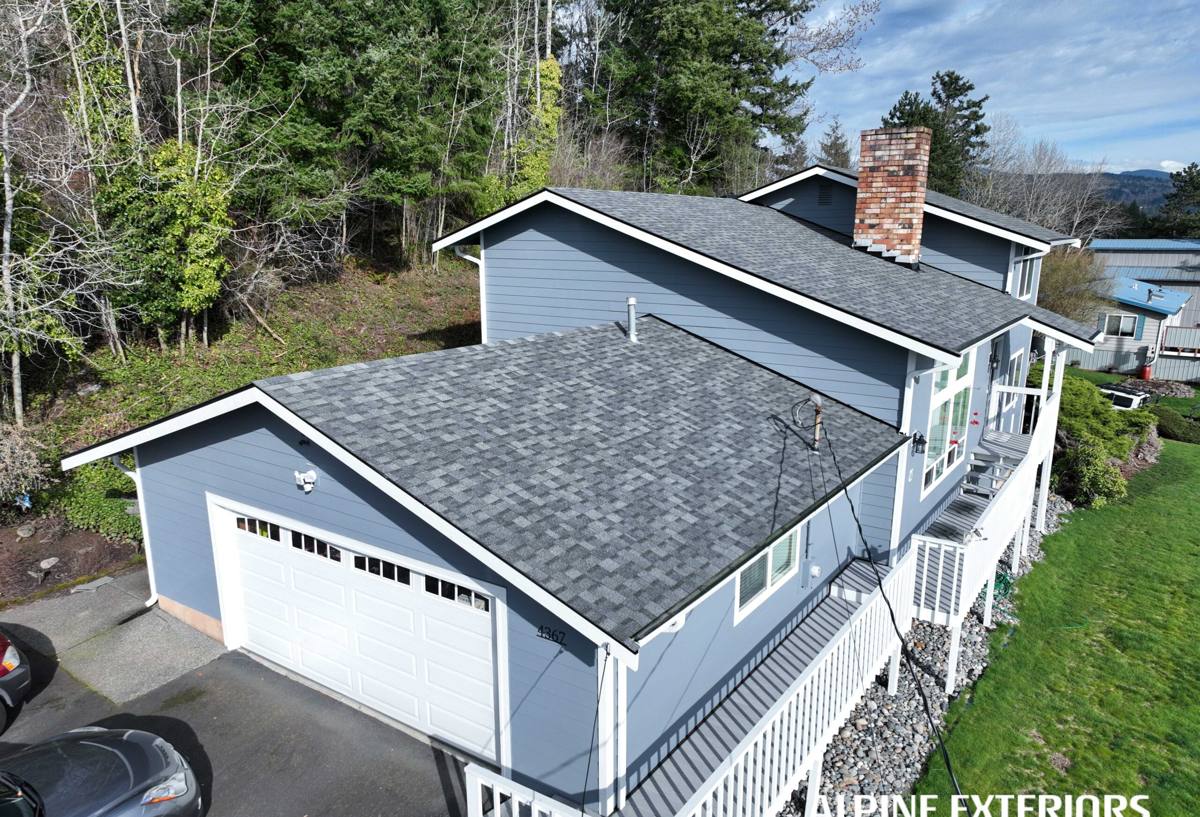
| Architectural asphalt shingles | Good performance with proper ventilation and moss-resistant granule options; widely used and easy to repair in sections | Mid-range cost; lifespan depends heavily on ventilation and maintenance |
| Metal roofing (standing seam) | Sheds wind-driven rain well and resists moss better than shingles; needs marine-grade fasteners and coatings near the water | Higher upfront cost; long service life when installed correctly |
| Synthetic/composite roofing | Resists moisture absorption and moss better than wood-based products | Cost varies by product; good option where appearance and durability both matter |
| Cedar shake | Traditional look but higher maintenance in this moisture and moss environment | Requires more frequent upkeep to manage moss and moisture retention |
We don't push one material on every home. A steep, shaded lot inland from town might do well with a moss-resistant architectural shingle and better attic ventilation, while a home facing open water might get more life out of a well-fastened metal roof. We'll walk through the trade-offs with you rather than defaulting to whatever's easiest to install.
Roof Replacement: What Actually Drives the Decision
Most homeowners don't wake up planning a roof replacement — it's usually a leak, a string of granules in the gutter, or an inspection from a home sale that starts the conversation. A few honest signs it's time to start planning:
- Shingles that are curling, cracking, or missing granules in patches
- Persistent moss growth that keeps returning within a season or two of cleaning
- Soft spots in the decking when walked, or sagging along roof planes
- Daylight visible through the attic or staining on interior ceilings
- A roof approaching or past the manufacturer's expected service life for its material and exposure
- Flashing that's rusted, lifted, or separating at chimneys, valleys, and walls
Not every one of these means full replacement — some are repair situations. Part of our job on an estimate is telling you honestly which category you're in, including when a repair is the right call and a full tear-off isn't necessary yet.
Roof Repair and Maintenance in a Marine Climate
Given how much moisture and salt exposure Blaine roofs deal with, maintenance matters more here than in drier inland areas. Routine attention catches small problems — a lifted shingle tab, a cracked pipe boot, a clogged valley — before they turn into decking damage or interior leaks.
Moss removal is worth doing carefully rather than aggressively. Pressure washing a roof can strip granules and shorten its life; the more durable approach is manual removal combined with zinc or copper strips that discourage regrowth over time, plus keeping gutters and valleys clear so water isn't sitting against the roofing material longer than it needs to.
We also check attic ventilation as part of most repair and maintenance visits. Poor ventilation traps moisture underneath the roof deck, which accelerates the exact problems — rot, moss, premature aging — that Blaine's climate already pushes toward.
Beyond the Roof: Siding, Windows, and Decks
A roof doesn't fail in isolation from the rest of the exterior. Salt air and driving rain that stress a roof put the same load on siding, window seals, and any exposed deck framing or fasteners. We handle all four — roofing, siding, windows, and decks — because they're connected systems on a coastal property. A leak that starts at a roof valley can show up as siding damage or interior water stains well away from the roof itself, and catching that connection early saves homeowners from chasing symptoms in the wrong place.
If you're already having roof work done, it's often worth a quick look at flashing where the roofline meets siding, and at window and door trim exposed to the same wind-driven rain. We'll flag anything that looks like a concern rather than upselling work that isn't needed.
Why Local Crew Experience Matters Here
Blaine isn't a generic PNW roofing market. Its position on Whatcom County's northwest coast — right up against the Strait of Georgia and the border — means the wind exposure, salt content in the air, and moss pressure are more pronounced than in more sheltered parts of the county. A crew that's worked mostly inland jobs may not think twice about fastener grade or flashing detail that actually matters a great deal on a Blaine roof.
Being based in Bellingham and working throughout Whatcom County, we see the range of conditions across this area — from Blaine's open-water exposure to the more wooded, moisture-heavy lots further inland — and that experience shapes the recommendations we make on-site, not just the products we happen to stock.
What to Expect When You Call Us
We start with an honest look at your roof's actual condition — age, material, ventilation, and how exposed the property is to wind and salt. From there we'll explain what we're seeing in plain terms: what's a repair, what's nearing the end of its life, and what's genuinely fine for now. We're not going to recommend a full replacement when a repair will hold up, and we won't sugarcoat it if a roof is past the point where patching makes sense.
Questions Worth Asking Any Contractor Before You Hire
- Are you licensed and insured to work in Washington, and can you provide proof?
- What warranty covers both materials and labor, and for how long?
- Will you provide a written estimate that details materials, scope, and timeline?
- How do you handle unexpected decking damage found once the old roof is off?
- Do you carry local references or examples of similar work in this area?
A contractor who answers these clearly and doesn't rush you is generally one worth trusting with a job this important.
If you're noticing moss buildup, a leak, or just want an honest read on where your roof stands, we're happy to take a look. Reach out for a free, no-pressure estimate — we'll assess the roof, explain what we find, and give you options that fit your home and your budget.