 Bellingham Roofing
 Siding Replacement Built for Blaine's Coastal Conditions
Blaine sits at the northwest corner of Washington, right on Semiahmoo Bay and Drayton Harbor, which means homes here take on a version of weather most inland Whatcom County houses never see. Salt-laden air blows in off the water, driving rain comes in sideways during winter storms, and the damp, low-light stretches of fall and winter feed moss and algae growth that can sit against siding for months at a time. Siding that would hold up fine in a drier, more sheltered part of the county can start failing years early out here.
When we replace siding on a Blaine home, we're not just swapping old material for new — we're building an exterior that's specifically suited to salt exposure, wind-driven moisture, and a long wet season. That's a different job than a generic re-side, and it starts with understanding what's actually attacking the siding in the first place.
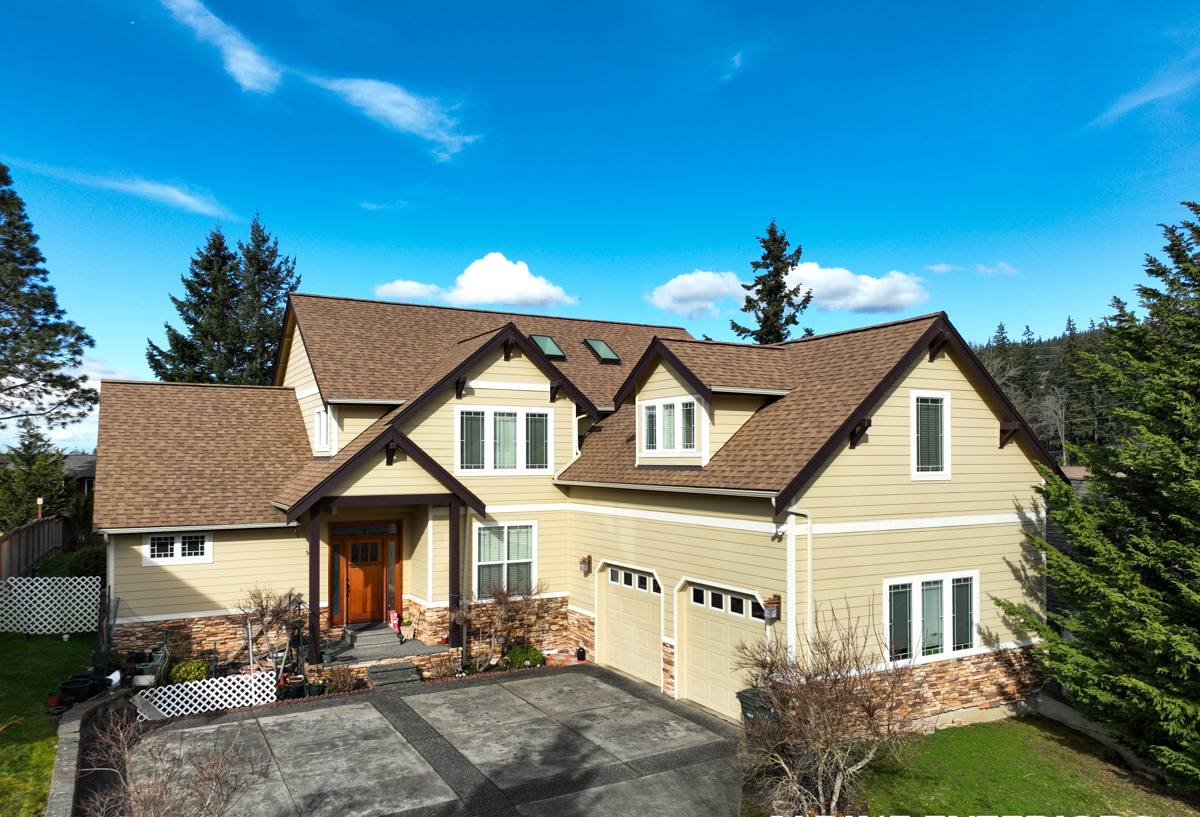
Why Salt Air and Driving Rain Wear Siding Down Faster Here
Salt air is corrosive to fasteners, trim, and any siding product with exposed metal components, and it accelerates the breakdown of finishes that aren't formulated to resist it. Combined with wind-driven rain — which doesn't just fall straight down but gets pushed sideways and up under laps, trim, and penetrations — Blaine's coastal exposure puts more stress on a wall assembly than most manufacturers' standard test conditions assume.
A few specific ways this shows up on siding in Blaine:
- Caulk joints and trim seams dry out and crack faster under salt and UV exposure, opening paths for water intrusion.
- Wood-based and engineered wood siding products absorb moisture at cut edges and fastener points, leading to swelling and eventual rot if not perfectly sealed and maintained.
- Fasteners and flashing that aren't corrosion-rated for marine exposure can rust and stain the siding face over time.
- Moss and algae take hold in shaded, north-facing, and wind-sheltered wall sections and hold moisture against the siding surface for extended periods.
- Paint and factory finishes not engineered for coastal UV and salt exposure fade and chalk noticeably faster than they would a few miles inland.
Signs Your Blaine Home's Siding Needs Replacing
Not every siding problem means a full tear-off, but in a marine climate, small issues tend to compound quickly once the surface is compromised. Here's what we look for during an inspection:
- Soft or spongy spots when you press on the siding, especially near the bottom courses and around windows and doors
- Visible swelling, delamination, or bubbling at panel edges and seams
- Persistent moss or algae growth that comes back within weeks of cleaning
- Paint that's peeling or bubbling rather than just fading evenly
- Cracked or missing caulk at trim, corners, and penetrations
- Rust streaking below fasteners or metal flashing
- Visible gaps or warping where siding has pulled away from the wall
- Interior signs — musty smells, staining, or soft drywall on exterior walls — that point to moisture getting behind the siding
If you're seeing more than one or two of these, especially on the sides of the house that face the water or prevailing wind, it's worth a real inspection rather than another round of patching.
What a Correct Siding Replacement Actually Involves
Replacing siding correctly is about what happens underneath it as much as what you see on the wall. In a climate like Blaine's, cutting corners on the parts you can't see is exactly how a siding job fails in five years instead of lasting for decades.
Tear-off and inspection
We remove the old siding down to the sheathing and inspect for hidden rot, damaged framing, or existing moisture problems. This is often the first time an owner sees what's actually been happening behind the old siding — and it's the right time to fix it, before it's covered back up.
Weather-resistive barrier and flashing
A properly lapped weather-resistive barrier, correctly integrated flashing at windows, doors, and penetrations, and attention to drainage planes matter more on an exposed coastal wall than almost anything else in the job. Water that gets past the siding face needs a clear path back out, not a place to collect.
Corrosion-resistant fastening
Given the salt exposure, fastener selection isn't a place to save money. We use fasteners and flashing rated for the exposure the wall actually sees, not just whatever's standard for an inland install.
Correct clearances and gaps
Siding needs proper clearance from grade, roof lines, decks, and other transitions to avoid trapping moisture. This is a common shortcut on rushed jobs and one of the more frequent causes of premature rot we see when we tear off older siding.
Finish work
Trim, caulking, and touch-up painting are done to manufacturer spec, not eyeballed. On a coastal home, sloppy caulk work is often the first thing to fail.
Why We Install Only James Hardie Fiber Cement
We made a decision as a company to install James Hardie fiber cement siding exclusively — not vinyl, not LP SmartSide or other engineered wood products, not primed spruce or cedar. That's not a marketing angle; it's based on what actually holds up on the homes we work on, especially in exposed coastal conditions like Blaine's.
Fiber cement is non-combustible and dimensionally stable, meaning it doesn't expand, contract, or absorb moisture the way wood-based products do. Hardie's ColorPlus factory finish is baked on and warranted separately from the substrate, which matters a lot in a climate where UV and salt exposure fade paint fast — a factory finish engineered for weathering holds color longer than field-applied paint typically will. Hardie also builds climate-specific HZ product lines, engineered for different moisture and temperature exposures, which is directly relevant in a place like Whatcom County where wet winters and coastal humidity are the norm rather than the exception.
We're not going to tell you every other product on the market is junk — vinyl is inexpensive and low-maintenance in the right setting, engineered wood has genuine fans, and cedar has a look some homeowners want enough to accept the upkeep. But when we weigh moisture behavior, long-term appearance, fire resistance, and installed longevity against the conditions a Blaine home actually faces, fiber cement is what we're willing to put our name on and back with a workmanship warranty.
How Siding Materials Compare for a Coastal Whatcom County Home
| Factor | Vinyl | Engineered Wood | James Hardie Fiber Cement |
|---|---|---|---|
| Moisture / rot resistance | Doesn't rot, but can warp and gap over time | Vulnerable at cut edges and fastener points if not sealed perfectly | Not organic — doesn't rot or absorb moisture the way wood does |
| Salt air / UV durability | Can chalk, fade, and become brittle | Finish maintenance is critical to prevent moisture entry | Factory ColorPlus finish engineered for weathering, separately warranted |
| Fire resistance | Melts and can contribute fuel in a fire | Combustible, wood-based core | Non-combustible |
| Maintenance | Low, but limited repair options if damaged | Requires regular repainting/resealing | Repaint interval is long; ColorPlus finish reduces upkeep further |
| Typical lifespan when installed to spec | 20–40 years, variable | Manufacturer-dependent, sensitive to install quality | Decades, with strong transferable warranty support |
Our Siding Replacement Process in Blaine
We work Blaine and the rest of Whatcom County's coastal areas regularly, so our process is built around what actually happens on these homes, not a one-size-fits-all script.
- On-site inspection: We walk the exterior, check for the failure signs above, and look closely at the sides of the house that take the most wind and rain exposure.
- Assessment and estimate: You get a clear, honest picture of what's needed — full replacement, partial, or repair — and a written estimate with no pressure to decide on the spot.
- Tear-off and sheathing check: Old siding comes off, sheathing is inspected, and any hidden damage is documented and addressed before anything new goes up.
- Weather barrier and flashing install: Correct lapping, sealing, and flashing integration at every penetration and transition.
- Hardie siding installation: Installed to manufacturer specification — fastening pattern, clearances, joint treatment — by a crew trained specifically on the product.
- Trim, caulk, and finish: Detail work done to spec, not rushed, since this is where coastal homes tend to fail first if corners get cut.
- Final walkthrough: We go over the finished work with you before calling the job done.
Why a Crew That Already Works Blaine Matters
Siding installation is one of those trades where local familiarity actually changes the outcome, not just the sales pitch. A crew that regularly works Blaine and the surrounding Whatcom County coastline already knows which wall orientations catch the worst of the wind-driven rain, where moss tends to establish first, and how much margin to build into flashing and clearances for a place that gets a genuinely long wet season. That's different from a crew that mostly works drier, more sheltered inland neighborhoods and treats every job the same way.
It also matters for accountability. A contractor based in the region and working here regularly has a reason to stand behind the work — reputation and follow-up matter when you're not a one-time crew passing through. If a warranty issue or a question comes up two years down the road, you want someone who's still local and still doing this work in your area.
Questions Worth Asking Any Siding Contractor Before You Hire
- Are you installing manufacturer-certified, and do you have references from jobs in this specific area?
- What's your plan for the weather-resistive barrier and flashing, not just the siding itself?
- What fastener and flashing materials do you use, and are they rated for coastal/marine exposure?
- What does your workmanship warranty cover, and for how long?
- Will the same crew that gives the estimate be the one doing the install?
Caring for Your New Siding After Installation
Fiber cement siding installed to spec is low-maintenance, but "low-maintenance" doesn't mean "no maintenance," especially this close to the water. A periodic rinse to knock off salt residue and any early moss growth, keeping gutters clear so water isn't sheeting down the wall, and trimming back vegetation that shades and holds moisture against the siding all go a long way toward getting the full lifespan out of the installation. Because the ColorPlus finish is factory-applied and warranted, you're not on the hook for frequent repainting the way you would be with field-painted wood siding — but it's still worth a visual check each fall before the wet season sets in, looking for any caulk that's cracked or trim that's come loose.
Get an Honest Look at Your Blaine Home's Siding
If your siding is showing wear, or you just want a straight answer on whether it's holding up the way it should in this climate, we're glad to take a look. The estimate is free, there's no pressure, and you'll get a clear explanation of what we find and what your options actually are.