 Bellingham Roofing
 Siding Built for Lynden's Weather, Not Just Its Looks
Lynden sits in a part of Whatcom County that takes a steady beating from the elements — not dramatic storms, but the slow, grinding kind of weather exposure that wears down a home's exterior over years. Salt-tinged air drifting in from the Puget Sound region, long stretches of driving rain, and a moss season that can run most of the year all work against siding that isn't built or installed correctly. A siding system that performs fine in a drier climate can fail here in a fraction of the time.
When we replace siding on a Lynden home, we're not just swapping old boards for new ones. We're addressing the specific ways this climate attacks a wall assembly: moisture intrusion behind the cladding, organic growth on the surface, and the slow degradation that comes from siding that stays damp longer than it should between rain events.
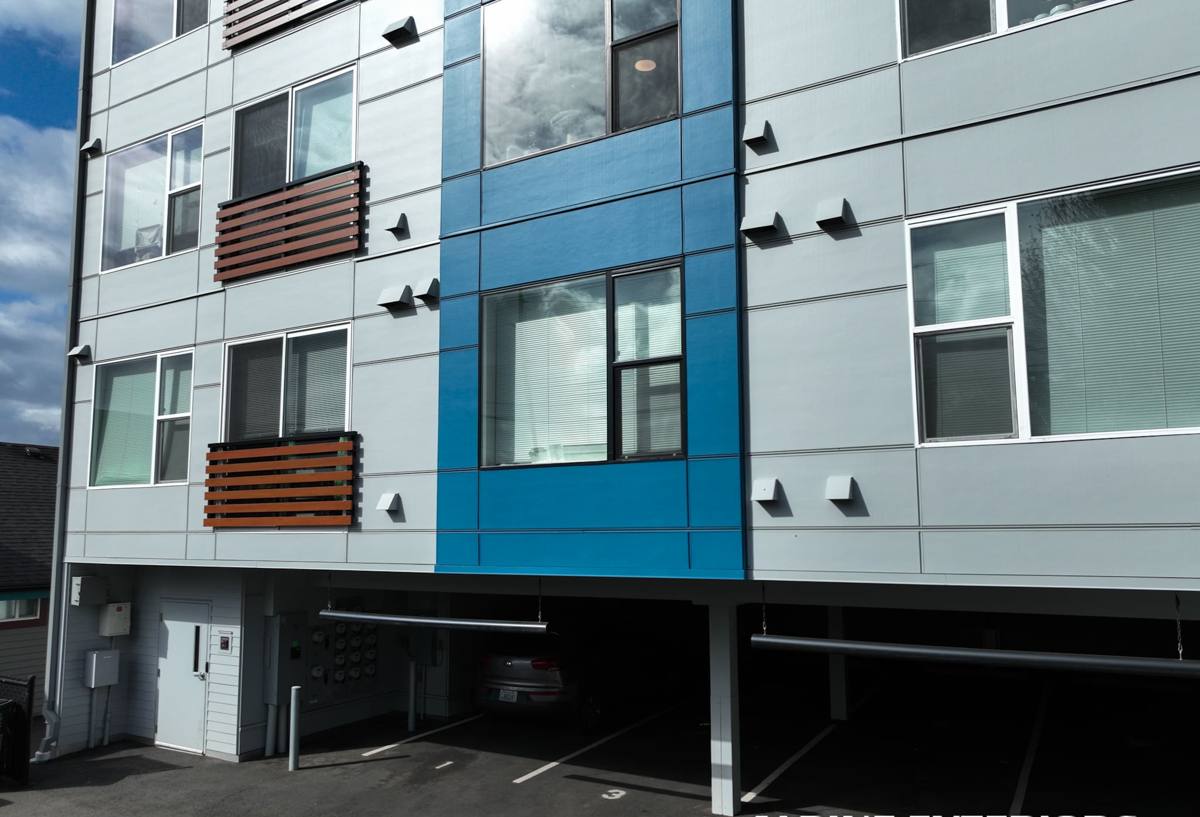
How Whatcom County's Climate Wears Down Siding
Driving Rain and Wind-Driven Moisture
Rain that falls straight down is manageable for almost any siding product. Rain that's pushed sideways by wind is a different problem — it finds gaps, works its way under laps, and tests every seam, joint, and penetration in the siding system. Over a wet Whatcom County winter, a home gets dozens of these events. Any weakness in the water-resistive barrier, flashing, or caulk joints gets exploited repeatedly.
Salt Air and Material Fatigue
Homes closer to Bellingham Bay and the surrounding coastal air get a slow, corrosive exposure that affects fasteners, trim, and paint finishes faster than an inland climate would. Cheaper coatings chalk, fade, and lose adhesion sooner. Fasteners that aren't rated for coastal exposure can corrode and streak the siding face.
Moss, Mildew, and Extended Dampness
Lynden's moss season isn't a two-month event — shaded walls, north-facing elevations, and areas near mature trees can stay damp for most of the year. Moss and mildew don't just look bad; they hold moisture against the siding surface and, on porous materials, accelerate rot and paint failure underneath.
Signs a Lynden Home Needs Siding Replacement
Not every siding problem calls for full replacement — sometimes a section repair or a repaint is enough. But certain signs mean the underlying material or installation has failed and patching won't hold:
- Soft, spongy, or crumbling siding when you press on it, especially near the bottom courses or under windows
- Paint that keeps failing within a couple of years no matter how often it's redone
- Visible gaps, warping, or buckling boards
- Persistent moss or black streaking that returns quickly after cleaning
- Bubbling, peeling, or discolored siding near roof lines, deck ledgers, or window trim — common entry points for water
- A musty smell or visible staining on interior walls that share an exterior wall with problem siding
- Siding that's original to a home built more than 20-25 years ago with no major exterior updates since
What Correct Siding Replacement Actually Involves
Siding is a system, not a single layer. Replacing it correctly means addressing every part of that system, not just what's visible from the street.
Tear-Off and Sheathing Inspection
Once the old siding comes off, we inspect the sheathing underneath for rot, soft spots, or prior water damage — problems that are invisible until the cladding is removed. Any compromised sheathing gets repaired or replaced before anything new goes on. Skipping this step is one of the most common ways a siding job fails early.
Water-Resistive Barrier and Flashing
A correctly lapped house wrap, properly integrated window and door flashing, and correctly detailed flashing at roof-to-wall transitions are what actually keep water out — the siding itself is the second line of defense, not the first. In a climate with as much driving rain as Whatcom County sees, this layer matters as much as the visible siding.
Fastening and Installation to Spec
Fastener type, spacing, and placement affect both how well siding resists wind-driven rain and how it holds up to coastal air over time. Manufacturer installation instructions exist for a reason, and shortcuts here — wrong nail type, incorrect gapping, missing caulk joints — tend to show up as callbacks within a few years.
Trim, Caulking, and Paint Finish
The details at corners, window and door trim, and butt joints are where most siding failures start. Correct caulking at the right joints (and no caulking at joints that need to breathe) plus a properly applied finish coat round out a job that's built to last, not just look good on installation day.
Comparing Siding Options for a Lynden Home
Homeowners in this area typically weigh a few materials when it's time to replace siding. Here's an honest comparison of how each holds up against Whatcom County's specific conditions:
| Material | Moisture Resistance | Maintenance in This Climate | Typical Lifespan |
|---|---|---|---|
| James Hardie fiber cement | Non-combustible, engineered to resist moisture damage; factory finish resists moss staining better than field-painted products | Occasional wash; ColorPlus finish reduces repainting cycles | Decades when installed to spec |
| Vinyl siding | Sheds water on the surface but seams and panels can allow moisture behind the cladding; can warp or crack in temperature swings | Low upfront maintenance, but damage often means full panel replacement | Variable; fades and becomes brittle over time |
| Primed wood (cedar/spruce) | Naturally moisture-sensitive; needs an intact, well-maintained paint film to perform | Highest ongoing maintenance — repainting, caulking, and moisture monitoring | Shorter without diligent upkeep |
| Engineered wood (LP SmartSide) | Resin-treated to resist moisture, but still wood-based and dependent on correct sealing at cut edges and joints | Moderate; edge sealing and joint maintenance are critical in wet climates | Good, but more installation-sensitive than fiber cement |
We install James Hardie fiber cement exclusively. It isn't the only siding product on the market, but for a climate that combines salt air, sustained rain exposure, and heavy moss pressure, it's the material we're willing to put our name behind. It's non-combustible, engineered specifically for regional climate conditions through Hardie's HZ product lines, and its factory-applied ColorPlus finish holds color and resists the staining that shortens the life of field-painted siding.
What Drives the Cost of a Siding Replacement
Every home is different, but the same handful of factors move the price up or down on most Lynden siding jobs:
| Factor | Why It Matters |
|---|---|
| Condition of existing sheathing | Hidden rot or water damage found during tear-off adds repair scope before new siding can go on |
| Home size and wall complexity | More corners, gables, and trim detail mean more labor and material cuts |
| Siding profile and accessories | Lap width, trim style, and accent details affect material cost |
| Access and site conditions | Multi-story sections, tight lot lines, or landscaping can affect staging and labor time |
| Scope of removal | Full tear-off versus siding over an existing layer (which we generally don't recommend) changes the timeline |
We'll walk your home, point out what we find, and give you real numbers before any work starts — not a rough guess and not a lowball figure meant to get a signature.
Our Siding Replacement Process
- On-site assessment — we inspect your current siding, trim, and any visible signs of moisture or damage, and talk through what we see
- Detailed estimate — a clear scope of work and pricing, with any sheathing risk areas flagged in advance where possible
- Tear-off and sheathing check — old siding removed, sheathing inspected and repaired as needed before moving forward
- Water-resistive barrier and flashing — house wrap and flashing installed and integrated correctly at every penetration
- Hardie siding installation — installed to manufacturer specification for fastening, gapping, and joint treatment
- Trim, caulking, and finish detail — the final details that determine how well the job holds up over time
- Final walkthrough — we go over the finished work with you before calling the job done
Why Hiring a Crew That Already Works in Lynden Matters
Siding installation isn't one-size-fits-all. A crew that regularly works Whatcom County homes already understands how local wind patterns push rain against walls, which elevations tend to hold onto moss the longest, and how coastal air affects fastener and trim choices over time. That local pattern recognition shows up in the details — where extra flashing attention pays off, which joints need to be sealed differently, and what a home in this specific climate needs to actually perform for decades rather than just look good on installation day.
It also means straightforward accountability. We're not a crew passing through the area for a single job — we're working on homes throughout this region on an ongoing basis, and we stand behind what we install here.
Get a Straightforward Estimate for Your Lynden Home
If your siding is showing its age, holding onto moss no matter how often it's cleaned, or just due for an honest look, we're glad to come take a look. Use the form below to request a free, no-pressure estimate — we'll assess your home's siding, explain what we find in plain terms, and give you real numbers to work with.