 Bellingham Roofing
 Roofing Built for Happy Valley's Climate
Happy Valley sits close enough to the water and tucked into enough tree cover that roofs here take a specific kind of beating. It's not one dramatic storm that wears out a roof in Bellingham — it's the steady grind of months-long wet seasons, salt-tinged air drifting in off Bellingham Bay, and moss that never really stops growing because it never really dries out. If you've owned a home in this neighborhood for more than a few years, you already know the pattern: shingles that look fine from the driveway but are quietly losing granules, gutters that back up every fall, and that green tint creeping across the north-facing slopes no matter how many times you clean it off.
We work on roofs in this part of Whatcom County every week, and Happy Valley's mix of older homes and newer infill construction means we see everything from original 1980s composition roofs to newer architectural shingle jobs that were installed without accounting for how much shade and moisture this area actually holds onto. Understanding that local pattern is most of what separates a roof that lasts its full warranty period from one that needs premature repair.
What Actually Wears Out Roofs Here
Moss and Organic Growth
Moss doesn't just sit on top of a roof looking bad — it holds moisture against the shingle surface and works its way under the tabs, lifting them over time. On lots with mature tree cover or north-facing roof planes that don't get much direct sun, moss growth can become a near year-round maintenance item rather than a once-a-year chore. Left unaddressed, it shortens the life of even a good-quality shingle roof by years.
Driving Rain and Wind-Driven Moisture
Bellingham doesn't get the volume of rain some parts of the Pacific Northwest see, but a good share of it arrives sideways during winter windstorms. That matters more than steady vertical rain because it pushes moisture up under shingle edges, around flashing, and into any gap that wouldn't be a problem in a calmer climate. Roof valleys, chimney flashing, and skylight seals take the brunt of it.
Salt Air and Material Fatigue
Proximity to the bay means a low but constant level of salt air exposure. It's not as aggressive as a true coastal environment, but over a couple decades it does accelerate corrosion on exposed metal — flashing, fasteners, gutter hardware — which is part of why we pay close attention to the metal components of a roofing system, not just the shingles themselves.
Temperature Swings and Freeze-Thaw
Whatcom County winters aren't brutally cold, but the freeze-thaw cycles that do happen are enough to stress any moisture that's already worked its way into a roofing system. A roof that's been quietly absorbing water all fall is the one most likely to show real damage after the first hard freeze.
Signs a Happy Valley Roof Needs Attention
- Dark streaking or thick moss growth, especially on north- or shade-facing slopes
- Granules collecting in gutters or at downspout outlets
- Shingles that look cupped, curled, or lifted at the edges
- Soft spots or sagging when walked on (do not walk your own roof to check this — call us instead)
- Water stains on interior ceilings, especially near chimneys, skylights, or where roof planes meet
- Daylight visible through the attic roof deck
- Rusting or loose flashing around vents, chimneys, and valleys
- Gutters overflowing during normal rain, not just downpours
Roof Replacement vs. Repair: How We Help You Decide
Not every roofing problem in this neighborhood needs a full tear-off. A lot of what we see is targeted damage — a failed flashing seal, a section of moss-damaged shingles, a gutter system that's letting water back up under the roof edge. We'll always tell you honestly when a repair is the right call versus when you're better off putting that money toward a full replacement.
| Situation | Usually Repair | Usually Replacement |
|---|---|---|
| Roof age | Under 15 years | Approaching or past manufacturer lifespan |
| Damage pattern | Isolated to one area or slope | Widespread granule loss, curling, or moss damage |
| Leak history | First occurrence, clear source | Recurring leaks in multiple spots |
| Decking condition | Solid, no soft spots | Soft, spongy, or visibly rotted |
| Cost over time | Repair cost is a small fraction of replacement | Repairs are stacking up year over year |
We'll get on the roof, look at the decking where accessible, check flashing and ventilation, and give you a straight answer — not an upsell.
Materials That Hold Up in This Climate
We install a range of roofing systems, and the right one depends on your home's slope, sun exposure, and budget. In a neighborhood like Happy Valley, where moss and moisture retention are the biggest long-term threats, a few things matter more than they might in a drier climate:
- Algae-resistant shingles — many architectural shingles now come with copper or zinc granules built in specifically to slow moss and algae growth. Given how much shade cover this area has, we generally recommend this upgrade over standard shingles.
- Proper attic ventilation — a roof can only shed the moisture that condenses underneath it if the attic is actually venting correctly. Poor ventilation is one of the most common hidden causes of premature roof failure we find on older Bellingham homes.
- Metal flashing quality — given the salt air exposure, we use flashing and fasteners rated to hold up over the long term rather than the cheapest option available, since this is one of the harder components to replace without disturbing the surrounding shingles.
- Ice-and-water shield in valleys — even without heavy snow, valleys are where wind-driven rain concentrates, so extra underlayment protection there pays off.
Beyond the Roof: Siding, Windows, and Decks
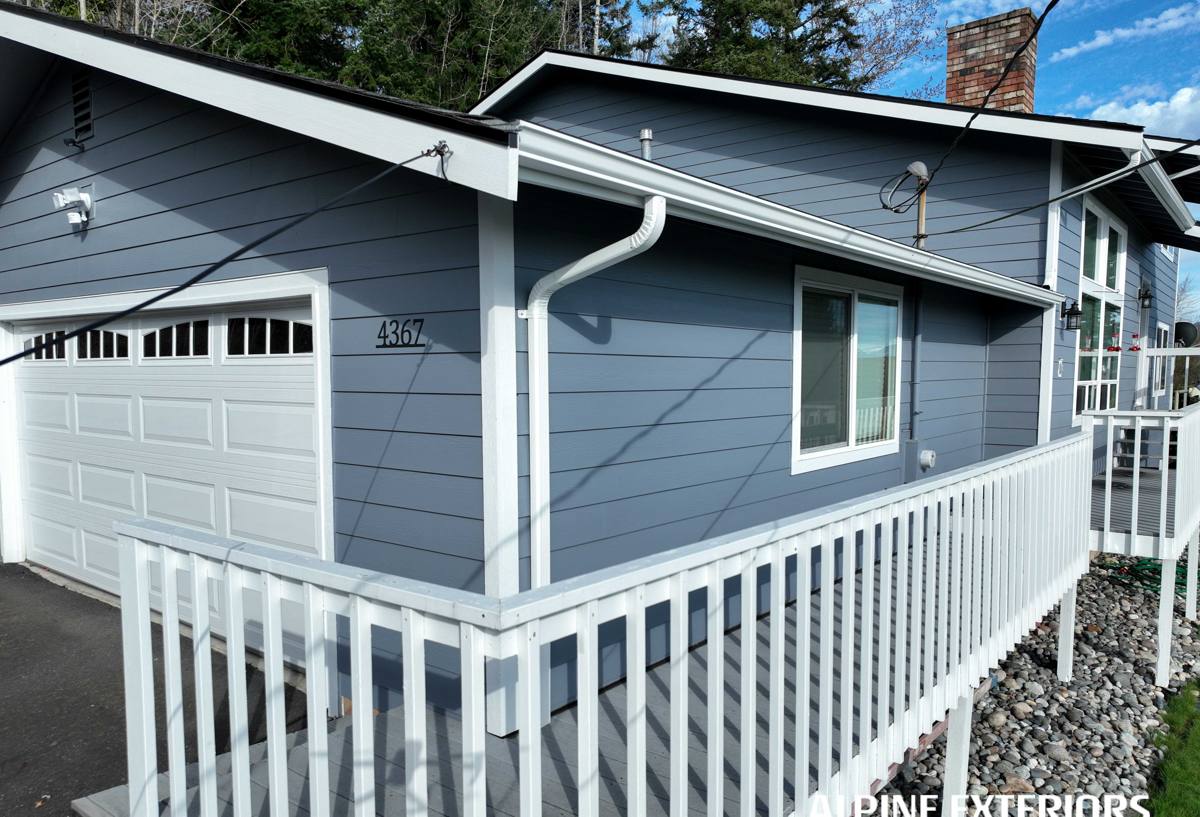
Roofs don't fail in isolation — the same moisture and salt air that wear out shingles are working on your siding, window seals, and any exterior deck framing at the same time. We handle all four because they're connected: a leaking roof can damage siding and interior walls before you ever see the roof problem itself, and failing window flashing can mimic a roof leak and send you looking in the wrong place. When we're on-site for a roofing estimate in Happy Valley, we'll flag anything we notice on siding, trim, or decking too — no extra charge for telling you what we see.
Siding in a Wet, Shaded Neighborhood
Siding in this part of Bellingham deals with the same moisture retention issues as roofing, particularly on shaded sides of the home where things simply don't dry out as fast. Caulking failure, trim rot, and moisture intrusion behind siding panels are common enough that we check for them as a matter of course.
Windows and Moisture Control
Older windows with failed seals let moist air in and fog between panes — an easy thing to ignore until it's affecting your energy bills or causing interior condensation. In a climate this damp, window flashing detail matters as much as the window unit itself.
Decks Facing Year-Round Exposure
Decks here don't get a dry season to fully recover in. Ledger board attachment, flashing at the house connection, and fastener corrosion are the areas we check most closely, since those are the failure points that cause the most damage if missed.
Why a Local Crew Matters
Roofing companies that aren't based in Whatcom County tend to apply a generic playbook — the same shingle spec and ventilation approach they'd use in a drier climate. We're out in Bellingham neighborhoods like Happy Valley regularly enough to know which slopes hold moss, which older subdivisions had ventilation shortcuts taken during original construction, and what actually needs upgrading versus what's fine as-is. That local pattern recognition is worth more than any generic estimate.
We're also here for warranty follow-up and future maintenance, not just a one-time install. If a repair issue shows up two winters from now, you're calling a company that's still local and still accountable, not tracking down an out-of-town crew.
What to Expect From an Estimate
- An on-roof inspection, not just a look from the ground or a satellite photo
- A clear explanation of what's driving any current damage — moss, ventilation, flashing, age, or a combination
- An honest repair-vs-replace recommendation
- A written estimate with material options explained, not just one default package
- No pressure to decide on the spot
If you're noticing moss buildup, granule loss, or a leak that's shown up more than once, it's worth having a local set of eyes on it before it turns into a bigger repair. Reach out for a free, no-pressure estimate — we'll take a look, tell you honestly what we find, and go from there.