 Bellingham Roofing
 Birch Bay's Exterior Is Fighting Salt Air Every Single Day
Birch Bay sits right on the water, and that changes what a roof, a wall of siding, or a set of windows has to deal with compared to a home a few miles inland in Bellingham or Ferndale. Homes closer to the shoreline take on salt-laden air almost constantly, and that salt doesn't just sit on the surface — it works its way into fasteners, flashing seams, and any exposed metal on the exterior. Add in wind-driven rain coming straight off the water and a moss season that runs longer here than in drier parts of Whatcom County, and you've got a combination that wears out the wrong materials fast.
We're not a national franchise sending a crew through once and moving on. Bellingham Roofing Co works this whole corner of Whatcom County, and Birch Bay's waterfront exposure is something we plan for specifically — not something we discover after a job goes wrong.
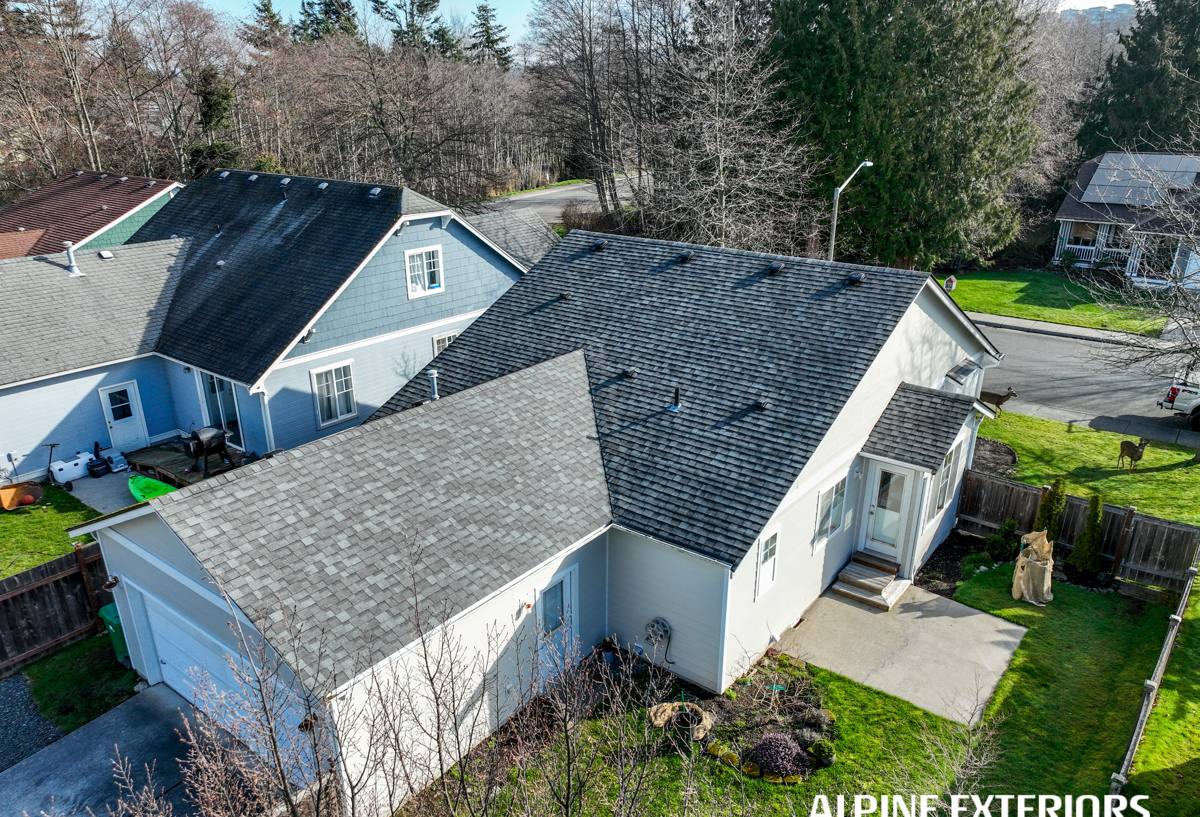
What Coastal Exposure Actually Does to a House
Corrosion Where You Can't See It
Salt air accelerates corrosion on anything metal — nails, screws, flashing, gutter hangers, even the fasteners holding trim boards on. On a standard inland roof, galvanized fasteners might hold up fine for decades. Closer to Birch Bay's shoreline, that same hardware can start showing rust and weakness years earlier. The failure usually isn't dramatic; it's a slow loosening of flashing or a fastener that backs out, and water finds its way in long before anyone notices from the ground.
Wind-Driven Rain Finds the Gaps
Rain that comes in sideways off the bay behaves differently than a straight-down downpour. It gets pushed up under shingle laps, into siding seams, and around window and door trim that would shed water fine in calmer conditions. This is why flashing detail and proper lap direction matter more here than in a sheltered inland lot — the margin for error is smaller.
A Longer Moss Season
Whatcom County's damp, mild climate supports moss growth most of the year, and shaded, moisture-holding roof sections in Birch Bay — especially north-facing slopes or areas under tree cover — tend to hold onto moss longer than sunnier, more exposed roofs elsewhere. Moss isn't just cosmetic. It holds moisture against the roofing material, lifts shingle edges as it grows, and can shorten the life of a roof that would otherwise perform well for years longer.
Roofing Built for This Environment
When we work on a Birch Bay roof, we're not just matching what's already there — we're looking at how it's held up against salt, wind, and moisture, and building the replacement or repair to do better.
- Corrosion-resistant fasteners and flashing appropriate for coastal exposure, not just whatever meets minimum code inland
- Extra attention to flashing details at valleys, chimneys, and roof-to-wall transitions, since these are the first places wind-driven rain tests a roof
- Ventilation checks, since trapped moisture under a roof deck compounds every other problem salt air and rain create
- An honest look at moss and algae staining, with treatment recommendations that address the moisture cause, not just a one-time cleaning
We install and repair asphalt composition roofing, metal roofing, and other systems suited to Pacific Northwest coastal conditions, and we'll tell you plainly which option fits your home, your budget, and how close you are to the water — not just push whatever's easiest to sell.
Siding That Can Handle Salt Air and Constant Moisture
Siding on a Birch Bay home does two jobs at once: it has to shed a lot of water, and it has to hold up to salt exposure without the finish degrading early. We install and repair fiber cement, engineered wood, and vinyl siding systems, and we size the recommendation to the home's actual exposure — a house set back from the water with tree cover faces different demands than one facing the bay directly.
Why We're Selective About Certain Products Near the Water
Some siding materials that perform well inland are more sensitive to installation quality in a high-moisture, salt-air setting — moisture behind the cladding, caulk joints that need more frequent attention, or finishes that fade or chalk faster under constant damp and salt exposure. Our standard is to flag those trade-offs upfront so you're choosing with full information, not finding out five years in that a product needed more maintenance than expected for this location.
Windows and Doors: The Weakest Point in a Coastal Wall
Every window and door is a seam in your building envelope, and seams are where wind-driven rain and salt-laden condensation cause the most trouble. In Birch Bay, we pay close attention to:
- Proper flashing integration with siding so water is directed out, not trapped behind the window frame
- Weatherstripping and sealant condition, since coastal humidity and temperature swings break down seals faster than in drier inland areas
- Hardware and frame materials that resist corrosion rather than just looking finished on installation day
- Condensation patterns, which can signal a failing seal or inadequate ventilation before a bigger moisture problem develops
If your windows are original to an older Birch Bay home, we can assess whether repair, re-sealing, or full replacement makes more financial sense — we won't push a full replacement job if a targeted repair solves the actual problem.
Decks: Built to Take the Weather Head-On
A deck in Birch Bay is exposed to everything at once — salt air, standing moisture from long rainy stretches, UV from open sky over the water, and freeze-thaw cycles in winter. We build and repair decks with attention to:
- Fastener and hardware selection rated for coastal, high-moisture exposure
- Proper drainage and ledger flashing so water doesn't sit against the house structure
- Decking material choice — wood versus composite — weighed honestly against your maintenance appetite and budget, not a one-size answer
- Railing and structural connections checked for the corrosion that coastal air accelerates over time
Comparing Exterior Materials for Coastal Exposure
| Component | Coastal Consideration | What We Watch For |
|---|---|---|
| Roofing fasteners & flashing | Salt-accelerated corrosion | Rust streaking, loosened flashing, early fastener failure |
| Siding finish | Constant moisture and salt exposure | Fading, chalking, seam gaps, caulk breakdown |
| Window seals | Humidity and temperature swings | Condensation between panes, drafts, soft frame edges |
| Deck hardware | Open exposure plus moisture | Corroded fasteners, loose railing connections |
| Shaded roof sections | Extended moss season | Moisture retention, lifted shingle edges, granule loss |
Why a Local Crew Matters More Here Than Most Places
Whatcom County has microclimates within a few miles of each other — a home tucked inland near Bellingham can dry out and age very differently than one facing open water in Birch Bay. A crew that only works one part of the county, or a traveling contractor unfamiliar with this specific stretch of coastline, is more likely to spec the same materials and details everywhere. We work across this region regularly enough to know that a Birch Bay roof or siding job needs different attention to flashing, fasteners, and finish than a similar job a few miles inland — and we build our recommendations around that, not around a generic playbook.
What This Means for Maintenance Timelines
Because of the added exposure, we generally recommend Birch Bay homeowners inspect roofing, siding, and deck hardware somewhat more often than a strictly inland property would need — catching a corroding fastener or a failing seal early is far cheaper than repairing water damage after it's had time to spread into framing or sheathing. We're happy to walk a homeowner through what to watch for between professional inspections, since most early warning signs are visible without needing to get on a ladder.
- Check for granule buildup in gutters or downspouts after storms — a sign of accelerated roof wear
- Look for streaking or rust trails below flashing and fasteners
- Note any new moss growth on shaded roof slopes before it spreads
- Watch for soft spots or discoloration around window and door trim
- Inspect deck fasteners and railing connections annually for looseness or corrosion
Get an Honest Look at Your Birch Bay Home
Whether you're dealing with a roof that's showing its age, siding that's taking on more moisture than it should, windows that fog between the panes, or a deck that needs an honest assessment, we'll come out, look at the actual conditions your home is facing, and give you a straight recommendation — not an upsell. Reach out for a free, no-pressure estimate using the form below.