 Bellingham Roofing
 Birch Bay's Climate Is Rougher on a Roof Than It Looks
Birch Bay sits right on the water, and that changes what a roof has to deal with compared to homes a few miles inland in Bellingham. The combination of salt-laden air off the Strait of Georgia, near-constant wind, and driving rain that comes in sideways rather than straight down puts real stress on roofing materials, fasteners, and flashings. Add in a moss season that can stretch from fall through spring under the Pacific Northwest's persistent cloud cover and moisture, and you've got a roof environment that punishes anything installed with shortcuts.
Asphalt shingles in this setting tend to show their age faster than they would in a drier, calmer climate — granule loss from wind-driven rain, moss establishing itself in shaded valleys, and edges that lift after repeated freeze-thaw and wet-dry cycling. Metal roofing, installed correctly, handles all three of these stressors better than most alternatives, which is a big part of why we see more homeowners in Birch Bay asking about it.
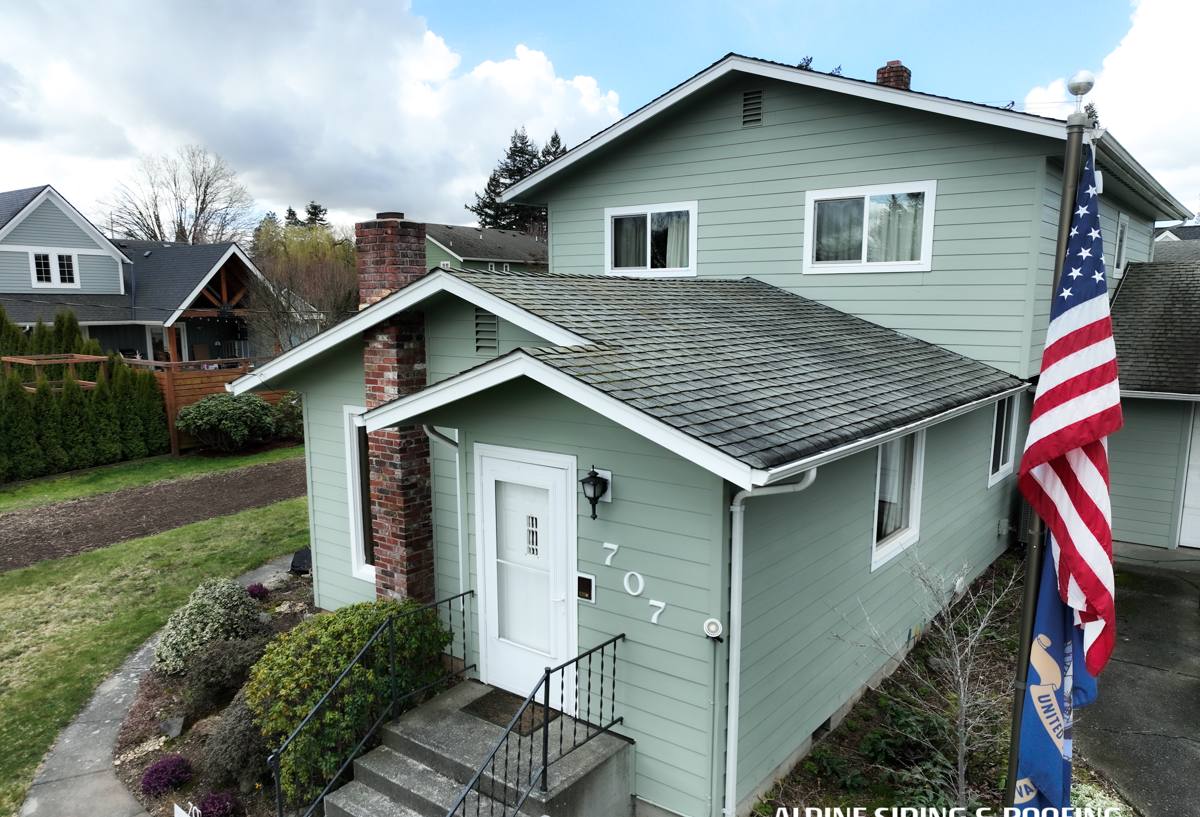
Why Metal Roofing Makes Sense for a Birch Bay Home
Metal roofing isn't the right fit for every house or every budget, but for waterfront and near-waterfront properties in Birch Bay, the case for it is straightforward:
- Wind performance: Properly fastened metal panels resist uplift far better than shingles in the gusty conditions common along this stretch of coastline.
- Moss resistance: Metal doesn't give moss and lichen the same foothold that shingle granules do, which matters given how long moss season runs here.
- Rain-shedding: A steep-slope metal system with correctly lapped panels sheds wind-driven rain more reliably than a shingle roof where wind can drive water up and under the tabs.
- Longevity: A well-installed metal roof commonly outlasts two or more shingle roof cycles, which matters if you don't want to be back on the roof deck again in 15-20 years.
None of that means metal is maintenance-free or immune to the coastal environment — it isn't. It means metal, done right, holds up to this specific climate better than the alternatives, provided the materials and installation account for the salt air.
Salt Air and Corrosion: What Changes Near the Water
The biggest mistake we see in coastal metal roofing isn't the panel choice — it's the fasteners, flashing, and cut edges. Salt air accelerates corrosion at any point where bare metal is exposed or where dissimilar metals touch each other. That means:
- Fasteners need corrosion-resistant coatings rated for coastal exposure, not the standard-grade screws used further inland.
- Cut panel edges should be sealed or protected rather than left exposed to salt spray.
- Flashing, trim, and fastener metal need to be compatible with the panel metal — mixing incompatible metals in a salt environment invites galvanic corrosion at the contact points.
- Panels should be rinsed periodically (rain does most of this naturally, but overhangs and sheltered areas may need occasional attention) to keep salt film from concentrating.
This is the kind of detail that separates a metal roof that looks good for 40 years from one that starts showing rust streaks at year eight.
Panel Types and Finishes: What We're Actually Comparing
"Metal roofing" covers a range of products, and the right one depends on the home's style, budget, and how exposed the site is to wind and salt spray.
| Type | Best For | Coastal Considerations |
|---|---|---|
| Standing seam (concealed fastener) | Waterfront and higher-exposure sites | No exposed fastener heads for salt air to attack; best wind uplift performance |
| Exposed-fastener panel | Budget-conscious projects, outbuildings, shops | Lower upfront cost, but fastener gaskets and coatings need periodic attention in salt air |
| Steel with premium coating | Most residential roofs | Strong, cost-effective; coating quality matters more here than inland |
| Aluminum | Sites with heavier salt exposure | Naturally corrosion-resistant, doesn't rust; often preferred right along the waterline |
We'll walk through these trade-offs with you honestly rather than push whatever's easiest to install. A shop roof set back from the water doesn't need the same spec as a home sitting exposed to direct wind off the water.
What a Correct Metal Roof Installation Actually Involves
Metal roofing punishes bad installation more visibly than shingles do — a poorly flashed valley or an under-fastened panel edge in a wind event isn't subtle. A correct job involves:
Deck and Underlayment
The roof deck gets inspected and repaired before anything goes down, and a high-temp, self-adhering underlayment goes over it — this is the layer that protects the structure if wind ever drives rain past the metal at a seam or fastener.
Fastening and Panel Layout
Panel layout accounts for prevailing wind direction, and fastening patterns are tightened up at eaves, ridges, and rakes — the edges where uplift forces concentrate first in a coastal wind event.
Flashing and Penetrations
Every valley, wall transition, vent pipe, and chimney gets custom-fabricated flashing rather than generic off-the-shelf boots, because generic flashing is the single most common source of roof leaks we find on service calls — metal or otherwise.
Ventilation
Metal roofs need proper intake and exhaust ventilation to manage condensation on the underside of the panels. Skipping this is a common cause of hidden moisture problems that have nothing to do with the roof surface itself.
Our Process, Start to Finish
- On-site inspection: We look at the existing roof, deck condition, ventilation, and site exposure — waterfront and near-waterfront Birch Bay lots get evaluated for wind and salt exposure specifically.
- Honest options, not a hard sell: We'll tell you where metal is worth the investment and where it isn't, based on your home and budget.
- Written scope and materials: Panel type, gauge, fastener spec, flashing details, and warranty terms are all documented before work starts — no surprises mid-job.
- Tear-off and deck repair: Old roofing comes off, the deck is inspected, and any rot or damage is repaired before new material goes down.
- Installation: Underlayment, panels, flashing, and ventilation are installed to spec, with attention to the coastal-specific fastener and flashing details covered above.
- Cleanup and walkthrough: Site is cleaned of debris and fasteners, and we walk the finished roof with you before calling the job done.
Maintaining a Metal Roof in a Coastal Environment
Metal roofing needs less maintenance than shingles, but "less" isn't "none," especially this close to the water. A simple annual routine goes a long way:
- Clear debris from valleys and gutters before the fall rains — trapped organic matter holds moisture against the panel and is where moss gets its start.
- Check sealant at penetrations and flashing points; sealants age faster in UV and salt exposure than the metal itself.
- Look for any early rust bloom at cut edges or fastener heads and address it before it spreads.
- Confirm gutters and downspouts are directing water away from the foundation, especially during Whatcom County's wetter months.
- After any major windstorm, a quick visual check for lifted panel edges or loosened fasteners is worth the ten minutes.
What Metal Roofing Costs to Consider in Birch Bay
Exact pricing depends on roof size, pitch, panel type, and site access, but the factors that move the number most in this area are worth knowing upfront:
| Cost Factor | Why It Matters Here |
|---|---|
| Panel/coating grade | Coastal-grade coatings and fasteners cost more but avoid early corrosion near the water |
| Standing seam vs. exposed fastener | Concealed-fastener systems cost more upfront but need less long-term fastener maintenance |
| Roof complexity | Valleys, dormers, and multiple penetrations add flashing labor regardless of panel type |
| Tear-off vs. overlay | Full tear-off costs more but lets us inspect and repair the deck — usually the right call on older homes |
| Site access | Waterfront lots with limited staging area can affect crew time and material handling |
We give straight numbers based on your actual roof, not a generic per-square estimate that changes once we're up there.
Why It Matters to Hire a Crew That Already Works in Birch Bay
A roofing crew that mostly works dry, sheltered, inland jobs doesn't always think about fastener coatings, dissimilar-metal contact, or wind-loading the way a crew that regularly works the Birch Bay waterfront does. We're a Bellingham-based, Whatcom County crew, and the coastal details covered here — corrosion-resistant fasteners, proper metal compatibility, wind-conscious fastening patterns, and flashing built for wind-driven rain — aren't an upsell to us. They're just what a correct job looks like out here.
If you're weighing metal roofing for a Birch Bay home, we're glad to come take a look and give you a straightforward read on what your roof actually needs. Reach out for a free, no-pressure estimate using the form below.