 Bellingham Roofing
 Blaine's Coastline Climate Is a Different Kind of Hard on a Roof
Blaine sits right on the water at the northwest corner of Whatcom County, and that location shapes everything about how a roof ages here. Homes close to the shoreline deal with salt-laden air that settles on metal fasteners, flashing, and vents year-round. Add in wind-driven rain that comes in sideways off the water during winter storms, and a long, shaded, damp season that lets moss and moisture-loving growth take hold on north-facing slopes — and you've got a climate that punishes any shortcuts taken during installation.
A roof that would perform fine in a drier inland town can fail early in Blaine if it wasn't built with this specific exposure in mind. That's not a knock on any particular product — it's just the reality of installing roofs a few blocks from saltwater with Pacific storms rolling through most of the year.
What "Coastal Wear" Actually Looks Like
On older or poorly installed roofs in this area, we typically see a few consistent patterns: corroded or rusting fasteners and flashing well before their expected service life, moss colonies established in shaded valleys and north slopes, soft or delaminating decking under areas where wind-driven rain worked past aging flashing, and granule loss on shingles that were left without adequate ventilation underneath. None of these are mysteries — they're the predictable result of installing standard materials without adjusting for salt exposure, wind uplift, and moisture control.
What a Correct New Roof Installation Involves in Blaine
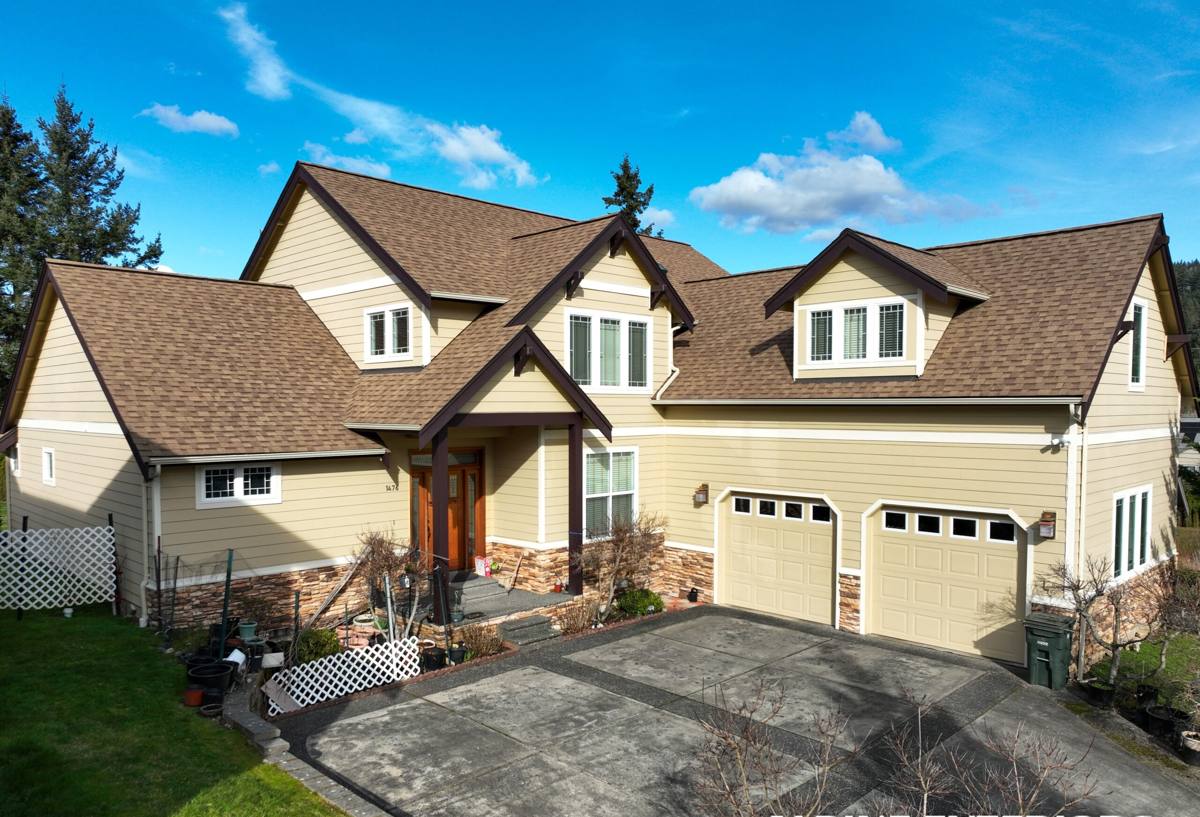
A new roof is more than laying down shingles or panels. In a coastal, high-moisture area like this, the parts you don't see matter as much as the parts you do.
Full Tear-Off and Deck Inspection
We remove the old roofing down to the deck rather than layering over it. That's the only way to actually see the plywood or OSB underneath, check for soft spots or rot from long-term moisture intrusion, and replace any damaged sections before new material goes down. Covering over a compromised deck just hides a problem that will surface again.
Underlayment Built for Wind-Driven Rain
Standard felt underlayment is not enough for a home exposed to sideways rain off the water. We use synthetic or self-adhered underlayment in the field, and self-adhered membrane at eaves, valleys, and any low-slope transitions, so that water forced under the roof covering by wind still has a sealed barrier to stop it.
Flashing and Fastener Selection for Salt Exposure
Flashing at chimneys, skylights, walls, and valleys is where most premature failures start near the coast, because standard galvanized metal corrodes faster in salt air. We select corrosion-resistant flashing and fasteners appropriate to the home's proximity to the water, and we form and seal every transition rather than relying on caulk as a primary seal.
Ventilation Sized to Fight Moisture and Moss
A roof deck that can't breathe traps moisture, and trapped moisture is what feeds both rot and moss growth. We calculate intake and exhaust ventilation for the actual attic space rather than guessing, so the deck stays dry from underneath even during the wettest stretch of a Pacific Northwest winter.
Choosing a Roofing Material for a Blaine Home
There isn't one "best" roofing material for every home — it depends on the home's exposure, roof pitch, budget, and how long the owner plans to stay in the house. Here's how the common options stack up against the specific stresses this area creates.
| Material | Salt air / corrosion behavior | Moss resistance | Wind performance | Typical lifespan here |
|---|---|---|---|---|
| Architectural asphalt shingle | Good with proper flashing metal; fasteners matter | Moderate — benefits from zinc/copper strips and clean valleys | Good with correct nailing pattern and rated shingle | 20-30 years |
| Standing seam metal | Excellent when coated/finished for coastal use | Very good — sheds moisture quickly, little surface to hold moss | Excellent, very high wind ratings | 40-60+ years |
| 3-tab asphalt shingle | Fair — thinner profile, more exposed fastener area | Lower — flatter profile holds moisture longer | Lower wind rating than architectural shingles | 15-20 years |
| Composite/synthetic shake | Good, depends on manufacturer coating | Moderate to good depending on profile | Good | 30-50 years |
We'll walk through these trade-offs with you directly rather than pushing one product for every roof. A steep, shaded, north-facing roof close to the water has different needs than a sunny, low-pitch roof set back from the shoreline, even on the same street.
Moss: Prevention Beats Removal
Blaine's combination of tree cover, marine humidity, and long overcast stretches makes moss close to unavoidable on shaded slopes over time — but a new roof done right slows it dramatically and makes it easy to manage.
- Zinc or copper control strips installed near the ridge on moss-prone slopes, which release trace metals with rainfall that inhibit growth
- Clean, properly lapped shingle or panel courses with no low spots where debris and moisture can collect
- Adequate ventilation so the deck and shingle underside dry out between rain events instead of staying damp
- Gutters and valleys clear of overhanging branches and debris, since trapped organic matter is what moss actually feeds on
None of this makes a roof moss-proof forever, but it's the difference between light surface growth that a homeowner can manage and the kind of established moss mats that lift shingles and hold moisture against the deck.
Our New Roof Installation Process
- On-site evaluation — we inspect the existing roof, deck condition, ventilation, and the home's specific wind/salt exposure before recommending anything.
- Material and system recommendation — we go over material options, expected lifespan for this location, and a written scope so you know exactly what's included.
- Tear-off and deck repair — old roofing comes off, the deck is inspected board by board, and any damaged sections are replaced.
- Underlayment and flashing installation — synthetic or self-adhered underlayment, corrosion-resistant flashing, and sealed transitions at every penetration.
- Roofing material installation — installed to manufacturer specification and rated for the wind exposure of your specific site.
- Ventilation confirmation — intake and exhaust checked and adjusted as needed for the finished system.
- Final walkthrough — we go over the completed roof with you, including care and maintenance specific to your material and exposure.
What Affects the Cost of a New Roof in Blaine
Every roof is priced from an actual on-site evaluation, but a few factors consistently move the number more than others in this area:
| Cost factor | Why it matters here |
|---|---|
| Roof pitch and complexity | Steep or cut-up roofs with multiple valleys take longer and use more flashing and underlayment |
| Deck condition | Rot from long-term moisture intrusion means plywood/OSB replacement before new material goes down |
| Material choice | Metal and higher-grade architectural shingles cost more upfront but hold up longer against salt air and wind |
| Ventilation upgrades | Homes with inadequate intake/exhaust often need vent additions as part of the job, not just new roofing |
| Wind exposure of the site | Homes with direct, unshielded exposure to the water may call for higher wind-rated materials and fastening patterns |
As a broad range, a full tear-off and replacement on an average single-family home typically runs from the low five figures into the high five figures depending on size, pitch, material, and how much deck repair is needed. We'll give you a firm, itemized number after we've actually looked at your roof — not a phone estimate.
Why It Matters That a Crew Already Works in Blaine
A roof installed by a crew unfamiliar with this stretch of coastline is more likely to miss the details that matter here — using standard fasteners where corrosion-resistant ones were called for, underestimating wind exposure on an open lot near the water, or skipping moss-prevention details because they're not routine inland. A crew that regularly works Blaine and the surrounding Whatcom County coastline already knows which slopes need extra ventilation, which sites need higher wind ratings, and how to detail flashing so it holds up against salt air instead of failing in a few years.
That local familiarity also means a faster, more accurate estimate — we're not learning this climate on your roof.
Protecting Your New Roof Once It's Installed
A properly installed roof still benefits from basic upkeep, especially in this climate:
- Have gutters cleared at least twice a year, more often if the property has overhanging trees
- Keep branches trimmed back from the roofline to reduce shade, debris, and moss-feeding organic matter
- Schedule a visual inspection after major windstorms, particularly if you noticed missing granules or debris in the yard
- Address any moss at first sight with gentle, roof-safe treatment rather than pressure washing, which can strip granules and shorten shingle life
- Watch for any interior signs of moisture — a stain on a ceiling or in an attic is worth a prompt roof check, not a wait-and-see
If you're planning a new roof for a Blaine home, we're glad to come take a look and give you a straightforward, no-pressure estimate — including an honest read on what your specific roof and exposure actually need. Use the form below to get started.