 Bellingham Roofing
 Why South Hill Decks Wear Out Faster Than You'd Expect
If you live in South Hill, you already know the drill: a few dry weeks in summer, then months of steady moisture that never really lets a deck dry out underneath. Bellingham's proximity to the water means salt-laden air is a constant, low-grade stress on any exposed metal — fasteners, joist hangers, railing hardware. Add in Whatcom County's driving rain, which doesn't just fall straight down but gets pushed sideways into ledger boards and gaps between decking, and you've got a structure that's working against the weather every single day of the year.
Then there's moss. South Hill's mix of mature tree cover and steady humidity gives moss and algae exactly what they need to take hold on any horizontal wood surface that doesn't dry quickly. Once moss establishes itself on a deck, it holds moisture against the boards constantly, which accelerates rot from the top down — not just the underside issues homeowners usually watch for.
None of this means decks in this neighborhood are doomed. It means they need to be built and replaced with these specific conditions in mind, not with generic techniques that might work fine somewhere drier.
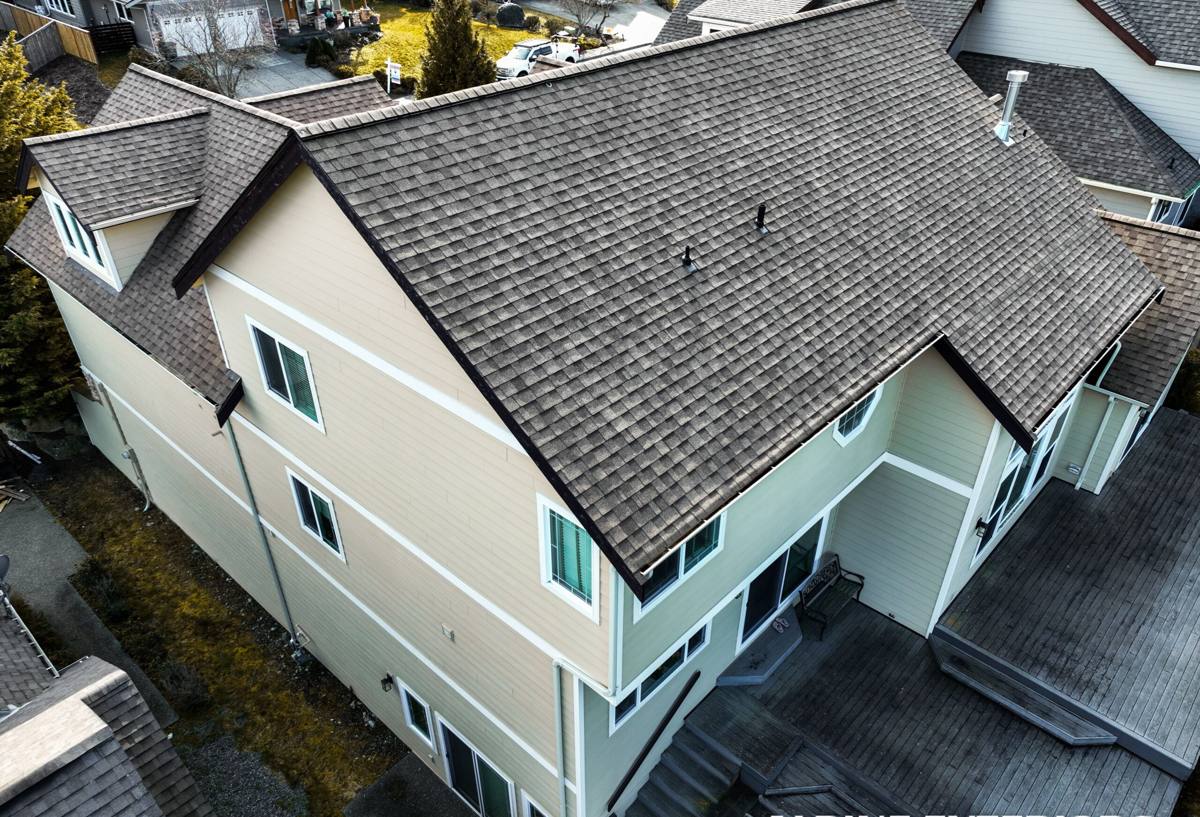
Signs Your Deck Needs Replacement, Not Another Repair
A lot of decks get patched for years past the point where patching still makes sense. Here's what tells us a full replacement is the honest recommendation instead of another round of board swaps:
- Soft or spongy spots when you walk across the decking, especially near the house
- Visible rot or dark staining at the ledger board where the deck attaches to the house
- Rusted, corroded, or backed-out fasteners and joist hangers
- Noticeable sag or bounce in the frame, not just the surface boards
- Persistent moss or algae staining that keeps coming back after cleaning
- Railings or stair stringers that feel loose or flex under weight
- Gaps between boards that have widened well beyond their original spacing
If you're only seeing surface graying or a few worn boards, repair is often the right call. It's when the framing, ledger, or fasteners are compromised that replacement becomes the safer and more cost-effective path — patching structural problems just delays the real fix and adds cost on top of cost.
Why This Matters More on an Elevated Deck
South Hill's terrain means a fair number of decks sit well above grade to work with sloped lots. A structural failure on a deck that's a few feet off the ground is a nuisance. On an elevated deck, it's a safety issue. We treat any sign of ledger or framing deterioration on a raised deck as a priority, not a wait-and-see item.
What a Correct Deck Replacement Actually Involves
Tearing out old decking and screwing down new boards over the same frame is not a deck replacement — it's a resurfacing, and it leaves the parts most likely to fail untouched. A proper replacement addresses the structure from the house connection down.
Ledger Board and Flashing
The ledger board — where the deck bolts into the house — is the single most common point of water intrusion and structural failure we find. Proper flashing here means water is directed away from the house framing, not trapped against it. This is also the connection point that carries the most structural load on most residential decks, so it has to be both watertight and mechanically sound. We don't consider a deck replacement complete unless this connection is done right, even when it means more work than just resurfacing.
Framing, Fasteners, and Hardware
Modern pressure-treated lumber uses chemical preservatives that can corrode standard steel fasteners over time — a problem that's made worse, not better, by the salt air common in coastal Whatcom County. We use fasteners and joist hangers rated for both treated lumber and coastal exposure, which costs more up front than standard hardware but avoids the premature corrosion that shows up as rust streaks and loosening connections a few years down the road.
Footings and Support
Footing depth and placement need to match the soil conditions and load the deck will actually carry, not just meet the bare minimum. On sloped South Hill lots this sometimes means additional footings or different post placement than the original deck had, especially if the original build cut corners.
Choosing Decking Material for South Hill's Conditions
There's no single "best" decking material — the right choice depends on how much upkeep you want to do and how the deck will be used. Here's how the common options hold up against the moisture and moss pressure typical of this area:
| Material | Moisture & Moss Resistance | Maintenance | Typical Lifespan |
|---|---|---|---|
| Pressure-Treated Wood | Moderate — needs sealing to perform well | Annual cleaning and periodic resealing | 10–15 years with upkeep |
| Cedar | Good natural resistance, but surface still needs care | Regular cleaning, occasional staining | 15–20 years with upkeep |
| Composite | Strong — resists rot, less prone to holding moss | Periodic washing, no sealing/staining | 20–30 years |
| PVC / Capped Composite | Very strong — fully resists moisture absorption | Occasional washing only | 25+ years |
Wood decking can absolutely work here, but only if the homeowner is realistic about the maintenance schedule — skipping a year of sealing in this climate shows up fast as graying, cupping, and moss growth. Composite and PVC products cost more initially but trade ongoing maintenance for upfront durability, which is why we see more homeowners in this area shifting toward them for full replacements rather than repeat wood rebuilds.
Our Deck Replacement Process
We keep the process straightforward and communicate at each stage so there are no surprises about timeline or scope:
- On-site assessment of the existing deck, ledger connection, and house framing behind it
- Written scope and estimate covering materials, structural work, and any permit needs
- Full removal of the old deck, including hardware and any compromised ledger material
- Inspection of the house framing behind the ledger before anything new goes up
- New framing, ledger flashing, and footings installed to current structural standards
- Decking, railing, and stair installation per your material choice
- Final walkthrough so you can see the finished work and ask questions before we consider the job done
Timelines vary with size and complexity, but most South Hill deck replacements move quickly once material is on-site — the framing and flashing work is where care matters most, and we don't rush that part regardless of schedule pressure.
Permits and Code Requirements
Most deck replacements in Bellingham and unincorporated Whatcom County require a permit, particularly when the deck is attached to the house or elevated above a certain height. Requirements typically cover ledger attachment, footing depth, guardrail height, and stair geometry. We handle the permit filing and coordinate inspections as part of the job — it's not an extra homeowners need to chase down themselves, and skipping this step can create problems later when selling the home or filing an insurance claim.
Cost Factors to Expect
Every deck is different, but the line items that move the price tend to be the same ones on every job:
| Factor | Why It Affects Cost |
|---|---|
| Deck size and shape | More square footage and cut angles mean more material and labor |
| Decking material choice | Wood, composite, and PVC sit at different price points and install differently |
| Height and structural complexity | Elevated decks need more footings, bracing, and stair structure |
| Ledger and house framing condition | Rot behind the ledger means added repair before new construction starts |
| Railing and stair design | Custom railings and multiple stair runs add material and labor time |
| Old deck removal and disposal | Larger or multi-level decks take more time and cost more to haul away |
We'd rather walk your specific deck and give you real numbers than quote a broad range that doesn't mean much either way — every South Hill lot and every existing deck's condition is different enough that estimates need to be site-specific to be useful.
Keeping Your New Deck Ahead of Moss and Moisture
A well-built deck still needs some basic upkeep to get its full lifespan out of it, especially in this climate. A few habits go a long way:
- Sweep leaves and debris off the deck surface regularly, especially in fall
- Keep nearby gutters clear so overflow isn't draining onto the deck
- Treat moss and algae growth early, before it stains or holds moisture against boards
- Reseal or restain wood decking on the schedule recommended for the product you chose
- Check railing and stair fasteners once a year for looseness or corrosion
- Keep planters and furniture legs from sitting directly on the surface for long periods, which traps moisture underneath
None of this is complicated, but it's the difference between a deck that looks and performs well for decades and one that starts showing problems again in five years.
Why It Matters to Hire a Crew That Already Works in South Hill
Deck framing and flashing details that work fine in a dry inland climate don't always hold up here. A crew that regularly works South Hill and the rest of Bellingham already knows how this neighborhood's tree cover, slope, and coastal exposure affect a deck's long-term performance — where moss tends to build up fastest, which ledger details actually keep water out over a full Whatcom County winter, and what hardware holds up against salt air instead of failing early. That local pattern recognition is hard to substitute with a generic approach, and it's usually the difference between a deck that needs attention again in a few years and one that doesn't.
If your deck is showing signs of wear, or you're just ready to stop patching an old one, we're happy to come take a look. There's a form below for a free, no-pressure estimate — we'll walk the deck, tell you honestly what we find, and lay out real options and pricing from there.