 Bellingham Roofing
 Living With Salt Air and a Long Moss Season in Birch Bay
Birch Bay sits right on the water, and that changes what a house needs from its exterior. Homes here take on a steady mix of salt-laden air off the bay, wind-driven rain that comes in sideways during winter storms, and a moss and algae season that can run most of the year in the shaded, damp corners of a lot. None of that is unique to any one street or subdivision — it's just what Whatcom County's marine climate does to the outside of a building, and it's harder on siding here than it is twenty miles inland.
Siding in Birch Bay isn't decorative trim. It's the layer standing between that weather and your framing, sheathing, and insulation, day after day, year after year. When it's the wrong material, or installed carelessly, the problems don't show up right away — they show up two or three winters later as soft spots, peeling paint, or moss creeping up from the bottom courses. This page is about what fiber cement siding needs to look like in this specific environment, and what our crew actually does differently because we work here regularly.
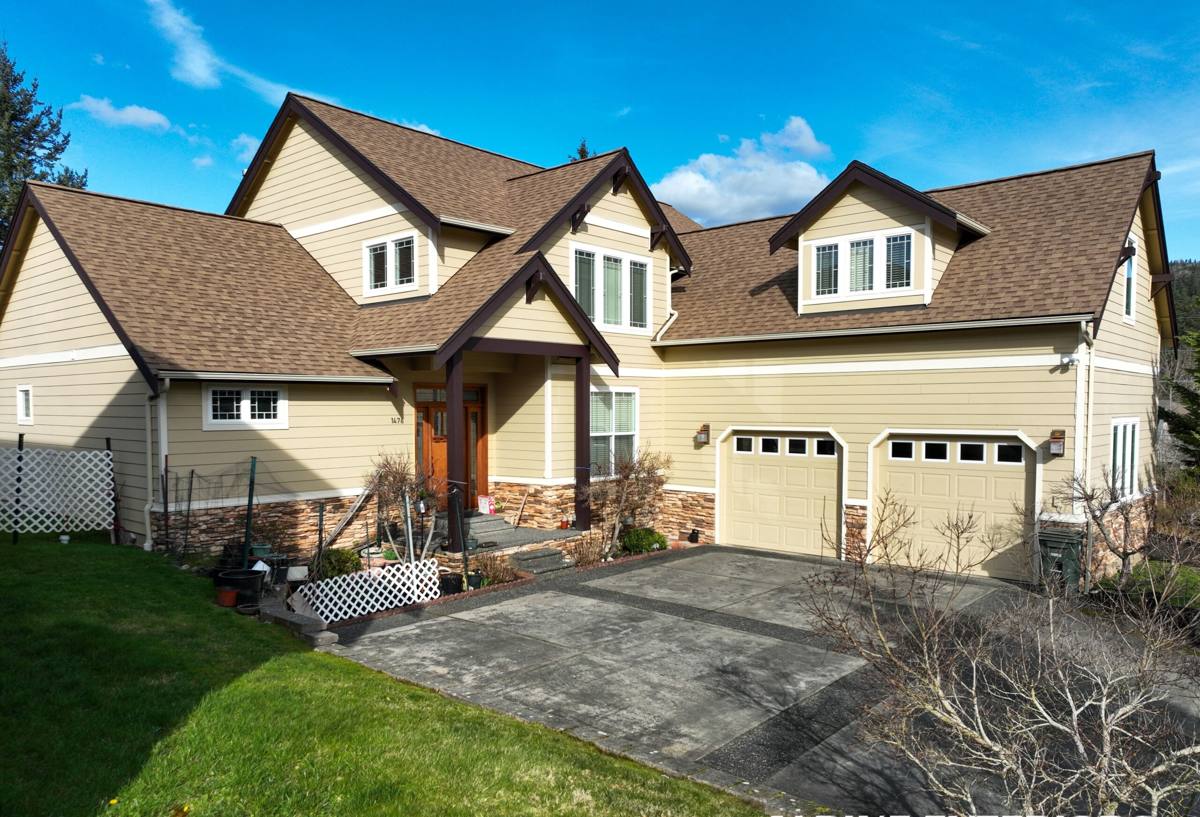
What Birch Bay Homes Need From Their Siding
Salt Air and Corrosion
Airborne salt accelerates corrosion on fasteners, flashing, and any exposed metal trim. It also degrades some paint finishes faster than an equivalent inland application, leading to chalking and color loss well before a product's rated lifespan. Anything installed close to the bay needs corrosion-resistant fasteners and a finish that's actually engineered to hold color in a marine environment — not just a coating that tests well in a lab.
Wind-Driven, Sideways Rain
Storms coming off the Strait of Georgia and the Salish Sea don't just fall straight down — they push rain horizontally into wall assemblies, especially on west- and southwest-facing elevations. That means water is being forced at seams, butt joints, window and door trim, and any penetration in the siding. A siding system that relies on caulk alone to keep water out, rather than proper lap, flashing, and drainage behind the cladding, will eventually let moisture in.
A Long Moss and Algae Season
Shaded north sides, areas under trees, and anywhere air doesn't move freely stay damp long enough for moss and algae to take hold. On porous or wood-based siding, that growth holds moisture directly against the substrate. Over time that's a recipe for soft, swollen boards and paint that won't stay adhered no matter how often it's redone.
Why This Crew Installs Only James Hardie Fiber Cement
We made a decision a while back to install James Hardie fiber cement exclusively — no LP SmartSide, no vinyl, no Cemplank or Allura, no primed spruce or cedar. That's not a marketing line; it's a standard we hold to because of what we've seen matters most in a climate like this one:
- Non-combustible core — fiber cement doesn't burn, which matters anywhere near dry summer conditions or brush.
- Factory-applied ColorPlus finish — baked on under controlled conditions, which holds up to UV and salt air noticeably better than field-applied paint, and it comes with its own finish warranty.
- Climate-engineered HZ product lines — Hardie's HZ5 formulation is built specifically for wetter, cooler climates like ours, versus a generic one-size-fits-all board.
- Dimensional stability — fiber cement doesn't swell, cup, or rot the way wood-based products can when they take on repeated moisture cycling.
- A strong, transferable warranty — backed by a large manufacturer with decades of product history, not a smaller regional brand with a thinner track record.
Wood siding products can look good and perform fine in the right application, and vinyl has its place for buyers on a tight budget who accept its limitations. We simply don't think either is the right long-term answer for a home absorbing this much salt air and rain, and we'd rather turn down that installation than put our name on a product we don't believe will hold up here.
What a Correct Fiber Cement Siding Job Involves
Fiber cement is only as good as its installation. A rushed or generic install can undercut everything the material is supposed to give you. Here's what we hold every job to:
Prep and the Water-Resistive Barrier
Old siding comes off down to the sheathing so we can actually see what's underneath — this is often the first real look anyone's had at the wall assembly in years. Any soft or water-damaged sheathing gets addressed before anything new goes up. A continuous weather-resistive barrier goes on next, lapped correctly so water is always shedding outward and downward, never trapped behind the new siding.
Fastening and Clearances
Fasteners are corrosion-resistant, sized and spaced to Hardie's published fastening schedule — not "close enough." Siding is held up off decks, patios, and grade with the clearance Hardie specifies, because tight-to-grade installations are one of the most common causes of moisture problems on any home, coastal or not.
Caulking, Flashing, and Trim
Butt joints, window and door trim, and penetrations get proper flashing details first, with sealant used to back that up — not substitute for it. This is the part of an install that's invisible once the job is done, and it's also the part that determines whether a home stays dry through a driving winter storm ten years from now.
Factory Finish, Not Field Paint
Because we install Hardie's ColorPlus prefinished boards, the color and topcoat are applied and cured under factory conditions before the boards ever reach the site. That's a meaningfully more durable finish than field-brushed paint, and it's part of why we don't deviate to primed board that needs to be painted on site.
Fiber Cement Compared to Other Siding Materials in a Coastal Climate
| Material | Moisture Behavior | Salt Air / UV | Fire Rating | Typical Lifespan |
|---|---|---|---|---|
| James Hardie Fiber Cement | Dimensionally stable, won't swell or rot | ColorPlus finish holds color well | Non-combustible | Multiple decades with proper install |
| Wood / Cedar / Primed Spruce | Absorbs moisture, prone to cupping and rot | Finish degrades faster near salt air | Combustible | Shorter, with higher maintenance |
| Vinyl | Won't rot, but can trap moisture behind it | Can fade, brittle in cold snaps | Combustible | Moderate, finish not repairable |
| Other Fiber Cement Brands | Similar base material properties | Depends on finish system used | Non-combustible | Varies by manufacturer warranty and track record |
The base material matters, but so does the specific product line and the finish system on top of it — that's why we standardized on one manufacturer's climate-specific product rather than treating fiber cement as an interchangeable commodity.
Our Process for a Birch Bay Siding Project
- On-site assessment. We walk the exterior with you, check current siding condition, sheathing access points, drainage, and any areas showing existing moss, staining, or moisture damage.
- Straight talk on scope. We tell you honestly whether this is a full re-side, a partial replacement, or repair — we don't upsell a full tear-off if it isn't warranted.
- Tear-off and inspection. Old material comes off, sheathing is inspected and repaired where needed before anything new is installed.
- Weather barrier and flashing. A continuous water-resistive barrier and proper flashing details go in at every window, door, and penetration.
- Hardie installation to spec. Boards are installed with correct fastening, clearances, and lap details, built for the HZ5 climate zone.
- Trim, caulking, and final detail. Corner boards, trim, and sealant are finished to shed water at every joint.
- Walkthrough. We go over the finished job with you before calling it done.
Maintaining Fiber Cement Siding in a Salt Air, Moss-Prone Climate
- Rinse siding periodically to clear off salt residue, especially on elevations facing the water.
- Keep gutters clear so water isn't overflowing and running down the wall face.
- Trim back vegetation and tree cover where practical to let shaded sides dry out between rain events.
- Check caulking at trim and penetrations every year or two and have any cracked or missing sealant redone before winter storms.
- Address any moss or algae growth early with a gentle wash rather than letting it build up season after season.
- Watch grade and landscaping over time — soil, mulch, or plantings that creep up against the siding reduce the clearance it needs.
What Fiber Cement Siding Typically Costs to Install
| Cost Factor | Why It Moves the Price |
|---|---|
| Home size and elevation count | More square footage and more complex wall planes mean more material and labor |
| Condition of existing sheathing | Rot or water damage found during tear-off requires repair before new siding goes on |
| Trim and detail level | Corner boards, window trim, and architectural detail add labor time |
| Board profile and color | Lap width and ColorPlus color selection affect material cost |
| Access and site conditions | Waterfront lots, tight access, or extensive landscaping can affect setup and staging |
Every Birch Bay property is a little different, which is why we walk the actual house before giving a number rather than quoting off a square-footage formula.
Why Hiring a Crew That Already Works Birch Bay Matters
A crew that regularly works this specific stretch of Whatcom County coastline already understands things a contractor coming from farther inland has to learn on your dime: how much clearance really holds up against wind-driven rain off the bay, which elevations take the worst of the weather, and how aggressive moss and algae growth actually gets in the shaded, damp pockets common to this area. That local pattern recognition shows up in the small decisions on a job — where extra flashing attention pays off, which details are worth doing right the first time — and those are exactly the decisions that determine whether siding is still performing well a decade or two from now.
If you're weighing a siding project on a Birch Bay home, we're glad to come take a look and give you an honest read on what your house actually needs — no pressure, no generic quote. Reach out below for a free estimate.