 Bellingham Roofing
 Building Decks for Edgemoor's Wooded, Waterfront Setting
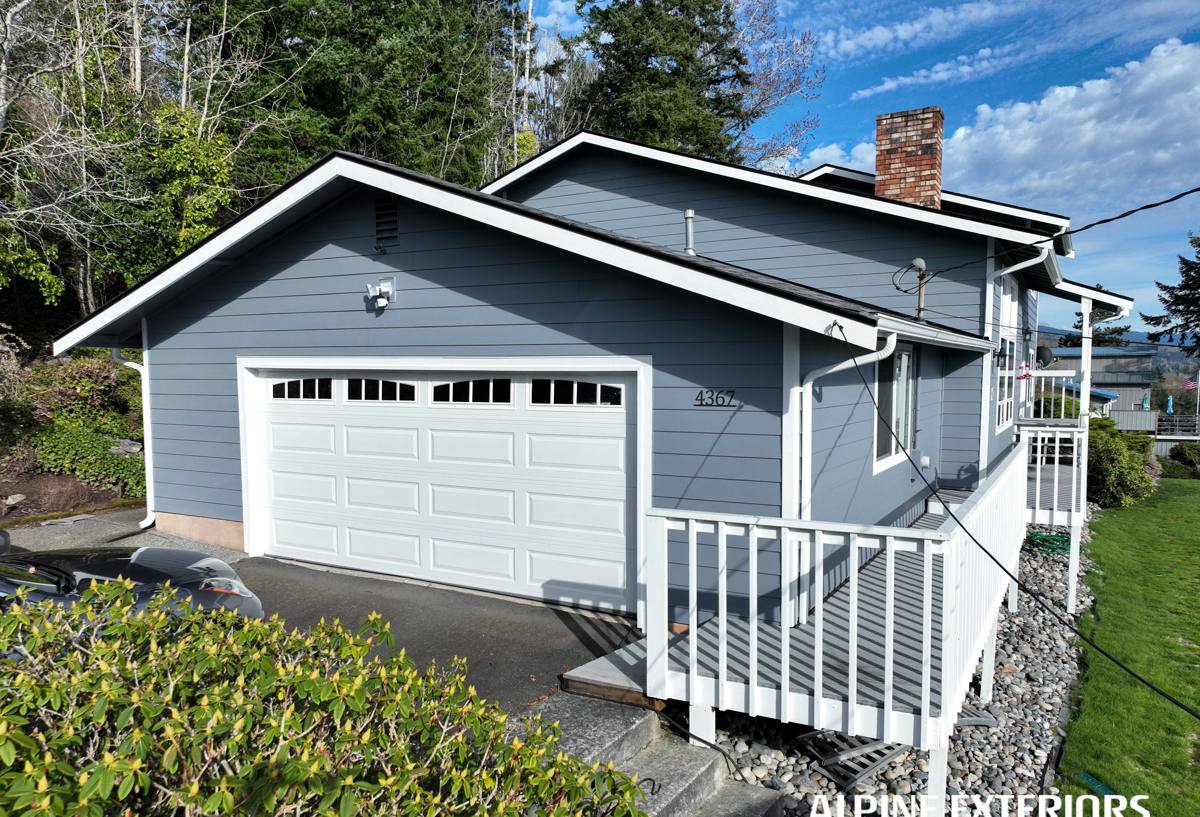
Edgemoor is one of the more distinctive pockets of Bellingham to build outdoor living space in. Homes here tend to sit on sloped, tree-covered lots with views toward Bellingham Bay, which is exactly what makes the neighborhood desirable — and exactly what makes deck-building here different from a flat, sunny backyard project elsewhere in Whatcom County. Mature tree canopy means more shade and more falling debris. Proximity to the bay means salt-tinged air working on every piece of exposed metal. And the terrain itself often means a deck isn't just a flat platform off the back door — it's doing real structural work to make a sloped or wooded lot usable.
We build and repair decks throughout Bellingham, and Edgemoor jobs come with a specific checklist in our heads before we ever price a project: shade and moisture retention, corrosion exposure, drainage on a slope, and root systems from established trees. None of that is exotic, but it has to be planned for from the design stage, not patched later.
What the Local Climate Actually Does to a Deck
Western Washington weather is hard on outdoor structures in general, and the specific combination of conditions around Edgemoor accelerates a few failure modes faster than you'd see on a typical inland lot.
Salt Air and Metal Corrosion
Homes with bay exposure get a steady, low-grade dose of salt-laden air. It's not the same as a beachfront property getting direct spray, but it's enough over years to pit standard fasteners, corrode cheap post bases, and stain lower-grade hardware. Metal components on a deck — screws, joist hangers, post anchors, ledger bolts — are the parts most likely to fail quietly, out of sight, long before the visible decking shows a problem.
Driving Rain and Trapped Moisture
Bellingham doesn't just get rain — it gets sustained, wind-driven rain that finds its way into joints, gaps, and end grain that a light drizzle would never reach. On a deck, that means water working into ledger connections, board end cuts, and anywhere two pieces of material meet without a drainage path. Trapped moisture is the root cause behind most rot and most fastener corrosion, more than any single weather event.
The Long Moss Season
Shaded, damp, wooded lots like the ones common in Edgemoor grow moss for most of the year, not just in winter. Moss holds moisture against wood and composite surfaces alike, and it turns deck boards slick and dangerous underfoot long before it becomes an eyesore. A deck built without airflow, drainage, and material choices that account for moss will need aggressive cleaning within a couple of seasons — or worse, will be hiding rot underneath the growth.
Choosing Decking Material for an Edgemoor Lot
There's no single "correct" decking material — the right choice depends on how much sun the lot actually gets, how much maintenance the homeowner wants to do, and budget. Here's how the common options stack up against the conditions we've described above.
| Material | Moss & Moisture Behavior | Maintenance | Typical Lifespan |
|---|---|---|---|
| Pressure-treated lumber | Absorbs moisture readily; needs sealing to resist moss staining and swelling | Annual cleaning and periodic sealing/staining | 15–20 years with upkeep |
| Cedar | Naturally rot-resistant but still needs sealing in shaded, damp spots | Sealing every 1–2 years, regular cleaning | 15–25 years with upkeep |
| Wood-plastic composite | Won't rot, but uncapped edges can absorb moisture and grow moss if not cleaned | Periodic washing; low but not zero | 25–30 years |
| Capped composite / PVC | Fully sealed surface resists moisture and moss buildup best | Occasional rinsing | 25+ years, often longer warranty coverage |
For a shaded, damp Edgemoor lot specifically, we usually steer homeowners toward capped composite or PVC boards if budget allows, simply because the sealed surface doesn't give moss the same foothold that raw wood grain does. That said, plenty of well-maintained cedar decks in this neighborhood look great for decades — it comes down to whether the homeowner wants to stay on top of sealing and cleaning or would rather trade a higher upfront cost for less maintenance later.
The Framing and Substructure Most People Never See
The decking boards get all the attention, but the framing underneath is what actually determines how long a deck lasts — and it's the part that's hardest to inspect once the deck is finished. On every Edgemoor project we pay particular attention to a few things:
- Ledger board flashing — where the deck attaches to the house is the single most common point of hidden rot if it isn't flashed correctly to shed water away from the wall framing.
- Joist protection — capping or taping the tops of joists so fasteners don't create an entry point for standing water.
- Footing depth — sloped lots need footings sized and set for the actual grade, not a generic flat-yard assumption.
- Post-to-beam connections — proper structural hardware rather than relying on nails or undersized fasteners to carry the load.
None of this is visible once the decking goes down, which is exactly why it matters who builds it. A deck can look finished and still have a ledger connection that's slowly rotting the rim joist behind it.
Designing In Drainage and Airflow So Moss Doesn't Win
Given how long the moss season runs here, we treat drainage and airflow as part of the design, not an afterthought. A few things make a measurable difference on a wooded, shaded Edgemoor lot:
Slope and Board Gapping
Decking should have a slight slope away from the house and consistent gapping between boards so water actually sheds instead of pooling. Too tight a gap, and the deck holds moisture and debris; too wide, and it becomes a maintenance and safety issue of its own.
Under-Deck Ventilation
Low decks or decks built close to grade need enough clearance and airflow underneath to let the substructure dry out between rain events. A deck sealed tight to damp ground is one of the fastest ways to grow moss and rot simultaneously.
Working With, Not Against, the Trees
We're not going to tell a homeowner to remove mature trees that are part of why they bought the lot. Instead, we plan the deck's footprint and any needed canopy trimming so enough light and airflow reach the surface to slow moss growth, without stripping the property of what makes it Edgemoor.
Fasteners and Hardware: The Small Parts That Decide How Long a Deck Lasts
Given the bay's salt air, hardware selection isn't a place to cut costs on this side of Bellingham. We use fasteners and structural connectors rated for exterior, corrosion-prone environments — stainless steel or heavy hot-dip galvanized rather than standard coated hardware — on ledger bolts, joist hangers, and post bases in particular. These are the components that are hardest to replace later, so it's worth getting right the first time rather than saving a modest amount upfront on parts that fail quietly below the decking.
Our Process, From Estimate to Finished Deck
Every Edgemoor deck project follows roughly the same sequence, adjusted for the specific lot:
- Site visit — we walk the lot, note the slope, sun exposure, tree cover, and existing structure condition if it's a replacement.
- Design and material discussion — we go over decking material trade-offs, layout, and how the deck ties into drainage on the property.
- Written estimate — a clear scope and price before anything is scheduled, with no pressure to decide on the spot.
- Permitting — we handle the permit process for the jurisdiction the property falls under.
- Build — framing and structural work first, inspected as required, then decking, railing, and finish details.
- Final walkthrough — we go over the finished deck together and answer maintenance questions before we consider the job done.
Permits and Local Requirements
Deck construction in and around Bellingham generally requires a building permit once a deck exceeds a certain height or size, along with attention to setback requirements from property lines — the exact thresholds depend on the specific jurisdiction and the property itself, since Edgemoor properties can fall under City of Bellingham or Whatcom County requirements depending on location. We pull and manage the required permits as part of the job rather than leaving that on the homeowner, so the deck is built to code and won't create problems at resale or insurance time.
Maintenance Checklist for Edgemoor Homeowners
Whatever material a deck ends up being, a little seasonal attention goes a long way in this climate. We tell every Edgemoor customer the same short list:
- Sweep off leaves, needles, and debris regularly — trapped organic matter is what feeds moss growth.
- Rinse or wash the deck surface at least once or twice a year to interrupt moss and algae before it takes hold.
- Check and clear gaps between boards so water keeps draining instead of pooling.
- Inspect ledger board and railing connections annually for looseness or staining that signals a leak.
- Reseal wood decking on the schedule recommended for the specific product — don't wait until it visibly grays and cracks.
- Trim back overhanging branches that keep the deck surface shaded and damp longer than necessary.
None of these take long individually, but skipping all of them for a few years is how a solid deck ends up needing board replacement or hardware repair well before it should.
Why a Crew That Already Works Edgemoor Matters
A deck built by someone unfamiliar with this specific stretch of Bellingham can still look fine on the day it's finished. The difference shows up two or three winters later — in whether the ledger flashing was detailed for driving rain, whether the hardware was rated for salt air, and whether the design accounted for shade and moss rather than treating it like a generic backyard build. We work this neighborhood regularly, and that familiarity shapes every material and framing decision we make before the first board goes down.
If you're planning a new deck or need to replace one that's showing its age, we're happy to come take a look and put together a straightforward, no-pressure estimate using the form below.