 Bellingham Roofing
 Window Replacement for York Homes in Bellingham
York is one of Bellingham's older, established residential pockets, and that means a lot of the housing stock is carrying windows that were never built for what this climate actually does to them year over year. Whether your home has original wood-frame single-pane windows from a mid-century build or a first-generation vinyl replacement job from the 1990s or early 2000s, there's a good chance the seals, frames, or glazing are past the point where caulk and weatherstripping can fix the problem. We install replacement windows for homes throughout York and the surrounding Bellingham neighborhoods, and we size the job to what the house and the climate actually require, not to a one-size-fits-all package.
This page covers what window replacement looks like specifically for this area: what the salt air off Bellingham Bay, the driving rain, and Whatcom County's long moss season do to windows over time, what a correct installation involves, and why it matters that the crew doing the work already knows this neighborhood's housing stock.
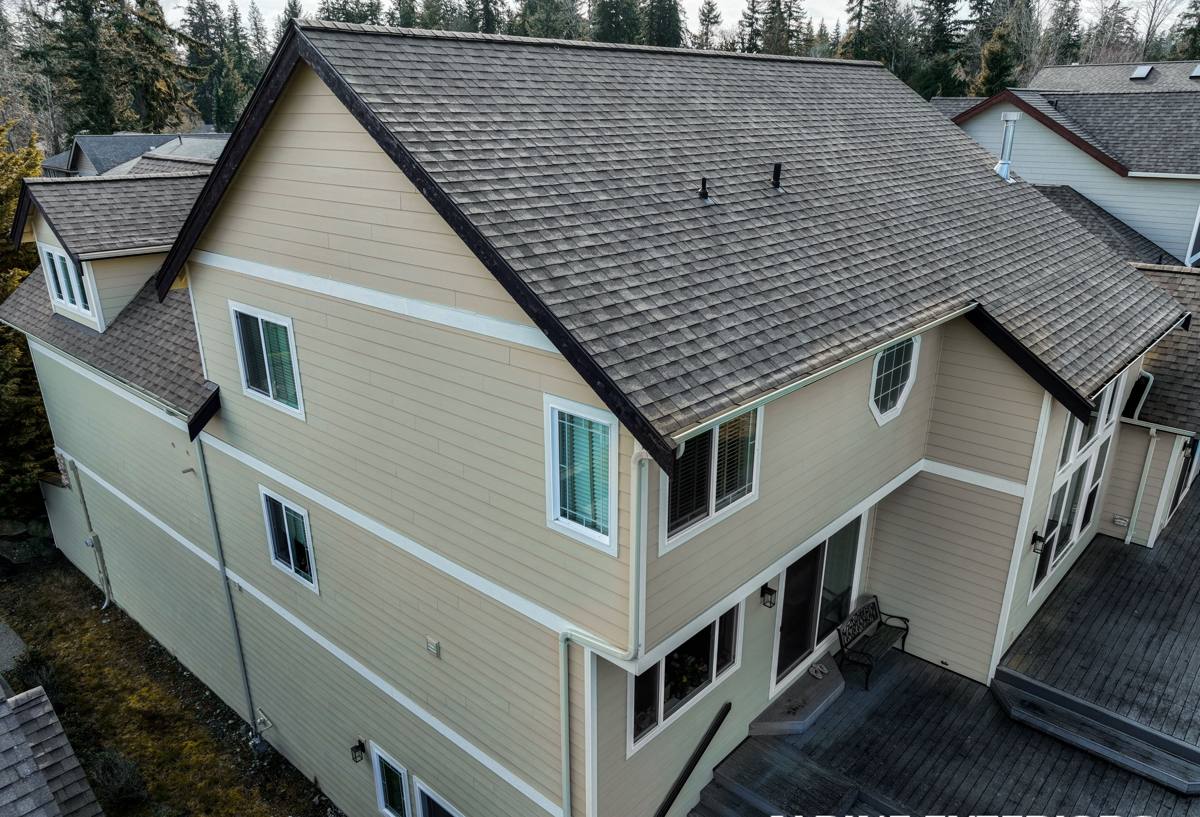
What This Climate Does to Windows
Bellingham sits close enough to Bellingham Bay and the Strait of Georgia that homes in York and nearby areas get a steady dose of salt-laden air, especially on west and southwest exposures. That air corrodes exposed aluminum hardware, pits weep holes, and slowly degrades the finish on lower-quality vinyl and metal components faster than a homeowner would expect from a "20-year" window. Combine that with Whatcom County's driving, wind-blown rain — which hits window flashing and sills at an angle, not straight down — and you get water intrusion at exactly the joints and seams that a lot of older or budget window installations never sealed correctly in the first place.
Then there's moss. Our moss season here runs long, and it's not just a roof problem. Moss and algae collect in window tracks, on sills, and in the corners of frames wherever moisture sits and doesn't get sun exposure to dry out — which describes a lot of north- and east-facing windows on York's tree-shaded lots. Over time that trapped moisture works into wood trim, breaks down glazing putty on older wood windows, and accelerates rot in sills and jambs long before the glass itself fails.
Signs a York home's windows have reached the end
- Fogging or a visible haze between the panes of a double-pane window — the seal has failed and the argon gas (if any) is gone
- Soft, spongy, or discolored wood at the sill or bottom corners of the frame
- Windows that are hard to open, don't stay up on their own, or won't latch tight
- Visible daylight or a draft you can feel with your hand along the frame edge on a windy day
- Condensation forming on the inside of the glass regularly, especially in winter
- Moss, algae, or black staining building up in the tracks or lower frame corners each year
- Paint that keeps failing on wood trim around the window no matter how often it's repainted
What a Correct Window Replacement Actually Involves
Swapping in a new window is the easy part. The part that determines whether that window lasts 25 years or leaks in three is everything around it — the flashing, the sill pan, the sealant, and how the new unit ties into the existing wall assembly. In a climate that throws wind-driven rain at a house sideways, a window that's caulked in place without proper flashing and a sloped sill pan is a window that will eventually leak, no matter how good the glass and frame are.
Our approach on every York job includes:
- Full removal and inspection of the old unit down to the rough opening, so we can actually see the condition of the framing before covering it back up
- Sill pan flashing that sheds any water that gets past the window to the outside of the wall, not into the framing
- Proper head, jamb, and sill flashing sequencing — installed in the correct shingle-lap order so water is always directed downward and outward
- Rot repair to any framing, sheathing, or trim we find compromised before the new window goes in, not after
- Low-expansion foam and backer rod plus sealant at the right points, rather than relying on caulk alone to do a foam or flashing job's work
- Interior and exterior trim finished properly so the whole assembly is sealed and weathertight, not just the window unit itself
Skipping any one of those steps is how a homeowner ends up replacing "brand new" windows again in ten years because the water damage happening behind the trim was never addressed.
Our Process, Start to Finish
1. On-site assessment
We look at each window individually, not just the house as a whole. Some windows on a York home might genuinely still have life left in them, especially on protected, south-facing walls, while windows on the exposed side of the house facing prevailing weather may be well past due. We'll tell you honestly which is which rather than pushing a whole-house replacement when it isn't needed.
2. Measuring and product selection
We measure for an accurate insert or full-frame replacement depending on the condition of your existing framing, and walk through frame material, glass package, and grille options based on your home's style and your budget.
3. Scheduling around Whatcom County weather
Window replacement means the wall is open to the weather for a window of time during install. We plan around forecasts and work efficiently so openings aren't left exposed longer than necessary, which matters more here than in a drier climate.
4. Installation
Old unit out, framing inspected and repaired as needed, new flashing and sill pan installed, window set, shimmed, and secured, insulated, sealed, and trimmed out on both the interior and exterior.
5. Walkthrough and cleanup
We walk every window with you, confirm smooth operation and a tight seal, and clean up the work area before we leave.
Choosing a Frame Material
There's no single "best" window material — the right choice depends on your budget, your home's age and style, and how much maintenance you want to take on. Here's how the common options hold up specifically in a wet, salt-air, moss-prone climate like Bellingham's:
| Material | How It Handles This Climate | Maintenance |
|---|---|---|
| Vinyl | Doesn't rot or corrode, handles moisture well, good value | Low — occasional cleaning of tracks and weep holes |
| Fiberglass | Very stable in temperature swings, resists moisture and salt air well, holds paint if desired | Low |
| Wood | Classic look, good for period-correct homes, but vulnerable to rot if seals or paint fail in this rain | High — regular painting/sealing required |
| Wood-clad (wood interior, aluminum or vinyl exterior) | Combines interior wood look with a weather-resistant exterior shell; a common middle ground for older-style homes | Moderate |
| Aluminum | Strong and slim-profile, but bare aluminum hardware and frames are prone to corrosion and pitting in salt air unless well-finished | Moderate to high near the water |
For most York homes, we steer clients toward vinyl or fiberglass for straightforward moisture and salt-air performance with low upkeep, and reserve wood or wood-clad for homes where matching an original architectural character is the priority and the owner is comfortable with the added maintenance that comes with it.
Glass Packages and Energy Performance
In this climate, the glass package matters as much as the frame. A double-pane window with a low-E coating and argon fill will cut down on both heat loss in winter and the condensation that tends to form on interior glass during our cold, wet months. Triple-pane glass adds another layer of insulation and is worth considering on north-facing rooms or homes closer to the water where wind exposure is higher, though it comes at a added cost and weight.
Condensation on the inside of a window in winter is usually a sign of an aging seal or a single-pane unit, not a defect in your home's heating — it's the glass itself losing the battle against the outside temperature. A properly sealed, insulated double- or triple-pane unit largely eliminates it.
Cost Factors to Expect
| Factor | Why It Affects Price |
|---|---|
| Insert vs. full-frame replacement | Full-frame work involves more labor and materials when framing needs repair |
| Frame material | Vinyl is typically most economical; fiberglass and wood cost more |
| Glass package | Triple-pane and specialty low-E coatings add cost over standard double-pane |
| Window size and configuration | Large picture windows, bays, and custom shapes cost more than standard operable units |
| Hidden rot or framing repair | Discovered during removal; not always visible beforehand, especially on older wood-frame homes |
| Number of windows in one project | Bundling multiple windows into one job typically brings a better per-window rate than one-off replacements |
We give straightforward, itemized estimates so you know what you're paying for and why — no vague lump-sum numbers that hide what's actually included.
Why It Matters That We Already Work in York
Housing stock in York and the surrounding Bellingham neighborhoods spans decades of construction styles, and a crew that's worked in the area knows what to expect before they even pull the first old window. That means recognizing which eras of homes are more likely to have rot hiding behind the trim, understanding how a given lot's tree cover and orientation affects moss buildup and moisture exposure, and knowing how local wind and rain patterns off the bay tend to hit a house. It also means we're familiar with Whatcom County permitting and code requirements for window replacement where they apply, so there are no surprises mid-project.
A crew unfamiliar with the area might install a technically fine window using a generic approach that works in a drier climate — and miss the flashing and moisture details that actually matter here. That gap is exactly where callbacks and repeat leaks come from.
A Practical Checklist Before You Decide
- Walk your home and note which windows fog, stick, draft, or show visible wood damage
- Pay closer attention to west- and southwest-facing windows, which take the brunt of driving rain and salt air
- Check shaded, tree-covered windows for moss or algae buildup in the tracks and corners
- Ask any contractor you're considering whether their quote includes sill pan flashing and full moisture-barrier detailing, not just the window unit itself
- Get a written, itemized estimate that separates material costs, labor, and any framing repair contingencies
- Confirm what warranty covers the window itself versus the installation — they're often different
Let's Take a Look
If your windows in York are fogging, drafting, sticking, or showing wear around the frames, it's worth a second look before another wet Whatcom County winter. We'll walk your home, tell you honestly which windows need attention and which can wait, and put together a clear, no-pressure estimate — just use the form below to get started.