 Bellingham Roofing
 Deck Repair Built for Birch Bay's Waterfront Climate
Birch Bay sits right on the water, and that location is exactly what makes deck maintenance different here than it is a few miles inland in Bellingham. Salt-laden air off the bay accelerates corrosion on fasteners and hardware, wind-driven rain finds its way into joints and end grain that a calmer climate would never touch, and the long gray stretch of fall through spring keeps deck surfaces damp long enough for moss and algae to take hold. None of that means a deck can't last for decades out here — it just means repairs have to account for conditions a generic handyman fix usually ignores.
We work on decks throughout Whatcom County, and Birch Bay decks consistently show a specific pattern of wear tied to their exposure: fastener corrosion before wood failure, ledger and flashing problems from wind-driven rain, and slick, moss-covered surfaces that are as much a safety issue as a cosmetic one. Understanding that pattern is the difference between a repair that holds and one that's patched over and failing again in two years.
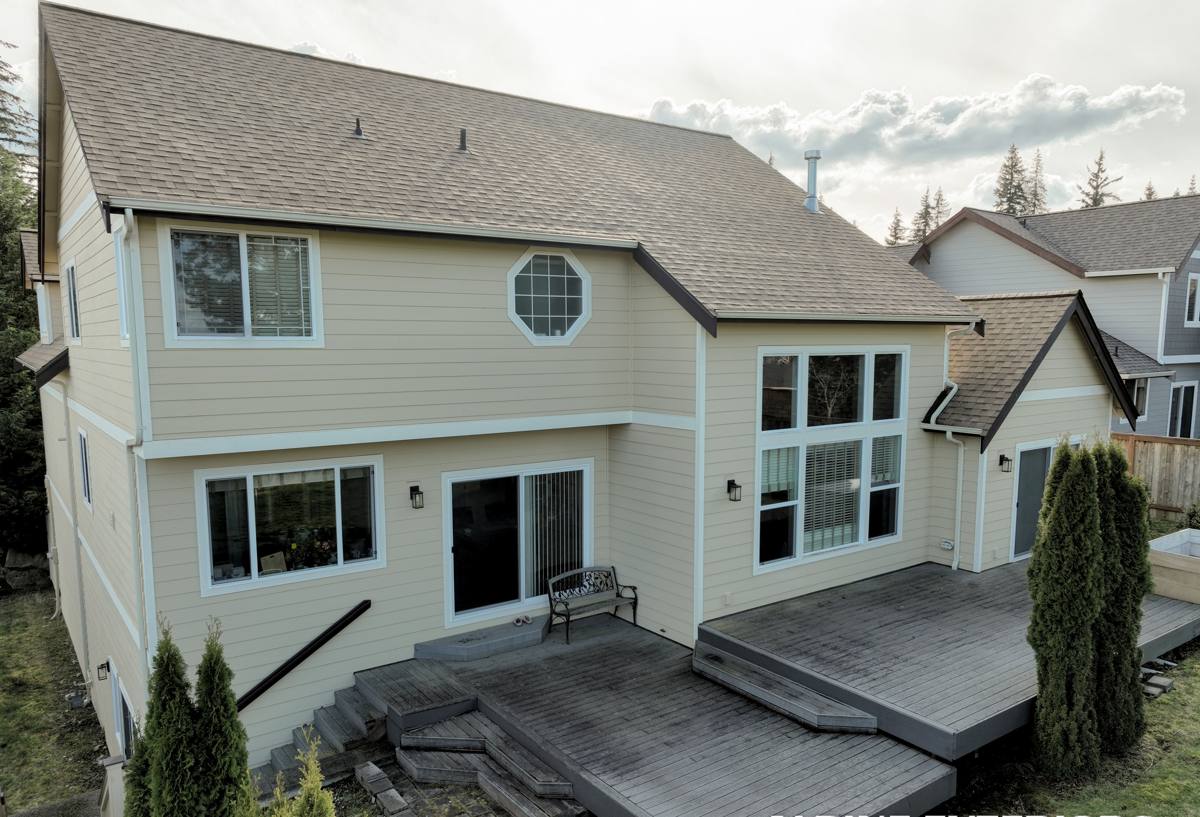
Signs Your Deck Needs Repair, Not a Full Rebuild
Most decks we're called out to in Birch Bay don't need to be torn out and replaced — they need targeted repair of the parts that actually fail first. Here's what we look for during an inspection, and what should prompt you to call before it gets worse:
- Soft, spongy, or springy spots when you walk the deck surface, especially near the house or along the perimeter
- Rust streaking below screw heads, joist hangers, or bolts — a sign fasteners are corroding faster than the wood around them
- Gaps or dark staining where the deck meets the house (the ledger board connection), which often means water is getting behind the flashing
- Persistent green or black film on boards that comes back within weeks of cleaning
- Loose, wobbly, or cracked railing posts and balusters
- Visible splitting or checking in structural posts or beams, particularly near the ground
- Stair stringers that flex or feel unstable underfoot
If you're only seeing one or two of these and the framing underneath is sound, repair is usually the right call — it's faster, less expensive, and doesn't disturb parts of the deck that are still doing their job.
Common Deck Problems We See in Birch Bay
Fastener and Hardware Corrosion
This is the number one issue in waterfront neighborhoods like Birch Bay. Salt air speeds up corrosion on standard fasteners well beyond what you'd see on a deck a few miles inland. Screws, nails, and joist hangers that weren't rated for coastal exposure often show rust and pitting years before the surrounding wood shows any real damage. Once a fastener starts failing, it can loosen its grip on the wood fibers around it, which is how a small hardware problem turns into a structural one.
Ledger Board and Flashing Failures
The ledger board — where the deck attaches to the house — is the single most important structural connection on most decks, and it's also the one most exposed to wind-driven rain in a spot like Birch Bay. When flashing is missing, undersized, or was installed without proper sealing, water tracks down behind the siding and into the ledger and rim joist. This kind of rot is often invisible from the deck surface and only shows up once you pull boards or probe the wood with a screwdriver.
Moss, Algae, and Surface Decay
Whatcom County's long wet season keeps horizontal wood surfaces damp for extended stretches, and shaded or north-facing decks in Birch Bay barely get a chance to dry out between storms. Moss and algae aren't just unattractive — they hold moisture against the wood surface, which accelerates rot in the top layer of decking boards and makes the surface genuinely slippery and dangerous, especially on stairs.
Post and Railing Instability
Railing posts take a lot of abuse from wind loading in an exposed coastal location, and if the post base wasn't properly through-bolted or has started to rot at the base, you'll feel movement well before you see visible damage. This is a safety item we never leave for "later."
What a Correct Deck Repair Actually Involves
A repair that lasts starts with understanding what's actually failing and why — not just replacing the board that looks bad. Our approach on every Birch Bay deck repair includes:
Full Structural Inspection First
Before we replace a single board, we check the ledger connection, joists, beams, posts, and footings. Cosmetic damage on the surface is often a symptom of a moisture problem underneath, and fixing the visible symptom without addressing the source just buys a year or two before it's back.
Correct Flashing and Water Management
If the ledger or rim joist area is compromised, we're not just swapping wood — we're correcting the flashing detail so water sheds away from the house instead of tracking behind the siding. This is the step that's most commonly skipped in a quick patch job, and it's the one that determines whether the repair lasts.
Matching Materials, Not Guessing
Whenever possible, we match new decking and framing lumber to what's already there so the repair doesn't create a visual patchwork or, worse, mix materials that expand and contract at different rates. Where the original material isn't holding up to the coastal exposure, we'll tell you honestly and walk through better-suited alternatives for that specific location on the deck.
Code-Correct Hardware and Fastening
Every ledger bolt, joist hanger, and railing connection gets fastened to current structural standards — not just "close enough." Guardrail height, baluster spacing, and stair stringer support all get checked against code during repair work, not just on new builds.
Repair or Replace? How We Help You Decide
Not every deck problem calls for the same level of work. Here's a general framework for how we evaluate it — every deck is different, and this is something we'll walk through with you in person:
| Condition Found | Usually Means | Typical Scope |
|---|---|---|
| Isolated soft boards, surface wear, moss staining | Surface-level moisture exposure | Board replacement, cleaning, surface repair |
| Rusted fasteners, loose hardware, sound wood underneath | Hardware not rated for coastal exposure | Hardware upgrade, targeted refastening |
| Soft or stained wood at the ledger/house connection | Flashing failure allowing water intrusion | Ledger and flashing repair, localized framing replacement |
| Widespread rot in joists, beams, or multiple posts | Long-term, unaddressed moisture damage | Partial to full structural rebuild |
| Deck over 20-25 years old with recurring issues | Original materials reaching end of service life | Full replacement often more cost-effective long term |
We'll always tell you when repair is the smarter money, and we'll also tell you honestly when a deck has reached the point where repeated patching stops making financial sense.
Materials and Fasteners for Coastal Exposure
What goes into a Birch Bay deck repair matters as much as the workmanship. Standard hardware store fasteners are often not rated for the level of salt exposure a bayfront or near-bayfront property sees. We use fasteners and connectors rated for coastal or marine-grade exposure on repair work in this area — typically hot-dip galvanized or stainless steel, depending on the application and what's already in place, since mixing incompatible metals can actually accelerate corrosion at the connection point.
For decking material, pressure-treated lumber, cedar, and composite decking all perform differently under salt air and constant damp shade. Composite decking generally resists moisture and moss growth better and needs less upkeep, but it comes at a higher upfront cost and isn't always the right visual match for an older deck. Wood costs less initially but needs more consistent maintenance — cleaning, sealing, and periodic refinishing — to hold up against the moss season here. We'll walk through the honest trade-offs of each for your specific deck rather than pushing one option across the board.
Our Deck Repair Process
- Inspection and assessment — we check structure, fasteners, flashing, and surface condition, and probe any suspect areas rather than guessing from a visual look
- Honest scope and estimate — you get a clear explanation of what's failing, why, and what it will take to fix it correctly, with repair and replacement options when both are reasonable
- Structural repair first — framing, ledger, and flashing issues are corrected before any cosmetic work begins
- Surface and railing work — decking boards, stair components, and railings are repaired or replaced with matched or clearly discussed alternative materials
- Final check — hardware, guardrail stability, and stair safety are confirmed before we consider the job done
Why Hire a Crew That Already Works in Birch Bay
Deck repair in a coastal Whatcom County community isn't the same job as deck repair twenty miles inland. A crew that regularly works Birch Bay and the surrounding Bellingham area already knows to expect accelerated hardware corrosion, understands how wind-driven rain behaves against ledger connections in this specific exposure, and isn't guessing at how a moss season this long will affect material choices. That local pattern recognition means fewer surprises mid-project and a repair that's built for the conditions your deck actually faces, not generic conditions from a manual.
It also means we're familiar with what local permitting expects for structural deck work in Whatcom County, so repairs involving framing, ledger reattachment, or railing changes get handled correctly from the start rather than requiring rework later.
Get a Straight Answer About Your Deck
If your Birch Bay deck has soft spots, rusting hardware, a stubborn moss problem, or just doesn't feel as solid as it used to, it's worth having someone take an honest look before winter storms make the decision for you. We offer a free, no-pressure estimate — we'll tell you plainly what we find, what it needs, and what your options actually are. Use the form below to get started.