 Bellingham Roofing
 Window Replacement Built for Happy Valley's Weather
Happy Valley sits close enough to Bellingham Bay and the surrounding wetlands that its homes take a different kind of weathering than houses further inland in Whatcom County. Salt-tinged air, wind-driven rain that comes in sideways off the water, and a long stretch of gray, wet months every year all work on window frames, sills, and seals in ways that show up as drafts, fogged glass, sticking sashes, and soft wood long before a homeowner expects it. Replacing windows here isn't just a cosmetic upgrade — it's a chance to close off the specific weak points that this climate finds.
This page covers window replacement as we do it for Happy Valley properties specifically: what the local conditions demand, what a correct installation actually involves, and how our process works from first look to final walkthrough.
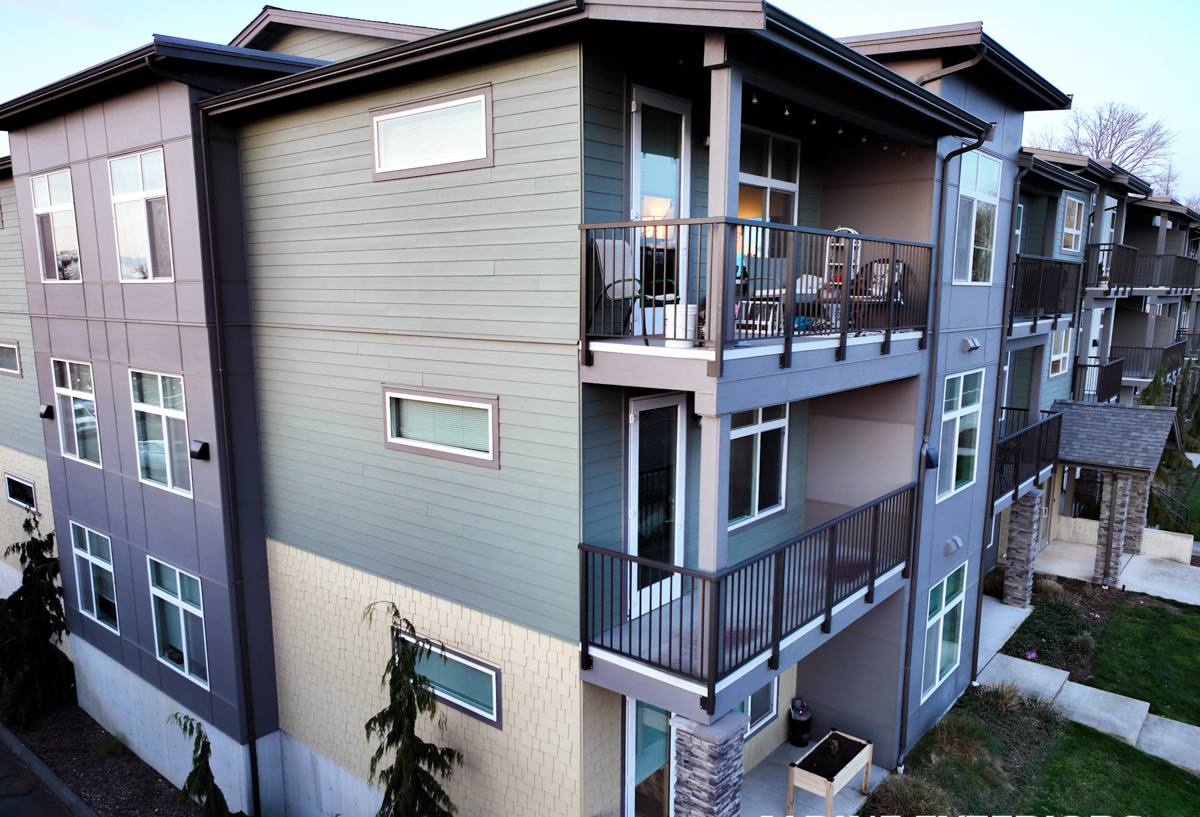
Why Happy Valley Homes Wear Out Windows Differently
Salt Air and Metal Fatigue
Proximity to the bay means airborne salt settles on and around window hardware, hinges, and exposed fasteners. Over years, that accelerates corrosion on lower-grade hardware and can pit aluminum components that weren't rated for coastal exposure. It's a slow process, so it's easy to miss until a window won't latch properly or a frame starts to chalk and pit.
Driving Rain and Water Intrusion
Storms off the Strait of Georgia and Puget Sound don't just fall straight down — wind pushes rain horizontally into wall assemblies, and windows are the first thing it tests. A window that was installed without proper flashing and sealant will let water track behind the trim and into the wall cavity, usually well before it shows up as a visible stain inside. This is the single most common reason we find rot around window openings during replacement work.
Moss Season and Sustained Moisture
Bellingham's long wet season keeps humidity high around the exterior of a home for months at a stretch. Wood sills and frames that aren't properly sealed or that have lost their finish stay damp longer than they would in a drier climate, which is exactly the condition wood rot and mold need. Moss and algae growth on nearby siding and trim is often a visible sign that the same dampness is affecting window components close by.
Signs Your Windows Are Ready for Replacement
Not every window problem means full replacement — some issues are solved with repair or re-caulking. Here's what tends to indicate it's time for new units rather than a patch:
- Visible fog or moisture trapped between panes of double-glazed glass — the seal has failed and can't be repaired
- Soft, spongy, or visibly rotted wood at the sill, jamb, or corners
- Windows that won't stay open, won't latch, or are painted shut from swelling
- Noticeable drafts or cold spots near the window even with it fully closed
- Frames that have warped, bowed, or separated slightly from the wall
- A jump in heating costs without another clear cause
- Persistent condensation on the inside of the glass during cold, wet weeks
What a Correct Window Replacement Job Actually Involves
Window replacement done right in this climate is as much about what happens around the window as the window unit itself. A lot of problems we're called out to fix started with a window that was fine but was installed without attention to water management. Our standard for a Happy Valley installation includes:
Opening Inspection and Repair
Before a new window goes in, we check the framing and sill for hidden rot or soft spots. Any compromised wood gets cut out and replaced — installing a new window into a damaged opening just seals the problem in.
Proper Flashing
Flashing tape and pan flashing at the sill direct any water that gets past the exterior back out, rather than letting it sit against the wood framing. Given how often wind-driven rain hits this area, this step is not optional in our process.
Sealant and Weatherproofing
We use exterior-grade sealants at the right points around the frame — not as a substitute for flashing, but as a second layer of defense. Sealant alone, without flashing underneath, is a common shortcut that fails quietly over a few wet seasons.
Insulation Around the Frame
Gaps between the window frame and the rough opening get filled with a low-expansion foam or backer rod and sealant, not stuffed with fiberglass that can settle and leave voids.
Interior and Exterior Trim
Trim gets reinstalled or replaced so it sheds water correctly on the exterior and finishes cleanly on the interior — not just caulked over to hide a gap.
Choosing the Right Window for This Climate
There's no single "best" window material — the right choice depends on the home, the budget, and how exposed that side of the house is to wind and rain. Here's how the common options hold up under Bellingham's coastal, wet conditions:
| Frame Material | Performance in Salt Air / Driving Rain | Maintenance |
|---|---|---|
| Vinyl | Handles moisture and salt exposure well; won't rot or corrode | Low — occasional cleaning |
| Fiberglass | Very stable in temperature swings and moisture; strong long-term option for exposed walls | Low |
| Aluminum | Can be prone to corrosion pitting near salt air unless marine-grade; conducts cold | Moderate |
| Wood | Needs a well-maintained exterior finish to resist rot in sustained damp conditions | Higher — periodic refinishing |
| Wood-Clad (wood interior, clad exterior) | Exterior cladding shields wood from direct weather; good option where interior wood look matters | Moderate |
For glass, we generally recommend double-pane units with a low-E coating and an argon or krypton gas fill for this region — the coating helps manage heat loss during our long cool season, and a tight seal is what actually keeps moisture from ever getting between the panes in the first place. We're careful about the trade-offs here rather than pushing any one option: a wood window with a poorly maintained exterior finish will underperform a vinyl or fiberglass unit in this climate regardless of how it looks on paper, so the honest answer depends on how much upkeep a homeowner plans to do.
Our Process, Start to Finish
- On-site assessment. We look at each window opening, check for hidden moisture damage, and take accurate measurements — no guessing from a photo.
- Straightforward estimate. You get a clear breakdown of window options, labor, and any additional repair work the opening needs, before anything is ordered.
- Scheduling around the weather. We plan installation days with an eye on the forecast — openings are only exposed for as short a window as possible.
- Removal and opening prep. Old units come out carefully, and any rot or damage found is addressed before the new window goes in.
- Installation with proper flashing and sealing. Every unit is set plumb, level, and square, then flashed, insulated, and sealed to the standard described above.
- Trim and finish work. Interior and exterior trim is completed to match the home.
- Final walkthrough. We check operation, seals, and finish work with you before calling the job done.
What Window Replacement Typically Costs
Pricing depends on window size, material, glass package, how many units, and whether the opening needs repair work. Rather than quote a number that won't match your specific home, here's what actually moves the price:
| Cost Factor | Why It Matters |
|---|---|
| Frame material | Vinyl is generally the most budget-friendly; fiberglass and wood-clad cost more upfront but bring different maintenance and longevity trade-offs |
| Glass package | Low-E coatings and gas fills add cost but improve comfort and energy performance |
| Opening condition | Hidden rot or framing damage adds repair labor beyond the window itself |
| Number of windows | Full-home replacement typically has a better per-window cost than a single unit |
| Access and window size | Larger units, upper stories, or tricky access can add labor time |
The only way to get a number that means anything is a look at the actual openings — which is what a free estimate is for.
Why a Crew That Already Works Happy Valley Matters
A window installer who hasn't worked this specific pocket of Whatcom County can still do competent work, but they're guessing at things a local crew already knows from repeated exposure: which sides of a house in this neighborhood take the worst of the driving rain, how much salt exposure actually matters block by block, and where moss and moisture problems tend to concentrate on homes of a similar age and construction. That local pattern recognition shows up in small decisions — where to add extra flashing, which openings are worth a closer look before assuming they're fine — that generic experience elsewhere doesn't teach.
It also matters for follow-through. A crew that works this area regularly is easy to reach if a question comes up after the job, and stands behind work that has to perform through the same wet seasons year after year, not just look good on installation day.
Get a Free Estimate
If your windows in Happy Valley are drafty, fogged, hard to operate, or just old enough that you're wondering, we'll take a straightforward look and give you an honest read on repair versus replacement — no pressure, no inflated scope. Use the form below to request a free estimate.