 Bellingham Roofing
 Why Roofing Quotes Vary So Much
If you've called around Bellingham for roof replacement quotes, you've probably noticed the numbers don't line up. One estimate comes in low, another twice as high, and it's not always clear why. Roofing isn't a commodity — two crews can look at the same roof and price it very differently based on the materials they use, how they handle tear-off and decking repair, and how much attention they pay to ventilation and flashing details that don't show up in a drive-by inspection.
This page walks through the real cost drivers for a roof replacement in Whatcom County, what our climate does to different roofing systems over time, and the questions worth asking before you sign anything. The goal isn't to hand you a single number — it's to help you understand your own quote well enough to know if it makes sense.
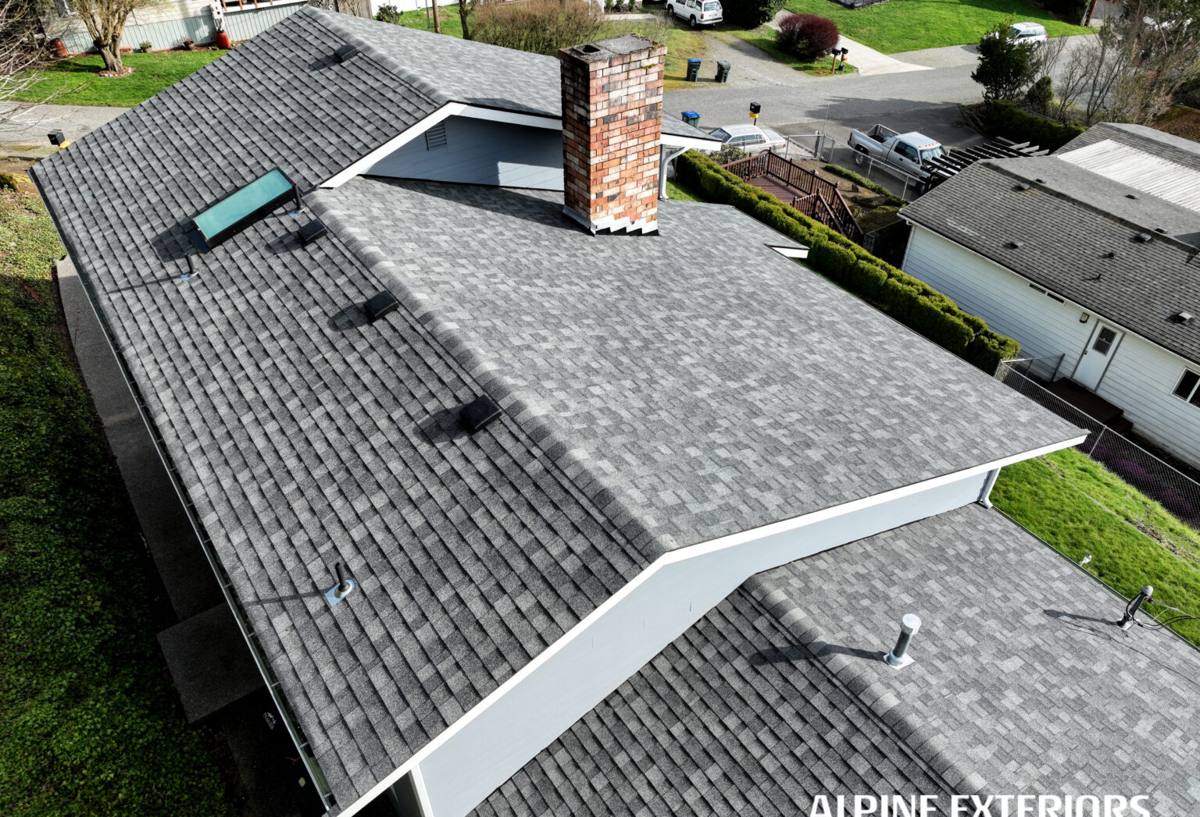
What Actually Drives the Price
Roofing cost comes down to a handful of variables. Square footage matters, but it's rarely the deciding factor — pitch, complexity, and what's underneath the old roofing usually move the number more than size alone.
| Factor | Why It Matters |
|---|---|
| Roof pitch and height | Steep or multi-story roofs require more safety setup, slower work, and specialized crews |
| Number of layers to remove | Tear-off of two or three old layers costs more in labor and disposal than a single layer |
| Roof complexity | Valleys, dormers, skylights, and chimneys all add flashing work and labor time |
| Decking condition | Soft or rotted plywood found during tear-off has to be replaced before new material goes down |
| Material choice | Asphalt, metal, and specialty products span a wide price range and different install labor |
| Ventilation upgrades | Older homes often need intake or exhaust vents added to meet current standards |
| Access and site conditions | Tight lots, mature trees, or difficult driveway access slow down staging and cleanup |
For a typical asphalt shingle replacement on an average Bellingham home, many projects fall somewhere in the broad range of a mid-size renovation — but decking repair, steep pitch, or a complex roofline can push that meaningfully higher. Any contractor who quotes a firm number without getting on the roof first is guessing.
Square Footage Isn't the Whole Story
A simple ranch roof and a chopped-up roofline on a similar-sized home can cost very differently to replace, even though the "square footage" on paper looks close. The ranch might be four or five roofing squares of straightforward, low-slope work. The complex roof could have the same square footage spread across a dozen planes, valleys, and step-flashing points against siding and chimneys — each one a place where water can get in if it's not done right, and each one adding labor hours.
Material Options: What They Cost and What They Cost Later
The sticker price of materials is only part of the equation. What matters more in a marine climate like ours is how a roofing system performs over 20-30 years of driving rain, salt-tinged air off Bellingham Bay, and a moss season that runs longer here than in drier parts of the state.
- Architectural asphalt shingles: The most common choice — reasonable upfront cost, wide color selection, and a solid track record when installed with proper underlayment and ventilation.
- Metal roofing: Higher upfront cost, but sheds moss and moisture better than most alternatives and typically outlasts asphalt by decades. A good fit for homeowners planning to stay long-term.
- Wood shake or shingle: Traditional look for the Pacific Northwest, but it's the highest-maintenance option in our climate — moss, moisture retention, and periodic treatment are ongoing realities, not occasional chores.
- Synthetic/composite shingles: A middle-ground option marketed as low-maintenance; performance varies by manufacturer, so warranty terms and local track record are worth scrutinizing closely.
We don't push one material as universally "best" — we walk through the trade-offs in maintenance burden, moisture behavior, and upfront versus lifetime cost so you can pick what fits your home and your plans for it.
The Bellingham Climate Factor
Whatcom County roofs work harder than roofs in most of the country. Salt air off the bay accelerates corrosion on exposed metal fasteners and flashing that isn't properly coated or spaced. Driving rain — often coming in sideways during winter storms — finds any weak point in flashing, valleys, or underlayment laps that a fair-weather install might get away with elsewhere. And our long moss season, stretching from fall through spring in shaded, tree-covered lots common around Bellingham, keeps roof surfaces damp and creates the conditions moss needs to establish and spread.
None of this means Bellingham roofs are doomed — it means the details matter more here. Proper ice-and-water shield at eaves and valleys, correctly lapped underlayment, adequate attic ventilation to keep moisture from condensing on the underside of the deck, and flashing metal that resists corrosion are not upgrades in this climate. They're the baseline for a roof that actually lasts its rated lifespan.
Moss: An Ongoing Cost, Not a One-Time Fix
Moss on a roof isn't just cosmetic. It holds moisture against roofing material, lifts shingle edges over time, and can work into fastener holes. A new roof reduces how aggressively moss takes hold, especially with proper edge metal and, in some cases, zinc or copper strips near the ridge — but no roofing material in a shaded, damp Whatcom County lot is entirely moss-proof. Budgeting for periodic gentle cleaning is part of realistic roof ownership here, not a sign something was installed wrong.
Tear-Off vs. Roof-Over
Some contractors offer to install new shingles directly over an existing layer to save money. It's cheaper upfront, but it comes with real trade-offs: you can't inspect or repair the decking underneath, the roof gains weight, and any hidden moisture damage stays hidden — right under the new material. Our standard is a full tear-off on every replacement. It costs more than a roof-over, but it's the only way to know what's actually happening at the deck level, and in a climate where hidden moisture is the biggest long-term threat to a roof, that inspection is worth the added cost.
The Costs That Don't Show Up in a Drive-By Quote
The most common source of "surprise" costs during a roof replacement isn't upselling — it's what a crew finds once the old roofing comes off.
- Rotted or delaminated decking: Common on older Bellingham homes, especially in areas that have carried moss or slow leaks for years. Replacing bad plywood is priced by the sheet as it's found.
- Inadequate ventilation: Many homes built decades ago don't meet current intake/exhaust ventilation standards, which shortens the life of a new roof if left unaddressed.
- Old or missing flashing: Chimneys, skylights, and sidewall step-flashing are common trouble spots that may need full replacement rather than reuse.
- Permit and code requirements: The City of Bellingham and Whatcom County have permitting requirements for roof replacement that a legitimate contractor should handle, not skip.
A trustworthy quote either accounts for likely decking repair as a per-sheet allowance or clearly explains that it's a variable priced once the roof is opened up. Be cautious of quotes that promise zero surprises on an older roof — nobody can know exactly what's under the shingles until they're off.
Getting Quotes You Can Actually Compare
Because roofing quotes bundle so many variables, comparing them line by line is the only way to know if you're looking at a fair price or a stripped-down one. Before you decide, ask each contractor for the same information in writing.
- Full tear-off confirmed, with disposal included in the price
- Underlayment type and whether ice-and-water shield is included at eaves and valleys
- Ventilation plan — what exists now and what's being added or upgraded
- Flashing scope — what's being replaced versus reused
- Manufacturer and product line for the shingles or roofing material, plus the warranty terms
- Whether the crew is direct employees or subcontracted, and who is licensed and insured
- A clear allowance or process for decking repair if rot is found
- Permit handling for the City of Bellingham or Whatcom County, whichever applies to your address
A quote that's missing several of these isn't necessarily dishonest, but it makes it much harder to know what you're actually paying for — and much easier for the final bill to drift upward.
Timing and Financing Considerations
Roofing demand in Whatcom County follows the weather — spring and summer are the busiest and often the most expensive months to schedule, simply because everyone wants the work done in the dry season. Booking in the shoulder seasons can sometimes mean more flexible pricing and scheduling, as long as the crew is experienced working around our rain patterns. Most established contractors also offer financing options for homeowners who'd rather spread out the cost of a full replacement than pay it in one lump sum — worth asking about directly, since terms vary.
Getting an Honest Number for Your Roof
There's no substitute for someone getting on your actual roof, checking the decking access points, evaluating ventilation, and measuring the real complexity of your roofline. Every home in Bellingham carries its own combination of age, pitch, tree cover, and prior roofing history, and that combination is what determines a fair, accurate price — not a generic per-square rate pulled from a national average.
If you're trying to figure out what your own roof replacement would realistically cost, we're happy to walk it with you and give you a straightforward, no-pressure estimate using the form below.