 Bellingham Roofing
 Roofing in Sunnyland: A Bellingham Neighborhood With a Real Climate Problem
Sunnyland is one of Bellingham's older, established residential neighborhoods, and like most of the city's inland neighborhoods, it carries a mature tree canopy and a mix of home ages, from mid-century houses to newer infill construction. That combination, older roofs, big trees, and Whatcom County's marine climate, means roofing problems here tend to follow a predictable pattern: moss buildup under shade, slow leaks around old flashing, and gutters that can't keep up with the volume of needles and debris falling from overhead. We work on roofs across Bellingham, and Sunnyland's particular mix of tree cover and housing stock is one we see often enough to know what to look for before it becomes a bigger problem.
None of this is unique to Sunnyland in a dramatic way, but it is specific enough that a roofer who mostly works drier inland climates will miss things a local crew won't. Bellingham sits close to Bellingham Bay and the Salish Sea, and that proximity shapes almost everything about how a roof ages here.
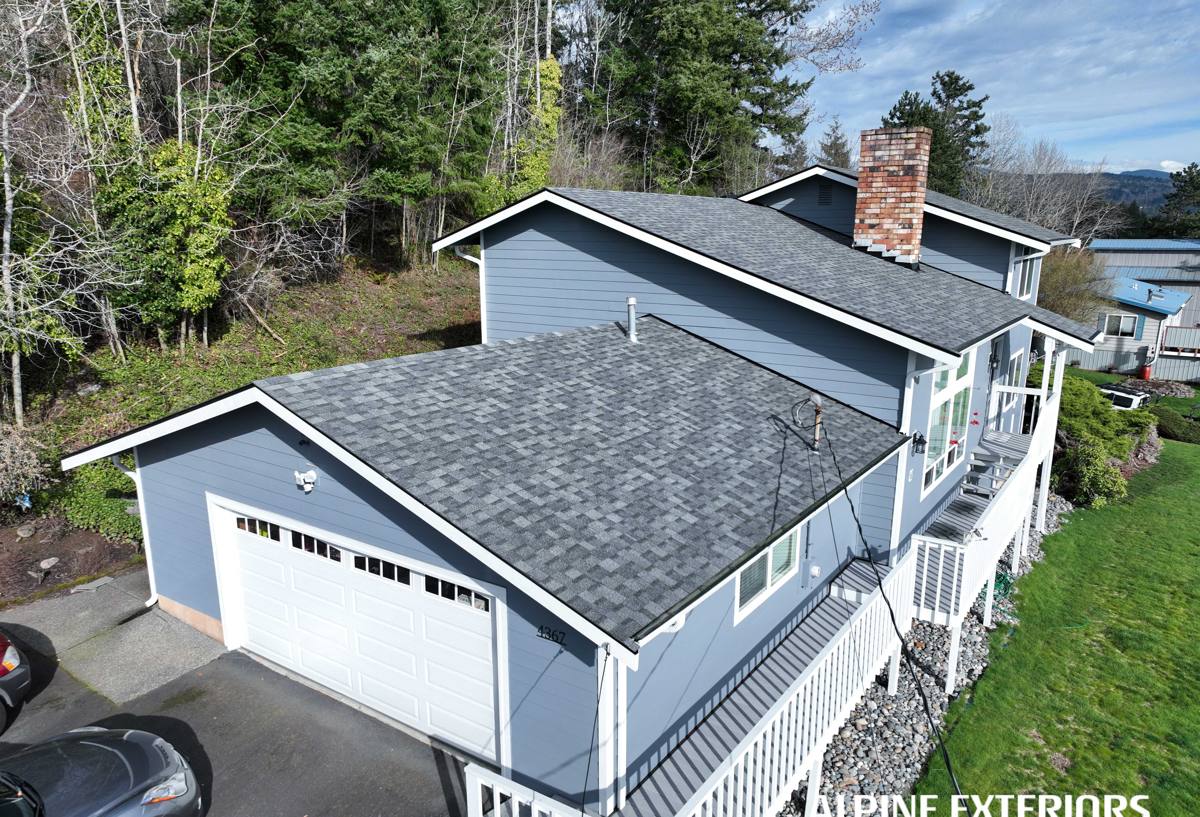
What Bellingham's Climate Does to a Roof
Salt Air and Sustained Moisture
Even neighborhoods set back from the water, like Sunnyland, get a steady flow of moisture-laden, salt-tinged air moving through the region. That's a slower, quieter kind of wear than a single storm. It works on exposed fasteners, flashing seams, and lower-grade metal components over years, not days, which is part of why a roof that looks fine from the ground can have real corrosion or seal failure at the details you can't see from a driveway.
Driving Rain, Not Just Rain
Whatcom County rain is frequently wind-driven, pushed sideways rather than falling straight down. On a roof, that matters most at the transitions: valleys, chimney flashing, skylight curbs, and anywhere two roof planes or a roof and a wall meet. A roofing system that would perform fine under calm, straight-down rainfall can still let water track sideways under shingles or behind flashing here, because the wind is doing something a simpler climate model doesn't account for.
A Long Moss Season
Mild year-round temperatures, heavy tree cover, and near-constant dampness add up to an extended moss and algae season on Bellingham roofs, and Sunnyland's tree canopy makes shaded, north-facing roof slopes especially prone to it. Moss isn't just cosmetic. It holds moisture against the roofing surface, lifts shingle edges as it grows, and works its way under laps and around fasteners over time. Left alone through multiple wet seasons, it shortens the real service life of an otherwise sound roof.
Debris Load From Mature Trees
Neighborhoods with substantial tree cover deal with a heavier, more constant load of needles, leaves, and small branches on the roof and in the gutters than newer, more open subdivisions. That debris holds water against the roofing material and can overwhelm gutters and downspouts during a heavy rain event, sending water where it isn't supposed to go, often along fascia boards and into soffits.
Roofing Systems We Install and Why
We install a limited set of roofing systems rather than a full menu of every product on the market, because we've found that a smaller, well-vetted lineup performs more consistently in this specific climate than trying to be everything to everyone. That generally means quality asphalt composition shingles from established manufacturers for most homes, and standing seam metal roofing for homeowners who want a longer service life and better shedding performance in a wet, mossy climate.
| Roofing System | Typical Lifespan Here | Trade-offs in This Climate |
|---|---|---|
| Asphalt composition shingle | 20–30 years, product dependent | Good value and wide color selection; needs periodic moss treatment and gutter maintenance on shaded slopes |
| Standing seam metal | 40-plus years | Sheds moss and moisture better than shingle, higher upfront cost, fewer surfaces for algae to grip |
| Cedar shake | Highly maintenance dependent | Attractive natural look, but requires disciplined upkeep to resist rot and moss in sustained Whatcom County moisture |
We're upfront that cedar shake is a legitimate, attractive product, and some homeowners want that look on an older Sunnyland home for good reason. Our professional position is that in a climate this consistently wet, cedar demands a maintenance commitment, regular treatment, prompt repair of any damaged shakes, that a lot of busy homeowners underestimate going in. We'll install and maintain it if that's what a homeowner wants, but we'll also tell you plainly what the upkeep actually looks like before you commit to it.
What a Correct Roof Installation Actually Requires
The shingle or panel a homeowner picks is only part of what determines how a roof performs. Underlayment quality, proper nailing patterns, correctly lapped and sealed flashing at every valley and penetration, and attic ventilation that actually moves air all matter as much as the surface material. In a marine climate, ventilation in particular gets overlooked. A roof deck that can't dry out between rain events, because the attic below it is trapping moisture, will fail from the inside well before the shingles wear out on the surface.
Flashing Detail Work
Chimney flashing, skylight curbs, and roof-to-wall transitions are where the large majority of roof leaks actually originate, not out in the open field of the roof. Step flashing that's been reused instead of replaced, counterflashing that wasn't properly set into a reglet, or sealant used as a substitute for correct metal work are common shortcuts that hold up for a year or two and then fail, usually during the first serious wind-driven rain event that hits the house at the wrong angle.
Ventilation and Moisture Management
Proper intake and exhaust ventilation keeps the underside of the roof deck close to outdoor temperature and humidity, which limits condensation and slows the wood decay that damp, poorly ventilated attics are prone to in this climate. On older Sunnyland homes with additions or attic conversions, ventilation is frequently compromised from remodeling work done without accounting for how it changed airflow, and it's one of the first things worth checking on any older roof.
Repair vs. Full Replacement
Not every roofing problem in Sunnyland means a full tear-off. A localized leak around a single chimney or skylight, a section of storm damage, or gutters that need attention can often be repaired without touching the rest of the roof. But when moss and moisture have been working on a roof for multiple seasons, or the roofing material has simply reached the end of its practical service life, patch repairs tend to just delay a larger job while the underlying roof deck continues to take on damage you can't see from the ground. Part of an honest inspection is telling a homeowner plainly which situation they're actually in, rather than defaulting to whichever answer is more profitable.
Roof Cost Factors in Sunnyland
| Factor | What It Affects | Why It Matters Here |
|---|---|---|
| Roof size, pitch, and complexity | Total material and labor | Older Bellingham homes often have more valleys, dormers, and roof-to-wall intersections where wind-driven rain can work its way in |
| Tear-off vs. layover | Labor scope and deck access | Tear-off exposes hidden moisture damage that's common under decades-old roofing in this climate |
| Decking condition | Repair costs before new roofing goes on | Years of trapped moisture from poor ventilation or old leaks can rot roof sheathing before it's visible from outside |
| Material selection | Material cost and expected lifespan | Metal and higher-grade shingle products cost more upfront but shed moss and moisture better on shaded slopes |
| Tree cover and site access | Labor time and equipment needs | Mature tree canopy common in Sunnyland can add debris removal, staging, and cleanup time |
Real numbers depend on the specific roof, which is why we walk the property and get into the attic before quoting rather than pricing off square footage alone.
Signs Your Sunnyland Roof Needs Attention
- Moss or dark streaking that returns quickly after cleaning, especially on shaded or north-facing slopes
- Granules collecting in gutters or at downspout outlets, a sign of shingle wear
- Soft or spongy spots on the roof deck, often found near valleys or chimney flashing
- Water stains or discoloration on interior ceilings, particularly after a heavy wind-driven rain event
- Gutters that overflow or back up during storms despite regular cleaning
- Curling, cracked, or missing shingles after wind events
- Visible daylight or gaps around flashing at chimneys, skylights, or roof-to-wall transitions
Roofing, Siding, Windows, and Decks as One System
A roof problem in Sunnyland rarely stays a roof problem for long. A failing valley or chimney flashing can send water down inside a wall cavity and show up later as siding damage or interior staining nowhere near the original leak. A deck attached to the house can trap moisture against siding and framing in a way that gets blamed on the roof when the water source is actually the ledger connection. Because we handle roofing, siding, windows, and decks, we look at a Sunnyland property as one connected exterior system rather than four separate trades, and we trace problems back to where they actually start instead of treating a symptom and leaving the source untouched.
What to Expect From a Local Roofing Crew
A crew that works Bellingham and Whatcom County roofs regularly has already seen how this specific climate, salt air, driving rain, and a long moss season, plays out on real roofs over years, not just at the moment of installation. That matters when it comes to material selection, flashing detail, and knowing which shortcuts show up as failures two winters later instead of two years later. It also matters for accountability. A local crew with a physical presence in the area is easier to reach if a warranty issue or a storm-related repair comes up down the road, rather than chasing down a company that moved on to the next region after the job was done.
A Few Questions Worth Asking Any Roofer
- Do you carry current liability insurance and workers' compensation coverage, and can you provide proof?
- Who handles the flashing detail work personally, and how much of the crew's experience is specific to this climate?
- What's included in the written warranty, both material and workmanship, and how long does each part last?
- Will you put the scope of work, materials, and cleanup expectations in writing before the job starts?
Straight answers to those questions tell you more about a contractor than a low bid ever will.
Ready for a Straight Answer About Your Roof?
If your Sunnyland roof is showing moss, a slow leak, or you're just not sure how much life it has left, we're happy to take a look. We offer free, no-pressure estimates and will tell you honestly whether you're looking at a repair or a full replacement. There's a form below to get started whenever you're ready.