 Bellingham Roofing
 Roofing and Exteriors for Birchwood Homeowners
Birchwood is one of those Bellingham neighborhoods where the housing stock tells a story — a mix of mid-century ramblers, a good number of split-levels from the 60s and 70s, and newer infill construction tucked in among the older lots. Whatever era your home was built in, the roof, siding, windows, and decks on it have all been fighting the same fight: a long wet season, salt-laden air rolling in off Bellingham Bay, and the moss and moisture pressure that comes with living in Whatcom County. We work on homes throughout this part of Bellingham and understand what that combination does to a building over time.
This page covers what we actually see on Birchwood homes, how we approach roofing, siding, window, and deck work here, and why having a crew that works this specific area — not just "the Pacific Northwest" in general — makes a difference in the quality of the outcome.
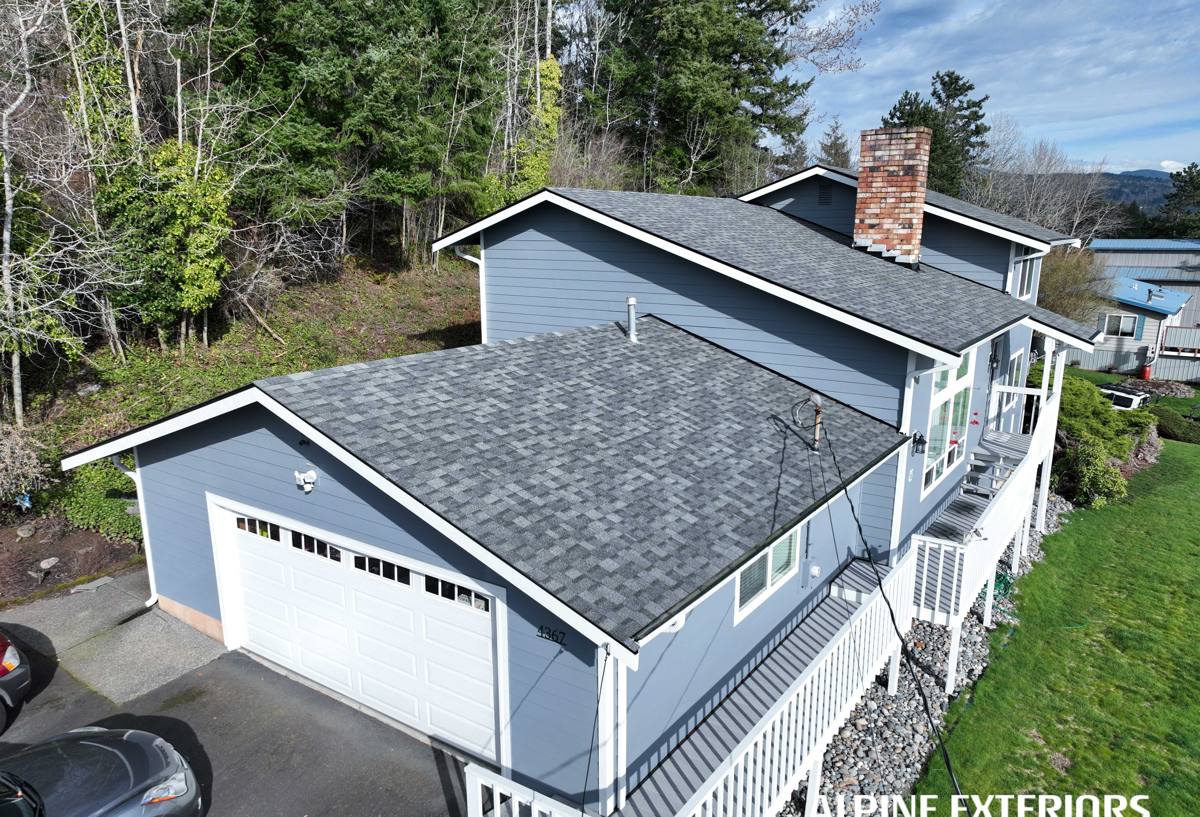
What the Bellingham Climate Does to Birchwood Homes
Salt Air and Driving Rain
Being close enough to the bay to catch salt-laden air matters more than most homeowners realize. Salt air accelerates corrosion on exposed metal — flashing, fasteners, gutter hardware, and any lower-grade hardware used in siding or trim work. It's not dramatic, it's slow. A fastener that would last twenty years inland might show rust streaking in half that time near the water. Combine that with driving rain that comes in sideways during winter storms, and you get moisture finding its way into laps, seams, and joints that would stay dry in a calmer climate.
The Long Moss Season
Bellingham's moss season isn't really a season — on a shaded, north-facing roof slope it can be closer to year-round. Moss and algae hold moisture against roofing material long after a storm has passed, which shortens the life of asphalt shingles, keeps wood siding damp, and can work its way under shingle tabs and lift them over time. Homes in Birchwood with mature tree cover — and there's plenty of it in this part of town — tend to see this more on north- and east-facing slopes that don't get much direct sun to dry out between rains.
What This Means Practically
- Roofs need attention to ventilation and moss control, not just shingle quality, to hit their expected lifespan
- Siding seams, corners, and butt joints are where water intrusion actually starts — installation detail matters as much as material choice
- Window flashing and sealant have to be done correctly the first time, because a bad seal here doesn't show itself until there's already rot behind the wall
- Decks exposed to standing moisture and shade develop soft spots and mildew faster than decks in full sun
Roofing in Birchwood
Most of what we replace or repair on Birchwood roofs falls into a few categories: aging asphalt shingle roofs original or close to original to the home, roofs with moss and algae staining that's gone past a simple cleaning, and roofs with isolated leak damage around chimneys, skylights, or valleys where flashing has failed. We inspect the full system — decking, underlayment, ventilation, and flashing — not just the shingles on top, because a roof that fails early in this climate is almost always failing from underneath or around the edges, not from shingle wear alone.
Repair vs. Replacement
If a roof is sound overall and the damage is localized — a section of lifted shingles, a flashing leak, moss buildup that hasn't caused rot — repair is the honest call. We don't push replacement on a roof that has years left in it. When a roof has widespread granule loss, soft decking, or repeated leak points in different areas, patch repairs stop being cost-effective and full replacement becomes the more honest recommendation.
| Factor | Repair Makes Sense | Replacement Makes Sense |
|---|---|---|
| Age | Under 15-20 years, spot damage | Approaching or past expected lifespan |
| Leak pattern | Single, identifiable source | Multiple leaks, unknown origins |
| Decking condition | Solid underneath | Soft spots, visible rot |
| Moss/algae | Surface level, treatable | Long-term staining with granule loss |
| Ventilation | Adequate, minor fixes | Undersized or blocked, causing damage |
Siding That Actually Handles This Climate
Siding on a Birchwood home has to do two jobs: look good, and keep driving rain and salt air away from the wall assembly behind it. We install fiber cement and quality vinyl and engineered wood siding systems, and we're upfront about which products we don't install and why. Some lower-cost composite and OSB-based siding products carry moisture-sensitivity issues that show up as swelling or delamination at seams and cut edges over time — not because the product is defective, but because it demands near-perfect installation and maintenance discipline that most siding jobs don't get in practice. Given the amount of rain this area sees, we'd rather install something more forgiving of the occasional missed caulk line or aging sealant joint than something with a thin margin for error.
What Matters More Than the Brand
- Proper house wrap and flashing behind the siding, not just the siding itself
- Corner and J-channel details that shed water instead of trapping it
- Correct fastener spacing and type to handle expansion and contraction without cracking or popping
- Caulking and sealant at penetrations — hose bibs, vents, light fixtures — done as part of the job, not an afterthought
Windows: Where Small Gaps Cause Big Problems
Window replacement and repair in this climate is mostly about the seal, not just the glass. An old window with failed seals or gapped flashing lets both drafts and moisture in, and moisture that gets behind a window frame in a rainy climate like Bellingham's doesn't dry out quickly — it sits, and it starts to affect the framing around it. When we replace windows, we pay as much attention to flashing and integration with the surrounding siding as we do to the window unit itself, because a great window installed with a poor seal will fail the same way an old one did, just more slowly.
Decks Built for Wet Weather
A deck in Birchwood spends a lot of its life wet, and often shaded by surrounding trees, which slows drying time even further. That combination is hard on wood decking, hardware, and especially ledger board connections where the deck meets the house — a common point of hidden rot if it wasn't flashed correctly to begin with. Whether you're looking at composite decking for lower long-term maintenance or a wood deck rebuilt with proper flashing and drainage, we build with this area's actual weather in mind, not a generic install.
Deck Health Checklist
- Ledger board flashing intact and free of gaps where it meets the house
- No soft or spongy spots in decking boards, especially near the house or in shaded areas
- Railing posts solid, with no rot at the base
- Proper drainage — water shouldn't pool on the deck surface after rain
- Fasteners and hardware free of significant rust or corrosion
Why a Local Crew Matters Here
Birchwood isn't a subdivision with one house style repeated a hundred times — it's a mix of ages and construction types, and the right approach for a 1960s rambler isn't the same as the right approach for a home built in the last decade. A crew that works Bellingham and Whatcom County regularly has seen how these specific homes age in this specific climate: where moss actually builds up, which siding details tend to fail first near the water, how much a north-facing roof slope differs from a south-facing one in the same yard. That's not something you get from a general contractor working from a national playbook — it comes from doing this work, on these kinds of homes, in this weather, repeatedly.
It also means someone local to call if something isn't right after the work is done. We're not driving in from out of the area for a one-time job.
What to Expect From an Estimate
We look at the actual condition of your roof, siding, windows, or deck — not just the surface — and give you a straight assessment of what needs to happen now versus what can wait. If a repair is the honest answer instead of a full replacement, that's what we'll recommend. Cost ranges depend heavily on square footage, material choice, and the condition of what's underneath the surface, so we'd rather look at the actual project than quote a number that doesn't mean anything until we've seen your home.
If you're in Birchwood or elsewhere around Bellingham and want an honest look at your roof, siding, windows, or deck, reach out for a free, no-pressure estimate using the form below.