 Bellingham Roofing
 Why Sehome Puts Extra Stress on Siding
Sehome sits in central Bellingham on the rise toward Sehome Hill, close enough to the Salish Sea to catch salt-laden air off the water but far enough inland to also collect wind that gets funneled and driven by the surrounding terrain. That combination, salt air, driving rain, and a moss season that can run most of the year under the neighborhood's mature tree cover, wears on exterior materials differently than a drier inland climate would. Whatcom County's marine weather doesn't hit a house all at once; it's a slow, cumulative kind of exposure that shows up first in the details most homeowners never think to check.
Sehome's housing stock is a mix of older homes, mid-century construction, and newer infill, which means the siding already on a lot of these houses was installed under very different standards than what's available today. This page covers James Hardie fiber cement siding specifically: what it needs to do in this neighborhood's climate, what a correct installation actually involves, and how our process works for homeowners here.
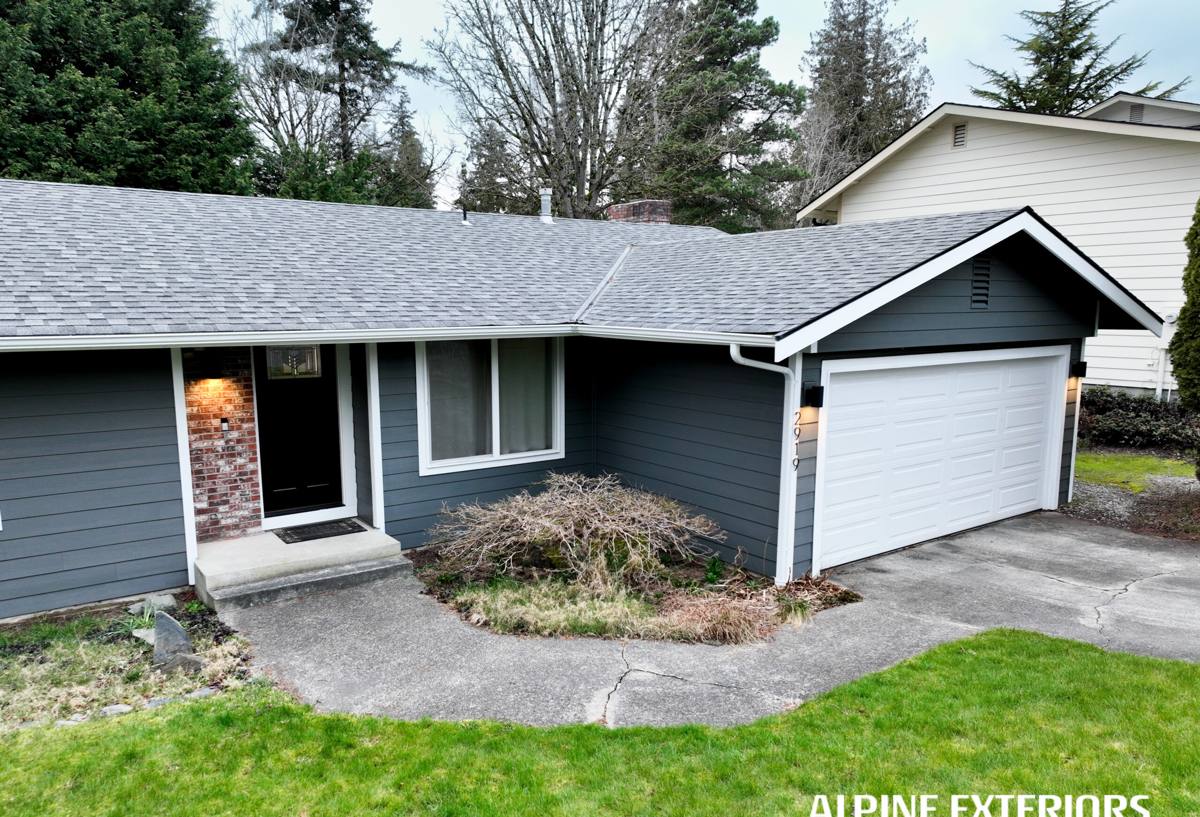
What Salt Air, Rain, and Moss Actually Do to Siding
Salt-Laden Air
Air moving through Bellingham off the Salish Sea carries a mild salt content that reaches well past the immediate waterfront, including inland neighborhoods like Sehome. Salt accelerates corrosion on fasteners, flashing, and any exposed metal trim, and it breaks down lower-grade paint and coatings faster than they'd wear in a dry climate. It's a background condition, not a storm event, which is exactly why it gets underestimated until fasteners start bleeding rust or a finish chalks out years ahead of schedule.
Wind-Driven Rain
Rain in this region rarely falls straight down. Wind pushes it sideways into lap joints, butt seams, and anywhere two pieces of siding or trim meet. A siding system that isn't detailed for that kind of exposure, or that relies on caulk alone to keep water out of a joint, tends to let moisture in behind the surface long before any staining shows up on the outside.
A Long Moss and Mildew Season
Mature trees, mild temperatures, and consistent dampness add up to extended moss and algae growth on Sehome's shaded lots, especially on north-facing walls that don't get enough sun to dry out between storms. Any siding material that's even slightly porous becomes a growth surface over time, and once moss and algae take hold they hold additional moisture against the wall, which compounds the original problem instead of just sitting on the surface.
Why James Hardie Fiber Cement Is What We Install
We install James Hardie fiber cement siding exclusively. We don't offer LP SmartSide, vinyl, Cemplank, Allura, primed spruce, or cedar as alternatives, and that's a professional standard, not a supplier arrangement. Each of those products has a legitimate place in the market and plenty of contractors install them well. Our call is narrower than that: in a climate that combines sustained salt exposure, wind-driven rain, and a long wet season, we'd rather stand fully behind one system than offer a cheaper option that quietly pushes maintenance risk onto the homeowner a few years down the road.
Fiber cement doesn't feed a fire the way wood-based products can, it doesn't swell or cup the way engineered wood can after repeated wet-season cycling, and its factory-applied ColorPlus finish holds color and resists moisture far better than a coating applied on site. Those three properties matter more in Sehome's climate than in most parts of the country, which is exactly why Hardie built product lines specifically engineered for regions like this one.
The Hardie Product Lines That Fit This Neighborhood
HZ5 Engineering
James Hardie makes region-specific formulations, and the HZ5 line is engineered for climates with heavy sustained moisture and freeze-thaw cycling, a closer match to coastal Whatcom County than a generic national-spec product. That engineering affects the cement formulation itself, not just the surface finish, which is part of why it holds up under Sehome's rain and humidity load rather than just resisting it for a season or two.
ColorPlus Factory Finish
ColorPlus color is baked onto the board in a controlled factory process, cured before it ever reaches a job site, rather than brushed or sprayed on after installation. That matters in a climate this wet because field-applied paint has to cure in whatever weather shows up that week, while a factory finish is already fully cured and far more resistant to fading, chalking, and moisture intrusion at the surface.
Plank, Panel, and Shingle Profiles
Most Sehome homes get HardiePlank lap siding, which gives the traditional horizontal look common on the neighborhood's older and mid-century houses. HardiePanel works well on accent walls, gable ends, or more modern facades, and HardieShingle gives a staggered or straight shingle look for homes going for a more traditional or craftsman appearance. The right choice depends on the home's existing lines and the look the homeowner wants, not just what's cheapest to install.
What a Correct Installation Actually Involves
Fiber cement siding fails in the field far more often from installation shortcuts than from the material itself. A correct Hardie installation in a climate like Sehome's comes down to a handful of details that are easy to skip and expensive to fix later.
- Weather-resistive barrier and flashing first. A proper water-resistive barrier goes on the wall sheathing before any siding, with flashing integrated at every window, door, and penetration so water sheds outward and down, never behind the siding plane.
- Correct starter strip and clearances. The bottom course needs a starter strip set at the manufacturer's specified reveal, with a minimum gap above grade, decks, and roof lines so the siding never sits in standing water or gets constant splash-back.
- Kick-out flashing at roof-to-wall intersections. Anywhere a roofline meets a wall, kick-out flashing has to divert water away from the siding instead of letting it run down behind the bottom courses, a detail that's frequently missed on older homes and a common source of hidden rot.
- Proper fastening. Hardie specifies fastener type, spacing, and placement relative to the board's edge; over-driven or misplaced nails crack the board or break the seal at the fastener, both of which become entry points for moisture.
- Correctly treated joints and butt seams. Butt joints need to be caulked, backed, or flashed per Hardie's specification, not just caulked over as a cosmetic finish, since these seams are exactly where wind-driven rain tries hardest to get in.
- Paint or touch-up matched to ColorPlus. Any cut edge or field touch-up needs the correct matched product applied per spec, or it becomes the one spot on the wall that fades and weathers differently than the rest of the siding.
How Our Process Works on a Sehome Siding Project
We start with a walk-through of the home, not a drive-by estimate. On a lot of Sehome's older housing stock, that means checking what's actually happening behind the existing siding wherever we can, especially around windows, roof-to-wall transitions, and any spot showing staining, softness, or paint failure, because those spots tell us more about the wall's real condition than the siding's surface appearance does. From there we walk the homeowner through the Hardie product line, profile, and color options that fit the house, and we give a written scope that spells out tear-off versus overlay, trim work, and any substrate repair we expect to find once the old siding comes off.
During installation, we follow the sequence that protects the wall assembly first: barrier and flashing details before any siding goes up, correct clearances and starter courses, then field installation with fastening and joint treatment to spec. We don't treat flashing and clearances as an afterthought to speed through, because those are the details that determine whether a Sehome home stays dry through its next twenty wet seasons or starts showing moisture problems in five. We finish with a walkthrough where we point out what we did at the details that matter most, so the homeowner isn't just trusting that it was done right.
Comparing Siding Options for a Sehome Home
| Material | Performance in Salt Air & Wind-Driven Rain | Moss & Moisture Behavior | Typical Lifespan Here |
|---|---|---|---|
| James Hardie fiber cement | Engineered for sustained moisture exposure (HZ5); non-combustible | Dense, non-porous surface resists sustained moisture uptake | Multiple decades when installed and maintained to spec |
| Vinyl | Can warp or become brittle with temperature swings; seams are a common water entry point | Doesn't feed moss growth itself, but trapped moisture behind panels goes unseen | Variable; often replaced sooner in exposed coastal conditions |
| LP SmartSide (engineered wood) | Wood-based core is more sensitive to sustained wet exposure than fiber cement | Can swell or delaminate at cut edges and joints if moisture gets behind the surface | Shorter than fiber cement in consistently wet climates if any detail fails |
| Cedar | Naturally moisture-resistant but still an organic material exposed to salt and rain | Prone to graying, checking, and moss growth without regular maintenance | Requires the most ongoing upkeep of the group |
Exact costs on any of these depend on the home's size, the amount of trim and window detail, and how much substrate repair the tear-off uncovers, which is why we walk the property before giving a real number rather than quoting off a flat rate.
Living With the Siding After It's Installed
Fiber cement is low-maintenance compared to wood or engineered wood siding, but low-maintenance isn't no-maintenance in a climate like this one. A yearly rinse to knock loose moss, pollen, and grime keeps organic growth from getting a foothold, especially on shaded, north-facing walls. It's worth walking the perimeter after major storms to check that gutters are draining away from the wall, that no debris is holding moisture against the bottom courses, and that caulking at joints and trim hasn't cracked or pulled away. None of this is heavy work, but skipping it in a climate that runs wet most of the year is how small issues turn into repairs.
Signs Existing Siding Is Losing the Fight in Sehome
- Moss or dark staining that returns within weeks of being cleaned off
- Soft or spongy siding low on the wall, around window trim, or near roof-to-wall intersections
- Paint or finish that's peeling, bubbling, or visibly faded well ahead of its expected life
- Rust streaking below fastener heads or exposed metal trim
- Cracked or gapped caulking at butt joints, corners, or window and door trim
- Warping, cupping, or bowing boards, especially on shaded or north-facing walls
- Visible daylight, drafts, or water staining on interior walls near exterior siding
Why Hiring a Crew That Already Works Sehome Matters
A contractor who works across Bellingham's neighborhoods day to day has already seen how salt air, driving rain, and moss behave on real Sehome houses through a full year of weather, not just how a product performs on a data sheet. That kind of repeated, local experience shapes real decisions on the job: where extra flashing attention pays off given the age of the neighborhood's housing stock, how a sloped lot changes drainage planning around the foundation, and which details are worth the extra time on install day so a homeowner isn't dealing with a callback two winters later. It also means familiarity with how the City of Bellingham and Whatcom County handle permitting and inspection for exterior work, so a project doesn't stall on paperwork a contractor should already know how to handle.
If you're weighing a siding replacement on a Sehome home, we're glad to walk the property, look at what's actually happening behind the existing siding where we can, and put together a straightforward, no-pressure estimate for James Hardie siding done right for this specific house and this specific climate.