 Bellingham Roofing
 Storm Damage Roof Repair for Lynden Homes
Lynden sits inland from Bellingham Bay, out in the open farmland of Whatcom County, and that geography shapes what a storm does to a roof here. There's less direct salt exposure than homes closer to the water, but there's more open ground for wind to build speed across before it hits a roofline. When a Pacific storm system rolls through — and in this part of Washington, several do every winter — Lynden roofs take it from the side as much as from above. Add in the region's long, wet moss season and the driving rain that comes with almost every front, and you've got a climate that wears on roofs in ways a homeowner in a drier state would never have to think about.
Storm damage repair isn't the same job as routine maintenance. It's diagnostic work first, repair work second. The goal is to find every place wind and water got into the roof system — not just the obvious spot — and put it back together correctly, not just cover it up.
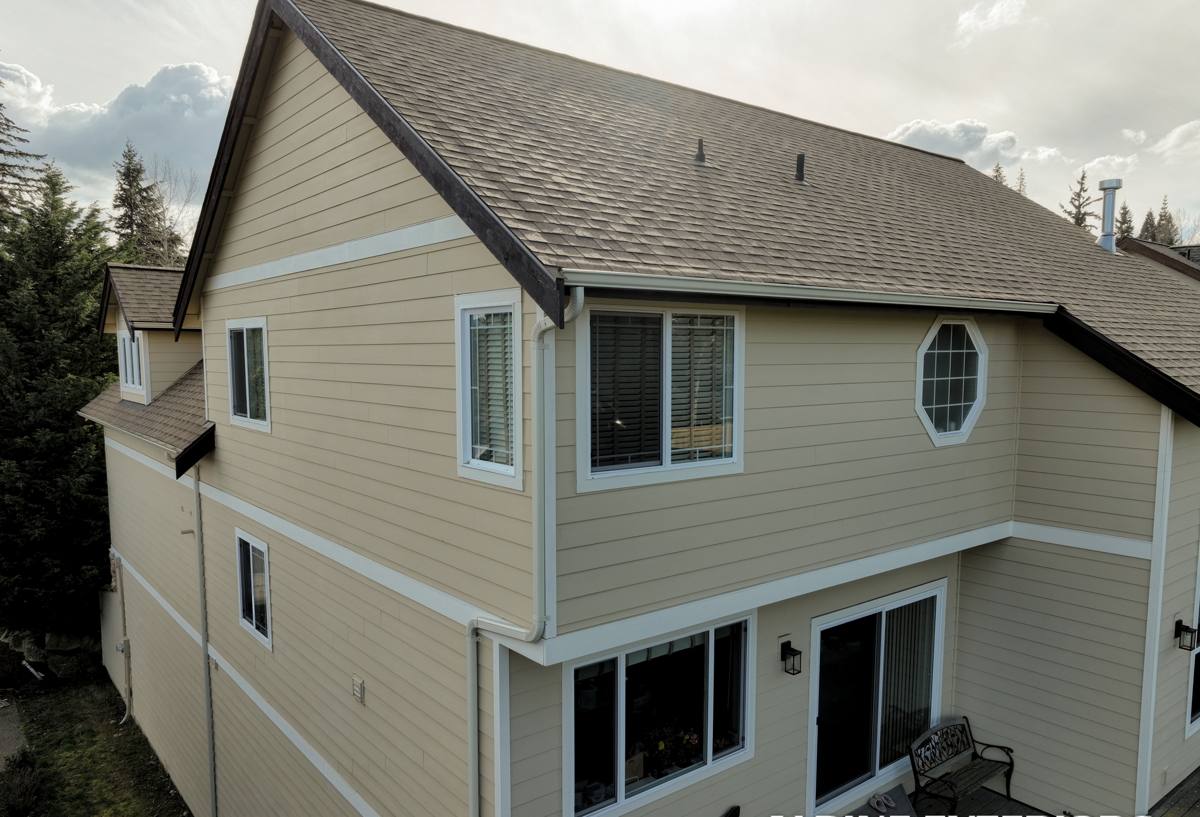
What Whatcom County Storms Actually Do to a Roof
Wind Off the Open Fields
Around Lynden, houses often sit on larger lots with fewer windbreaks than in-town properties. That means gusts hit rooflines at fuller strength, especially on the windward slope and around ridge caps, hips, and any place shingles or panels have an exposed edge. Wind damage often shows up as lifted or missing shingle tabs, creased shingles that have lost their seal, or fasteners that have backed out just enough to let the next storm finish the job.
Driving Rain and Wind-Driven Water
Rain that falls straight down is rarely the problem. Rain that's being pushed sideways by 30-40 mph gusts is a different story — it can work its way under shingle tabs, around flashing, and through any gap that would never leak in calm weather. This is why a roof can pass a casual visual check after a storm and still be leaking into the attic. The damage is often at flashing points: chimneys, skylights, vent boots, and valleys.
Moss Season's Slow Damage
Whatcom County's long wet season, roughly October through April, keeps roofs damp for extended stretches, which is exactly what moss needs to establish. Moss holds moisture against the roofing material, lifts shingle edges as it grows, and can hold enough water to add real weight in a heavy rain event. A roof that's already stressed by moss growth is more vulnerable when a storm hits — lifted edges catch wind more easily, and trapped moisture accelerates rot in the decking underneath.
Storm Damage vs. Normal Wear: Knowing the Difference
Not every roof issue after a storm is storm damage, and not every storm leaves damage. Here's a general guide to what to look for:
| Sign | Likely Storm Damage | Likely Gradual Wear |
|---|---|---|
| Missing shingles | Sudden, clean edges, appeared after a specific wind event | Curling, brittle edges that broke off over time |
| Granule loss | Heavy loss concentrated on one slope facing the wind | Even, gradual loss across the whole roof, often with age |
| Ceiling stains | Appeared within days of a storm, may follow rain events | Slow-growing stain unrelated to specific weather |
| Flashing separation | Bent, pulled, or torn metal near chimneys or valleys | Rust or sealant breakdown from age |
| Debris on roof | Broken branches, displaced material after high wind | Accumulated needles, leaves, moss over a season |
The distinction matters for a couple of reasons. Storm-related damage is what an insurance claim typically covers. Gradual wear generally isn't. A straightforward inspection can usually tell the two apart, but only if someone is looking closely and knows what wind-driven damage looks like versus age.
What a Correct Storm Damage Repair Involves
A rushed storm repair often just addresses the visible symptom — a tarp, a patch, a handful of replaced shingles — without checking whether water already got past the surface layer. A correct repair works from the inside out:
Checking the Deck, Not Just the Surface
If wind lifted shingles or water tracked under flashing, the plywood or OSB decking underneath needs to be checked for soft spots, staining, or delamination before any new material goes down. Replacing shingles over damaged decking just hides a problem that will resurface, usually as a soft spot or a sag.
Matching the Repair to the Roof System
Underlayment, flashing details, and fastening patterns all need to match how the rest of the roof was built, not just whatever is fastest to install. A patch that doesn't tie into the existing system the right way becomes the next leak point.
Addressing the Cause, Not Just the Symptom
If moss contributed to the failure, the repair should include cleaning and addressing drainage or airflow issues that let moss take hold in the first place — otherwise the same spot fails again next wet season.
Our Process for Storm Repairs in Lynden
- Inspection. We walk the roof (or use a lift/drone where a walk-on inspection isn't safe) and check every slope, not just the side facing the reported damage. Wind damage is often worse than what's visible from the ground.
- Documentation. We photograph and note findings in a way that's useful for an insurance claim, if you're filing one — clear, specific, and tied to the storm event.
- Temporary protection. If there's active water intrusion, we get the roof weathertight first — tarping or temporary sealing — so the interior of the home isn't taking on more damage while a permanent repair is scheduled.
- Written scope and estimate. You get a clear description of what's damaged, what needs to be repaired or replaced, and why — before any work starts.
- Repair. Deck repair where needed, correct flashing and underlayment detail work, and shingle or panel replacement matched to your existing roof as closely as possible.
- Final check. We verify the repair is sealed and draining correctly before we consider the job done.
Storm Damage and Insurance Claims
Most homeowners' policies cover sudden storm damage — wind, falling limbs, hail — but not gradual deterioration like age-related wear or long-term moss damage. Because those two categories can look similar to an untrained eye, a documented inspection matters. We're not a public adjuster and don't represent your insurance company, but we can provide the kind of clear, photo-backed documentation that helps a claim move without unnecessary back-and-forth. If a repair turns out to be more maintenance issue than storm damage, we'll tell you that directly rather than let you file a claim that's likely to get pushback.
Materials and Methods: What We Use and Why
For storm repairs, matching materials and installation quality both matter. A few of the choices that affect how well a repair holds up long-term:
| Factor | Why It Matters for Storm-Prone Areas |
|---|---|
| Shingle wind rating | Higher-rated shingles resist uplift better in open, wind-exposed areas like much of Lynden |
| Underlayment type | Synthetic underlayments handle the region's extended wet periods better than older felt products |
| Flashing material and fit | Properly formed and fastened flashing is usually the difference between a repair that holds and one that leaks again next winter |
| Ice-and-water shield placement | Extra protection at valleys, eaves, and penetrations matters even in areas that rarely freeze, because it also blocks wind-driven rain |
| Fastening pattern | Correct nail placement and count is often the actual cause of "storm damage" that's really an installation shortcut finally failing |
We don't push a specific brand as the only option — most quality shingle and underlayment lines perform well when installed correctly. What we won't do is cut corners on fastening or flashing details to save time, because those shortcuts are exactly what shows up as storm damage a few years later.
Why a Crew That Already Works Lynden Matters
Roofing crews that mostly work elsewhere in Whatcom County — or outside the county entirely — don't always have a feel for how differently Lynden's exposure behaves compared to, say, a sheltered lot closer to Bellingham. Knowing which roof orientations catch the worst of a given storm, how moss tends to establish faster on north-facing slopes here, and what the local permitting and inspection process looks like all comes from doing this work in the area regularly. It also means faster response after a storm — when a lot of roofs need attention at once, being local and already scheduled in the area makes a real difference in how quickly a leak gets covered.
After a Storm: A Homeowner's Quick Checklist
If a storm has just come through Lynden, here's what's worth checking before you call anyone — safely, from the ground:
- Look for shingle pieces, granules, or flashing metal in the yard or gutters
- Check gutters and downspouts for new dents, separation, or sagging
- Scan the roofline from the ground for obvious gaps, lifted edges, or missing sections
- Check the attic (if accessible) for new water stains, damp insulation, or daylight showing through the decking
- Note the date and rough conditions of the storm for insurance purposes
- Avoid getting on the roof yourself, especially after a wind event — damaged areas may not support weight safely
- Get a professional inspection before the next rain, even if damage looks minor
Small issues after a storm — a lifted tab, a pulled-back piece of flashing — are far cheaper and easier to fix than the rot or interior damage that shows up after a few more weeks of Whatcom County rain finds its way in.
Get a Free, No-Pressure Estimate
If your Lynden home took a hit in a recent storm, or you just want a roof checked out before the next one rolls through, we're happy to take a look and give you an honest read on what you're dealing with. There's no obligation and no pressure — just a clear inspection and a straight answer. Fill out the form below to get started.