 Bellingham Roofing
 Birch Bay's Marine Climate and What It Does to Windows
Birch Bay sits right on the water, and that changes the math on windows compared to homes even a few miles inland. Salt-laden air off the bay works on aluminum hardware, steel fasteners, and unprotected wood trim year-round, not just during storms. Add Whatcom County's long wet season and you get windows that see near-constant moisture exposure for months at a stretch, with driving rain pushed sideways by wind off the water finding every gap in old flashing and worn weatherstripping.
Then there's moss. The same damp, shaded conditions that grow moss on roofs and siding all over this part of Washington also colonize window sills, trim, and the top edges of frames that don't get sun or airflow. Left alone, that moss holds moisture against wood and painted surfaces for weeks, which is exactly the kind of slow, sustained wetness that causes wood windows to swell, stick, and eventually rot at the corners and sills.
None of this means Birch Bay is a bad place for windows — it means the windows and the installation details have to be chosen with this specific climate in mind. A window that's fine in a dry inland neighborhood can underperform here within a few years if it wasn't spec'd or installed for marine exposure.
What "Custom Windows" Actually Means for This Neighborhood
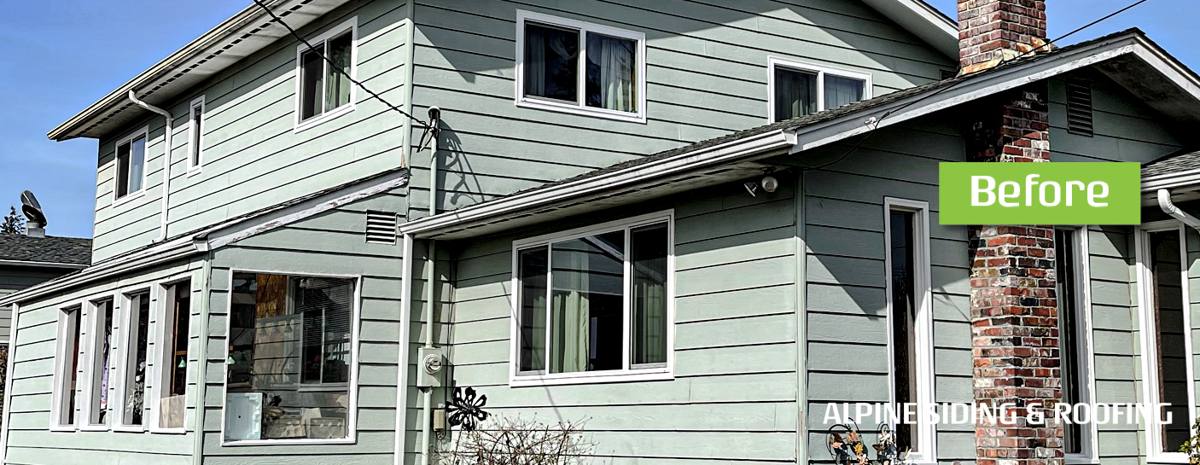
"Custom" doesn't have to mean exotic shapes or high-end architecture, though we do that too. For most Birch Bay homes it means windows sized and detailed to fit an opening correctly, rather than forcing a stock size into a wall that doesn't match it. Older homes near the bay were often built or added onto in ways that don't line up with today's standard window dimensions, and a lot of the leaks and drafts we get called out for trace back to a stock window that was shimmed, packed, or trimmed to fit an opening it was never designed for.
Custom work also covers matching window style to exposure. A window on the water-facing wall of a Birch Bay home takes a different beating than one on the sheltered side, and it often makes sense to spec heavier glass, better weatherstripping, or a different operating style (casement instead of a slider, for example) on the exposed elevations even when the rest of the house uses a simpler window.
When Custom Sizing Is the Right Call
- Additions, sunrooms, or bay windows built at an angle to the original structure
- Older homes with settled or slightly out-of-square openings
- Replacing a non-standard shape — arched, angled, or oversized picture windows
- Upgrading a water-facing wall to a higher wind and water rating than the rest of the house
- Matching a specific sightline or trim detail on a home with a particular architectural style
Signs Your Current Windows Are Losing the Battle
Coastal wear on windows is gradual, so most homeowners notice the small stuff long before a window actually fails outright. Catching it early is cheaper than waiting.
- Fogging or a permanent haze between panes — the seal on the insulated glass unit has failed
- Hardware that's stiff, corroded, or won't latch fully closed
- Visible moss, algae, or black staining on sills, trim, or the bottom rail of the frame
- Soft or spongy wood when you press a thumbnail into the sill or frame corners
- Drafts you can feel with a hand held near the frame edge on a windy day
- Paint that's bubbling or peeling specifically around the window, not the rest of the wall
- Condensation forming on the inside of the glass regularly, even in mild weather
Any one of these on its own might just mean a window needs cleaning or minor repair. Two or three together, especially on a wall that faces the water or prevailing weather, usually means the window's ability to shed water and hold a seal is already compromised.
Frame and Glass Choices That Hold Up Near Salt Air
There's no single "best" window material — each has a real trade-off, and the right call depends on the wall, the budget, and how much upkeep you want to take on.
| Frame Material | How It Handles Salt Air & Rain | Maintenance | Best Use in Birch Bay |
|---|---|---|---|
| Vinyl | Won't corrode or rot; performs well in marine exposure | Low — occasional cleaning | Most walls, especially budget-sensitive replacements |
| Fiberglass | Very stable in wet/dry cycling, resists warping | Low | Water-facing walls, larger openings |
| Wood | Needs a sound, intact exterior finish to resist rot near salt air | High — regular refinishing | Interior aesthetic where exterior is clad or protected |
| Wood-clad (aluminum or fiberglass exterior) | Good, as long as cladding and flashing details are done correctly | Moderate | Homes wanting a wood interior look with a protected exterior |
| Aluminum | Prone to corrosion and condensation near salt air unless thermally broken | Moderate to high | Limited — we typically steer clients away from bare aluminum on exposed walls |
Glass Packages
For this area, dual-pane with a Low-E coating and argon fill is the practical baseline — it cuts heat loss and helps control condensation, which matters given how often the air here sits at high humidity. Triple-pane adds cost and weight but is worth discussing on walls that take direct wind and rain, or for homeowners who want the extra sound dampening off the bay. We'll walk through what actually pays off for your specific exposure rather than upselling glass you don't need.
How We Install Custom Windows in Birch Bay
The window unit itself is only part of the job. Installation quality is what determines whether that window is still performing in ten years or leaking in two.
1. Measure and Assess the Opening
We check the opening for square, level, and plumb, and look at the condition of the framing and sheathing behind the existing window before ordering anything. This is where we catch hidden rot or water damage that a lot of quick estimates miss.
2. Remove the Old Window and Inspect the Wall Cavity
Once the old window is out, we can see the sill pan, header, and jamb framing directly. Any soft or water-damaged wood gets addressed before a new window goes in — installing a new window over compromised framing just hides a problem instead of fixing it.
3. Install a Proper Sill Pan and Flashing
This is the single most important step for a coastal home. A correctly lapped sill pan and flashing sequence directs any water that gets past the window itself back out of the wall instead of into the framing. Given how much wind-driven rain Birch Bay gets, we don't shortcut this step.
4. Set, Shim, and Fasten the Window
The window is set square and plumb, shimmed at the correct load points, and fastened per the manufacturer's schedule — not just at the corners.
5. Seal and Insulate
Low-expansion foam or backer rod and sealant fills the gap between the frame and rough opening, and exterior sealant is applied at all the joints where water could otherwise track in.
6. Finish Trim and Final Weatherproofing
Exterior trim, flashing tape, and any cladding details are finished and inspected before we call the job done.
Flashing, Sealing, and Long-Term Moisture Control
A lot of window callbacks anywhere on the coast trace back to flashing that was installed out of sequence — house wrap over flashing instead of under it, or a sill pan that wasn't lapped correctly. Water doesn't need a big gap to get in; wind-driven rain off the bay will find a pinhole gap if the layers aren't shingled correctly, top over bottom, so gravity and wind pressure both work with the assembly instead of against it.
We also pay attention to drainage paths behind the window — weep holes kept clear, sill pans that actually slope outward, and sealant used at the right joints rather than everywhere (sealing the wrong joint can trap water instead of letting it drain).
Moss, Algae, and Keeping Sills Clean
Because Birch Bay's moss season runs long, sills and trim on shaded or north-facing walls need periodic attention independent of the window itself. A quick brush-off and rinse a couple of times a year keeps organic growth from taking hold and holding moisture against the frame. On wood or wood-clad windows especially, this small habit does more for the finish's lifespan than almost anything else a homeowner can do.
What Custom Windows Typically Run
Every home and opening is different, so treat this as a general range rather than a quote — the table below shows the main factors that move the number up or down.
| Factor | Effect on Cost |
|---|---|
| Standard vs. custom-sized opening | Custom sizing and non-standard shapes add fabrication cost |
| Frame material (vinyl vs. fiberglass vs. wood-clad) | Fiberglass and wood-clad run higher than vinyl |
| Glass package (dual-pane vs. triple-pane) | Triple-pane adds cost but may be worth it on exposed walls |
| Condition of the existing wall/framing | Hidden rot repair adds labor once the opening is exposed |
| Number of openings done at once | Bundling multiple windows typically lowers the per-unit cost |
| Access and site conditions | Second-story or hard-to-reach openings add labor time |
We'll give you a real, itemized number after we've actually looked at your openings — not a phone estimate that changes once we're on-site.
Why Local Experience in Birch Bay Matters
A crew that regularly works this stretch of Whatcom County's coastline already knows which frame materials hold up on a water-facing wall, how far wind-driven rain travels up a wall during a winter storm, and what a moss-prone north side needs that a south side doesn't. That's not something you get from a spec sheet — it's from having done the work here and seen what fails and what doesn't a few years down the road.
It also means we're realistic about what marine exposure requires versus what's overkill. Not every window on your home needs the heaviest-duty option — usually it's the walls facing the bay or the prevailing wind that deserve the upgrade, while more sheltered walls can use a more standard specification without giving anything up.
Get a Straight Answer on Your Windows
If you're dealing with drafts, fogged glass, sticking sashes, or just want to know whether your current windows are holding up the way they should in Birch Bay's climate, we're glad to take a look. Reach out for a free, no-pressure estimate — we'll walk your home, tell you honestly what needs attention and what doesn't, and give you real numbers to work from.