 Bellingham Roofing
 Why Lynden Decks Wear Out Faster Than People Expect
Lynden homeowners often assume a deck is a twenty-year investment because that's what the lumberyard tag says. In practice, most decks in this part of Whatcom County start showing structural problems well before that, and it's rarely the decking boards that fail first. It's what's underneath: the ledger board, the footings, and the joists — the parts nobody looks at until a board flexes or a railing wobbles.
The reason is straightforward. Lynden sits inland from Bellingham Bay, so it doesn't take the direct salt spray that coastal parts of the county deal with, but it gets the same long, wet shoulder seasons, heavy fall and winter rain, and stretches of low sun that keep wood damp for days at a time. Add mature trees and fenced yards that shade a deck for part of the day, and you get ideal conditions for moss, algae, and slow rot to set in exactly where drainage is worst.
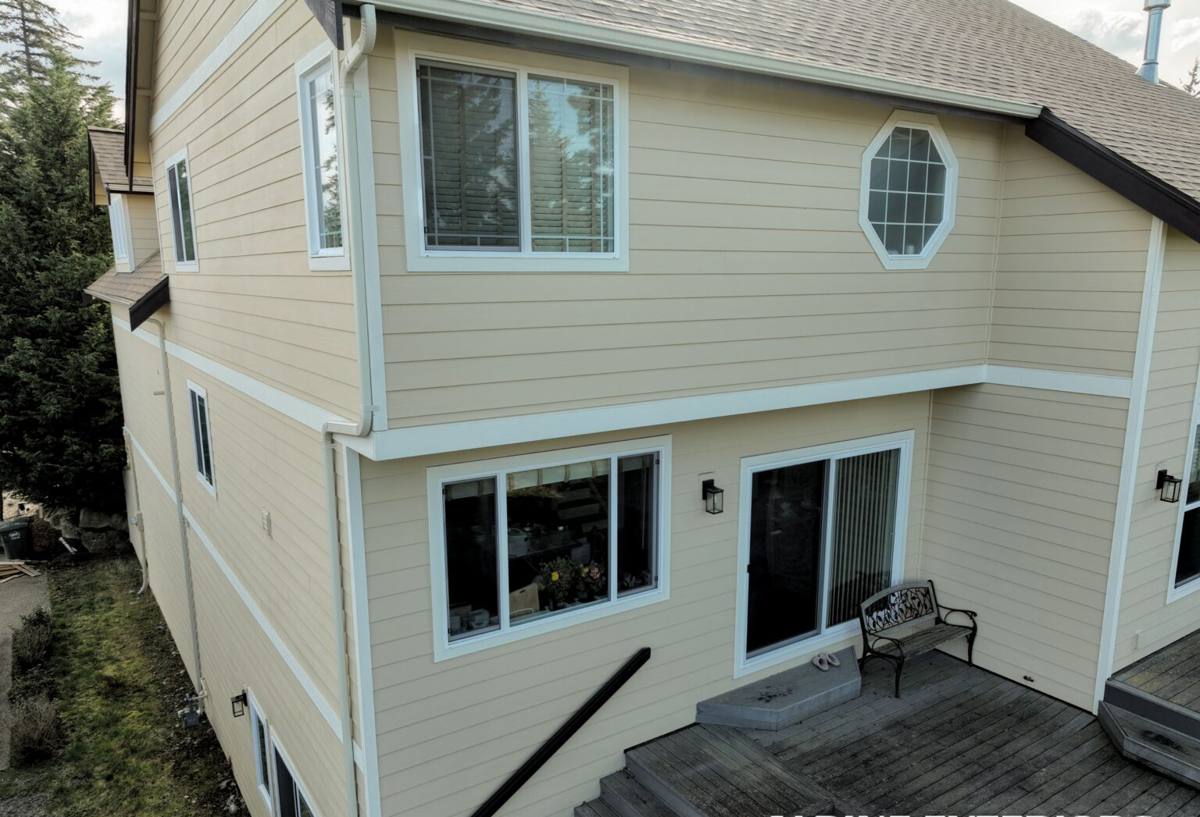
What Whatcom County Weather Actually Does to a Deck
It helps to understand the failure pattern instead of just reacting to symptoms.
Driving Rain and Standing Moisture
Whatcom County's rain doesn't just fall straight down — wind-driven rain gets pushed sideways into ledger connections, under flashing, and into any gap where two pieces of framing meet. Once water sits in a joint instead of shedding off, decay starts even if the surface wood still looks fine.
The Long Moss Season
Moss and algae thrive in shade and moisture, and Whatcom County gives them months of both. On a deck, moss doesn't just look bad — it holds water against the board surface, which accelerates rot in wood decking and can stain or degrade the surface layer on composite products if it's never cleaned off.
Freeze-Thaw Cycling
Lynden gets more frost than the immediate coastline. Water that's soaked into a crack or a fastener hole expands when it freezes, which widens the crack. Over several winters, that cycle turns small cosmetic cracks into real structural weak points, especially in older or under-spec framing.
Signs Your Deck Needs Replacement, Not Just Repair
Not every deck problem means starting over. But there are signs that point toward replacement being the honest recommendation rather than another round of patching:
- Soft or spongy spots in the decking boards, especially near the house or in shaded corners
- A ledger board that's pulling away from the house, or flashing that's missing or clearly failed
- Rot or soft wood where posts meet footings, or footings that have shifted or heaved
- Railings or stairs that flex noticeably under normal weight
- A deck built before current fastener and connection codes, especially older decks attached with nails instead of proper structural hardware
- Persistent moss or algae growth that keeps coming back no matter how often it's cleaned
If a deck is showing two or more of these at once, repair usually just delays the same conversation by a year or two — often at a higher total cost than replacing it properly now.
What a Correct Deck Replacement Actually Involves
A deck replacement done right isn't just swapping old boards for new ones. It starts below the surface:
Ledger and Attachment
The ledger board — where the deck attaches to the house — is the single most important connection on the structure and the most common source of failure. It needs proper flashing, correct fasteners, and a real gap or drainage plane so water sheds away from the house instead of pooling behind the board.
Footings and Posts
Footings need to sit below frost depth and bear on solid, undisturbed soil. On a replacement, we check whether existing footings are adequate or whether they need to be reset — reusing undersized or shifted footings just to save time is how a "new" deck ends up with the same problems in a few years.
Framing and Joist Spacing
Joist spacing and beam sizing need to match the actual span and the load the deck will carry — furniture, a hot tub, a grill, however the family actually uses the space. This is also where current code has moved forward the most compared to decks built ten or fifteen years ago, particularly around structural connectors at the ledger, posts, and joist hangers.
Decking Surface and Drainage
Whatever decking material goes on top, it needs consistent gapping for drainage and airflow underneath. Tight, uneven gaps are one of the most common causes of premature moss buildup and trapped moisture we see on decks in this area.
Decking Material Options for Lynden Homes
There's no single "best" decking material — it's a real trade-off between upfront cost, maintenance, and how the material handles the wet, shaded conditions common in this part of the county.
| Material | Upfront Cost | Maintenance | How It Handles Local Climate |
|---|---|---|---|
| Pressure-treated wood | Lowest | Annual cleaning, periodic staining/sealing | Prone to moss and graying if not maintained; needs the drainage gap done right |
| Cedar | Moderate | Regular sealing to keep natural rot resistance intact | Handles moisture well when maintained, but neglect shortens its life fast |
| Composite decking | Higher | Occasional washing, no staining/sealing | Resists rot well; needs periodic cleaning to keep moss/algae from staining the surface |
| PVC / capstock boards | Highest | Minimal — mostly rinsing | Best moisture resistance of the group; higher material cost offsets lower upkeep |
We install wood and composite/PVC decking based on the homeowner's budget and maintenance appetite — not a house preference. Our job is to lay out the honest trade-offs and let the family choose what fits how they actually want to spend their weekends.
Our Deck Replacement Process
- On-site evaluation — We look at the existing structure, footings, ledger condition, and drainage before quoting anything, so the estimate reflects what's actually there, not a guess.
- Plan and permit — We handle the scope of work needed for permitting where required, sized correctly to the footprint and use of the deck.
- Demolition — Full removal of the old structure down to sound framing or bare ground, including proper disposal.
- Footings and framing — New or reset footings, correctly sized framing, and code-compliant structural connections at every ledger, post, and joist.
- Decking and railing installation — Consistent board spacing for drainage, proper fastening, and railing built to current code for spacing and load.
- Final walkthrough — We go over the finished deck with the homeowner, including basic maintenance guidance specific to whatever material was installed.
Cost Factors for Lynden Deck Replacement
Every deck is priced from the actual site conditions, but the variables that move the number the most are consistent:
| Factor | Why It Matters |
|---|---|
| Deck size and shape | Square footage and the number of angles, steps, or level changes drive labor and material |
| Decking material chosen | Wood, composite, and PVC carry different material costs and installation time |
| Footing and framing condition | Whether existing footings can be reused or need to be replaced changes the scope significantly |
| Height and access | Elevated decks with stairs or tricky site access take more labor than a low, simple deck |
| Railing style | Basic code-compliant railing vs. custom or cable railing changes both material and install time |
We give a firm, written quote after the on-site look — not a phone estimate — because guessing on footing condition or framing is exactly how a project ends up with change orders halfway through.
Permits and Working With Local Code
Deck replacements in Whatcom County typically require a permit once the deck exceeds a certain size or height, and inspections check footings, framing, and railing before the project closes out. We build to pass inspection the first time — not because it's required, but because a deck that barely scrapes by on framing or attachment is a deck that causes problems in five years, and that's not the kind of work we want our name on.
Why a Crew That Already Works Lynden Matters
A lot of deck problems we get called out to replace weren't built badly on the day of installation — they were built by a crew that installed the same design regardless of where the house sat. A deck that's shaded most of the day and sits low to wet ground needs different drainage and fastener choices than one that gets full sun in an open yard, even if both are technically "in code."
Working across Whatcom County — including Lynden and the rest of Bellingham's surrounding communities — means we've seen how this specific mix of rain, shade, and moss plays out on real decks over real years, not just on a spec sheet. That shapes how we frame, flash, and space every deck we build here, not as an upsell, but because it's the difference between a deck that needs real work again in eight years and one that doesn't.
Questions to Ask Before Hiring a Deck Contractor
- Will you inspect and evaluate the existing footings and ledger before quoting the project?
- What decking materials do you install, and what are the honest maintenance differences between them?
- Will the project be permitted and inspected according to current Whatcom County requirements?
- What structural hardware and fasteners will be used at the ledger, posts, and joists?
- Is the quote a firm written estimate based on an on-site visit, not a phone or online guess?
If your deck is showing soft spots, moss that won't quit, or just feels older than its years, we're glad to come take an honest look. The estimate is free, there's no pressure, and you'll get a straight answer on whether it's time to replace or whether a repair still has some life left in it — just fill out the form below to get started.