 Bellingham Roofing
 Birchwood's Siding Takes a Different Kind of Beating
Birchwood sits close enough to Bellingham Bay and Lake Whatcom that homes here deal with a specific combination of exposures: salt-tinged air moving in off the water, long stretches of driving rain through fall and winter, and heavy tree cover that keeps siding shaded and damp for weeks at a time. None of those things alone is unusual for Whatcom County. Together, on the same house, they add up to a lot of stress on whatever material is covering the walls.
Salt air is corrosive to exposed metal fasteners and trim, and it accelerates the breakdown of paint films over time. Driving rain — rain that comes in sideways during a windstorm instead of falling straight down — finds every gap in flashing, caulking, and butt joints that a calmer climate would never test. And shade from mature trees means siding in Birchwood often doesn't get the sun exposure that dries it out between storms, which is exactly the condition moss and algae need to take hold. A siding product and installation that would hold up fine in a drier, sunnier part of the state can fail years early here.
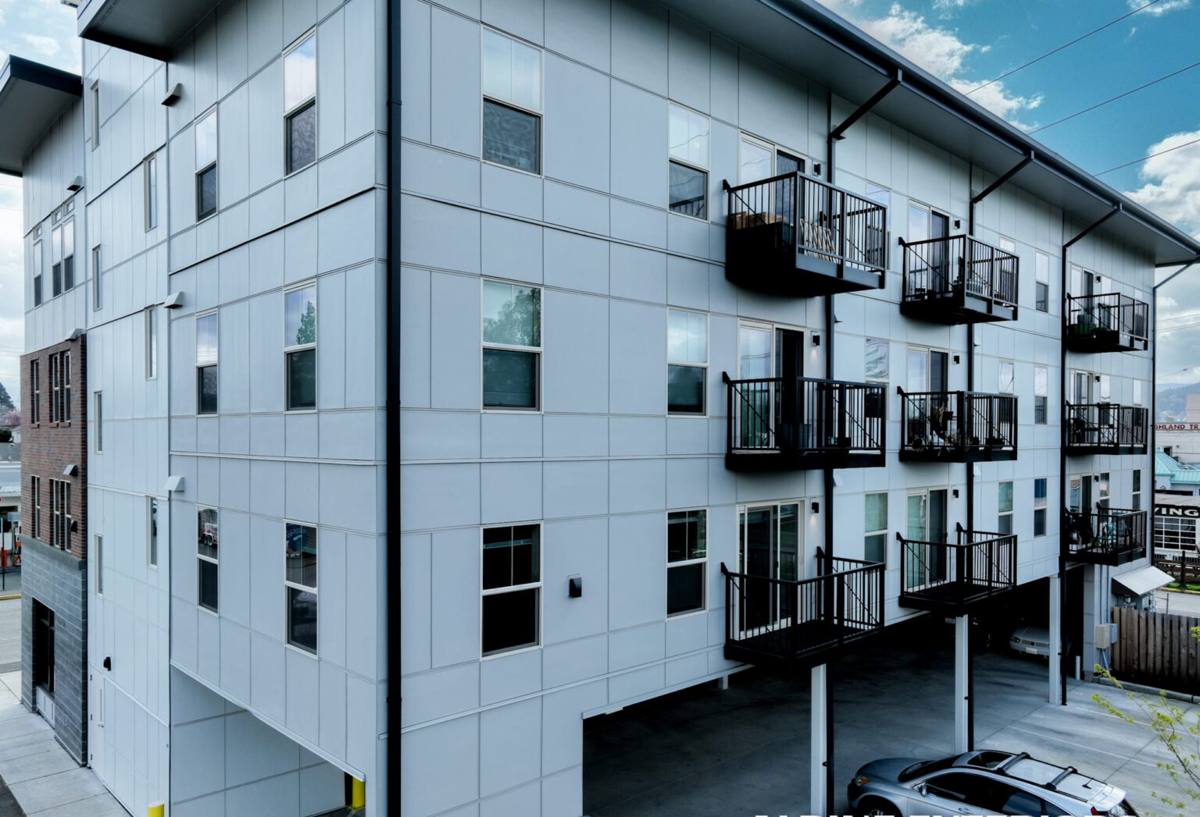
What Siding Actually Needs to Do in This Neighborhood
Before talking about products, it helps to be clear about the job the siding is doing. In Birchwood, siding needs to:
- Shed water fast and keep it moving down and away from the wall assembly, not just resist it
- Hold its finish and color without chalking, fading, or peeling under repeated wet-dry cycles
- Resist moisture absorption at cut edges, seams, and fastener penetrations — the places where most siding failures actually start
- Stay dimensionally stable through the swelling and shrinking that comes with a wet climate, so joints and caulk lines don't open up
- Tolerate long periods of shade and dampness without rotting or hosting moss and mildew growth
This is the standard we hold every job to, and it's also the reason we don't install every product on the market.
Why We Only Install James Hardie
We install James Hardie fiber cement exclusively — not vinyl, not LP SmartSide, not Cemplank or Allura, not primed spruce or cedar. That's a deliberate standard, not a sales pitch, and it's worth explaining honestly.
Vinyl siding is inexpensive and low-maintenance, and for some budgets and some homes it's a reasonable choice. But it's a thin plastic product that expands and contracts noticeably with temperature swings, can crack in cold snaps, and isn't repairable in the way fiber cement is — a damaged panel usually gets replaced, not patched. LP SmartSide is engineered wood, which means it performs well when the factory coating and installation details are perfect, but wood-based siding is inherently more vulnerable to moisture intrusion at cut edges and seams than a cement-based product, and Birchwood's wet, shaded conditions are exactly the environment where that vulnerability shows up over time. Primed cedar and spruce look great new but require an ongoing paint and sealing commitment that most homeowners underestimate, especially in a climate that rarely gives siding a long dry stretch to cure a fresh coat.
James Hardie fiber cement is cement, sand, and cellulose fiber — it doesn't rot, it isn't attractive to insects, and it's non-combustible. Its ColorPlus factory finish is baked on under controlled conditions rather than field-painted, which gives it better adhesion and color retention than site-applied paint, and Hardie's HZ5 product line is specifically engineered for the freeze-thaw and moisture exposure found in the Pacific Northwest. It's also backed by a transferable limited warranty, which matters to a lot of Birchwood homeowners thinking about resale.
| Factor | James Hardie Fiber Cement | Vinyl | Engineered Wood (LP SmartSide) |
|---|---|---|---|
| Moisture resistance at cut edges/seams | Strong — cement-based, doesn't absorb and swell | Good, but seams can gap with thermal movement | Depends on field-sealing every cut edge correctly |
| Finish durability | Factory-baked ColorPlus, resists fading and peeling | Color molded in, but can chalk and fade over decades | Factory primer/finish, still needs field touch-up at cuts |
| Performance in shaded, damp conditions | Non-combustible, doesn't rot or feed mold | Doesn't rot, but can trap moisture behind panels | Wood substrate is more vulnerable if moisture gets in |
| Repairability | Individual boards can be replaced | Panels typically replaced, matching old color is hard | Individual boards can be replaced |
| Warranty | Long-term, transferable limited warranty | Varies widely by manufacturer and grade | Manufacturer warranty, often void if install specs aren't met |
What a Correct Fiber Cement Installation Actually Involves
Fiber cement siding is only as good as its installation. Hardie's own technical bulletins are specific for a reason — the material performs exactly as designed when the details are followed, and it can fail well short of its potential when they're skipped. On a Birchwood home, we pay particular attention to:
Water Management Behind the Siding
A correctly installed weather-resistant barrier and properly lapped flashing at every window, door, and penetration matter more in a house that sees driving rain than in a drier climate. Siding is the visible layer, but the drainage plane behind it is what actually keeps water out of the wall assembly.
Clearances and Gaps
Hardie specifies minimum clearances from grade, roof lines, decks, and other flatwork, along with gapping at butt joints and trim to allow for expansion. Skipping these is one of the most common causes of moisture problems in fiber cement installs, and it's an easy thing for a crew unfamiliar with the product to get wrong.
Fastening
Corrosion-resistant fasteners, driven to the correct depth and pattern, are non-negotiable this close to the bay. Overdriven or underdriven nails compromise both the water-shedding lap and the long-term hold of the board.
Caulking and Sealant
Only at the joints and penetrations Hardie's install guide calls for — not everywhere, and not as a substitute for proper flashing. Over-caulking can actually trap moisture rather than keep it out.
Our Process, Start to Finish
- Walkthrough and assessment — we look at the existing siding, trim, and water management details, not just the surface condition, and flag anything (rot, old flashing, drainage issues) that needs to be addressed before new siding goes on.
- Written estimate — a clear scope covering product line, color, trim details, and what's included, so there are no surprises mid-project.
- Prep and tear-off — removing old siding, repairing any sheathing or framing damage found underneath, and installing a correct weather-resistant barrier.
- Installation to Hardie spec — flashing, clearances, fastening, and gapping done to manufacturer requirements, not shortcuts.
- Final walkthrough — checking trim, caulk lines, and finish with you before we call the job done.
Why a Crew That Already Works Birchwood Matters
Fiber cement installation isn't exotic work, but doing it well in this specific neighborhood benefits from knowing what the local exposure actually looks like — where the wind-driven rain tends to hit hardest, how much shade a given lot gets through the wet months, and what condition older siding and trim in the area tends to be in when it's time to replace it. A crew that regularly works Bellingham and the surrounding Whatcom County neighborhoods has already seen how these houses age, which means fewer surprises once tear-off starts and a better sense of where extra flashing attention actually pays off.
It also means straightforward accountability. We're not a traveling install crew passing through — we're working in the same communities we live near, which is part of why we stand behind the work.
Keeping Siding Healthy Through Birchwood's Wet Season
Even the right product installed correctly benefits from a little homeowner attention, especially under tree cover. A short seasonal checklist:
- Rinse siding annually with a garden hose and soft brush — avoid pressure washers, which can force water behind laps and trim
- Trim back tree branches and shrubs that keep siding shaded and damp against the wall
- Check gutters and downspouts each fall so overflow isn't running down the siding face
- Look for green or black staining at north-facing or shaded walls early, before it spreads
- Have caulk lines and trim joints inspected every few years — small gaps are cheap to reseal, expensive to ignore
What Drives the Cost of a Birchwood Siding Job
| Factor | Why It Matters |
|---|---|
| Home size and wall complexity | More corners, gables, and trim details mean more labor and material waste |
| Condition of existing sheathing | Hidden rot or water damage found at tear-off adds repair work before new siding goes on |
| Hardie product line and profile | Lap width, texture, and product line (HardiePlank vs. HardiePanel, for example) affect material cost |
| Trim and accessory work | Corner boards, window trim, and soffit work are often bundled with a siding project |
| Access and site conditions | Sloped lots, tight setbacks, or mature landscaping can add time to a job |
We don't quote prices without seeing the house — anyone who does is guessing. What we can tell you upfront is that we price the job as James Hardie fiber cement, done to spec, with nothing substituted to hit a lower number.
Get a Local Estimate
If your Birchwood home's siding is showing its age — fading, moss staining, soft spots at the bottom edges, or caulk that's cracked and pulled away — it's worth having someone take a real look before winter's rain sets in again. We offer free, no-pressure estimates and are happy to walk you through exactly what we'd recommend and why. Use the form below to get started.