 Bellingham Roofing
 Why Decks Age Differently in Birch Bay
Birch Bay sits right on the water, and that changes what a deck has to survive. Homes a few blocks inland in Bellingham deal with plenty of rain, but a deck in Birch Bay also takes on salt-laden air, near-constant wind exposure, and moisture that sits in shaded, north-facing corners for months at a time. None of that is dramatic on its own. It's the accumulation over years that causes trouble: corroded fasteners nobody can see until a board comes loose, ledger boards that trap water against the house, and a slow green film of moss and algae that turns a deck surface slick every fall through spring.
A deck built without accounting for this environment can still look fine for a season or two. The failures show up later, and they usually show up in the parts that are hardest to fix after the fact — framing, flashing, and fastener choice. That's why deck building in this part of Whatcom County isn't just a scaled-down version of a general contracting job. It's a set of specific decisions made up front so the structure holds up long after the finish coat wears off.
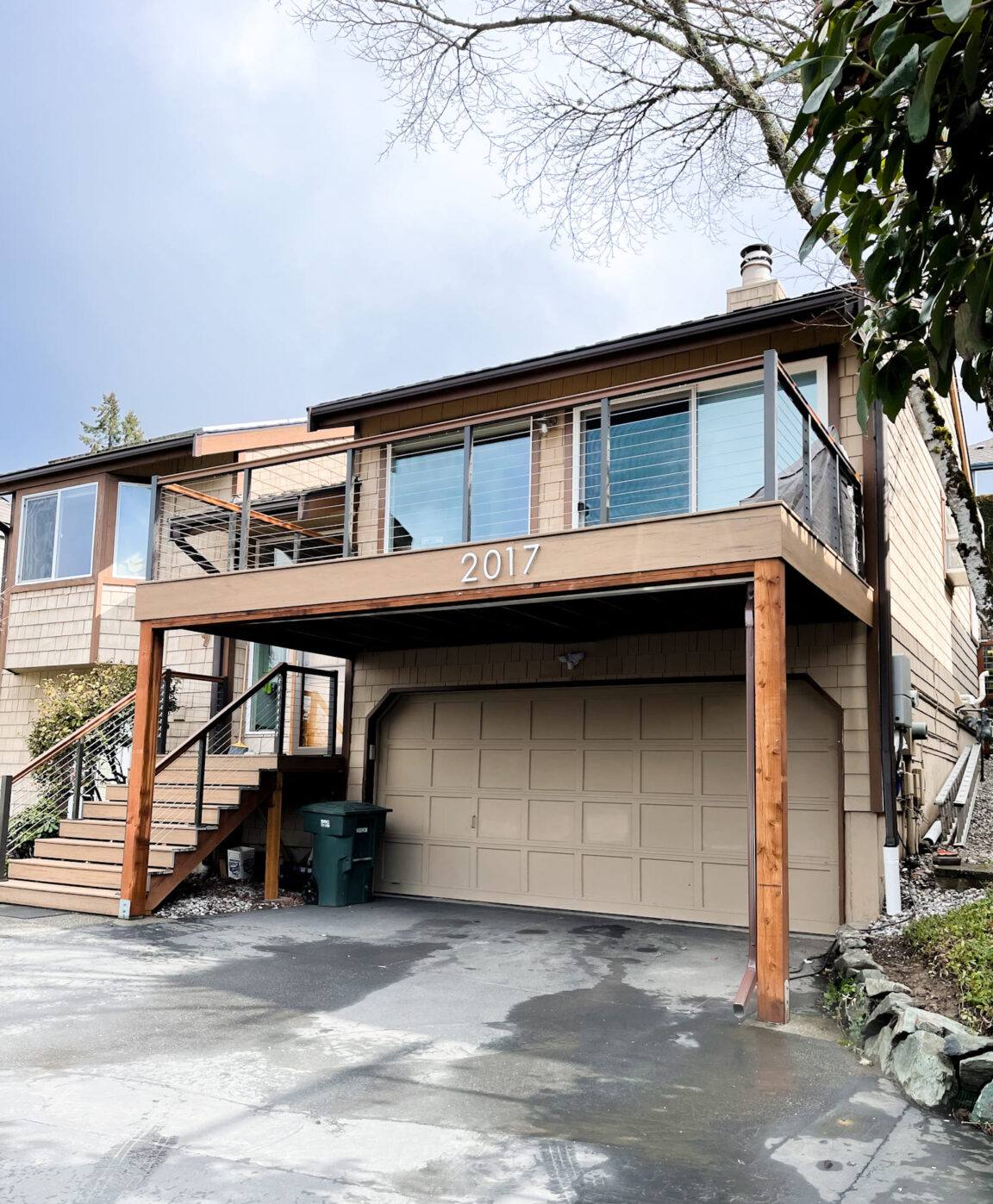
What Birch Bay's Climate Actually Does to a Deck
Salt Air and Corrosion
Airborne salt from Birch Bay itself accelerates corrosion on any metal component that isn't rated for a marine or coastal environment. Standard hot-dip galvanized fasteners can hold up reasonably well inland, but that close to the water they corrode faster than homeowners expect, sometimes staining the decking around each screw head within a couple of years. Structural hardware — joist hangers, post bases, ledger bolts — takes the same exposure and is far more consequential if it fails, since it's holding the deck to the house.
Driving Rain and Wind-Driven Moisture
Wind off the water doesn't just bring rain straight down — it pushes it sideways, into places a typical deck design assumes will stay dry. Ledger connections, stair stringers, and any exposed end grain take on more moisture here than they would on a sheltered inland lot. Without the right flashing and gapping details, that moisture gets trapped rather than shed, and trapped moisture is what rots framing from the inside before it ever shows on the surface.
The Long Moss Season
Whatcom County's moss season runs long — often eight months or more of the year with enough shade and dampness to support growth. On a deck, moss and algae aren't just cosmetic. They hold moisture against the decking surface, make boards dangerously slick, and on softer wood species can contribute to surface decay over time. A deck's board spacing, drainage path, and surface texture all affect how much moss problem a homeowner ends up managing.
What a Correctly Built Deck Needs Here
Framing and Structural Hardware
For a coastal-exposure job, we spec fasteners and structural connectors rated for the corrosion level the site actually sees — not just whatever meets the minimum code requirement inland. That includes joist hangers, ledger lag bolts or through-bolts, and post connections. We also pay close attention to ledger flashing where the deck meets the house, since that single connection point is the most common source of hidden rot in older decks we're asked to repair or replace.
Decking Material Selection
There's no single right decking material for every Birch Bay home — it depends on budget, how much upkeep the owner wants to do, and how exposed the deck is to wind and salt spray. What we won't do is recommend a material or installation shortcut just because it's cheaper up front if we know it creates a bigger maintenance burden or moisture problem in this specific environment. That's a professional judgment call we make with the homeowner, not a sales pitch.
Drainage and Airflow Underneath
A deck that can't shed water and breathe underneath will hold moisture regardless of what decking material sits on top. Proper joist spacing, board gapping, and grading beneath the structure all matter more here than in a drier inland yard, because the drying window between rain events is shorter for much of the year.
Comparing Decking Materials for a Coastal Whatcom County Lot
| Material | Upfront Cost | Maintenance | Moisture & Salt Behavior |
|---|---|---|---|
| Pressure-treated wood | Lowest | Regular cleaning, periodic staining/sealing | Needs consistent maintenance to resist rot and moss buildup near the water |
| Cedar | Moderate | Periodic sealing to maintain appearance | Naturally decay-resistant but still benefits from upkeep in high-moisture areas |
| Composite decking | Higher | Occasional washing, no staining | Resists rot well; surface texture and color affect how visible moss/algae film becomes |
| Capped composite / PVC | Highest | Minimal — washing only | Best moisture resistance of the group; a stiffer install with less tolerance for framing errors |
That last point on capped composite and PVC decking matters more than it looks: these products install differently than wood, with specific fastener systems, expansion gaps, and framing spacing tolerances. Installed correctly, they hold up very well in a coastal environment. Installed like a standard wood deck out of habit, they can buckle, gap unevenly, or void the manufacturer's warranty. That's an installation-sensitivity issue, not a knock on the product — it just means the crew needs to know the specific system they're working with.
How We Approach a Birch Bay Deck Project
1. Site Assessment
We look at sun exposure, prevailing wind direction, drainage slope, and how close the deck will sit to the water's salt influence. This shapes material recommendations and structural details before we ever talk numbers.
2. Design and Permitting
Deck permitting requirements vary by jurisdiction and by how the structure attaches to the house, its height, and its footprint. We handle that process as part of the job rather than leaving it for the homeowner to sort out.
3. Framing and Structural Work
This is where the coastal-specific decisions get built in — corrosion-appropriate hardware, correctly flashed ledger connections, and framing spaced to match whatever decking material is going on top.
4. Decking Installation
Installed to the manufacturer's specifications when it's a composite or PVC product, with the gapping and drainage details that keep water — and moss — from having a place to sit.
5. Final Walkthrough
We go over the finished deck with the homeowner, including what maintenance (if any) the specific material will need going forward.
Living With the Deck: Realistic Maintenance Expectations
No deck in Birch Bay is maintenance-free forever, even the low-upkeep materials. What changes by material choice is how much and how often. A wood deck near the water benefits from an annual look at fastener condition and a periodic clean-and-seal cycle. Composite and capped composite decks mostly need washing to keep moss and algae from getting a foothold, especially in shaded areas during the long wet season. Setting realistic expectations at the start is part of an honest estimate — nobody should be surprised by upkeep two years in.
- Rinse or wash the deck surface periodically to prevent moss and algae buildup, especially in shaded sections
- Check fastener heads and visible hardware yearly for early signs of corrosion staining
- Keep gutters and downspouts clear so runoff isn't draining directly onto or under the deck
- Trim back vegetation that keeps deck sections shaded and damp longer than necessary
- Address any soft or discolored boards early — small repairs are far cheaper than framing repairs later
Why Local Experience Matters for This Job
A deck built to a generic inland spec sheet will often pass inspection and look good on installation day. Whether it holds up depends on details that only show up when a crew has actually worked this stretch of Whatcom County — how far the salt influence reaches inland on a given lot, which corners of a yard hold moisture longest through moss season, and which fastener and flashing choices have proven themselves versus which ones look fine on paper. A crew that already builds decks in Birch Bay isn't guessing at those answers; they've seen how the last several projects held up in this exact environment.
Local familiarity also speeds up the parts homeowners don't enjoy — permitting conversations, understanding setback or height considerations tied to the property's location, and coordinating a build schedule around the region's wetter months.
Get a Straight Answer for Your Property
Every Birch Bay lot handles wind, salt exposure, and drainage a little differently, so the right deck spec for one house isn't automatically right for the one next door. If you're planning a new deck or replacing one that's showing its age, we're happy to take a look and walk through honest options for your specific site — no pressure, no upsell. Use the form below to request a free estimate.