 Bellingham Roofing
 Windows in Birch Bay Work Harder Than Windows Almost Anywhere Else in Whatcom County
Birch Bay sits right up against the water, and that changes what a window has to deal with day to day. Homes a few miles inland get rain and cold snaps. Homes near Birch Bay get all of that plus salt-laden air, near-constant wind off the water, and driving rain that hits window assemblies sideways instead of straight down. Add in a moss season that can stretch for months in the Pacific Northwest, and you have a set of conditions that will find every weak point in a window installation faster than in a typical inland neighborhood.
This page is specifically about energy-efficient window replacement for homes in and around Birch Bay. Not a general overview of window options — what actually holds up here, what a correct installation looks like given the exposure, and why the work matters more in this location than it would a few miles away from the coast.
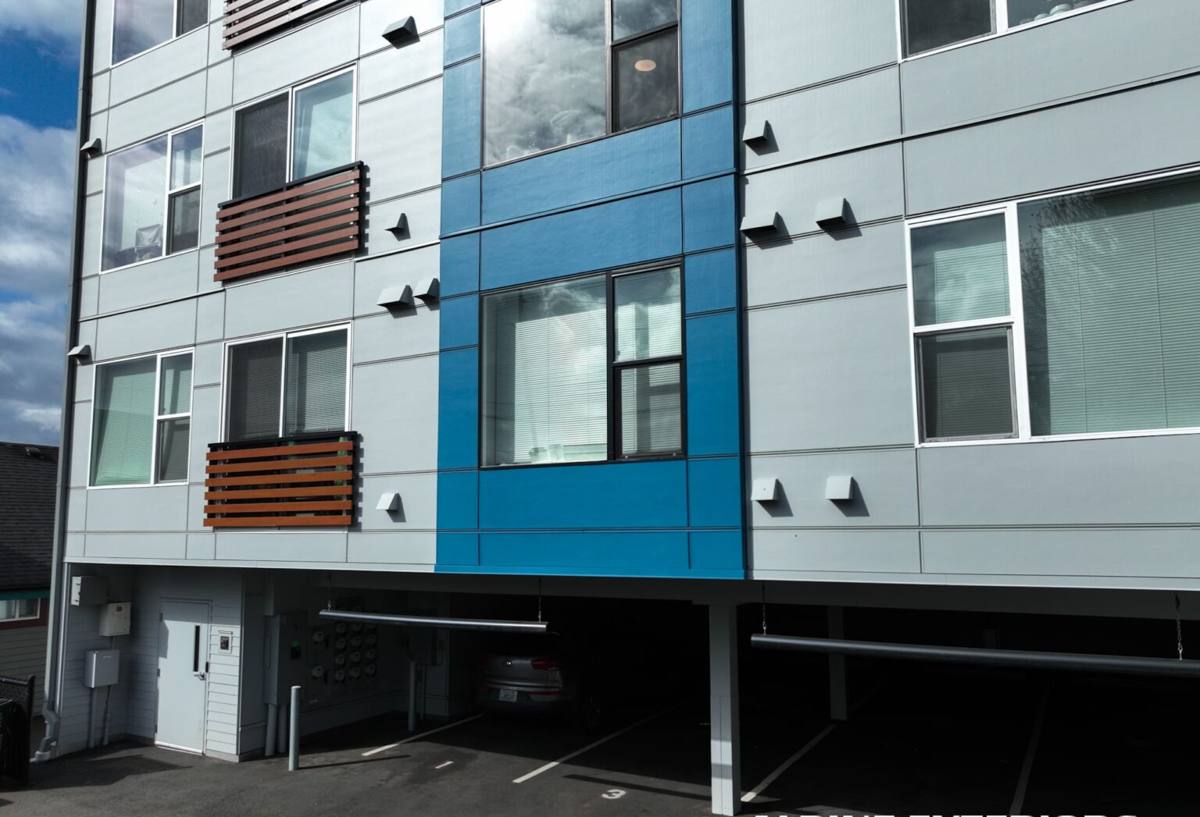
What the Birch Bay Climate Actually Does to a Window
Salt Air and Corrosion
Airborne salt is corrosive to hardware, fasteners, and some finishes, especially on the sides of a house that face the water and catch the prevailing wind. Over years, cheap or improperly finished hardware can pit, discolor, or bind up. This isn't a dramatic failure — it's a slow one, showing up as a window that gets harder to open and close, or weatherstripping that wears unevenly because the sash isn't seating right anymore.
Driving Rain and Wind-Driven Water
Wind off the bay pushes rain into a building envelope horizontally, not just vertically. That means water gets driven against the window and the wall assembly around it with real force, especially during winter storms. A window that would perform fine on a calm inland lot can still leak in Birch Bay if the flashing, sill pan, and sealant details weren't built for wind-driven exposure in the first place.
A Long Moss and Damp Season
Like the rest of the Bellingham area, Birch Bay gets an extended stretch of the year where surfaces stay damp and shaded areas grow moss and algae. Around windows, that means trim, sills, and any exposed wood is under near-constant moisture pressure for months at a time. Any gap in the sealant or flashing during that season becomes an entry point for slow water intrusion that isn't always obvious until there's staining, soft trim, or a musty smell near the window.
What "Energy-Efficient" Should Mean for This Specific Location
Energy efficiency in a window comes down to a handful of measurable factors — how well it resists heat transfer, how well it blocks air leakage, and how well the glass manages solar heat and condensation. For a Birch Bay home, those same ratings matter, but they need to be paired with hardware and materials that can handle sustained wind and salt exposure without that performance degrading over the first several years.
- U-factor — measures heat loss through the window; lower is better for our winters
- Solar Heat Gain Coefficient (SHGC) — how much solar heat passes through the glass; matters on south and west-facing walls
- Air leakage rating — how much air passes through the assembly when closed; directly tied to drafts
- Condensation resistance — relevant in a climate with high humidity and cool nights near the water
A window with good ratings on paper can still underperform if the hardware corrodes early or the frame isn't rated for the wind exposure a waterfront-adjacent property actually sees. That's the piece that's easy to overlook when comparing window quotes on ratings alone.
Frame Material Trade-offs Near the Water
| Frame Type | How It Holds Up Near Birch Bay | Maintenance Reality |
|---|---|---|
| Vinyl | Doesn't corrode; performs well in salt air; can expand/contract more with temperature swings | Low — no painting or sealing needed on the frame itself |
| Fiberglass | Very stable in wind and temperature swings; strong resistance to moisture-related warping | Low to moderate — durable finish, minimal upkeep |
| Wood-clad | Good insulating properties, but exposed wood or damaged cladding is vulnerable in a long wet season | Higher — cladding seams and any exposed wood need regular inspection |
| Aluminum | Strong but a poor insulator on its own; without a thermal break it conducts cold and invites condensation | Moderate — needs a quality finish to resist salt air corrosion over time |
None of these are wrong choices in every situation — the right one depends on the specific wall, orientation, and budget. What matters is choosing with the coastal exposure in mind rather than defaulting to whatever is cheapest or most common inland.
Where Window Failures Actually Start — And It's Rarely the Window
In our experience working on homes throughout Whatcom County, most window problems in coastal-exposed areas like Birch Bay trace back to the installation, not the product. A well-rated window installed with a gap in the sill pan flashing, insufficient sealant, or the wrong fastening for the wind exposure will leak and lose efficiency no matter how good its factory ratings are. The details that matter most:
- A properly formed sill pan that directs any water that gets past the window back out, not into the wall
- Flashing tape and house wrap integration done in the correct shingle-lap order so water always sheds downward and outward
- Sealant and backer rod sized correctly for the gap — not just a bead of caulk around the perimeter
- Shimming and fastening that keeps the frame square without over-compressing it, which can distort the seal and hardware over time
- Insulation in the gap between the rough opening and the window frame, so the assembly isn't just watertight but also thermally continuous
This is why two homes with the same window product can have very different outcomes five years later — one installed with wind-driven rain in mind, one installed the same way it would be a mile inland.
Our Process for a Birch Bay Window Replacement
- On-site assessment. We look at existing window condition, wall orientation relative to prevailing wind and rain, and any signs of past water intrusion around openings.
- Product recommendation based on exposure. We walk through frame material and glass package options suited to that specific wall and budget, not a one-size answer for the whole house.
- Removal and opening inspection. Once old windows are out, we check the rough opening and sheathing for hidden moisture damage before anything new goes in — this is often where real problems get found.
- Correct flashing and sealing sequence. Sill pan, flashing tape, and sealant applied in the right order for wind-driven rain, not just a quick perimeter caulk job.
- Insulation and interior finish. The gap around the frame gets properly insulated and finished so the thermal performance matches what the window is rated for.
- Final check and walkthrough. We test operation, confirm weatherstripping seats correctly, and walk the homeowner through what to expect and watch for.
Signs Your Current Windows Are Costing You Money
Homeowners near Birch Bay often live with early warning signs for longer than they should, because they develop slowly. Worth checking for:
- Noticeable draft near the window frame on windy days, even with the window fully closed
- Condensation forming between panes, which usually means a failed seal on a double- or triple-pane unit
- Hardware that's stiff, corroded, or doesn't latch fully anymore
- Soft or discolored trim and sill material, especially on walls facing the water or prevailing wind
- Visibly worn or gapping weatherstripping
- Rooms near older windows that feel noticeably colder or draftier than the rest of the house
Any one of these on its own isn't an emergency, but a window showing two or three of them is usually past the point where it's contributing to your heating costs rather than just being an inconvenience.
What Affects Window Replacement Cost in This Area
Costs vary by frame material, glass package, window size and count, and how much work the opening needs beyond the window itself. We don't quote in generalities — every home gets an on-site look before a number is given. Broadly, the factors that move the price:
| Factor | Why It Matters Here |
|---|---|
| Frame material | Fiberglass and better-grade vinyl cost more upfront but hold up better against salt air and wind exposure long term |
| Glass package | Double vs. triple pane, and coatings suited to sun exposure on south/west walls |
| Wall condition | Hidden moisture damage found during removal can add scope — this is common on older coastal-exposed homes |
| Number and size of openings | Larger and more numerous windows increase material and labor, but often see better per-unit pricing |
| Access and site conditions | Upper-story or hard-to-access windows near the water can add setup time |
Why It Matters to Hire a Crew That Already Works in Birch Bay
Window installation isn't identical from one part of Whatcom County to another. A crew used to inland Bellingham conditions may not default to the flashing and sealing details that wind-driven rain off the bay actually requires, simply because they don't see that failure mode as often. Working in Birch Bay regularly means we've seen what goes wrong on this stretch of coastline specifically — which walls take the worst of the weather, what corrosion looks like on hardware after a few seasons, and where past installations have failed. That's not something a general contractor unfamiliar with the area will necessarily account for on the first job.
It also means we're a known, reachable crew if a question comes up after the install — not a company that did one job in the neighborhood and moved on.
Get a Straightforward Look at Your Windows
If your windows are original to the house, feel drafty, or you've noticed any of the wear signs above, it's worth having someone take a real look before deciding what to do. We offer free, no-pressure estimates for Birch Bay homeowners — an honest read on your current windows' condition, what's driving any energy loss, and what a correct replacement would involve for your specific walls and exposure. Use the form below to get started.