 Bellingham Roofing
 Building New in Birch Bay? Get the Windows Right the First Time
New-construction windows are a one-shot decision. Once the siding and interior trim close in around them, swapping a poorly chosen or poorly flashed window becomes a demo project, not a quick fix. That makes the window package one of the few line items on a Birch Bay build where getting it right up front matters more than almost anything else on the exterior.
Birch Bay sits right on the water, and that changes what "the right window" means. Homes a half-mile inland in Bellingham deal with a lot of the same rain, but a shorefront or near-shore lot in Birch Bay adds salt-laden air and more direct wind exposure into the mix. We treat those as design inputs, not afterthoughts, when we spec and install a new-construction window package out there.
What Birch Bay's Climate Actually Does to a New Window Install
Salt Air
Airborne salt accelerates corrosion on anything metal — hardware, screws, flashing tape adhesives that aren't rated for it, and lower-grade cladding on wood windows. It doesn't ruin a window overnight, but it shortens the life of the wrong components by years. We pick fasteners, flashing, and hardware finishes with that exposure in mind rather than defaulting to whatever's standard for an inland job.
Driving Rain
Whatcom County storms coming off the Strait of Georgia don't just fall straight down — wind pushes rain sideways into wall assemblies, especially on west- and north-facing elevations near the water. A window that's watertight in a still-air test can still leak on a driving-rain day if the flashing details around it aren't built for wind-driven water. This is where most new-construction window failures actually originate — not the window unit itself, but the flashing and sealant work around it.
Long Moss Season
Extended damp periods keep moss and algae active on north-facing and shaded exterior surfaces for much of the year. On windows that means grime buildup in sill tracks and around trim, which holds moisture against the frame if it's never cleared. It doesn't damage a well-installed window fast, but it's a maintenance reality worth planning sills and trim details around.
New-Construction Windows vs. Replacement Windows — Why It's a Different Job
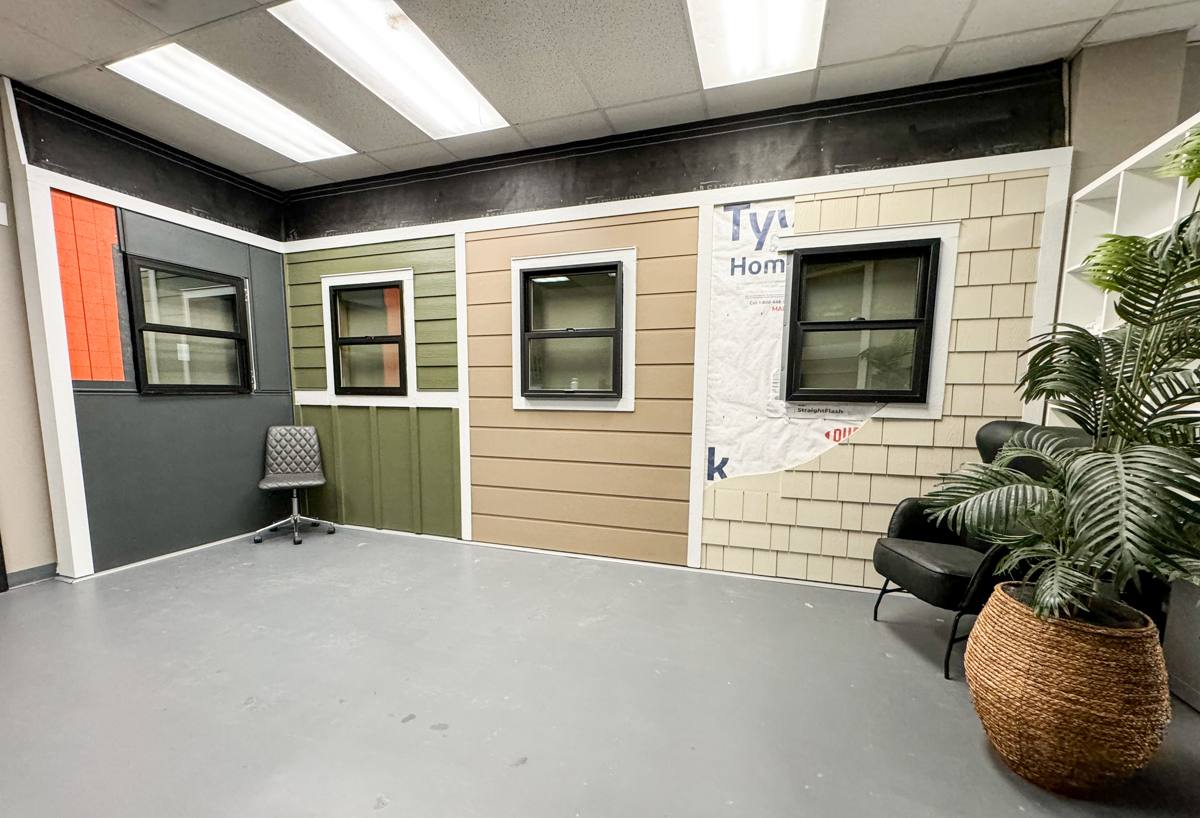
A lot of homeowners assume "installing a window" is the same task no matter the situation. It isn't. New-construction windows have a nailing fin around the perimeter of the frame and are installed into a rough opening before the siding goes on, which lets us integrate the window flashing directly into the home's water-resistive barrier (WRB) and weather-resistant sheathing wrap. Replacement windows, by contrast, get inserted into an existing finished opening with the old exterior trim staying in place, which limits how much of the flashing system can be rebuilt.
New construction is the better scenario for a coastal Whatcom County site because it gives us full access to build the water management system from the sheathing out, rather than working around what's already there. We don't cut corners on that access just because the framing crew wants to move fast — the flashing sequence is the part of the job that determines whether the window still performs in fifteen years.
Choosing a Frame Material for a Near-Shore Lot
There's no single "best" window material for every Birch Bay build — it depends on budget, the home's style, and how exposed the specific elevation is. Here's how the common options actually compare for this environment:
| Material | Salt-air behavior | Maintenance | Typical fit |
|---|---|---|---|
| Vinyl | Won't corrode; UV-stable modern formulations hold up well | Low — rinse periodically, no refinishing | Budget-conscious builds, rental or spec homes |
| Fiberglass | Excellent — dimensionally stable, resists salt and moisture well | Low | Higher-end builds wanting durability without wood upkeep |
| Aluminum-clad wood | Good on the exterior face; interior wood needs protection from any water intrusion at seals | Moderate — depends on sealant condition over time | Homeowners wanting a wood interior look with a protected exterior |
| Bare wood | Weakest choice this close to salt air and driving rain without diligent upkeep | High | We generally steer near-shore clients away from this unless upkeep is planned for |
We're not against wood windows as a category — they have a real place inland or on protected elevations. On an exposed Birch Bay lot, though, we're upfront that a bare wood frame puts more of the long-term performance burden on maintenance than a vinyl, fiberglass, or properly clad option does. That's a maintenance-and-moisture-behavior tradeoff we'll walk through honestly, not a sales pitch either direction.
How We Handle the Install
- Rough opening check. We verify the opening is square, plumb, and sized correctly before the window ever shows up on site — catching framing errors here is far cheaper than after the window's in.
- WRB and flashing prep. House wrap or building paper gets lapped correctly around the opening, with sill pan flashing installed to direct any water that gets past the window back out, not into the wall.
- Window set. The unit is set, shimmed level and plumb, and fastened through the nailing fin per manufacturer spec — this is also where warranty compliance gets locked in or lost.
- Flashing tape and head flashing. Side and head flashing lap over the nailing fin in the correct shingle-style sequence so water is always directed outward and downward, never trapped.
- Sealant at critical points only. We seal where sealant is supposed to carry the load, not as a substitute for proper flashing sequencing — sealant-only "flashing" is one of the most common shortcuts we see and refuse to take.
- Final inspection. Operation, seal, and drainage path get checked before we sign off and before siding closes in around the opening.
Energy Code and Performance Notes for This Climate
Washington's energy code sets minimum performance requirements for new-construction windows, and Whatcom County's marine climate has different priorities than a hot, dry region would. U-factor (how well the window resists heat loss) matters more here than solar heat gain coefficient, since Birch Bay doesn't deal with intense summer sun load the way inland or southern climates do. We help builders and homeowners land on window specs that meet code and actually make sense for how the house will be lived in, rather than over-speccing for a problem this climate doesn't really have.
Egress requirements for bedroom windows, tempered glass at code-required locations, and proper flashing documentation for inspection are all things we handle as a matter of course — not extras.
Working Alongside Your Builder or General Contractor
On most new builds we're not the only trade touching that wall — framers, siding crews, and sometimes the GC's own scheduling all intersect with our window install window. We coordinate directly with the builder on sequencing so the rough openings are ready when we arrive and the siding crew isn't waiting on us longer than necessary. Clear handoffs here prevent the two most common new-construction headaches: windows installed before the WRB is properly lapped, and siding started before flashing is fully cured and inspected.
A Practical Checklist Before You Sign Off on Your Window Package
- Confirm frame material matches the exposure level of each elevation, not a single blanket choice for the whole house
- Ask how sill pan flashing will be handled at every opening — not just described, but shown
- Verify U-factor and any other specs meet current Washington energy code for your climate zone
- Get manufacturer warranty terms in writing, including what installation practices are required to keep the warranty valid
- Confirm hardware and fastener finishes are appropriate for near-shore salt exposure if you're close to the water
- Ask about the sequencing plan with your framer and siding crew so nobody's waiting on nobody
- Walk the rough openings with your installer before windows arrive, not after
Why a Bellingham Crew That Already Works Birch Bay Is Worth Choosing
Birch Bay isn't identical to downtown Bellingham or the inland parts of Whatcom County, and treating every new build the same way regardless of exposure is how corners get cut without anyone noticing until the first bad winter. A crew that's already worked near-shore lots in Birch Bay knows which elevations typically take the worst of the wind-driven rain, which fastener and flashing choices hold up against the salt air, and how the long moss season affects sill and trim upkeep down the road. That's not something you can fully substitute with a generic installation manual — it comes from having actually flashed openings on this stretch of coastline before.
We're based in Bellingham and treat Birch Bay as regular territory, not a special trip. That means realistic scheduling, familiarity with the local building department's expectations, and a crew that isn't guessing at how this specific coastline behaves.
Get a Straight Answer on Your Window Package
If you're framing up a new build in Birch Bay, or still specifying the window package with your builder, we're glad to take a look and give you an honest read — no pressure, no upsell. Use the form below to request a free estimate and we'll go over what your specific lot and elevation exposure actually call for.