 Bellingham Roofing
 Board & Batten Siding for York-Area Homes in Bellingham
The York neighborhood sits close enough to the water and to Bellingham's wooded, low-light lots that its houses take a specific kind of beating: salt-tinged air drifting off the bay, driving rain that comes in sideways during winter storms, and long stretches of damp shade that keep roofs and walls wet for days at a time. Board and batten siding — with its bold vertical lines and deep shadow reveals — is a popular look for the craftsman and modern-farmhouse homes common in this part of Bellingham, but it is also one of the least forgiving siding styles when it's installed wrong. Every batten seam is a potential water path if it's not detailed correctly, and in a climate like Whatcom County's, a mistake doesn't take years to show up.
This page covers what board and batten siding needs to actually hold up on a York-area home, how we build it, and why we install it exclusively in James Hardie fiber cement rather than wood, vinyl, or engineered wood alternatives.
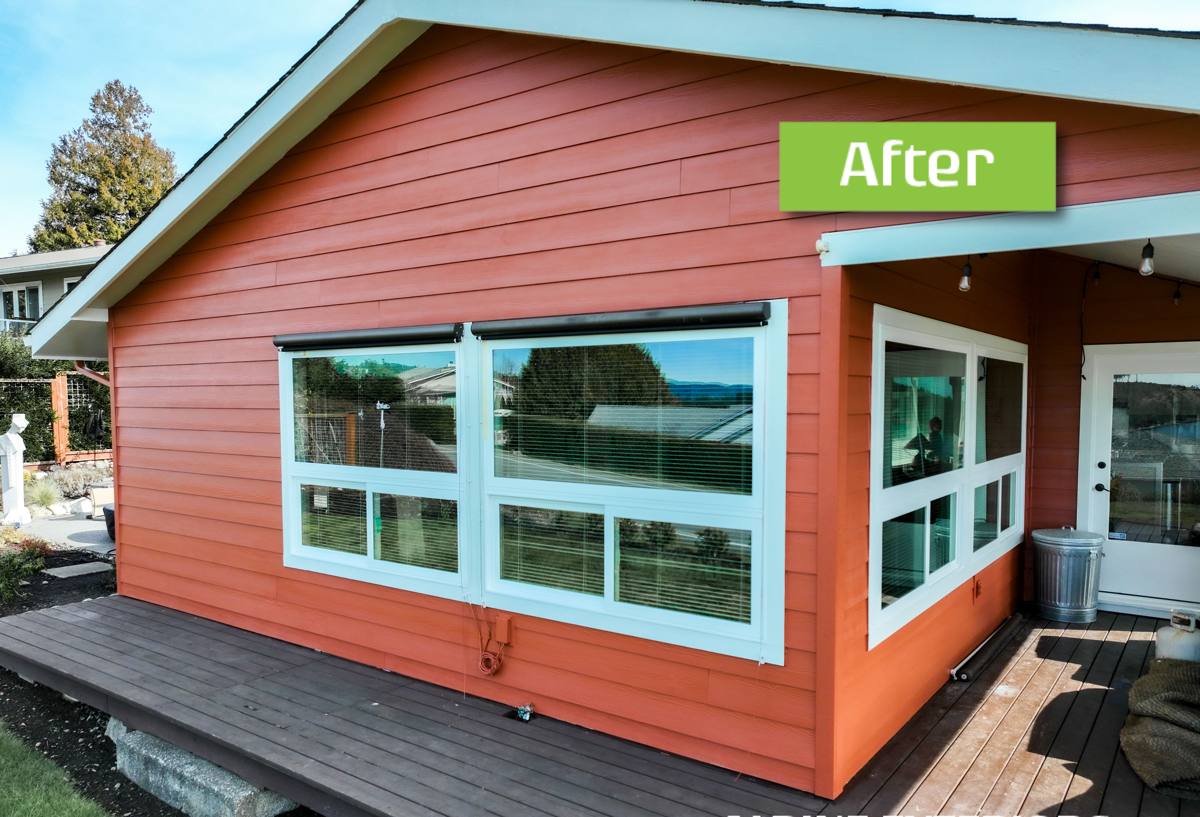
What Bellingham's Climate Does to Board & Batten Siding
Moss and Sustained Moisture
Whatcom County's moss season runs long — many properties stay shaded and damp from fall through spring. Moss and algae don't just look bad on a wall; they hold moisture against the siding surface, and on softer materials that moisture can work its way into seams, fastener holes, and the top edges of battens. Board and batten's vertical battens create more seams per square foot than lap siding, so the material and the installation both have to resist that constant dampness rather than just shed a passing rain.
Driving Rain and Wind-Driven Water
Storms coming off the water tend to push rain sideways, not straight down. That matters enormously for a vertical siding style: horizontal lap siding is engineered to shed water downward by design, but board and batten relies entirely on correct flashing, a functioning rainscreen gap, and properly lapped house wrap to keep wind-driven water from tracking behind the battens and into the wall assembly.
Salt Air
Proximity to Bellingham Bay means airborne salt is a real factor for many York-area homes. Salt accelerates corrosion on fasteners and metal flashing, and it can degrade cheaper paint films faster than inland exposure would. Material choice and fastener selection both need to account for it.
What a Correct Board & Batten Job Actually Involves
Board and batten looks simple from the curb — vertical boards, battens over the seams — but the installation details are where the siding either performs for decades or starts failing in five years. A correct install includes:
- A drainage gap (rainscreen) between the siding and the weather-resistive barrier, so any water that does get behind the panels can drain and dry instead of sitting against the wall sheathing
- Properly lapped and taped house wrap or building paper installed before any siding goes up
- Flashing at every horizontal transition — window and door heads, roof-to-wall intersections, and the base of the wall — not just caulk
- Battens fastened through the underlying panel into framing or furring, at the correct spacing, not just glued or face-nailed into the panel alone
- Correct fastener penetration depth and pattern per the manufacturer's installation instructions — under- or over-driven fasteners are a common cause of early failure
- Sealed and back-primed cut edges wherever a panel is trimmed on site
- Proper clearance at grade and at roof lines so the bottom of the siding isn't sitting in standing water or splash-back
Skip any one of these and the siding may look fine for a year or two before problems start showing up as staining, soft spots, or paint failure at the seams.
Why We Install James Hardie for Board & Batten — Not the Alternatives
Board and batten can be built out of several materials, and we get asked about most of them. Here's the honest comparison of what we've weighed before standardizing on James Hardie fiber cement:
| Material | What it does well | Trade-off in this climate |
|---|---|---|
| Cedar / primed spruce | Natural look, easy to work with on site | Absorbs moisture at end grain and seams; needs regular refinishing to resist rot and moss staining in a wet climate |
| Vinyl board & batten | Low upfront cost, no painting | Can warp or become brittle with temperature swings; seams and battens are often decorative rather than structural, limiting how well it manages real water intrusion |
| LP SmartSide / engineered wood | Lighter weight, factory primed | Wood-strand core is still vulnerable if the factory seal is ever compromised at a cut edge or fastener hole |
| James Hardie fiber cement | Non-combustible, dimensionally stable, factory-cured ColorPlus finish, engineered for Pacific Northwest moisture (HZ5 climate zone) | Heavier material, requires correct fastening and installation technique — which is exactly what we specialize in |
We're not going to tell you cedar or engineered wood siding is junk — plenty of homes wear it fine when it's maintained. But we've chosen not to install products that depend on an unbroken paint film or factory seal to keep water out of a wood-based core, especially on a vertical siding style with this many seams, in a climate that rarely gives a wall enough dry time to recover from a small breach. James Hardie's fiber cement is cement, sand, and cellulose fiber — it doesn't rot, and it isn't a food source for the moss and algae that thrive in York's shaded, damp microclimates.
The James Hardie Board & Batten System
For this style, James Hardie's system pairs HardiePanel vertical siding with HardieTrim battens over the seams, finished in the factory-applied ColorPlus finish. That finish is baked on and warranted against fading and cracking well beyond what field-applied paint typically holds up to — which matters on a home taking direct salt-air and UV exposure near the water. Hardie's HZ5 product line is engineered specifically for the wet, freeze-thaw-variable climate found across Western Washington, including moisture and impact performance suited to Whatcom County conditions.
Our Process on a York-Area Home
- Site walk and assessment — we look at drainage, roof lines, existing moisture damage, and how the specific lot's shade and exposure will affect the finished wall
- Tear-off and sheathing check — old siding comes off and we inspect the sheathing underneath for rot or soft spots before anything new goes up
- Weather barrier and rainscreen — house wrap, flashing at every penetration, and a drainage gap built in before the first panel goes on
- Panel and batten installation — HardiePanel installed to Hardie's fastening spec, battens set and fastened through to framing
- Trim, caulk, and paint touch-up — factory-finished ColorPlus panels need very little field paint, which keeps the finish consistent and reduces future maintenance
- Final walk-through — we check seams, flashing, and clearances with you before calling the job done
Cost Factors for Board & Batten Siding
Every home is different, but these are the main variables that move the price on a board and batten job in this area:
| Factor | Why it matters |
|---|---|
| Wall square footage and home height | More surface area and multi-story access both add labor time |
| Condition of existing sheathing | Rot repair found during tear-off is priced separately once it's visible |
| Number of window/door openings and rooflines | Each one needs individual flashing detail, which adds labor over a plain wall |
| Battens per panel width | Tighter batten spacing (a common design choice) means more cutting and fastening per square foot |
| Color and trim package | ColorPlus factory finishes and custom trim details vary in cost by product line |
We'll walk your specific home and give you real numbers rather than a rough per-square-foot guess — board and batten pricing varies more than lap siding because of the extra battens and detail work.
Maintaining Board & Batten Siding in This Climate
Even with the right material and installation, a little seasonal attention goes a long way in Whatcom County:
- Keep gutters clear so roof runoff isn't sheeting down the wall face during winter storms
- Rinse moss and algae buildup off shaded walls before it has a chance to stain the finish
- Keep landscaping trimmed back from the siding so walls get airflow and sunlight to dry out
- Check caulking at window and door trim yearly — caulk is a maintenance item on any siding, including Hardie
- Watch for any staining at the base of battens, which can signal a flashing or clearance issue worth a look
Questions to Ask Before You Hire
Board and batten is easy to install poorly and hard to fix after the fact, since correcting a flashing mistake usually means pulling siding back off. Before you hire anyone for this work, ask:
- Will you install a rainscreen gap, or nail siding directly to the house wrap?
- How do you flash window heads, roof-to-wall transitions, and the base of the wall?
- Are you a certified installer for the fiber cement product you're proposing?
- What's your fastening pattern for battens — through to framing, or just into the panel?
- What does the manufacturer's warranty actually cover, and does it require a certified installer to stay valid?
Why a Crew That Already Works in York Matters
We work throughout Bellingham and Whatcom County, and jobs in and around York give us a direct, current read on how the local mix of shade, wind exposure, and proximity to the water plays out house to house. That's not a substitute for walking your specific property, but it does mean we're not guessing at how a rainscreen detail or a batten spacing choice will hold up here — we're building on what we've already seen work on homes nearby, under the same weather.
If you're weighing a board and batten refresh or a full siding replacement on a York-area home, we're happy to walk the property, look at what's there now, and give you a straight, no-pressure estimate for what correct James Hardie board and batten siding would take.