 Bellingham Roofing
 Building Decks for Blaine's Marine Climate
Blaine sits right up against the water, and that changes what a deck has to survive here compared to a deck built twenty miles inland. Salt-laden air off the water, near-constant fall and winter rain, and a moss season that can stretch from October through May all put real stress on wood, fasteners, and finishes. A deck that would hold up fine in a drier part of Whatcom County can start showing problems in Blaine within a couple of seasons if it wasn't built with this specific environment in mind.
We build and repair decks for homes throughout Blaine and the surrounding Whatcom County waterfront and near-waterfront neighborhoods. That means we're not guessing at how a deck will hold up here — we're building to what we've already seen happen to decks that weren't built for these conditions, and correcting for it from the framing up.
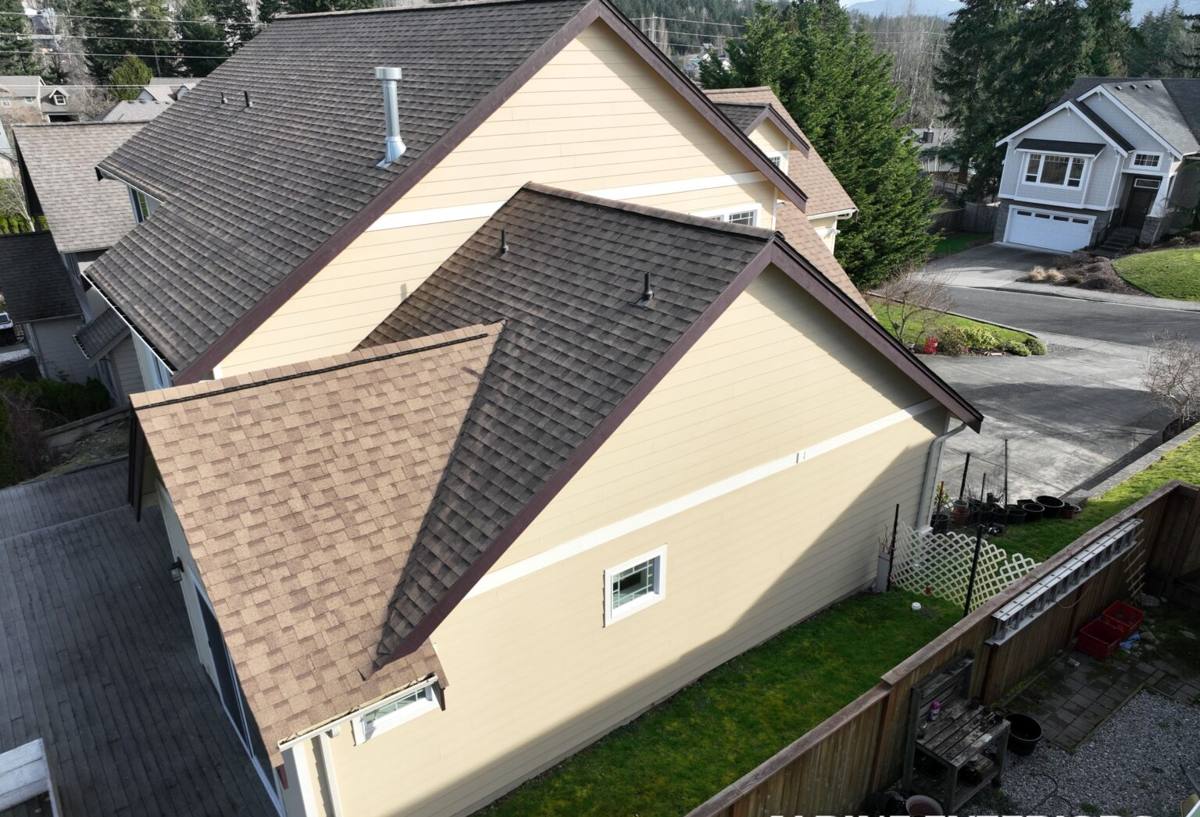
What Salt Air, Rain, and Moss Actually Do to a Deck
Each of these three factors attacks a deck differently, and a deck that only accounts for one or two of them will eventually fail in the spot nobody thought about.
Salt Air and Corrosion
Airborne salt accelerates corrosion in any metal fastener, bracket, or hardware piece that isn't rated for it. Standard galvanized screws and joist hangers can start rusting and staining the wood around them well before the deck itself is due for any other repair. Once a fastener corrodes, it loses holding strength — and on a structural connection like a ledger board or a post base, that's not a cosmetic problem.
Driving Rain and Moisture Intrusion
Blaine's rain doesn't just fall straight down — wind off the water drives it sideways into ledger boards, stair stringers, and any spot where the deck meets the house. Water that gets behind flashing or into end-grain cuts doesn't dry out quickly in our climate, and that's where rot starts. Most of the structural failures we find on older decks trace back to one of a handful of moisture entry points, not the decking boards themselves.
Moss and Organic Growth
A long, damp moss season means anything horizontal — deck boards, stair treads, the tops of railings — stays wet longer and picks up moss, algae, and lichen growth faster than it would in a drier climate. Beyond looking bad, moss holds moisture against the surface and makes boards slick and genuinely dangerous underfoot, especially on stairs.
Choosing the Right Decking Material for Blaine
There's no single "best" decking material — the right choice depends on how much maintenance you're willing to do, your budget, and how close the deck is to the water. Here's how the common options compare specifically for a marine climate like Blaine's.
| Material | Upfront Cost | Maintenance in Salt Air / Rain | Typical Lifespan |
|---|---|---|---|
| Pressure-treated wood | Lowest | Needs regular cleaning, moss removal, and re-sealing to resist moisture and salt exposure | 10-15 years with upkeep |
| Cedar | Moderate | Naturally rot-resistant but still needs periodic finishing to hold its color and shed moisture | 15-20 years with upkeep |
| Composite decking | Higher | No sealing needed; occasional washing to keep moss and algae from taking hold on the surface | 25-30 years |
| PVC decking | Highest | Fully synthetic, doesn't absorb moisture; easiest surface to keep moss off long-term | 30+ years |
Wood is a legitimate choice if you're willing to keep up with cleaning and resealing on a regular schedule — it's a real ongoing commitment in a climate this wet, not a one-time task. Composite and PVC cost more up front but trade that maintenance burden for a surface that doesn't absorb water or feed moss the way bare wood does. We'll walk through the honest trade-offs for your specific project rather than push one material across the board.
What a Correctly Built Deck Involves
The decking boards are the part everyone sees, but they're the last thing installed — and the least likely part of the deck to fail if everything underneath was done right. A deck built for Blaine's conditions gets extra attention in a few specific places:
Ledger Board Attachment
Where the deck attaches to the house is the single most common point of failure on older decks. Proper flashing — installed so water sheds away from the house, not into it — is non-negotiable here, along with fasteners rated for the exposure.
Footings and Framing
Footings need to be sized and set to local frost depth and soil conditions, and framing lumber should be rated for ground contact or exposure where it's close to grade or shaded. Joist hangers and structural connectors should be corrosion-resistant hardware, not standard galvanized, given the salt air.
Fasteners and Hardware
This is where cutting corners shows up years later as rust streaks and loose connections. We use stainless steel or coated fasteners rated for coastal and marine exposure on structural connections, not just on the visible decking surface.
Drainage and Airflow
Decks built low to the ground or over living space need proper spacing and, where relevant, a drainage system underneath so water isn't trapped against framing. Without airflow underneath, wood framing in a wet climate stays damp far longer than it should.
Our Deck Building Process
- On-site assessment — we look at sun and rain exposure, proximity to the water, soil conditions, and how the deck will tie into your home before recommending a design or material.
- Design and material selection — we walk through the honest trade-offs between wood, composite, and PVC for your specific site and budget.
- Permitting — most new decks and many rebuilds in Whatcom County require a permit; we handle that process as part of the job.
- Framing and structural work — footings, ledger flashing, joists, and corrosion-resistant hardware installed to code, not just to pass a quick look.
- Decking, railing, and stairs — installed with attention to fastener placement and spacing that accounts for board movement in wet-dry cycles.
- Final walkthrough — we go over care and maintenance specific to the material you chose so you know what upkeep to expect.
Railings, Stairs, and Hardware That Hold Up
Railings and stair treads take more direct weather exposure than the main deck surface, and they're also the components most tied to safety. We pay particular attention to a few things on every project:
- Stainless steel or marine-rated fasteners on all railing posts and stair stringers
- Post bases and connectors rated for corrosion resistance, not standard galvanized
- Stair tread material and spacing chosen with slip resistance in mind for a moss-prone climate
- Railing baluster spacing and height built to current code, not just what was on the old deck
- Attention to any spot where two materials meet, since that's where trapped moisture usually starts a problem
Keeping a Blaine Deck in Good Shape
Every deck material needs some seasonal attention in this climate — the amount just varies by what you chose. A simple, honest maintenance routine goes a long way toward avoiding the kind of neglected-deck problems we get called out for years down the line.
- Sweep or hose off debris regularly, especially heading into fall when leaves and needles trap moisture
- Treat moss and algae growth promptly rather than letting it establish, particularly on stairs
- Check fasteners and hardware annually for early signs of rust staining or looseness
- Reseal or re-stain wood decking on the schedule your finish product calls for — don't wait until it's visibly failing
- Confirm drainage paths under and around the deck aren't blocked by debris or plant growth
- Look closely at the ledger board and flashing area once a year, since that's the highest-consequence spot for hidden moisture damage
Permits and Local Considerations
Deck projects in Blaine and elsewhere in Whatcom County generally go through a permitting process, and requirements can vary depending on the deck's height, size, and proximity to property lines or shoreline areas. Waterfront and near-waterfront properties sometimes have additional setback or shoreline considerations to account for during design. We handle the permitting conversation as part of the project so you're not left navigating it alone, and we design around whatever site-specific requirements apply to your property rather than assuming a one-size-fits-all approach.
Why Work With a Crew That Already Builds in Blaine
A deck built to a generic regional standard and a deck built specifically for salt air, driving rain, and a long moss season are not the same project, even if they look identical on installation day. The difference shows up two, five, and ten years later — in whether the ledger board is still dry, whether the hardware is still holding, and whether the stairs are still safe to walk on in December. Crews that regularly work Blaine and the surrounding Whatcom County waterfront already know which details matter most here, because we've seen what happens when they're skipped.
If you're planning a new deck, replacing an aging one, or just want an honest read on whether your current deck's framing and fasteners are holding up, we're happy to take a look and give you a straightforward, no-pressure estimate using the form below.