 Bellingham Roofing
 Why Metal Roofing Makes Sense for Blaine
Blaine sits at the northern edge of Whatcom County, close enough to Semiahmoo Bay and Drayton Harbor that salt-laden air is a daily fact of life for most homes in town, not just the ones with a water view. That salt exposure, combined with driving rain that comes ashore with real force and a moss season that runs most of the year, wears down a roof faster here than it does in a drier, more sheltered part of the county. Metal roofing holds up differently against that combination than asphalt shingle or wood shake, which is a big part of why it's become a serious option for homeowners in Blaine rather than a specialty product reserved for barns and outbuildings.
This page covers what Blaine's climate actually does to a roof, what a correctly installed metal roof involves, and how our process works for a metal roofing project in this specific part of Whatcom County — not a generic rundown of metal roofing in general.
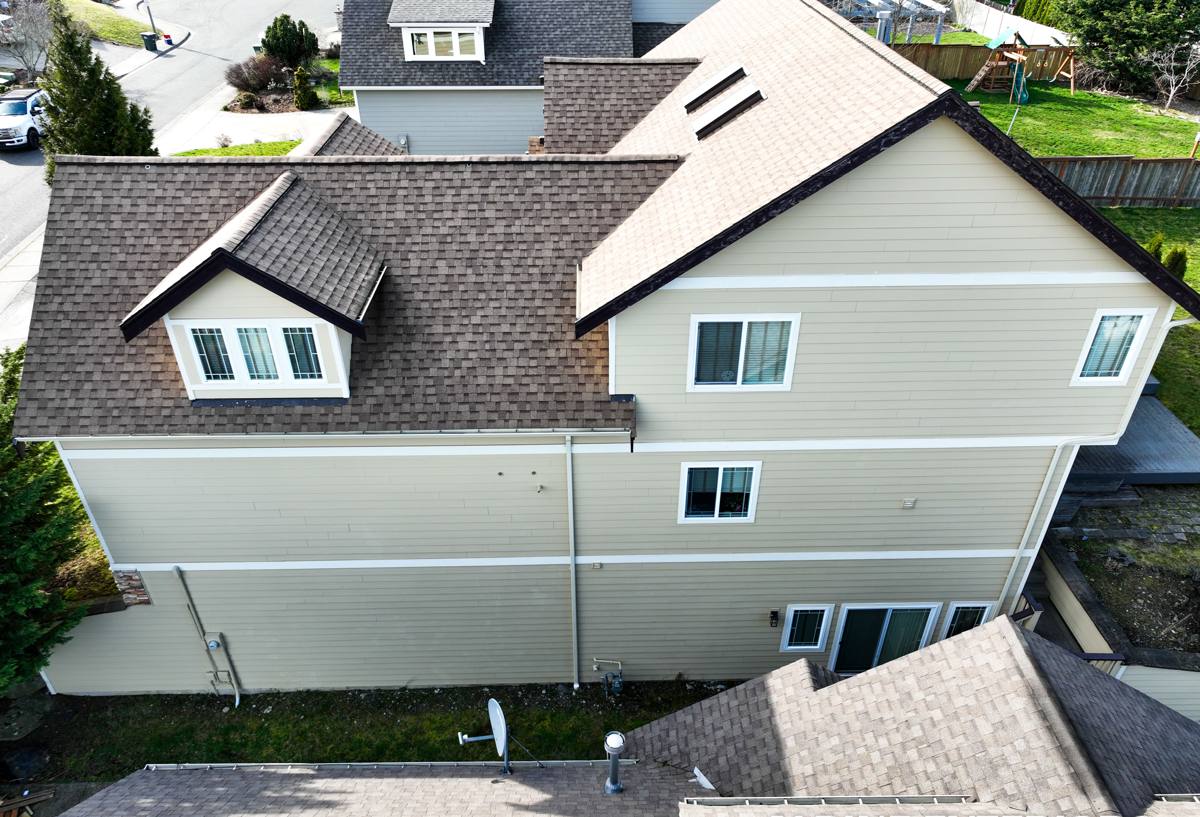
What Blaine's Climate Does to a Roof
Salt Air Off the Bay and Harbor
Homes near Semiahmoo Bay and Drayton Harbor take a steadier dose of salt-laden air than towns set further inland in Whatcom County, and a roof sits directly in it with nothing to block the exposure. Salt accelerates corrosion in exposed metal — fasteners, flashing, valleys, vent stacks — and a corroding fastener loses holding strength well before it looks obviously bad from the ground. On a roof, that's the difference between a leak showing up decades in versus showing up within a handful of years.
Driving Rain
Storms coming off the water in Blaine don't just fall straight down; wind pushes rain sideways and drives it up under laps, into valleys, and around any flashing detail built for calmer weather. A roofing system installed to a bare-minimum standard for wind-driven exposure tends to leak first at those transition points — chimney flashing, roof-to-wall junctions, valleys — rather than across the open field of the roof.
A Moss Season That Runs Most of the Year
Mild temperatures and near-constant moisture give moss a long growing season in Blaine, and shaded or north-facing roof slopes are usually the first to show it. Moss holds water against a roofing surface and can work its way into laps and seams over time, which is a bigger problem for porous or textured materials than for a smooth, steep-shedding metal surface.
Standing Seam vs. Exposed Fastener Metal Roofing
Not all metal roofing performs the same way in this climate, and the choice between the two main systems matters more here than it would in a drier part of the state.
Standing Seam
Standing seam panels use raised, interlocking seams with no exposed fasteners across the roof field — the panels attach with hidden clips, so there's no fastener head sitting out in the weather for salt air to work on. That makes it the stronger long-term choice for sustained coastal exposure, though it costs more up front and requires more installation precision to get the seams, clips, and flashing details right.
Exposed Fastener Panels
Exposed fastener metal roofing — sometimes called corrugated or ag-panel style — costs less and installs faster, but it relies on gasketed screws driven through the face of the panel. Those fasteners and their rubber washers are a maintenance item: the washers degrade with sun and weather exposure over the years, and once they do, that's a direct path for water into the roof deck. In a salt-air environment like Blaine's, that maintenance burden is real rather than theoretical, which is why we lay out this tradeoff plainly instead of treating both systems as equivalent.
| Factor | Standing Seam | Exposed Fastener |
|---|---|---|
| Fastener exposure | None on the field — hidden clip attachment | Screws through the panel face, gasketed |
| Salt air performance | Excellent — least exposed metal to corrode | Good initially; washers degrade over time |
| Upfront cost | Higher | Lower |
| Long-term maintenance | Minimal | Periodic fastener and washer inspection needed |
| Typical service life here | Decades longer with correct install | Shorter, dependent on fastener upkeep |
What a Correct Metal Roof Installation Involves
The panels themselves get most of the attention when homeowners picture a metal roof, but in Blaine's climate, what's underneath and around them is what actually determines how long the roof performs. A correctly done metal roof here includes:
- Full tear-off and deck inspection rather than installing over old roofing, so any soft or damaged sheathing gets replaced before new material goes down
- A synthetic, high-temperature underlayment suited to metal roofing, with self-adhered membrane at eaves, valleys, and other vulnerable points
- Corrosion-resistant flashing at chimneys, vent penetrations, and roof-to-wall transitions, integrated with the underlayment rather than relying on sealant alone
- Panel and clip systems, or fasteners and washers, rated for coastal exposure rather than standard-grade hardware
- Correct panel seaming or fastening pattern matched to the specific product's manufacturer specification
- Proper ventilation at intake and exhaust points, keeping the roof deck drier and reducing the moisture that feeds moss growth
- Attention to panel expansion and contraction allowances, since metal moves more with temperature swings than shingles do
Skip any one of those and the roof can still look right on installation day. The gaps usually show up years later as a fastener stain, a leak at a valley, or moss taking hold faster than it should on a metal surface.
Is Metal Roofing the Right Fit for Your Blaine Home?
Metal roofing isn't automatically the right call for every home, and we'd rather say that plainly than oversell it. It tends to make the most sense for homeowners planning to stay long-term and wanting to minimize moss and maintenance headaches, for steeper roofs where metal's shedding performance really pays off, and for homes closer to the water where salt exposure is heaviest. It's a less obvious fit for a homeowner on a tight near-term budget who's more focused on the lowest upfront cost, or for a roof shape with an unusual number of penetrations and transitions where flashing complexity drives the price up significantly. We'll talk through where your specific home and situation land during the estimate rather than assuming the answer in advance.
Cost Factors for a Metal Roof in Blaine
Every roof prices out differently, and we don't quote a number without seeing the roof, since pitch, access, and existing condition can all move a bid significantly. These are the main variables that tend to matter most on a Blaine job:
| Factor | Why It Matters Here |
|---|---|
| Panel system chosen | Standing seam costs more upfront than exposed fastener panels but needs far less long-term maintenance in salt air |
| Roof size and complexity | More valleys, dormers, and penetrations mean more flashing detail and labor |
| Pitch and access | Steep or hard-to-reach roofs take longer and need more safety setup |
| Deck condition | Rot or soft sheathing found during tear-off adds repair cost not visible before the old roof comes off |
| Finish and coating | Higher-grade coastal-rated finishes resist salt corrosion and fading longer than bare or standard-grade finishes |
| Underlayment upgrade | Full self-adhered membrane coverage costs more than minimum-code underlayment but reduces wind-driven rain risk |
Our Metal Roofing Process
- On-site assessment. We inspect the existing roof, deck condition, ventilation, and any problem areas, and take measurements for an accurate estimate.
- Panel system selection. We go over standing seam versus exposed fastener options, along with finish and color choices, with honest tradeoffs for each given your roof and budget.
- Tear-off and deck repair. Old roofing comes off, the deck is inspected, and any damaged sheathing is replaced before anything new goes down.
- Underlayment and flashing installation. The moisture barrier and flashing go in first, since this layer determines whether the roof actually stays dry in wind-driven rain.
- Panel installation. Panels are installed to manufacturer specification, with correct seaming or fastening pattern and expansion allowance for the site's exposure.
- Ventilation check. Intake and exhaust ventilation are confirmed to be working correctly before close-out.
- Final walk-through. We review the completed roof with you and go over care and warranty details specific to the system installed.
Why Hire a Crew That Already Works Blaine
A roofer who mostly works further inland in Whatcom County isn't wrong about metal roofing in general — they're just working from a different set of defaults. Fastener grades, flashing choices, and underlayment coverage that are perfectly adequate on a typical inland roof are often undersized for what a Blaine roof sees year-round so close to Semiahmoo Bay and Drayton Harbor. A crew that already works this area has seen which panel systems and hardware grades actually hold up against Blaine's specific mix of salt air, driving rain, and a long moss season, and which upgrades are worth the extra cost rather than just an upsell.
That familiarity also shows up in smaller judgment calls — how to detail a valley or roof-to-wall transition for the wind exposure a particular lot actually sees, or being straightforward about what a metal roof here realistically needs to perform versus what's just an extra line item.
Maintaining a Metal Roof in This Climate
A correctly installed metal roof needs far less upkeep than shingle or wood roofing, but it isn't entirely maintenance-free in Blaine's conditions:
- Keep gutters and valleys clear of debris so water isn't backing up under panel edges during heavy rain
- Check exposed fastener systems periodically for washer wear or early corrosion, especially heading into the wet season
- Rinse off salt residue and organic buildup periodically, particularly on roofs closer to the bay or harbor
- Have any moss growth addressed before it spreads across a full slope rather than after
- Trim back overhanging branches that keep a section of roof shaded and slow to dry
- Address any small leak signs immediately rather than waiting for the next dry season
If you're weighing metal roofing for your Blaine home, or just want an honest read on whether it makes sense for your roof and budget, we're glad to take a look and walk through the options plainly. Reach out below for a free, no-pressure estimate.