 Bellingham Roofing
 Asphalt Shingle Roofing Built for Blaine's Coastline
Blaine sits right on the water at the northwest corner of Whatcom County, and that location shapes everything about how a roof ages here. Homes close to Semiahmoo Bay and Drayton Harbor take on salt-laden air almost year-round, while the rest of town still gets the same wind-driven rain and long wet winters as the rest of the county. An asphalt shingle roof that would hold up fine twenty miles inland can wear out faster in Blaine if it wasn't detailed with this specific exposure in mind. That's the gap we focus on closing — not generic shingle installation, but shingle roofing built for a marine-influenced, moss-prone corner of the Pacific Northwest.
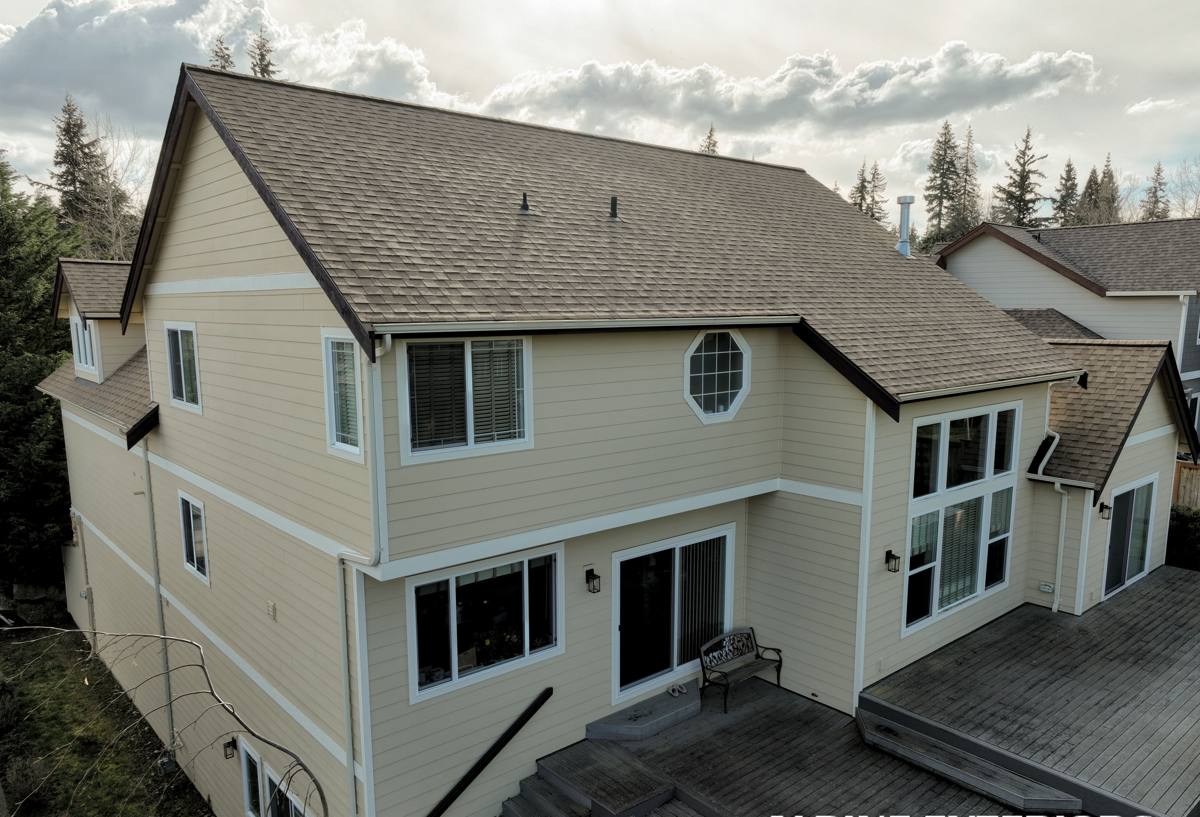
Why Blaine's Climate Is Harder on a Roof Than It Looks
Three things work against an asphalt shingle roof in Blaine, and they compound each other over a typical Whatcom County winter.
Salt Air
Airborne salt from the Strait of Georgia and Boundary Bay settles on exposed metal — nail heads, flashing, vent stacks, gutter hardware — and speeds up corrosion. Standard fasteners and thin-gauge flashing that would last decades elsewhere can start pitting or rusting years earlier this close to the water. It doesn't damage the shingles themselves as much as it damages the metal components that keep water out around them.
Driving Rain
Blaine gets wind off the water that pushes rain sideways instead of straight down. That matters because asphalt shingles are designed to shed water running downhill, not water being forced sideways or upward under a shingle edge. Roofs with tight seals, correct nailing patterns, and properly lapped underlayment handle this fine. Roofs with shortcuts in any of those areas start leaking at the laps, at valleys, and around anything that penetrates the roof deck — vents, chimneys, skylights.
A Long Moss Season
Cool temperatures, shade from mature trees, and months of damp weather give moss and algae a long window to take hold on north-facing slopes and shaded roof sections. Moss doesn't just look bad — it holds moisture against the shingle surface, works its way under shingle tabs as it grows, and can lift edges enough to let wind-driven rain in underneath.
What a Correctly Installed Shingle Roof Needs Here
A shingle roof is a system, not just a layer of shingles nailed to plywood. In a coastal, high-moisture area like Blaine, every layer of that system earns its keep.
- Synthetic underlayment across the full deck, properly lapped, as the roof's actual water barrier if shingles are ever compromised by wind or moss lift.
- Self-adhered ice-and-water membrane at eaves, valleys, and roof-to-wall transitions — the spots where wind-driven rain and pooling water cause the most trouble.
- Corrosion-resistant flashing at every penetration and wall intersection, sized and lapped correctly rather than caulked as a substitute for proper flashing.
- Correct nailing pattern and nail placement for the specific shingle being installed, in fasteners rated to hold up in salt air rather than standard-grade steel.
- Balanced attic ventilation so moisture from inside the house doesn't condense under the deck and feed the same moss and rot problems the exterior climate is already causing.
- Starter strip and ridge cap detailing that resists wind uplift at the edges, which is where a coastal roof is most likely to lose a shingle in a storm.
Skip any one of these and the roof may look fine for a year or two, then start showing the exact symptoms Blaine's climate is designed to expose — leaks at penetrations, lifted tabs, and moss gaining ground faster than it should.
Choosing the Right Shingle for a Blaine Home
Not every asphalt shingle product performs the same way in wind and damp shade. The table below is a general comparison of the common categories homeowners choose between — actual product lines and pricing vary by manufacturer, and we'll walk through current options during your estimate.
| Shingle Type | Wind Performance | Moss/Algae Resistance | Best Fit in Blaine |
|---|---|---|---|
| Standard 3-tab | Lower wind rating, more prone to edge lift | None unless treated | Budget projects on less exposed slopes |
| Architectural/laminate | Higher wind rating, heavier and more wind-resistant | Available with algae-resistant granules | Most Blaine homes, especially waterfront-facing slopes |
| Algae-resistant laminate | Same as standard architectural | Copper- or zinc-infused granules slow moss/algae growth | Shaded, north-facing, or tree-covered roof sections |
| Impact-rated laminate | Reinforced mat resists wind and debris damage | Often paired with algae-resistant granules | Homes with overhanging trees or storm-exposed rooflines |
For most Blaine homes, we lean toward architectural shingles with algae-resistant granules as the practical baseline — they hold up better to wind and give you a real head start against moss on shaded slopes. We'll always explain the trade-offs honestly rather than just upselling the most expensive option.
Moss and Algae: What Actually Works
Moss prevention on a Blaine roof isn't a one-time fix — it's an ongoing relationship between roof design, tree cover, and maintenance. Here's what we recommend, in order of impact:
- Keep overhanging branches trimmed back so shaded roof sections get more light and air movement.
- Have gutters cleared regularly — clogged gutters hold moisture against the roof edge and give moss an easy foothold at the eaves.
- Use zinc or copper strips near the ridge on moss-prone slopes; rain washing over them carries trace metal that discourages regrowth.
- Have moss physically removed by a professional rather than pressure-washed, which can strip granules and shorten shingle life.
- Schedule a roof check each fall before the wet season sets in, and again in spring to catch anything that took hold over winter.
How Our Blaine Roofing Process Works
We keep the process straightforward because a roof project is stressful enough without surprises.
1. On-Site Inspection
We walk the roof (or use a drone where a walk isn't practical) and check the deck, flashing, ventilation, and current shingle condition — not just from the ground, but up close where moss, corrosion, and lifted tabs actually show themselves.
2. Honest Written Proposal
You get a clear scope: what's being replaced, what underlayment and flashing package is included, ventilation changes if needed, and shingle options with straightforward pricing — no vague allowances.
3. Tear-Off and Deck Check
We remove old roofing down to the deck and inspect for soft spots or rot before anything new goes down. Coastal moisture problems often hide under the old shingles until tear-off exposes them.
4. Full System Installation
Underlayment, ice-and-water membrane, flashing, ventilation, and shingles go in as a coordinated system, not a stack of separate steps done in isolation.
5. Cleanup and Final Walkthrough
We clear the site of debris and nails, then walk the finished roof with you so you know what was done and what to watch for going forward.
Signs Your Blaine Roof Needs Attention
Because moss and salt-driven corrosion progress gradually, a lot of homeowners don't realize how much wear has built up until a leak shows up inside. Watch for:
- Granules collecting in gutters or at downspout outlets
- Curling, cupping, or lifted shingle tabs, especially at roof edges
- Visible moss or dark algae streaking on shaded slopes
- Rust staining around vent stacks, flashing, or fasteners
- Soft or discolored ceiling spots after a windy, wet stretch
- Daylight visible through the attic decking
Any one of these on its own might just mean a repair. Several together, or a roof that's already 15-20 years old, usually means it's time to talk replacement before a small problem becomes a interior repair bill.
What Drives the Cost of a Blaine Shingle Roof
Every roof is different, but the same handful of factors drive most of the cost variation we see on Blaine homes.
| Factor | Why It Matters |
|---|---|
| Roof size and pitch | More surface area and steeper slopes mean more material and labor time |
| Number of existing layers | Tearing off multiple layers of old roofing takes longer and adds disposal cost |
| Deck condition | Rotted or soft decking found at tear-off needs replacement before new roofing goes down |
| Flashing and penetration count | Chimneys, skylights, and multiple vents each add flashing detail work |
| Shingle grade chosen | Standard, architectural, and algae- or impact-resistant lines carry different material costs |
| Ventilation upgrades | Adding or correcting ridge and soffit venting protects the new roof but adds scope |
We'll walk through which of these apply to your specific roof during the estimate, so the number you get reflects your actual house rather than a generic average.
Why Local Experience in Blaine Matters
A shingle roof installed by a crew that mainly works drier, more sheltered inland areas can end up under-detailed for what Blaine actually throws at it. Working this stretch of Whatcom County regularly means we already know which slopes hold moss longest, which orientations catch the worst of the wind off the water, and which flashing and fastener choices actually hold up in salt air over time. It also means we're familiar with local permitting and inspection requirements, so your project moves through approval without unnecessary delays. That local track record is worth asking about with any contractor you're considering for a coastal roof — not just their price, but where they've actually worked.
Warranty Basics Worth Understanding
Asphalt shingle roofs typically carry two separate warranties, and it's worth knowing the difference before you sign anything. The manufacturer's warranty covers defects in the shingle material itself, with terms that vary by product line and grade. The workmanship warranty, provided by the installing contractor, covers installation errors — things like flashing mistakes or nailing problems that cause leaks. A roof can have a strong manufacturer warranty and still leak from a workmanship issue, so ask any contractor specifically what their workmanship warranty covers and for how long, not just what the shingle brand promises.
If your Blaine home is due for a new shingle roof, or you're seeing early signs of trouble — moss buildup, granule loss, or a leak that shows up during wind-driven rain — we're happy to take a look and give you a straightforward, no-pressure estimate using the form below.