 Bellingham Roofing
 Why Siding Fails Faster in the Blaine Area
Blaine sits right up against saltwater, tucked into the northwest corner of Whatcom County near Drayton Harbor and Semiahmoo Bay. That location is part of what makes the town special, and it's also exactly why siding here takes more abuse than siding twenty miles inland. Salt-laden air corrodes fasteners, breaks down caulking, and accelerates the failure of finishes that were never engineered for a marine environment. Add in driving rain that comes sideways off the water during winter storms, and a moss season that can stretch from October through May in the shade of tall conifers, and you have a climate that finds every weak point in a siding system within a few years, not a few decades.
Most siding problems we see in Blaine aren't dramatic. They're slow: a hairline crack that lets in moisture, a butt joint that was never properly flashed, a section of moss-covered siding on the north side of a house that's been quietly holding water against the wall sheathing. By the time a homeowner notices soft trim or a stain on an interior wall, the damage has usually been building for a year or more.
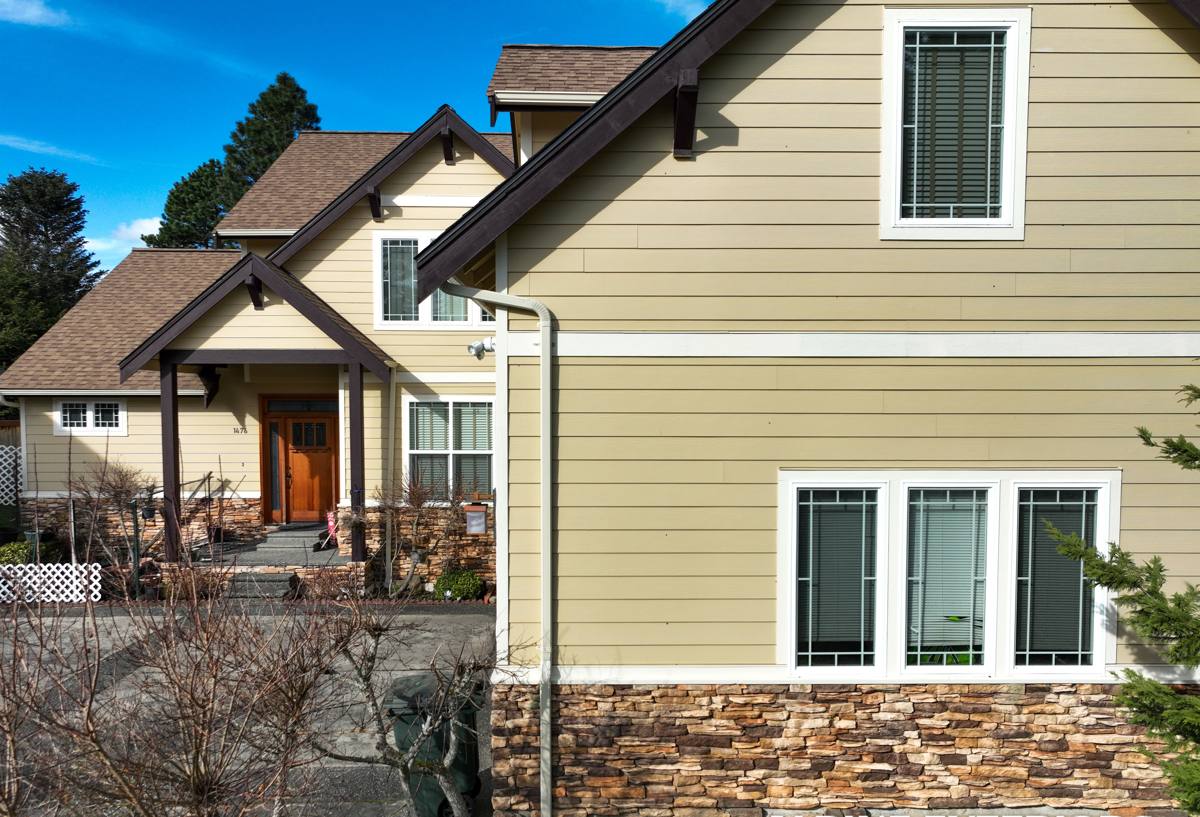
Signs a Blaine Home Needs Siding Repair, Not Just Paint
A fresh coat of paint can hide a lot of problems temporarily, but it doesn't fix them. Here's what actually signals that repair work is needed:
- Cracked, split, or buckled siding panels, especially near corners and window trim
- Soft or spongy spots when you press on the siding by hand
- Persistent moss or algae growth that keeps coming back within a season of cleaning
- Gaps opening up at seams, butt joints, or where siding meets trim and flashing
- Peeling or bubbling paint that returns quickly after repainting
- Visible fastener corrosion or rust streaks running down from nail heads
- Interior signs — musty smell, discoloration on drywall, or trim separating from walls near exterior corners
Any one of these on its own might be minor. Several showing up together, especially on the sides of the house that face prevailing weather or sit in shade most of the day, usually means moisture has been getting behind the siding for a while.
What a Correct Repair Actually Involves
It starts with finding the source, not the symptom
A repair that just replaces the damaged board without figuring out why it failed is a repair that fails again. Before we touch anything, we look at the flashing details, the caulking condition, the grading and drainage around the foundation, and whether the original installation left any gaps for water to travel behind the siding. In a lot of older homes in this area, the siding itself is fine — it's a flashing detail or a caulk joint that let water in.
Then it means matching the repair to the system, not just the panel
Siding is a system: the water-resistive barrier, the flashing, the fasteners, the caulking, and the visible panel all have to work together. A patch that ignores the barrier behind the panel, or uses the wrong fastener spacing, or skips flashing at a horizontal joint, will look fine for a season and then fail in the same spot. Correct repair means pulling back far enough to fix the whole detail, not just covering the visible damage.
And it means finishing the job so it doesn't stand out
Replacement sections need to match existing coursing, reveal, and color as closely as possible. With factory-finished products this is far more consistent than with field-painted materials, which is one of the practical reasons we work almost exclusively with James Hardie ColorPlus siding — the finish is baked on at the factory to a consistent standard, so a repaired section blends in rather than becoming an obvious patch.
Repair or Replace? How We Help You Decide
Not every damaged section needs a full re-side, and not every "small" repair is actually small once you look behind the siding. We walk homeowners through the real factors rather than defaulting to the most expensive option:
| Factor | Leans toward repair | Leans toward replacement |
|---|---|---|
| Extent of damage | Isolated to one or two areas | Recurring across multiple walls |
| Underlying moisture | Sheathing and framing still sound | Rot found behind more than one section |
| Age of existing siding | Newer, still within expected service life | Original material aging out or discontinued |
| Product type | Repairable, matchable material on hand | Failing product line (e.g. older wood composite) |
| Cost proportion | Repair cost is a small fraction of full re-side | Repair cost approaches replacement cost |
We'll give you a straight answer on which side of that table your home falls on — including telling you when a repair is genuinely the right call and a full re-side would be overkill.
Our Process for Siding Repair Work
- Inspection. We look at the visible damage plus the areas around it — corners, trim, flashing, and any spots where water tends to collect.
- Diagnosis. We identify the actual cause of failure, not just the symptom, and check whether moisture has reached the sheathing or framing.
- Written scope. You get a clear explanation of what needs to happen, what it will cost, and why — before any work starts.
- Repair. We remove damaged material back to sound substrate, correct any flashing or barrier issues we found, and install matching material with proper fastening and sealing.
- Cleanup and check. We clean up debris and walk the repaired area with you so you know exactly what was done.
Why We Only Repair With James Hardie Materials
When we're patching or extending siding, the replacement material matters as much as the workmanship. We standardized on James Hardie fiber cement for every job — repairs included — for a few concrete reasons that matter especially in a marine climate like Blaine's:
Fiber cement doesn't rot, and it doesn't provide a food source for the moss and algae that thrive in this area's damp, shaded conditions the way wood-based products can. It's non-combustible, which matters given the dry summer stretches this region also sees. And James Hardie's HZ5 product line is specifically engineered for climates with high moisture exposure — freeze-thaw cycling, driving rain, and coastal humidity — which is a closer match to Blaine's conditions than a general-purpose product line.
We don't install vinyl, LP SmartSide, primed spruce, or cedar, and we won't use them for repairs either. Vinyl can crack in cold snaps and fade unevenly under UV exposure over time, and any repair sections rarely match older, sun-faded panels. Wood-based composite and solid wood products need consistent paint maintenance to keep moisture out, and a repair on a coastal home is fighting a losing battle against that maintenance schedule from day one. James Hardie's factory-applied ColorPlus finish carries its own long-term warranty against fading and peeling, which means a repaired section holds its finish as well as the rest of the wall — something field-painted patches struggle to do.
Why a Crew That Already Works in Blaine Matters
Siding repair isn't just a materials question — it's a local-knowledge question. A crew that regularly works in Blaine and the surrounding Whatcom County coastline already knows which sides of a house take the worst weather, how moss behaves on shaded north walls near the water, and what flashing details tend to fail first on homes built to older codes in this specific area. That's the difference between a repair that addresses the actual local failure pattern and one that treats every house the same regardless of where it sits.
There's also a practical side: a local crew can respond faster if a repair reveals more damage than expected, doesn't need to mobilize a special trip for a follow-up, and has an ongoing reputation in the community to protect — which matters when you're trusting someone to tell you the truth about whether you need a $600 repair or a $16,000 re-side.
A Simple Checklist Before You Hire Anyone
- Ask them to identify the cause of the damage, not just describe the repair
- Ask what material they'll use for the patch and whether it will match the existing siding's finish over time
- Ask whether they check flashing and the water-resistive barrier, not just the visible panel
- Ask for a written scope before work starts, not a verbal estimate
- Ask how long they've worked in your specific area and whether they know the local weather exposure patterns
- Confirm they carry proper licensing and insurance for exterior work in Washington
Get an Honest Look at Your Siding
If you're seeing cracked panels, stubborn moss, or soft spots anywhere on your Blaine home's exterior, it's worth getting it looked at before another wet Whatcom County winter works on it further. We'll give you a straight assessment of what's actually going on, what it will take to fix it correctly, and whether repair or replacement makes more sense for your situation — no pressure, no upsell. Fill out the form below for a free estimate.