 Bellingham Roofing
 Blaine's Coastal Climate Puts Real Stress on Siding
Blaine sits right on the water at the northern edge of Whatcom County, and that location comes with a specific set of weather problems that inland Bellingham neighborhoods don't deal with quite as hard. Salt-laden air off the Strait of Georgia works on exposed materials year-round, driving rain off Puget Sound arrives sideways more often than straight down, and the long gray stretch from fall through spring keeps exterior walls damp enough for moss and algae to take hold and stay there. Any siding product installed in Blaine has to handle all three at once, for decades, without babysitting.
This is why we standardized on James Hardie fiber cement and stopped installing anything else. It's not a marketing position — it's what we've concluded after years of pulling failed siding off homes in exactly this kind of coastal, wet-winter environment and seeing which materials held up and which didn't.
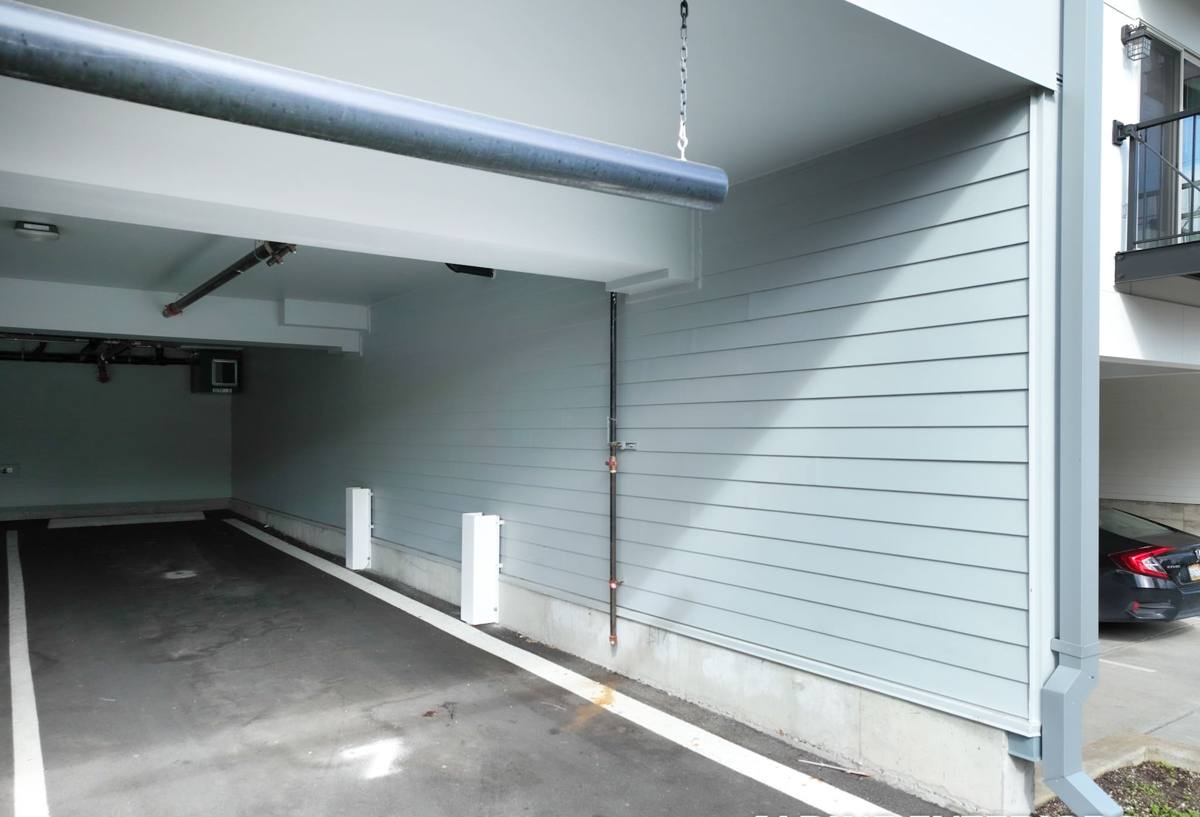
What Salt Air and Moisture Actually Do to a Wall
Salt Air
Airborne salt is corrosive to fasteners and hardware, and it accelerates the breakdown of finishes that aren't engineered to resist it. On wood-based and wood-composite siding products, salt exposure combined with constant moisture speeds up swelling, checking, and edge deterioration — especially at butt joints and cut ends where the factory coating doesn't reach.
Driving Rain
Wind-driven rain doesn't just wet a wall, it pushes water sideways and upward into laps, joints, and penetrations that a calm-weather rain would never reach. Siding systems with weak water-shedding details or moisture-sensitive cores are the ones that fail here first, usually starting at the bottom courses and around windows.
Moss and Algae Season
Blaine's shaded, north-facing, and tree-adjacent walls stay damp for long stretches most winters. That's exactly the environment moss and algae need to establish. Porous or moisture-absorbing siding gives them something to root into; a dense, non-absorbent fiber cement surface gives them far less to hold onto.
Why James Hardie Is the Right Material for This Environment
James Hardie siding is fiber cement — a mix of cement, sand, and cellulose fibers pressed and cured into a dense, stable board. It doesn't absorb water the way wood or wood-composite products do, it won't rot, and it's non-combustible. For a coastal, high-moisture town like Blaine, the properties that matter most are:
- Dimensional stability — it doesn't swell, cup, or warp with repeated wet-dry cycles the way wood-based siding can
- A factory-applied finish (ColorPlus Technology) baked on under controlled conditions, rather than field-painted, so the color layer resists fading and chipping from salt air and UV exposure
- A dense surface that sheds water and doesn't give algae and moss the porous, absorbent surface they favor
- Class A non-combustible fire rating — an added layer of protection that plastic-based (vinyl) and wood-based products simply can't offer
- A strong transferable warranty backed by a large, established manufacturer, not a regional mill
We don't install LP SmartSide, vinyl, Cemplank, Allura, primed spruce, or cedar. Each of those has legitimate uses somewhere, but none of them hold up as consistently in a marine, high-rainfall climate as correctly installed Hardie does, and we'd rather turn down a job than put something on a Blaine home that we don't expect to perform for the long haul.
Hardie's Climate-Engineered HZ Product Line
James Hardie manufactures its siding in different formulations tuned to regional climate zones — this is the HZ10 and HZ5 system. Western Washington, including Blaine and the rest of Whatcom County, falls into a zone engineered for high-moisture, high-humidity conditions. That means the board formulation and finish system installed on a Blaine home is specifically built for exactly the wet, salt-exposed climate it has to survive in, rather than a generic national product.
Practically, this affects things like moisture resistance and the product's tolerance for the freeze-thaw swings we occasionally get in winter. It's one more reason we don't treat "fiber cement" as a single interchangeable category — the specific engineered product matters, and Hardie's regional formulation is built for this coastline.
What Correct Installation Involves
Fiber cement siding is only as good as the installation behind it. Most of the failures we see on coastal homes — cracking at joints, staining, water intrusion — trace back to installation shortcuts, not the material itself. On every Blaine project, correct installation means:
- Weather-resistive barrier first. A properly lapped and sealed water-resistive barrier goes on the wall sheathing before any siding, giving the wall a drainage plane behind the cladding.
- Rainscreen or drainage gap where appropriate. A ventilated gap behind the siding lets any moisture that does get past the cladding drain and dry out instead of sitting against the wall.
- Correct fastener pattern and type. Hardie specifies fastener type, spacing, and placement precisely — corrosion-resistant fasteners driven correctly are non-negotiable in a salt-air environment.
- Proper flashing at every penetration. Windows, doors, vents, and any wall penetration get flashed to shed water outward, not into the wall assembly.
- Correct clearances. Siding held above grade, decks, roofs, and other hard surfaces per manufacturer spec, so it never sits in standing water or wicks moisture from below.
- Factory-cut edges sealed. Any field-cut ends get treated per Hardie's specification so the cut edge doesn't become the weak point in an otherwise well-protected board.
Skip any one of these steps and you can end up with premature failures on a product that's rated to last decades. This is the difference between "installed" and "installed correctly."
Our Process for a Blaine Siding Project
We keep the process straightforward and transparent from the first walk-around to the final cleanup:
- On-site assessment. We look at the existing siding, sheathing condition, moisture points, and any trouble areas specific to your home's exposure — sun side, shade side, wind-facing walls.
- Written estimate. You get a clear scope of work: product line, color, trim details, and what the job includes, with no vague allowances.
- Tear-off and sheathing check. We remove the old siding and inspect the sheathing underneath for hidden rot or damage before anything new goes up — this is often where problems from the old siding system get discovered.
- Barrier and flashing installation. The water-resistive barrier, flashing, and drainage details go in before a single piece of Hardie board is hung.
- Siding installation to Hardie spec. Fastening, spacing, and clearances follow manufacturer requirements, not shortcuts.
- Final walkthrough. We go over the finished work with you and address anything before we consider the job done.
Color and Style Choices for a Coastal Setting
ColorPlus factory finishes come in a range of colors engineered to resist the fading that field-applied paint suffers under constant UV and salt exposure. For a Blaine home, that finish durability matters more than it would somewhere drier and less exposed — a field-painted product will typically need repainting well before a ColorPlus finish needs attention. Board styles — lap siding, shingle-style panels, and trim profiles — can be mixed to match the home's existing architecture, and Hardie's trim and soffit products let us keep the whole exterior system consistent rather than pairing fiber cement walls with mismatched trim materials.
What Affects the Cost of a Blaine Siding Project
| Factor | Why It Matters |
|---|---|
| Home size and wall complexity | More corners, gables, and dormers mean more cutting, flashing, and labor time |
| Existing siding removal and sheathing condition | Rotted or damaged sheathing found during tear-off needs repair before new siding goes on |
| Board profile and trim selection | Lap width, shingle-style panels, and trim detailing affect material and labor cost |
| Color and finish selection | Standard ColorPlus colors versus custom or premium finish options |
| Access and site conditions | Waterfront lots, tight lot lines, and multi-story walls affect staging and scaffolding needs |
We walk through these factors on-site so your estimate reflects your actual home, not a generic square-footage guess.
Maintenance in a Salt-Air, High-Moss Climate
Correctly installed Hardie siding is low-maintenance, not zero-maintenance. A short seasonal routine keeps it performing the way it's designed to:
- Rinse the exterior periodically to clear accumulated salt residue and organic debris, especially on wind-facing walls
- Keep gutters clear so overflow doesn't run down the siding face repeatedly
- Trim back vegetation and tree cover that keeps shaded walls damp longer than necessary
- Check caulking at trim joints and penetrations annually and re-caulk where it's cracked or pulled away
- Address any moss growth on siding promptly with a gentle wash rather than letting it establish and spread
Why a Crew That Already Works in Blaine Matters
Blaine's exposure to the Strait, its wind patterns, and its damp-season moss growth aren't identical to what a crew sees on an inland Bellingham job or a sheltered lot further south in Whatcom County. A crew that regularly works this specific stretch of coastline already knows which walls take the worst weather, where flashing details need extra attention, and how the local moss and algae pattern typically shows up first. That local pattern recognition, paired with a single-product focus on doing James Hardie installation correctly, is what keeps a siding job performing the way it's supposed to for the long term instead of needing early rework.
If you're weighing a siding replacement or new construction siding for a home in Blaine, we're happy to walk the property, look at your specific exposure, and put together a straightforward, no-pressure estimate for a correctly installed James Hardie system built for this coastline.