 Bellingham Roofing
 Decks Built for Fairhaven's Waterfront Conditions
Fairhaven sits close enough to Bellingham Bay that homes here deal with a version of coastal weather the rest of Whatcom County doesn't get quite as hard: salt-laden air, wind-driven rain that finds its way under normal flashing details, and a moss season that can stretch from October well into spring. A deck built to a generic spec might look fine the first year or two. By year four or five, the shortcuts start to show — soft spots near the ledger, corroded fastener heads bleeding rust into the boards, and a slick green film on anything that doesn't drain fast.
We build custom decks for homeowners in and around Fairhaven with those specific conditions in mind, not as an afterthought but as part of the initial design. That means talking through material choice, drainage, and hardware before we ever cut a board, because in this microclimate those decisions matter more than the finish work everyone notices first.
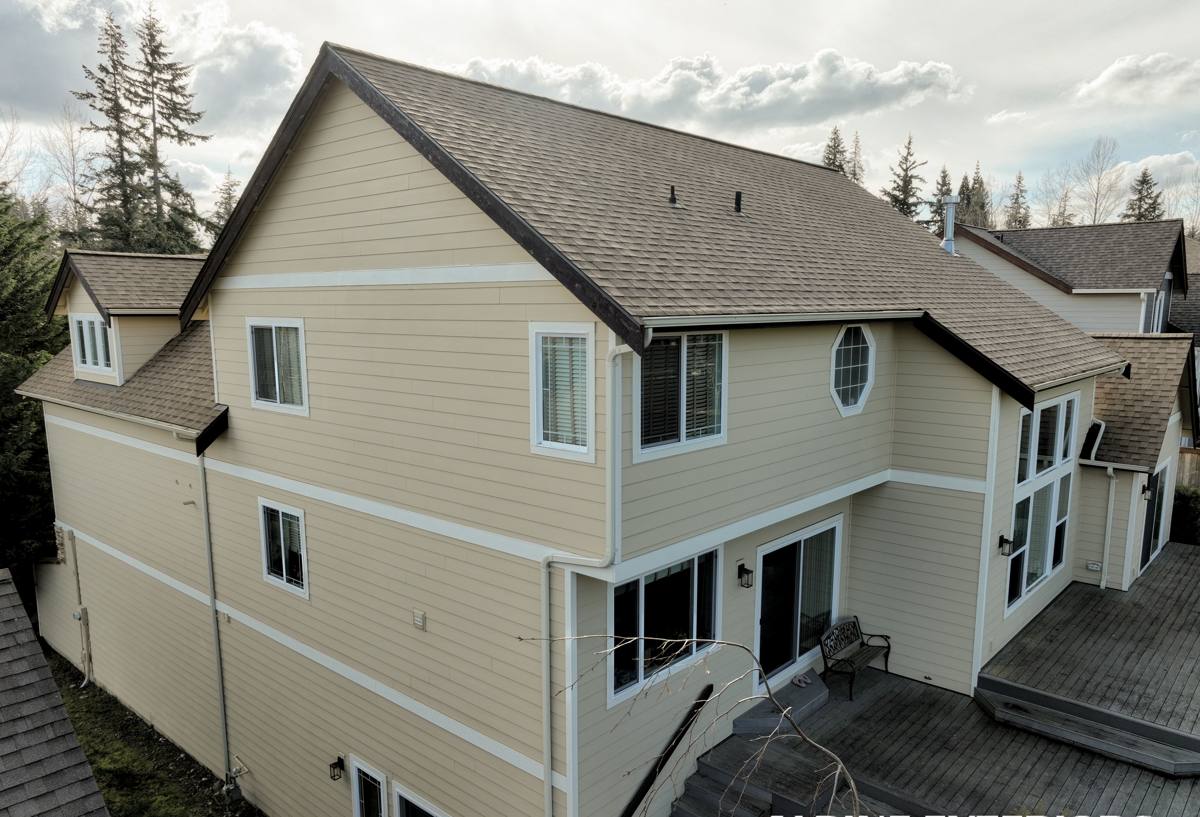
What Salt Air, Rain, and Moss Actually Do to a Deck
It helps to understand the specific failure modes before you decide how to build against them.
Salt Air and Corrosion
Proximity to saltwater accelerates corrosion on anything metal — fasteners, joist hangers, post bases, railing hardware. Standard galvanized coatings can hold up fine a few miles inland but wear through faster in a marine-influenced air environment. Once a fastener starts rusting, it weeps stain into the surrounding wood or composite and loses holding strength from the inside out, long before it looks obviously bad from above.
Driving Rain
Bellingham's rain doesn't always fall straight down. Wind off the bay pushes it sideways into ledger connections, stair stringers, and any horizontal surface that isn't sloped to shed water. A deck that traps moisture in these spots — rather than shedding it — sets up the conditions for rot in framing that's supposed to last decades.
Moss and Sustained Dampness
Moss doesn't just grow on roofs. Shaded decks, north-facing decks, and decks built without enough airflow underneath collect the same spores and hold the same moisture that feeds moss on a roofline. Once established, moss holds water against the decking surface almost permanently, which is exactly the environment that breaks down wood fiber and dulls composite finishes early.
Choosing the Right Decking Material for a Fairhaven Home
There's no single "best" decking material — there's a best material for your budget, your exposure, and how much upkeep you actually want to do. Here's how the common options hold up specifically against salt air, rain, and moss:
| Material | Coastal/Moisture Performance | Moss Resistance | Maintenance | Typical Cost Range |
|---|---|---|---|---|
| Pressure-Treated Wood | Good if properly sealed; end grain and fastener holes are the weak points | Low — needs regular cleaning and re-sealing | Annual cleaning, re-stain/seal every 2–3 years | $ |
| Cedar | Naturally rot-resistant but softer; still needs sealing near the water | Low to moderate | Re-oil or re-stain every 1–2 years to hold its resistance | $$ |
| Composite Decking | Very good — doesn't absorb water like wood | Moderate — surface texture can still hold spores if not cleaned | Periodic washing, no sealing required | $$$ |
| PVC / Capped Composite | Excellent — fully closed-cell, minimal water absorption | Good — smoother, harder surface sheds moisture and moss spores better | Occasional rinse, essentially no sealing | $$$$ |
For a deck close to the bay with real exposure to salt air and shade-driven moss, we usually steer clients toward composite or PVC decking, not because wood is a bad product, but because it demands a maintenance schedule most homeowners underestimate once the deck is finished and furniture's on it. If you want the look and feel of real wood and are willing to keep up with sealing, we'll build that too — we just make sure you know what the upkeep actually looks like before you commit.
Framing Is Where Deck Failures Actually Start
The decking boards get all the attention, but the framing underneath is what determines whether a deck lasts 10 years or 30. In a climate like Fairhaven's, we pay particular attention to:
Ledger Attachment and Flashing
The ledger board — where the deck attaches to the house — is the single most common point of water intrusion and structural failure on decks in wet climates. Proper flashing, installed in the correct order with the house's existing weather barrier, keeps wind-driven rain from working its way behind the siding and into the rim joist.
Joist Protection
Pressure-treated framing lumber resists rot, but cut ends, notches, and fastener holes expose untreated wood underneath. We seal these cut points and, where it makes sense, use joist tape over the tops of joists so decking fasteners bite into a protected surface instead of bare, exposed lumber.
Post Bases and Ground Contact
Posts that sit in standing water or damp soil for months at a time are a slow-motion failure. Elevated post bases that keep wood off the ground, paired with proper drainage grading around footings, matter more here than in a drier inland lot.
Fasteners and Hardware: Where Corrosion Gets Started
This is the detail most tempting to skip, and the one that causes the most visible damage down the line. Standard galvanized deck screws and joist hangers are built for general use, not sustained salt air exposure. We spec stainless steel or coastal-rated hardware for connections that matter structurally — hangers, ledger bolts, and any hardware near ground level or facing prevailing wind and rain. It costs more up front. It's a lot cheaper than replacing rust-streaked boards and corroded hangers in year six.
Drainage, Airflow, and Building Moss Out of the Design
Moss needs shade, moisture, and still air to establish itself. We design against all three where the lot allows it:
- Decking gaps sized to shed water fast rather than hold it between boards
- Under-deck clearance sufficient for real airflow, not just code-minimum
- Grading and drainage routing so water moves away from posts and footings instead of pooling
- Board orientation and layout that accounts for the sun and shade pattern specific to your lot
- Material selection matched to how shaded the deck actually is, not just what looks good in a showroom
None of this eliminates moss entirely on a shaded, waterfront-adjacent lot — nothing does — but a deck designed with drainage and airflow in mind needs a fraction of the cleaning a poorly designed one does.
Our Process for a Fairhaven Deck Project
Every property is different, but the sequence stays consistent:
- On-site assessment — we look at sun exposure, wind direction, existing drainage, and how close the deck will sit to grade or water runoff paths.
- Material and design conversation — we walk through the material comparison above in the context of your specific lot and budget, not a generic pitch.
- Permitting — most custom decks require a permit through the City of Bellingham or Whatcom County depending on the property's location; we handle that process as part of the job.
- Framing and structural work — ledger flashing, joist protection, and corrosion-resistant hardware installed to the standard described above, not the code minimum.
- Decking, railing, and finish work — installed to manufacturer spec for whatever material you've chosen, with attention to fastener pattern and drainage gaps.
- Final walkthrough — we go over the maintenance schedule your specific material needs so there are no surprises a year in.
Maintenance Checklist for a Fairhaven Deck
Whatever material you choose, a short annual routine goes a long way against this climate:
- Clear leaves and debris from between boards and along the perimeter before the wet season sets in
- Rinse or scrub visible moss growth promptly rather than letting it spread
- Check fastener heads and visible hardware for early rust staining
- Inspect the ledger flashing area for staining or soft wood, especially after a hard winter
- Re-seal wood decking on the schedule your material actually requires, not "whenever it looks dull"
- Confirm gutters and downspouts near the deck are directing water away, not onto it
Why Local Experience in Fairhaven Matters
Deck-building fundamentals are the same everywhere, but the failure points shift with the climate. A crew that mostly works drier inland areas may not default to stainless hardware or think twice about a shaded, poorly ventilated bay-facing layout. We work Fairhaven and the rest of Bellingham regularly, and the choices in this page — material selection, fastener grade, ledger flashing, drainage-first design — are the standard we build to here, not an upsell.
If you're planning a new deck or replacing one that's showing its age, we're happy to walk your property, talk through what your specific lot needs, and put together a straightforward estimate — no pressure, no obligation. Use the form below to get started.