 Bellingham Roofing
 Why Fairhaven Homes Need Siding Built for This Coastline
Fairhaven sits close to Bellingham Bay, which means the siding on these homes deals with a different set of pressures than a house twenty miles inland. Salt-laden air off the water accelerates corrosion of fasteners and finishes. Wind-driven rain off the Sound doesn't just fall straight down — it gets pushed sideways into laps, corners, and trim joints where ordinary siding is never tested. And Whatcom County's long, wet, low-sun winters create the kind of shaded, damp conditions moss and algae love. None of this is unique to Fairhaven, but it's concentrated here in a way that punishes the wrong siding choice faster than it would elsewhere in Bellingham.
We install siding across Whatcom County, but Fairhaven jobs get planned with this coastal exposure in mind from the first estimate — not treated as a generic re-side.
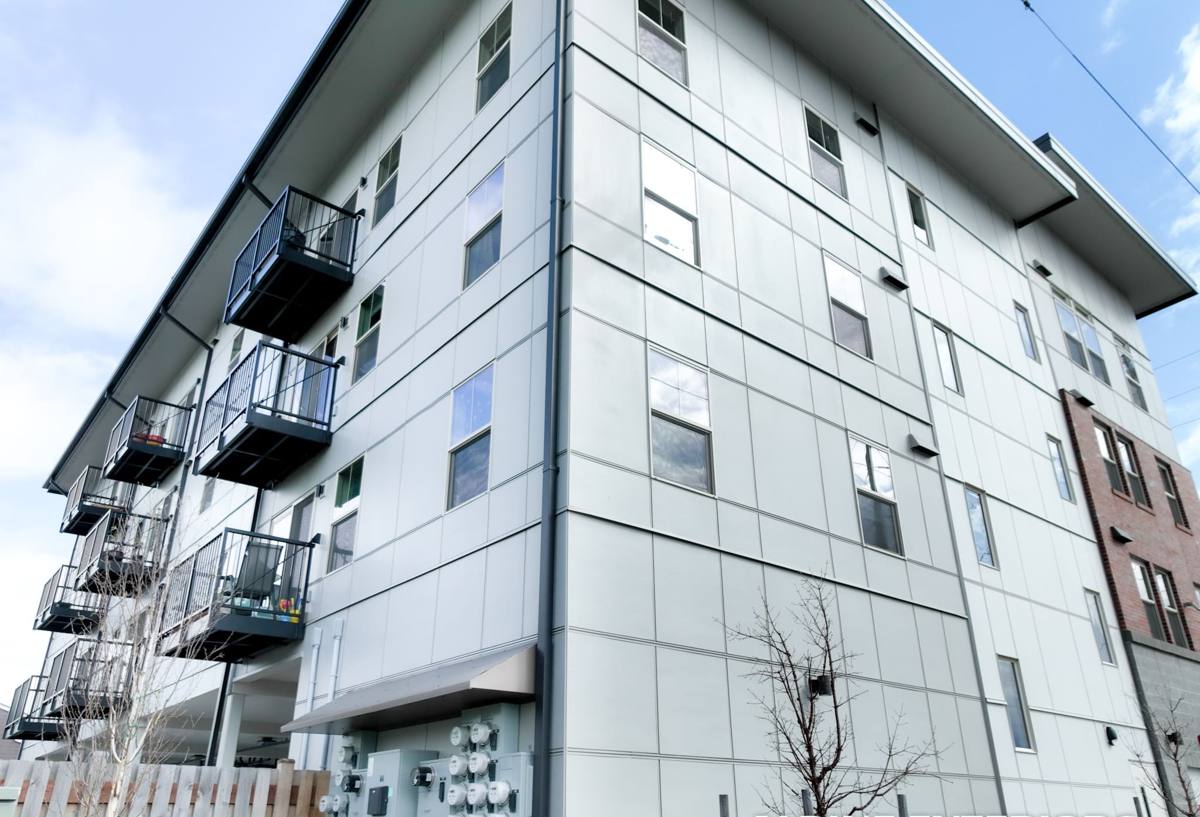
What Salt Air, Rain, and Moss Actually Do to Siding
Salt air and fasteners
Airborne salt speeds up corrosion on exposed metal — nail heads, trim flashing, and any fastener that isn't properly rated or covered. Over years, corroding fasteners can streak the siding face and eventually loosen their hold. This is a slow problem, which is exactly why it gets missed: it doesn't show up in year one or two, it shows up in year eight or ten, after the original installer is long gone.
Driving rain and water paths
Rain that comes in sideways finds every gap in a siding system that wasn't detailed for it — unsealed butt joints, missing flashing above windows and doors, inside corners without proper drainage. Water that gets behind the siding and can't get back out is the single biggest cause of rot in wall sheathing, and it's almost always an installation problem, not a product problem.
Moss, algae, and prolonged dampness
Shaded north and west walls in Fairhaven can stay damp for days after a storm system passes through. That moisture supports moss and algae growth on siding surfaces, which holds even more moisture against the material and, on the wrong substrate, invites decay underneath the growth itself.
Why We Install James Hardie Fiber Cement — and Only Hardie
We made a deliberate decision to install exclusively James Hardie fiber cement siding. We don't install vinyl, LP SmartSide, Cemplank, Allura, primed spruce, or cedar. That's not a marketing position — it's a standard we hold because of what we've seen these coastal conditions do to siding over time, and what it takes to hold up against them.
Fiber cement is non-combustible, which matters given Whatcom County's dry-season wildfire smoke and ember exposure risk, even this close to the water. It doesn't swell, warp, or rot the way wood-based products can when they take on moisture repeatedly. And James Hardie's ColorPlus factory-applied finish is baked on and warrantied against fading and peeling in a way that field-applied paint systems simply aren't — which matters a lot on a house that gets full weather exposure off the bay.
Built for this specific climate
James Hardie engineers its HZ5 product line specifically for wetter, more humid climate zones like the Pacific Northwest — different moisture and freeze-thaw performance than their products built for hot, dry regions. That's a meaningful distinction: siding engineered for the wrong climate zone can underperform even if it's a well-regarded product in general.
The warranty backs it up
James Hardie backs its siding with a strong transferable limited warranty, and the ColorPlus finish carries its own separate finish warranty. A warranty is only as good as the product and the install behind it, but it's a real signal of how the manufacturer expects the product to perform over decades, not just years.
What Correct Siding Installation Actually Involves
The product is only half the equation. Most siding failures we get called to inspect — regardless of brand — trace back to installation shortcuts, not material defects. A correct install includes:
- A proper water-resistive barrier installed and lapped correctly behind the siding, not just stapled up as an afterthought
- Flashing at every window, door, and horizontal trim transition, integrated with the barrier so water sheds outward, not inward
- Correct fastener type, spacing, and placement per James Hardie's published installation instructions — this affects the warranty's validity
- Proper clearance between siding and grade, decks, roof lines, and other surfaces so moisture has somewhere to go
- Caulked and sealed joints only where Hardie's specifications call for sealant — not everywhere, since over-sealing can trap moisture just as easily as under-sealing
- Rain screen or drainage gap detailing appropriate to the wall assembly, especially on shaded, damp-prone elevations
None of this is visible once the job is finished and the house looks good from the curb. It's exactly the kind of work that separates a siding job that lasts fifteen years from one that lasts forty.
Our Installation Process, Start to Finish
1. On-site assessment
We look at existing siding, sheathing condition, and problem areas — particularly on bay-facing and shaded walls — before quoting anything. If there's hidden moisture damage, we tell you before we tell you a price.
2. Tear-off and sheathing check
Old siding comes off, and we inspect the sheathing underneath. Any rot or soft spots get repaired before anything new goes up — covering damaged sheathing with new siding just hides the problem.
3. Water-resistive barrier and flashing
This is the layer that does the real work of keeping water out, and it's the layer that gets skipped or rushed on cut-rate jobs. We install it to manufacturer spec, with particular attention to window and door openings.
4. James Hardie installation
Panels, planks, or shingles go up per James Hardie's fastening and clearance specifications, maintaining warranty compliance throughout.
5. Trim, caulking, and final detailing
Trim work, corner details, and sealant get finished to match the home's style — a meaningful consideration in a neighborhood with a strong sense of architectural character.
6. Final walkthrough
We walk the finished job with you, point out what we did and why, and make sure you're clear on what maintenance (if any) is actually needed going forward.
Matching Fairhaven's Character
Fairhaven is known for its older housing stock and a stronger-than-average sense of neighborhood character compared to newer Bellingham subdivisions. Homeowners here are often trying to preserve or complement a specific architectural look rather than just cover the walls in whatever's cheapest. James Hardie's lap, shingle, and panel profiles, combined with a wide factory color range, give us the flexibility to match a traditional look without resorting to a product that won't hold up to the exposure this location gets. We plan color and profile choices around how the home actually sits — which elevations take the most weather, which are shaded, which face the water — not just what looks good in a sample chip.
What Affects Siding Installation Cost
Every Fairhaven property is different, but the factors that move the price are consistent. We give firm, itemized quotes after an on-site look — never a phone estimate — but here's what generally drives cost up or down:
| Factor | Lower cost | Higher cost |
|---|---|---|
| Existing wall condition | Sound sheathing, no hidden rot | Rot or moisture damage requiring repair |
| Home size and stories | Single-story, simple footprint | Multi-story, complex rooflines and gables |
| Siding profile | Standard lap plank | Shingle-style or mixed-profile detailing |
| Trim and accent work | Minimal trim | Extensive window, corner, and belt-line trim |
| Access and site conditions | Open, easy scaffolding access | Tight lots, slopes, landscaping to protect |
Maintaining Hardie Siding in a Salt-Air, High-Moisture Climate
James Hardie fiber cement is low-maintenance, not zero-maintenance. In a location like Fairhaven, a little regular attention keeps it performing the way it's designed to:
- Rinse siding annually, and more often on shaded or bay-facing walls prone to moss and algae buildup
- Keep gutters clear so overflow doesn't run down and pool behind siding at corners
- Trim back vegetation and landscaping that keeps siding shaded and damp longer than it needs to be
- Inspect caulked joints every couple of years and have any cracked or missing sealant addressed
- Watch for any staining near fasteners or trim, which can signal a flashing or fastener issue worth checking early
Why Local Experience in Fairhaven Matters
A crew that already understands how wind-driven rain moves across a bay-facing wall, how long a shaded elevation stays damp after a storm, and how Whatcom County's inspectors and permitting process work will plan a job differently than a crew seeing these conditions for the first time. That experience shows up in the details — flashing choices, fastener selection, drainage planning — that you won't see once the siding is up, but that determine whether it's still performing well in twenty years. We've built our entire installation standard, and our decision to work exclusively in James Hardie fiber cement, around getting those details right in exactly this kind of climate.
If you're weighing a siding replacement or repair on a Fairhaven home, we're happy to take a look and give you a straightforward, no-pressure estimate — no obligation, just an honest read on what your siding actually needs.