 Bellingham Roofing
 Board & Batten Siding Built for Blaine's Coastal Climate
Blaine sits right on the water at the northern edge of Whatcom County, which gives it a beautiful setting and a genuinely tough environment for exterior siding. Board and batten is one of the most requested looks out here — the vertical lines read as classic Pacific Northwest, and it works on everything from modest ranch homes to larger waterfront-adjacent properties. But the look only holds up if the material and the installation are matched to what this specific stretch of coastline throws at a house year-round: salt-laden air, wind-driven rain, and a moss season that runs longer than most homeowners expect.
This page is about doing board and batten right for Blaine conditions specifically — not a generic description of the style. We'll walk through what the climate actually does to siding here, what a correct installation looks like, and why we install this profile exclusively in James Hardie fiber cement rather than vinyl, LP SmartSide, or traditional cedar boards.
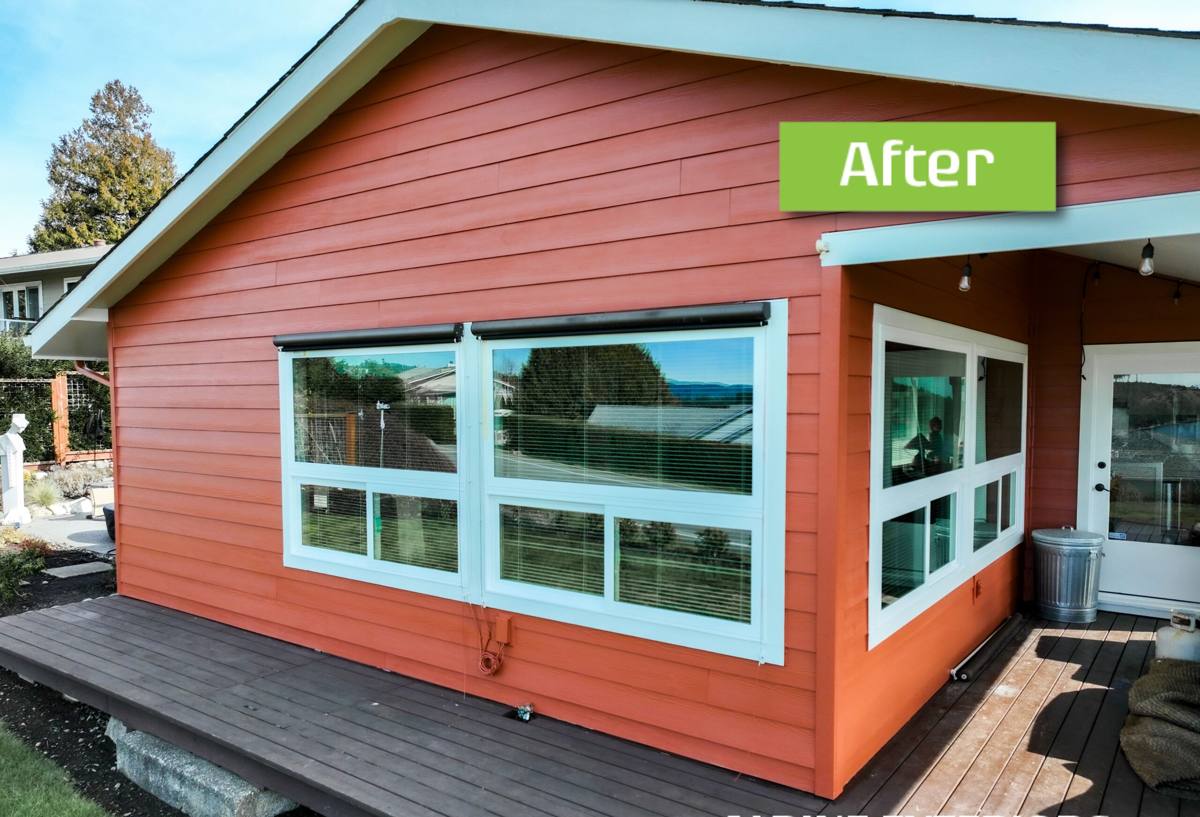
What Blaine's Climate Does to Vertical Siding
Salt Air
Homes near Semiahmoo Bay and Drayton Harbor sit close enough to saltwater that airborne salt is a real factor in exterior durability, not a theoretical one. Salt-laden moisture accelerates corrosion on fasteners and metal flashing, and it can degrade certain paints and coatings faster than the same product would wear inland. Board and batten has more exposed vertical seams and batten strips than lap siding, which means more linear feet of joint and fastener line exposed to that air over the life of the siding.
Driving Rain
Storms coming off the Strait of Georgia and the Salish Sea tend to arrive with real wind behind them, which pushes rain sideways into wall assemblies instead of letting it run straight down. Vertical board and batten actually handles wind-driven rain reasonably well when it's detailed correctly, because the battens shed water down the face of the boards rather than across a horizontal lap. But that only works if the water-resistive barrier, flashing, and gaps behind the boards are installed correctly — get any of that wrong and driving rain finds its way behind the cladding.
Moss Season
Whatcom County's damp, mild winters keep surfaces wet for extended stretches, and north-facing or shaded wall sections in Blaine can stay damp for weeks at a time. Moss and algae don't just look bad — they hold moisture against the siding surface, which is a slow but steady threat to any substrate that isn't dimensionally stable and rot-resistant. Board and batten's vertical grooves and batten shadow lines give moss extra surface area and micro-ledges to establish on compared to flat lap siding.
Board and Batten: Material Comparison
Board and batten can be built from several materials, and the differences matter more in a coastal Whatcom County climate than they would somewhere drier and warmer. Here's how the common options actually perform under salt air, driving rain, and moss pressure.
| Material | Moisture Behavior | Salt Air / Coastal Durability | Maintenance Load |
|---|---|---|---|
| James Hardie fiber cement | Dimensionally stable; won't swell, cup, or rot from repeated wetting | Factory ColorPlus finish resists salt-air fading and chalking | Occasional wash; no repainting cycle with ColorPlus |
| Vinyl board and batten | Won't rot, but panels can warp or oil-can with temperature swings and don't stop moisture from reaching sheathing at seams | Can become brittle and fade unevenly under sustained UV and salt exposure | Low, but limited repair options if a panel cracks or fades |
| LP SmartSide (engineered wood) | Wood-based substrate is more moisture-sensitive at cut edges and seams than fiber cement | Salt air combined with any moisture intrusion accelerates edge swelling | Requires diligent caulking and edge maintenance |
| Cedar / primed spruce boards | Natural wood movement with humidity; prone to cupping and checking | Salt air speeds finish breakdown and raises rot risk if coatings aren't kept up | Recurring refinishing/repainting on a regular cycle |
None of these are "bad" products in every climate. But in a location where salt air, wind-driven rain, and prolonged damp shade all stack up against a house, dimensional stability and finish durability stop being nice-to-haves and start being the difference between a siding job that lasts and one that needs early intervention.
What a Correct Board and Batten Installation Actually Involves
The vertical boards and battens are the visible part, but most of what determines whether the siding survives Blaine's weather happens underneath them.
- Water-resistive barrier: A continuous, properly lapped WRB behind the siding is the real first line of defense against driving rain — the cladding sheds most of the water, but the WRB handles what gets through.
- Rainscreen gap: A drainage gap between the WRB and the back of the boards lets any moisture that does get behind the siding drain and dry out instead of sitting against the sheathing.
- Flashing at every penetration: Windows, doors, vents, and any horizontal trim transitions need integrated flashing so water is directed out and down, not into the wall assembly.
- Fastener spacing and type: Correct nail or screw placement, spacing, and corrosion-resistant fastener selection matter more near saltwater — this is one of the most common places corners get cut.
- Expansion gaps: Fiber cement needs specific gaps at boards, trim, and butt joints per manufacturer spec so the material can move seasonally without cracking caulk lines.
- Sealed cut edges: Every field-cut edge on fiber cement board needs sealing before installation — this is a step that's easy to skip and hard to catch after the fact.
Skipping any one of these doesn't usually cause an immediate problem. It shows up two, five, or ten years later as a soft spot, a stain, or a section of siding that's failing while the rest of the wall looks fine — which is exactly the kind of localized failure that's expensive to diagnose after the fact.
Why We Install Board and Batten Only in James Hardie
We don't install vinyl, LP SmartSide, Cemplank, Allura, primed spruce, or cedar board and batten — not because those products can't be installed well, but because we've made a professional decision about what we're willing to put our name behind on homes exposed to this coastline. James Hardie fiber cement is non-combustible, holds its dimensions through wet-dry cycling far better than wood-based products, and its ColorPlus factory finish is engineered to resist the fading and chalking that salt air and UV exposure accelerate. Hardie also offers HZ5 product formulations specifically engineered for climates with sustained moisture exposure, which matches Whatcom County's weather pattern better than a general-purpose siding spec.
The other piece is the warranty. Hardie's transferable warranty backs the product for decades when it's installed to spec, which matters on a coastal property where the siding is working harder than it would inland. We'd rather install one product system correctly and stand behind it fully than offer several options with different long-term risk profiles.
Our Process for Board and Batten Projects in Blaine
- On-site assessment: We look at wall exposure, existing moisture damage, shaded/north-facing sections prone to moss, and how the home is oriented relative to prevailing wind and rain direction.
- Tear-off and sheathing check: Old siding comes off and we inspect the sheathing underneath for rot or soft spots before anything new goes up — this is where hidden problems get caught, not covered over.
- WRB and flashing install: Water-resistive barrier, flashing, and rainscreen furring go in first, sealed and lapped correctly at every seam and penetration.
- Board and batten installation: James Hardie boards and battens go up per manufacturer fastening schedule, with correct expansion gaps and sealed cut edges throughout.
- Trim, caulking, and final detailing: All transitions, corners, and penetrations get finished and sealed to shed water the way they're designed to.
- Walkthrough: We go over the finished work with the homeowner before calling the job done.
Living With Board and Batten in a Salt-Air, Moss-Prone Climate
James Hardie siding is low-maintenance compared to wood or vinyl alternatives, but "low-maintenance" isn't "no-maintenance," especially this close to the water. A short annual check keeps small issues from becoming siding failures.
- Rinse siding annually to remove salt residue and airborne grime buildup, especially on wall sections facing open water.
- Watch shaded and north-facing sections for early moss or algae growth and clean it off before it establishes.
- Check caulking at trim joints, window and door transitions, and butt joints yearly — caulk is the first thing to fail, and it's cheap to redo before it lets water in.
- Keep gutters and downspouts clear so overflow isn't running directly down wall sections.
- Trim back vegetation that's shading walls or holding moisture against the siding.
- Have any soft spots, staining, or bubbling paint checked promptly rather than waiting for a full siding inspection cycle.
What Affects the Cost of a Board and Batten Project
Every home is different, so we don't quote sight-unseen, but these are the factors that move a board and batten project up or down in scope and cost.
| Factor | Why It Matters |
|---|---|
| Home size and number of stories | More wall area and taller walls mean more material, more labor, and more staging/access work |
| Tear-off vs. new construction | Removing and disposing of existing siding adds labor and may reveal sheathing repairs |
| Existing moisture damage | Rotted sheathing or framing found during tear-off needs repair before new siding goes on |
| Trim and detail complexity | More corners, window/door transitions, and architectural detail mean more precision cutting and flashing work |
| Site access | Waterfront lots, steep grades, or tight setbacks can affect equipment and staging needs |
| Color and finish selection | Standard ColorPlus color options vs. custom finishes can affect material lead time and cost |
Why It Matters to Hire a Crew That Already Works in Blaine
Siding crews that mostly work inland don't always think about salt air fastener corrosion, wind-driven rain direction off the water, or which wall orientations in a place like Blaine tend to stay damp longest. A crew that's already doing board and batten and other James Hardie work throughout Whatcom County brings that judgment to the table without having to learn it on your house. That shows up in small decisions — fastener selection, flashing detail at a water-facing wall, where to expect moss pressure — that don't show up on a quote but do show up in how the siding performs ten and twenty years out.
We also know the practical side of working in Blaine: typical permitting expectations, common construction types in the area, and how weather windows affect scheduling for exterior work this close to the coast.
Get an Estimate for Your Blaine Home
If you're considering board and batten siding for a home in Blaine, we're glad to walk the property with you, look at your specific exposure and moisture history, and give you a straightforward estimate — no pressure, no upsell. Use the form below to request your free estimate.