 Bellingham Roofing
 Windows Built for Sudden Valley's Particular Climate
Sudden Valley sits in a pocket of Whatcom County that behaves a little differently than the rest of Bellingham. Wrapped around Lake Whatcom and shaded by dense second-growth forest, homes here deal with a damp, shady microclimate on top of everything the wider region throws at a window: driving winter rain off the Pacific storm track, a moss and algae season that can run eight months or more, and the moisture-laden marine air that reaches even inland, tree-covered neighborhoods like this one. Windows that would hold up fine in a more open, sun-exposed part of town often fail early here, because they simply never get a chance to fully dry out between rain events.
That combination — shade, humidity, and long stretches of standing moisture around the frame — is exactly what we plan for on every Sudden Valley job. It changes which products we recommend, how we flash and seal each opening, and how we sequence the install so water never gets a path back into the wall.
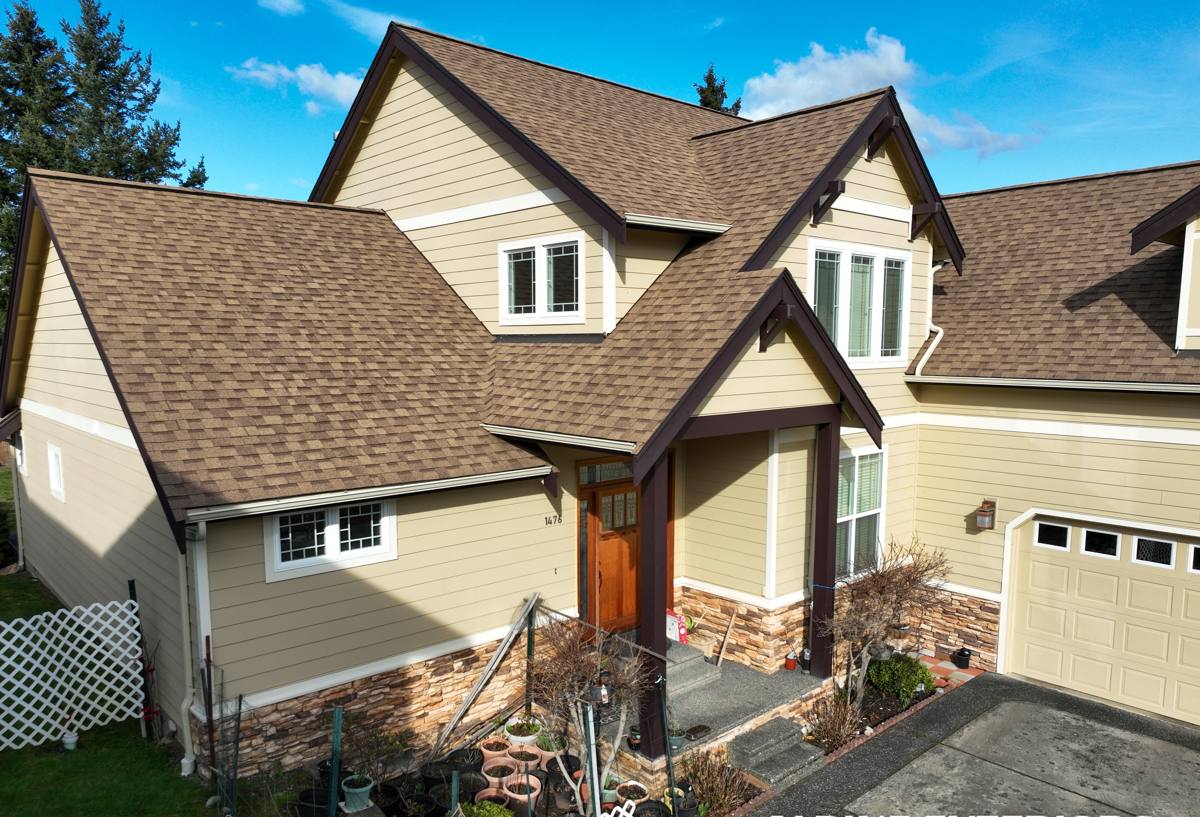
What the Local Climate Does to Windows Here
Most of the window failures we see in this neighborhood trace back to the same handful of causes, all tied to how wet and shaded the area stays for most of the year.
Moss, algae, and biofilm
North-facing walls and anything tucked under tree cover tend to grow a thin film of moss or algae on sills and lower sashes. On its own that's cosmetic, but it holds moisture against the frame and finish far longer than a dry surface would, which accelerates rot in wood components and breaks down sealants faster than the manufacturer's warranty assumes.
Driving, wind-blown rain
Pacific storms don't just drop rain straight down — wind pushes it sideways into wall assemblies, especially on exposed gable ends and upper-story windows. If flashing and sealant details aren't done correctly, wind-driven rain finds the gaps that a light, still rain never would.
Condensation from shade and humidity
Deep tree cover keeps ambient humidity higher around the house and slows evaporation. Combined with the temperature swing between a heated interior and a cool, shaded exterior, older or poorly sealed windows condensate heavily — sometimes enough to feed the same rot and mold problems as an outright leak.
Aging original windows
A fair number of Sudden Valley homes were built as cabins or vacation properties decades ago and later converted to full-time residences. Original single-pane or early dual-pane windows in these homes were never spec'd for year-round occupancy, and many are now well past the point where re-sealing or minor repair makes sense.
Signs Your Windows Need Attention
- Soft or discolored wood at the sill or bottom corners of the frame
- Fogging or a permanent haze between the panes of a dual-pane unit (failed seal)
- Visible moss, algae, or dark streaking on the sill or lower sash
- Drafts or a noticeable temperature difference near the window in winter
- Paint that keeps bubbling or peeling in the same spot no matter how often it's repainted
- Windows that are difficult to open, close, or latch — often a sign the frame has swelled or shifted
- Interior condensation that doesn't clear even with normal heating and ventilation
Any one of these can be a minor, fixable issue. Several at once, especially combined with soft wood, usually means the window and the flashing behind it both need to be replaced rather than patched.
What a Correct Installation Actually Involves
Window replacement looks simple from the outside — old unit out, new unit in — but the parts nobody sees are what determine whether a window lasts five years or twenty-five in a climate like this one.
Removal and opening inspection
We pull the old window carefully and inspect the rough opening before anything new goes in. In a wet, shaded environment this step matters more than usual — it's common to find soft sheathing or compromised framing behind an old window that's been leaking slowly for years without an obvious interior sign.
Flashing and water management
This is the single most important part of the job. Every opening gets flashed so that any water that does get past the exterior finish is directed back out, never into the wall cavity. Sill pan flashing, properly lapped house wrap, and correctly sequenced sealant beads all matter here — done out of order, they can trap water instead of shedding it.
Air sealing and insulation
The gap between the window frame and the rough opening gets sealed and insulated, not just caulked at the trim. A well-air-sealed window cuts drafts and also reduces the interior condensation that shaded, humid homes are prone to.
Setting, leveling, and fastening
The new window is shimmed, leveled, and fastened per the manufacturer's schedule — skipping fasteners or over-shimming are common shortcuts that shorten a window's service life and can void the warranty.
Interior and exterior finish
Trim, caulking, and touch-up paint are finished to match the existing house, and the work area is cleaned up before we leave.
Choosing the Right Window for a Shaded, Wet Neighborhood
Material choice matters more here than in a drier, sunnier part of town, because whatever you install will spend most of the year damp. Here's how the common options hold up under those conditions.
| Material | How It Handles Shade & Moisture | Maintenance | Typical Fit |
|---|---|---|---|
| Vinyl | Won't rot; unaffected by standing moisture | Low — occasional cleaning | Most Sudden Valley homes, especially full-time residences |
| Fiberglass | Excellent moisture and temperature stability | Low | Homes wanting a stiffer frame or larger window sizes |
| Aluminum-clad wood | Exterior protected, but any breach exposes wood core to rot | Moderate to high | Homeowners who want a wood interior look and are willing to maintain it |
| Solid wood | Most vulnerable to the moss, shade, and standing moisture typical here | High — regular refinishing and inspection required | Historic or architecturally specific replacements only |
We're not against wood windows as a category — they have real appeal — but in a heavily shaded, high-moisture setting like Sudden Valley, an unprotected wood exterior is fighting the site conditions every day of the year. If a homeowner wants a wood look, aluminum-clad or a high-quality wood-look vinyl generally gets closer to the durability the location demands. We'll always lay out the trade-offs honestly rather than push whatever's easiest to install.
Our Process, Start to Finish
1. On-site assessment
We look at each window individually — not just the glass, but the sill, the surrounding siding, and any signs of past moisture intrusion — and talk through what's actually needed versus what's optional.
2. Written estimate
You get a clear, itemized quote covering the window units, installation, flashing and sealing work, and any framing repair identified during the assessment. No surprise line items added mid-job.
3. Scheduling around the weather
Window openings are exposed to the elements while work is underway, so we schedule around Whatcom County's rain patterns and work efficiently once we start — most homes are down to a handful of open windows at any given time, not the whole house at once.
4. Installation day
We protect flooring and landscaping, remove and replace windows in a sequence that limits how long any opening sits exposed, and handle flashing, insulation, and finish work to the standard described above.
5. Walkthrough and cleanup
Before we leave, we walk the job with you, operate each window so you can confirm it opens, closes, and locks properly, and clean up debris and packaging.
Why a Crew That Already Works Sudden Valley Matters
Sudden Valley is a private residential community with its own access points and site rules, and homes here range from older lake cabins to newer full-time residences — each with different framing quirks depending on when they were built. A crew that's already done work in the neighborhood knows how to navigate community access smoothly, recognizes the difference between a cabin-era rough opening and a modern one, and has already seen how the tree cover and lake humidity behave against different siding types on nearby homes. That familiarity shows up as fewer surprises mid-project and a more accurate estimate up front, instead of change orders once the old window comes out.
What Affects the Cost
Every home is different, but the same handful of factors drive most of the variation in a Sudden Valley window quote.
| Factor | Why It Matters |
|---|---|
| Window material and glass package | Vinyl, fiberglass, and clad-wood carry different unit costs; double vs. triple glazing adds cost and performance |
| Condition of the rough opening | Soft or rotted framing found during removal adds repair time before the new window can go in |
| Number and size of openings | Larger or custom-sized units cost more than standard stock sizes |
| Access and story height | Second-story or hard-to-reach windows take longer and may need additional equipment |
| Full-frame vs. insert replacement | Full-frame replaces down to the studs and generally costs more than an insert into a sound existing frame |
We'd rather walk your specific windows and give you real numbers than quote a blanket per-window price that doesn't reflect what's actually behind your siding.
Living With New Windows in a Shaded, Wet Climate
Good windows and a correct installation take most of the maintenance burden off your plate, but a little seasonal attention goes a long way in this environment. Rinsing moss and algae off sills before it builds up, keeping gutters and downspouts clear so water isn't sheeting down the wall next to a window, and doing a quick visual check of caulking each fall before the rains settle in will keep a properly installed window performing for its full service life. None of that is a substitute for correct flashing and installation in the first place — it's what protects the investment once the hard part is already done right.
If your windows are showing any of the signs above, or you're simply ready to stop fighting drafts, fog, and moss every winter, we're happy to come take a look. We offer free, no-pressure estimates for Sudden Valley homeowners — use the form below to get one scheduled.