 Bellingham Roofing
 Fairhaven Takes Storms Differently Than the Rest of Bellingham
Fairhaven sits close to the water, tucked against Bellingham Bay, and that location shapes how storms treat its roofs. Wind off the water hits differently than wind funneling through inland neighborhoods — it carries salt spray, it gusts unevenly around the hills and tree lines, and it drives rain sideways into places a roof was never really built to shed water from. Add in the long stretch of wet months that define this part of Whatcom County, and you get roofs that are working harder, more often, than a simple age-based maintenance schedule would suggest.
We repair storm damage across Bellingham, but Fairhaven jobs tend to show a specific pattern: wind-lifted shingle edges on the bay-facing slopes, moss colonies established in shaded valleys and north-facing planes, and slow water intrusion around flashing that's been through one too many freeze-thaw and salt-air cycles. Understanding that pattern is most of what separates a repair that lasts from one that reopens in six months.
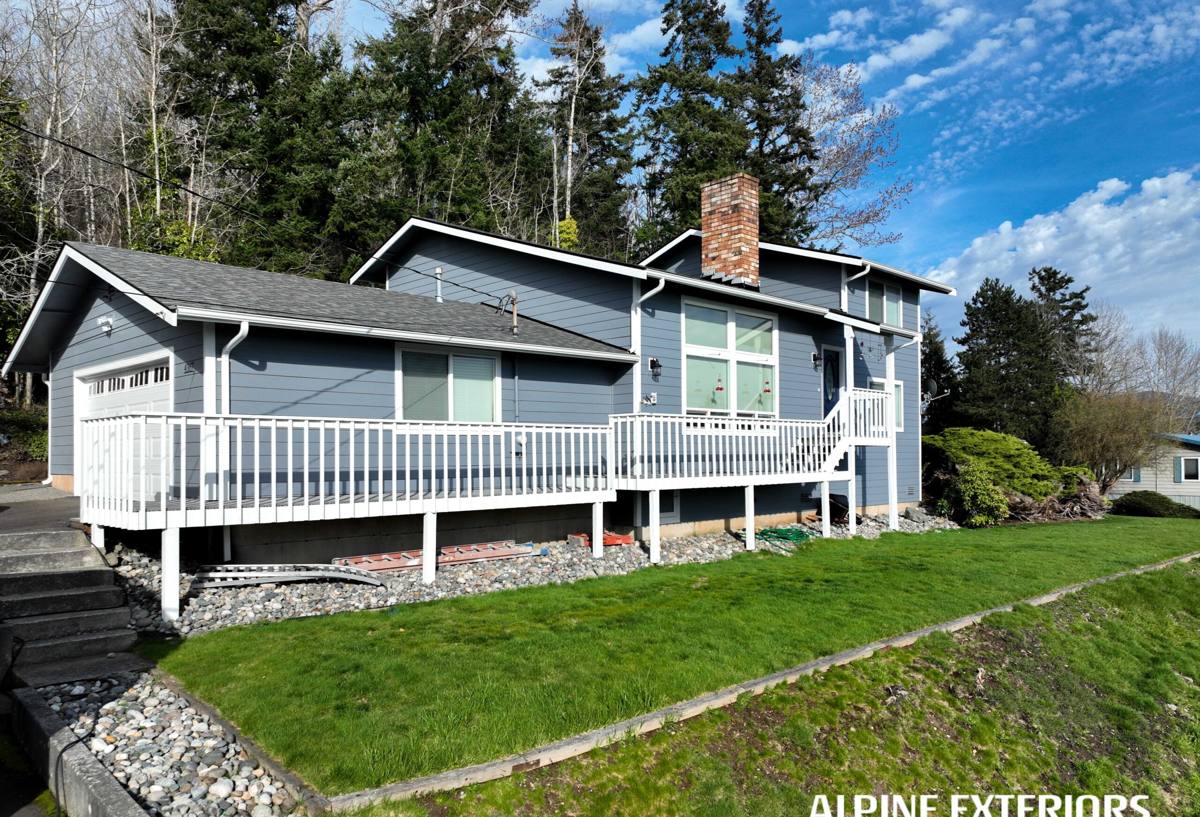
What Storm Damage Actually Looks Like Here
Wind and Rain Damage
A hard blow off the bay doesn't usually rip a roof apart in one dramatic event. More often it works loose the edges of shingles or shakes — the tabs, the ridge caps, the perimeter courses — and once an edge is lifted, the next rain gets underneath it. From the ground it can look like nothing happened. Inside the attic, it can mean a slow stain spreading across the sheathing for weeks before anyone notices a ceiling spot.
Moss and Trapped Moisture
Fairhaven's tree cover and marine humidity make for a long moss season — moss doesn't just sit on top of shingles, it holds water against them and works into the granule layer, and over a wet winter it can lift shingle edges the same way wind does. Combined with storm-driven rain, a moss-covered slope is often where we find the worst hidden rot, because the moss has been trapping moisture there long before the storm arrived.
Flashing and Metal Corrosion
Salt air is genuinely harder on exposed metal — flashing, fasteners, gutter hangers, and vent boots corrode faster near the bay than they do a few miles inland. A storm that would only stress a healthy flashing joint elsewhere can be enough to fail one that's already been quietly corroding in Fairhaven's air for years.
Why "A Few Missing Shingles" Isn't the Whole Story
The visible damage after a storm — a torn shingle, a dented vent cap, a gutter pulled loose — is almost never the full extent of it. Wind-driven rain finds its way under disturbed roofing and travels along the underlayment or decking before it ever shows up as a stain indoors. That's why a proper storm repair starts with an inspection that goes past the obvious spot, checking the decking underneath, the condition of the underlayment, and the neighboring courses that took the same wind load even if they look intact from the ground.
Skipping that step is how homeowners end up paying for the same repair twice — once for the patch, and again a year later when the water that got in during the storm finally rots through the decking it's been sitting on.
Our Storm Damage Repair Process
- Inspection and documentation. We check the whole roof, not just the damaged section, and photograph what we find — both for your records and for any insurance claim.
- Temporary protection. If there's an active leak or exposed decking, we get it covered and weather-tight the same visit, before we talk through permanent repair options.
- Scope and estimate. We explain what's damaged, what's simply worn, and what a correct repair actually requires — including anything the storm exposed that predates the storm itself.
- Repair. Matching materials where possible, correcting the underlying cause (not just the visible symptom), and re-checking flashing and fastening at the repair area and its immediate surroundings.
- Follow-up. A final check to confirm the repair is holding and the roof is shedding water the way it should.
Repair or Replace? How We Actually Decide
Not every storm-damaged roof needs a full replacement, and not every roof that "just needs a patch" should get one. The honest answer depends on a handful of factors we walk through with you before recommending either path.
| Factor | Leans Toward Repair | Leans Toward Replacement |
|---|---|---|
| Roof age | Under 10–12 years, still within expected lifespan | Near or past expected service life for the material |
| Extent of damage | Isolated to one slope or a small area | Spread across multiple slopes or repeated storm hits |
| Decking condition | Sound, dry sheathing under the damaged area | Soft, delaminated, or rotted decking found underneath |
| Moss/moisture history | Minor, treatable buildup | Long-term trapped moisture across large sections |
| Insurance coverage | Claim covers targeted repair scope | Adjuster and contractor agree damage warrants full replacement |
We'll always tell you honestly which side of that table your roof falls on. A repair that's done right can add years of service to a roof that isn't ready for replacement — but we're not going to patch over decking that's already failed just to make the estimate smaller.
Working With Insurance on Storm Claims
Wind and storm damage is one of the more straightforward insurance categories, but the claim still goes smoother when the documentation is solid from the start. That means photos of the damage before any repair work covers it up, a clear written scope of what's damaged versus what's pre-existing wear, and a repair estimate that an adjuster can actually evaluate against the loss. We provide that documentation as a normal part of our inspection — not as an upsell, just as the paperwork a claim needs to move without delays or disputes over scope.
One honest note: insurance covers storm damage, not the maintenance a roof was already overdue for. If a moss-choked valley finally gives out during a windstorm, part of that may be attributable to the storm and part to years of buildup — we'll be straightforward with you about where that line falls rather than inflating a scope to chase a bigger claim.
Getting a Trustworthy Contractor After a Storm
Storms bring out traveling crews offering fast, cheap fixes and pressuring homeowners to sign contracts on the spot. A few things worth checking before you hire anyone for storm repair, here or anywhere:
- They have a permanent local address and a track record of jobs in the area, not just a phone number and a truck
- They'll put the scope of work in writing before you sign anything
- They inspect the whole roof, not just the spot you called about
- They're licensed and insured in Washington, and can show proof without hesitation
- They're not requiring full payment upfront before any work starts
- They give you a straight answer about repair versus replacement instead of pushing the bigger job by default
Materials and Methods Suited to Fairhaven's Conditions
Given the salt air and near-constant moisture exposure, we pay close attention to a few details that matter more here than they would inland: corrosion-resistant fasteners and flashing metals in areas exposed to bay air, properly lapped and sealed underlayment at valleys and eaves where wind-driven rain concentrates, and ice-and-water shield in the vulnerable areas most prone to wind-driven intrusion. None of this is exotic — it's standard good practice — but it's the standard we hold to because generic materials and methods don't hold up as long this close to the water.
We treat moss as part of storm prevention, not a separate cosmetic issue. Clearing and treating moss on a Fairhaven roof reduces the trapped moisture that makes shingles brittle and prone to lifting the next time real wind comes through.
Reducing Storm Damage Before the Next One Hits
Most storm damage isn't random bad luck — it tends to find the parts of a roof that were already weakened by moss, age, or a prior repair that wasn't done quite right. A little attention between storms goes a long way.
- Have moss and debris cleared from valleys and north-facing slopes at least once a year
- Check gutters are clear before the wet season so water isn't backing up under the roof edge
- Have loose or lifted shingle edges resealed or replaced before they become an entry point
- Ask for an attic check after any major windstorm, even if nothing looks wrong from outside
- Keep an eye on flashing around chimneys, vents, and skylights — these fail before the field of the roof usually does
Why It Helps to Hire a Crew That Already Works in Fairhaven
A crew that's already familiar with Fairhaven's roofs knows what to expect before the ladder goes up — which slopes take the worst of the bay wind, which trees mean a moss check is worth the extra time, and which flashing details tend to be the weak point on homes of a certain age in this part of Bellingham. That familiarity means a faster, more accurate inspection and fewer surprises once repair work starts.
It also means a faster response when a storm actually hits. Being local to Whatcom County, not dispatched in from somewhere else after a big weather event, is part of why we can usually get a tarp on an exposed roof and a real inspection scheduled without the multi-week wait that storm-chasing crews create when they're spread thin across a wide region.
If a recent storm has left you with damage — or you're just not sure whether that lifted shingle or that mossy valley is something to worry about — we're glad to take a look. Reach out for a free, no-pressure estimate using the form below.