 Bellingham Roofing
 Why Metal Roofing Makes Sense in Lynden
Lynden sits back from the water in Whatcom County's farm country, but that distance doesn't buy the kind of protection people assume. The marine air that rolls in off Bellingham Bay and the Salish Sea still reaches this far inland, especially on roofs facing south and west into the prevailing wind. Combine that with the open exposure of a lot of Lynden properties — fewer tall buildings to break the wind than you'd get closer to town — and a roof here takes on more weather than its distance from the coastline would suggest.
Metal roofing holds up well against that combination. It sheds water fast instead of holding it, it doesn't feed moss and algae the way organic shingle materials do, and a properly fastened metal roof handles wind uplift better than most other roofing types. That's not a reason to install metal on every house, but for Lynden's mix of rain, wind, and long damp stretches, it's a genuinely good fit when it's installed correctly.
Driving Rain and Standing Water
Whatcom County doesn't just get a lot of rain — it gets a lot of wind-driven rain, the kind that comes in at an angle and finds its way under poorly lapped materials instead of running straight off the edge. Metal panels, when installed with the right lap and fastening pattern, shed that kind of rain instead of giving it a chance to work sideways. The weak points aren't usually the panels themselves — they're the transitions: valleys, wall intersections, and anywhere a roof plane changes direction. That's where correct installation matters more than the material.
A Long Moss Season
Between the shade from mature trees and hedgerows common around Lynden properties and the number of damp, low-sun months in a typical Whatcom County year, moss has a long runway to establish itself on a roof. Asphalt shingles give moss spores something to grip and organic matter to feed on. Metal doesn't offer either, which is a big part of why it holds up so much better over a long moss season than most other roofing materials.
What a Correct Metal Roof Installation Involves
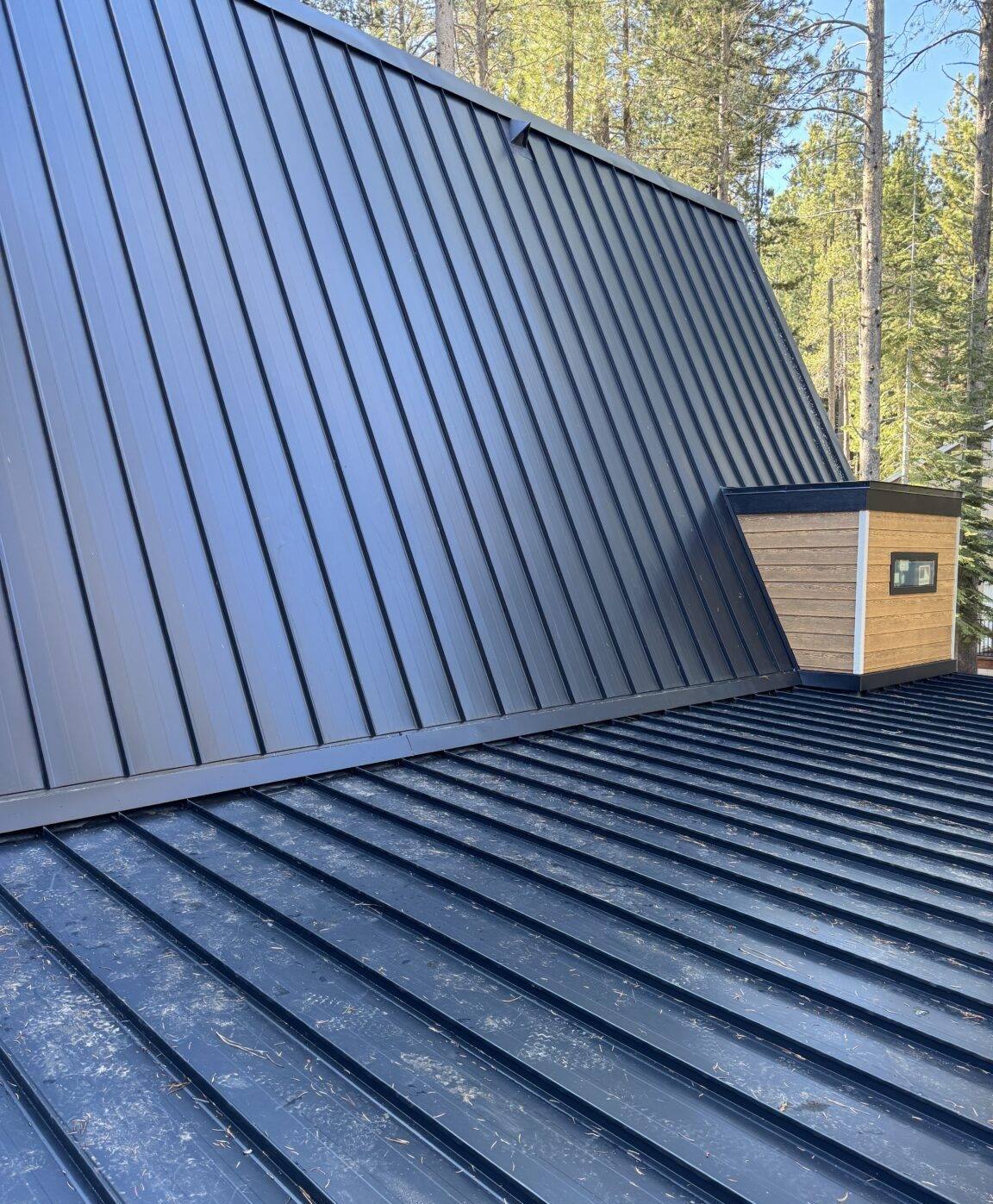
Metal roofing is unforgiving of shortcuts in a way that shingles sometimes aren't. A shingle roof with a mediocre install might still perform acceptably for years. A metal roof with the wrong underlayment, fastener spacing, or flashing detail will show it — usually as a leak at a transition point, not a failure of the panels themselves.
Underlayment and Moisture Barriers
Everything under the panels matters as much as the panels themselves. In a climate that stays damp for long stretches of the year, we use underlayment rated for extended exposure and pay close attention to how it laps at seams, valleys, and eaves. This layer is the backup system — it's what protects the deck if wind or ice ever pushes moisture past the metal itself.
Fasteners and Thermal Movement
Metal roofing expands and contracts with temperature swings more than shingles do. Panels need to be fastened in a way that allows for that movement without loosening screws or stressing seams over time. Exposed-fastener systems need the right screw type, spacing, and torque; standing seam systems use concealed clips designed specifically to let the panel move without compromising the seal. Getting this wrong doesn't usually cause an immediate problem — it shows up as loosening fasteners or stress cracking a few years down the road.
Flashing and Penetrations
Chimneys, vents, skylights, and wall intersections are where most roof leaks actually start, on metal roofs and every other kind. Flashing has to be formed and layered correctly for the specific panel profile being used — generic flashing details don't translate cleanly between panel systems. This is one of the areas where experience with metal specifically, not just roofing in general, makes a real difference.
Ventilation in a Damp Climate
A metal roof that's sealed tight but poorly ventilated can trap moisture in the attic, which defeats a lot of the benefit of choosing a moisture-resistant roofing material in the first place. We check ridge and soffit ventilation as part of any metal roofing project, because in a climate as consistently damp as this one, attic moisture management isn't optional.
Choosing a Panel System for a Lynden Home
There isn't one correct metal roofing system for every house — the right choice depends on the roof's pitch, the look you want, and your budget. The two most common options for residential work are standing seam and exposed-fastener panels.
| Factor | Standing Seam | Exposed Fastener |
|---|---|---|
| Fasteners | Concealed, under the seam | Visible, through the panel face |
| Typical Lifespan | 40+ years with proper install | 25–40 years, fastener-dependent |
| Maintenance | Low — no exposed screws to check | Fastener washers may need occasional inspection |
| Upfront Cost | Higher | Lower |
| Best Fit | Lower-slope roofs, longer-term ownership | Steeper roofs, tighter budgets, outbuildings |
Neither option is wrong — they're built for different priorities. We'll walk through which one fits your roof's pitch and how long you plan to own the home before recommending one over the other.
Moss, Algae, and Long-Term Maintenance
Metal roofs need far less maintenance than shingle roofs, but "far less" isn't "none." Debris from nearby trees and hedgerows can still build up in valleys and along the eaves, and where it does, moss and algae can get a foothold even on metal. Keeping gutters and valleys clear of needles, leaves, and organic buildup is the single most useful thing a homeowner can do to keep a metal roof performing the way it's supposed to over a long Whatcom County moss season.
We recommend a periodic visual check — after major windstorms and at least once a year — for loose fasteners, debris buildup, and any flashing that's shifted. None of this is heavy maintenance, but skipping it entirely means small issues go unnoticed longer than they should.
Our Metal Roofing Process
- On-site assessment: we look at your roof's pitch, framing, existing ventilation, and any problem areas before recommending a panel system.
- Written estimate: a clear breakdown of materials, labor, and timeline — no vague allowances.
- Tear-off and deck inspection: we remove the old roofing and check the deck underneath for rot or damage before anything new goes down.
- Underlayment and flashing installation: the moisture barrier and all flashing details are set before a single panel goes up.
- Panel installation: panels are fastened to spec for the system chosen, with attention to thermal movement and correct overlap.
- Final walkthrough: we go over the finished roof with you, including what maintenance to expect going forward.
Cost Factors to Expect
Metal roofing costs more upfront than asphalt shingles, and the honest range depends on several things specific to your roof rather than a flat per-square number:
- Roof complexity: a simple gable roof costs less to panel than one with multiple valleys, dormers, and penetrations.
- Panel system: standing seam runs higher than exposed-fastener panels due to material and labor differences.
- Tear-off vs. overlay: removing old roofing and inspecting the deck adds cost but also avoids covering up hidden problems.
- Deck repairs: any rot or damage found during tear-off is addressed before installation, which can add to the original estimate.
- Ventilation upgrades: bringing older ridge and soffit ventilation up to spec is sometimes needed alongside the roofing work.
We'll walk your specific roof and give you real numbers rather than a generic range that doesn't reflect your house.
Signs It Might Be Time for a Metal Roof
- Your current shingles are showing granule loss, curling, or moss that keeps coming back no matter how often you clean it
- You're planning to stay in the home long-term and want to stop replacing the roof every couple of decades
- You've had recurring leaks at valleys or flashing points that patching hasn't permanently solved
- You're re-roofing an outbuilding, shop, or barn where durability matters more than appearance
- You want a roofing material that performs better in wind than standard shingles
Why Hire a Crew That Already Works in Lynden
Metal roofing rewards experience with the specific conditions it's going into. A crew that installs metal roofs across Whatcom County knows how local wind exposure, the length of the moss season, and the kind of driving rain this area gets should shape fastening patterns, flashing details, and panel choice — not just how to follow a generic installation manual. That local familiarity is also what makes a warranty mean something: if a problem shows up down the road, you're dealing with a crew that's still working in the area and stands behind what they installed.
If you're weighing a metal roof for your Lynden home, we're happy to take a look and talk through what actually makes sense for your roof — no pressure, no upsell. Use the form below to request a free estimate.