 Bellingham Roofing
 Siding Repair Built for Fairhaven's Waterfront Climate
Fairhaven sits close to Bellingham Bay, and that proximity to the water shapes everything about how siding ages here. Homes in this part of Bellingham take on a combination most inland Whatcom County neighborhoods don't deal with at the same intensity: salt-laden air drifting off the bay, driving rain that comes in sideways during winter storms, and a moss season that can stretch for most of the year in the shaded, older tree canopy common to Fairhaven's streets. Individually, each of those is manageable. Together, over years, they find every weak point in a siding system — a nail that backed out, a joint that was never properly flashed, a paint film that gave up before its time.
This page is specifically about repairing siding on Fairhaven homes — not a general siding overview. If you're dealing with a damaged section, soft spots, cracked boards, or a contractor who told you "just patch it," this is the information you actually need before you make a decision.
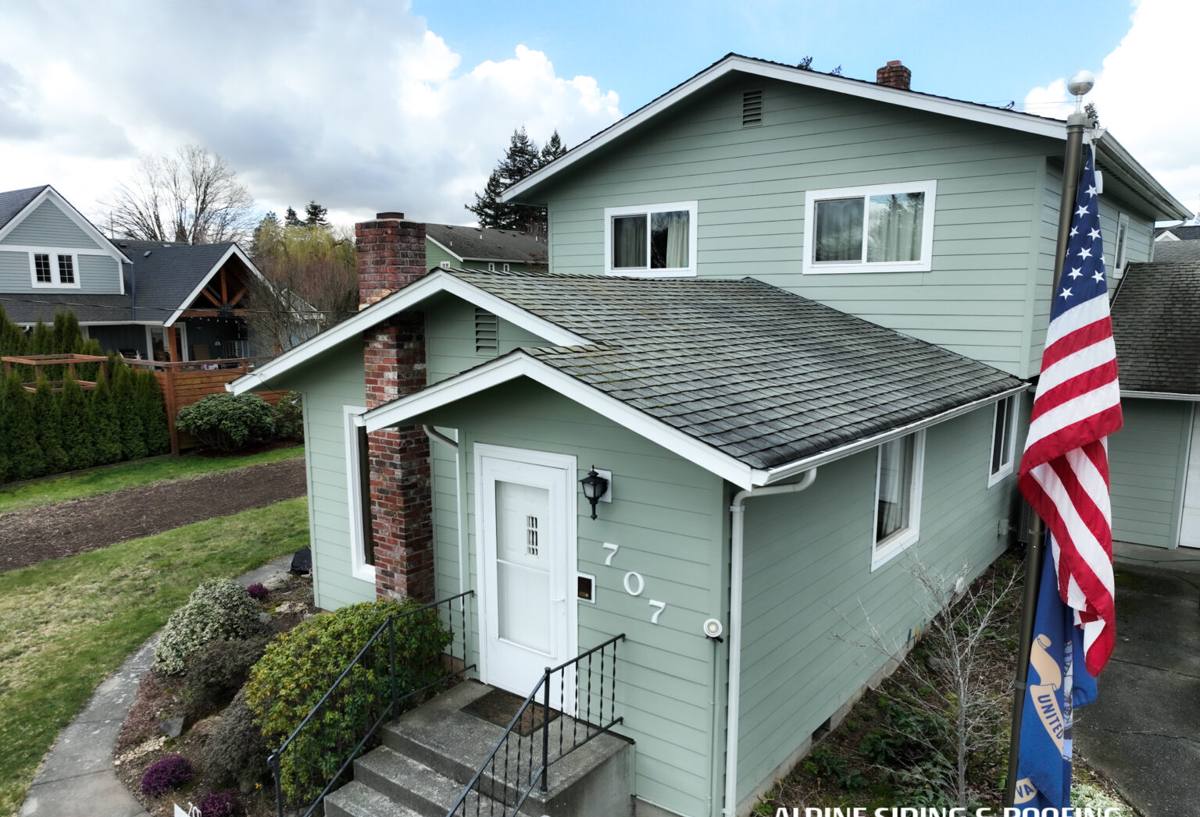
Why Fairhaven's Environment Is Harder on Siding Than It Looks
Salt Air
Airborne salt from the bay accelerates corrosion on anything metal — fasteners, flashing, trim nails — and it also degrades certain paint and sealant formulations faster than they'd wear inland. When fasteners corrode, they lose grip, and siding boards that were nailed correctly ten or fifteen years ago can start to work loose. That's a slow, quiet failure mode. It doesn't announce itself until a board is already cracked or a section is rattling in the wind.
Driving Rain
Bellingham gets plenty of rain, but Fairhaven's exposure to weather coming off the water means it often arrives horizontally, not straight down. Driving rain gets pushed up under laps, into butt joints, and around window and door trim in ways that vertical rain doesn't. Siding systems and flashing details that would hold up fine in a sheltered inland yard can leak here if they weren't installed with that wind-driven exposure in mind.
Moss and Shade
Older, tree-lined streets are part of what makes Fairhaven attractive, but shade means siding stays damp longer after every rain. Moss and algae take hold on north-facing walls and anywhere airflow is blocked by landscaping or roof overhangs. Moss itself doesn't eat through siding, but it holds moisture against the surface for extended periods, and on materials that aren't dimensionally stable or properly sealed at the edges, that constant dampness is what eventually causes swelling, delamination, or rot underneath.
Signs a Fairhaven Home Needs Siding Repair
Most siding problems don't show up as an obvious hole in the wall. They show up as small signals that are easy to write off until the damage has spread behind the surface. Walk your exterior and look for these:
- Soft or spongy spots when you press on a board, especially near the bottom of walls or below windows
- Visible cracking, splitting, or buckling in individual boards or panels
- Paint that's peeling, bubbling, or failing faster in one area than the rest of the house
- Persistent moss or algae growth that comes back within weeks of cleaning
- Gaps opening up at joints, corners, or where siding meets trim
- Nail heads that have backed out or are visibly rust-streaked
- Staining or discoloration that tracks downward from a seam, corner, or flashing point
- Any musty smell or visible moisture on the interior wall opposite a suspect exterior section
Any one of these on its own might be minor. Two or three in the same area, especially on a wall that faces prevailing wind and rain, usually means water has already gotten past the surface.
What a Correct Siding Repair Actually Involves
A repair that only addresses what's visible from the ground is not a real repair — it's a delay. Done right, siding repair on a Fairhaven home means:
Finding the Actual Source
Damaged siding is usually a symptom. Before we replace a single board, we look at what let water in: failed caulking, a missing or damaged flashing detail, a gap at a penetration (vent, light fixture, hose bib), or a grading/drainage issue at the base of the wall. Replacing the damaged material without fixing the entry point just means the same spot fails again in a year or two.
Checking What's Behind the Siding
Once damaged boards or panels come off, we inspect the water-resistive barrier (housewrap or building paper), the sheathing, and the framing underneath. If moisture has been getting in for a while, there can be hidden rot or deterioration that extends beyond the visibly damaged section. This is the step that separates an honest repair from a cosmetic patch — and it's also where a repair sometimes reveals that a larger section, or the whole wall, needs attention.
Matching or Upgrading the Material
If the surrounding siding is sound and simply needs a section replaced, we match it as closely as the existing material allows. If the existing siding is a product with known long-term moisture or maintenance issues, we'll tell you plainly and give you the option to address that section with James Hardie fiber cement instead of just patching it with more of the same.
Sealing and Finishing Correctly
Fastener pattern, joint treatment, caulking at the right (and only the right) locations, and paint or factory finish applied per manufacturer spec. In a wind-driven-rain environment like Fairhaven's, the finishing details matter as much as the board itself.
Repair vs. Replace: How We Help You Decide
Not every damaged section needs a full re-side, and not every repair is worth doing instead of replacing. Here's how we walk Fairhaven homeowners through that decision honestly:
| Factor | Leans Toward Repair | Leans Toward Replacement |
|---|---|---|
| Extent of damage | Isolated to one or two sections | Spread across multiple walls or elevations |
| Underlying sheathing/framing | Dry and sound once opened up | Soft, discolored, or rotted in multiple spots |
| Age and material of existing siding | Newer, still within its expected service life | Original material near or past typical lifespan |
| Cause of failure | A single fixable defect (one bad flashing, one gap) | Systemic issue (wrong material for the exposure, widespread failed caulk joints) |
| Cosmetic match | Replacement boards will blend in acceptably | Discontinued color/profile makes patches visibly mismatched |
We'll never push a full replacement when a repair will genuinely hold up. We also won't recommend patching a wall that's failing for structural reasons just to keep the estimate small — we'll explain exactly why, in plain terms, and let you make the call.
Why We Repair and Rebuild With James Hardie Fiber Cement
When a repair calls for new material — a full section, a wall, or eventually a full re-side — we use James Hardie fiber cement exclusively. We don't install vinyl, LP SmartSide, Cemplank, Allura, or unprimed cedar or spruce siding, and in an environment like Fairhaven's, that's a deliberate standard, not a brand preference.
Fiber cement is non-combustible and dimensionally stable, which matters directly for the moss-and-moisture cycle described above: it doesn't swell, cup, or delaminate the way some wood-based and engineered wood products can when they stay damp for extended periods under shade and salt air. Hardie's ColorPlus factory finish is baked on under controlled conditions and backed by its own finish warranty, which holds up better against the coastal exposure and UV cycling than field-applied paint tends to over the same years. Hardie also engineers specific product lines (their HZ designations) for different climate zones, so the material specified for a wind-driven-rain, marine-influenced area like Bellingham's is not the same as what gets used in a dry inland climate.
None of that makes fiber cement maintenance-free or immune to bad installation — it still needs correct flashing, fastening, and joint treatment, same as any product. But when we're the ones opening up a wall to repair storm or moisture damage, we're not going to close it back up with a product we don't believe holds up to the exposure that caused the problem in the first place.
Our Siding Repair Process
- Inspection. We look at the visible damage, the surrounding siding, flashing, trim, and grading — not just the one spot you called about.
- Honest diagnosis. We explain what caused the failure, what's actually needed to fix it, and what your realistic options are, including cost trade-offs.
- Written estimate. Clear scope, clear materials, no vague allowances.
- Repair work. Remove damaged material, address the underlying cause, replace with matching or upgraded material, and finish per manufacturer specification.
- Final check. We verify the repair sheds water correctly and blends with the surrounding wall before we consider the job done.
Why Hiring a Crew That Already Works in Fairhaven Matters
Fairhaven's mix of older housing stock, shaded lots, and direct exposure to bay weather is a specific combination. A contractor who mostly works newer subdivisions further inland may not immediately think to check for the failure patterns that show up here — corroded fasteners from salt air, moisture trapped by moss under overhangs, or wind-driven leaks at trim details that would never leak on a sheltered, sunnier lot. Crews who've worked repeatedly in Fairhaven and similar Bellingham neighborhoods close to the water learn to check those spots as a matter of habit, because they've seen the same failure show up house after house.
That local pattern-recognition doesn't replace a proper inspection, but it does mean fewer surprises and a repair that's actually sized to the real cause of the damage rather than just the part you could see from the driveway.
Get an Honest Look at Your Siding
If you're seeing soft spots, persistent moss, cracked boards, or paint that keeps failing in one spot on your Fairhaven home, it's worth having someone look at it before the damage spreads behind the wall. We offer free, no-pressure estimates — we'll tell you honestly whether you're looking at a straightforward repair or something bigger, and why. Use the form below to get started.