 Bellingham Roofing
 Deck Repair in Lynden, Washington
Lynden sits far enough inland to avoid the worst of Bellingham Bay's salt spray, but it gets everything else our climate throws at a deck: long wet winters, heavy dew off the Nooksack Valley farmland, and a moss season that can run eight months out of the year. If you own a deck in Lynden, you already know the routine — pressure wash in spring, watch the boards cup by fall, and hope the railings still feel solid when family comes over for the holidays. A lot of decks in this area don't fail all at once. They fail one soft board, one rusted fastener, one spongy stair tread at a time, until suddenly the whole structure feels unsafe.
We repair decks for homeowners throughout Lynden and the surrounding Whatcom County area, and we see the same handful of problems over and over. This page walks through what actually goes wrong with local decks, what a proper repair looks like, and how to tell the difference between a deck that needs a few boards swapped and one that needs a harder conversation about its structure.
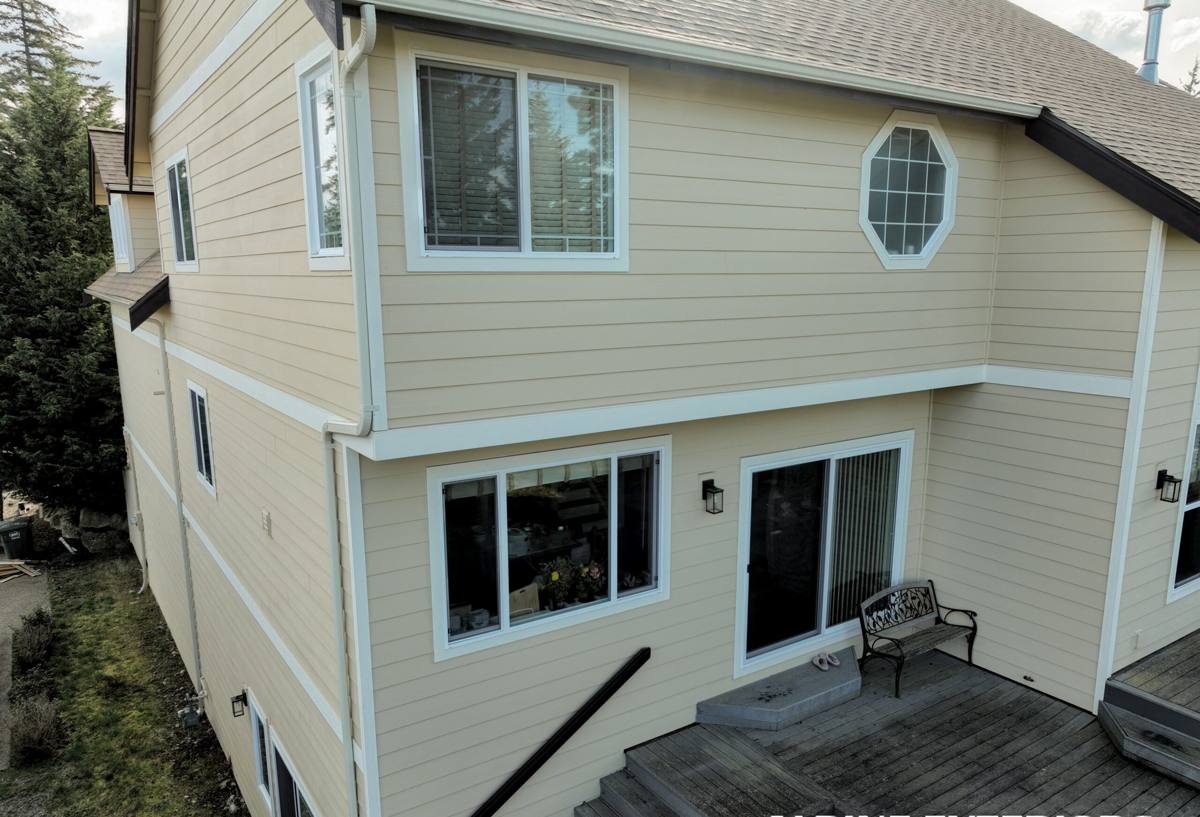
Why Lynden Decks Wear Differently Than You'd Expect
Deck damage here rarely comes from one dramatic event. It's cumulative — moisture that never fully dries out, combined with organic growth that holds that moisture against the wood.
Moss and Algae Hold Moisture Against Wood
Whatcom County's mix of mild temperatures and near-constant fall-through-spring dampness is close to ideal moss-growing weather. On a deck, moss doesn't just look bad — it acts like a wet sponge sitting directly on your boards and framing. Wood that stays damp for weeks at a time is wood that rots, and shaded decks under trees or on the north side of a house are usually the worst affected.
Driving Rain Finds Every Gap
Wind-driven rain off the valley doesn't just fall straight down — it gets pushed sideways into ledger boards, stair stringers, and the underside of rail posts. Over time it works into fastener holes, seams between boards, and anywhere flashing was skipped or installed wrong the first time. This is why so much deck rot starts in places you can't see from the surface: where the deck attaches to the house, under post bases, and at the ends of boards where end grain soaks up water like a straw.
Freeze-Thaw Cycles Widen Cracks
Whatcom County doesn't get brutal winters, but it gets enough freeze-thaw swings to matter. Water that's already worked into a crack or a fastener hole expands when it freezes, widening the damage a little more each cycle. A hairline split in October can be a real problem by March.
Signs Your Lynden Deck Needs Repair, Not Just Cleaning
A pressure wash and a coat of sealant fixes appearance. It does not fix structure. Here's how to tell which one you're actually dealing with:
- Boards that feel spongy, springy, or noticeably softer underfoot in one area
- A screwdriver or awl sinking into wood easily around post bases, stair stringers, or the ledger board where the deck meets the house
- Railings that wiggle or flex when you lean on them — this is a safety issue, not cosmetic
- Visible gaps, dark staining, or moss buildup where the deck attaches to the house
- Fasteners that are rusted, backing out, or leaving dark streaks down the board
- Stairs that feel uneven, bounce, or have a tread that's visibly lower than the others
- Persistent moss or algae that comes back within weeks of cleaning
Any one of these on its own might be a small fix. Several together, especially near the house connection or the stairs, usually means it's time for a real inspection rather than another round of cleaning.
What a Proper Deck Repair Actually Involves
Deck repair gets treated like a cosmetic job more often than it should be. Swapping a bad board without checking what's underneath it just delays the next repair call. Here's what we actually check and address:
The Ledger Board Connection
This is where the deck attaches to your house, and it's the single most important structural point on the whole deck. It's also the spot most exposed to water intrusion if flashing was missing or installed poorly during the original build — which was common practice on older decks in this area. We check for proper flashing, verify the fastening is up to current standards, and address any rot before it spreads into the house framing itself.
Framing and Joists
Soft or spongy decking is often just the visible symptom. We check the joists and beams underneath, since rot that's reached the framing changes the scope of the repair — you're no longer just replacing surface boards, you're rebuilding structural support.
Posts, Footings, and Railings
Loose or wobbly railings are a common complaint, and the fix depends on the cause — sometimes it's a fastening issue, sometimes the post itself has rotted at the base where it meets the footing. We also check that post spacing and railing height meet current code, since older decks were sometimes built to different standards than what's required today.
Stairs
Stair stringers take a beating because they're often close to grade and slow to dry out. An uneven or bouncy step usually means a stringer issue, and we treat stair repairs as a priority since they're the most common source of injury on a failing deck.
Fasteners and Hardware
Rusted or failing fasteners get replaced with corrosion-resistant hardware rated for exterior and ground-contact use where applicable — not whatever was cheapest at the time of the original build.
Repair vs. Replacement: How We Make the Call
Homeowners often assume any deck problem means a full rebuild. Just as often, we find a deck that's structurally sound with a handful of isolated issues. The honest answer depends on where the damage is and how far it's spread.
| Condition | Usually Repairable | Usually Needs Replacement |
|---|---|---|
| Surface boards cupping or graying | Yes — spot replacement | No |
| Isolated soft spot, framing solid underneath | Yes | No |
| Rot at ledger board connection | Yes, if caught before it spreads to the house framing | Possibly, if house-side framing is compromised |
| Widespread rot across multiple joists | Rarely cost-effective | Yes |
| Loose railing, isolated post | Yes | No |
| Deck over 20-25 years old with recurring issues | Case by case | Often, once repair costs stack up |
We'll always tell you straight if a repair is a temporary patch versus a lasting fix. If a deck is one or two seasons from needing full replacement, we say so — there's no benefit to either of us in you paying for a repair that won't hold.
Wood, Composite, and Mixed-Material Decks
Repair approach depends heavily on what your deck is built from. Pressure-treated lumber decks are the most common in Lynden and generally the most repairable, since damaged boards can be matched and replaced individually. Cedar decks age beautifully but are softer and more prone to moisture damage in shaded, moss-prone spots. Composite decking resists rot in the boards themselves but the underlying frame is still almost always wood — so a composite deck with a soft feel underfoot usually points to a framing problem, not a decking problem. We repair all three, and we'll tell you plainly if your composite boards are past the point where patching makes sense versus a full resurface.
Our Repair Process
- On-site inspection. We check the ledger connection, framing, posts, railings, and stairs — not just the surface boards — and probe any soft spots to see how far the damage actually goes.
- Honest scope and estimate. You get a clear breakdown of what needs fixing now, what can wait, and what a repair versus replacement would cost, with no pressure to upsell a job you don't need.
- Repair work. We replace only what's actually compromised, match materials where possible, and correct any underlying causes — bad flashing, missing gaps for drainage, undersized fasteners — so the same failure doesn't come back.
- Walkthrough. Before we consider the job done, we walk the deck with you and point out anything worth watching going forward.
Why Hire a Crew That Already Works in Lynden
Deck repair done by someone unfamiliar with this specific climate tends to treat symptoms instead of causes — replace the rotten board, skip the flashing check, move on. We work throughout Whatcom County and see how decks here actually fail over years, not just what they look like on one visit. That means we know to check the ledger flashing even when the visible boards look fine, and we know which shaded, moss-prone layouts are going to need a maintenance conversation, not just a repair. A deck fixed correctly the first time saves you from paying for the same problem twice.
Maintaining Your Deck Between Repairs
A repair holds longer when it's paired with basic upkeep suited to our climate:
- Clean moss and algae off at least once a year, more often on shaded sections
- Keep gutters and downspouts directing water away from the deck structure, not onto it
- Check the ledger board area annually for gaps, staining, or soft wood
- Reseal or restain on the schedule appropriate for your decking material — don't wait until it's visibly gray and dry
- Trim back vegetation that's shading the deck and keeping it from drying out between rains
If your Lynden deck has a soft board, a wobbly rail, or you just want an honest read on how much life it has left, we're happy to take a look. Fill out the form below for a free, no-pressure estimate.