 Bellingham Roofing
 Composite Decking That's Actually Built for Lynden's Weather
Lynden sits inland from Bellingham Bay, but it doesn't escape what makes Whatcom County decks fail early: long stretches of steady rain, high humidity that never really burns off in the shoulder seasons, and a moss and algae season that can run from fall through spring. A deck board here doesn't just get rained on — it stays damp for days at a time, especially in yards with fence lines, mature trees, or north-facing shade. Composite decking was built to handle exactly that kind of exposure better than wood, but only if it's installed correctly. A lot of the composite deck problems we get called out to fix in this area aren't board failures — they're installation shortcuts that let moisture do what moisture does.
This page is specifically about composite decking for Lynden homes: what the local climate demands, what a correct installation actually involves, and how we approach the job from first estimate to final walkthrough.
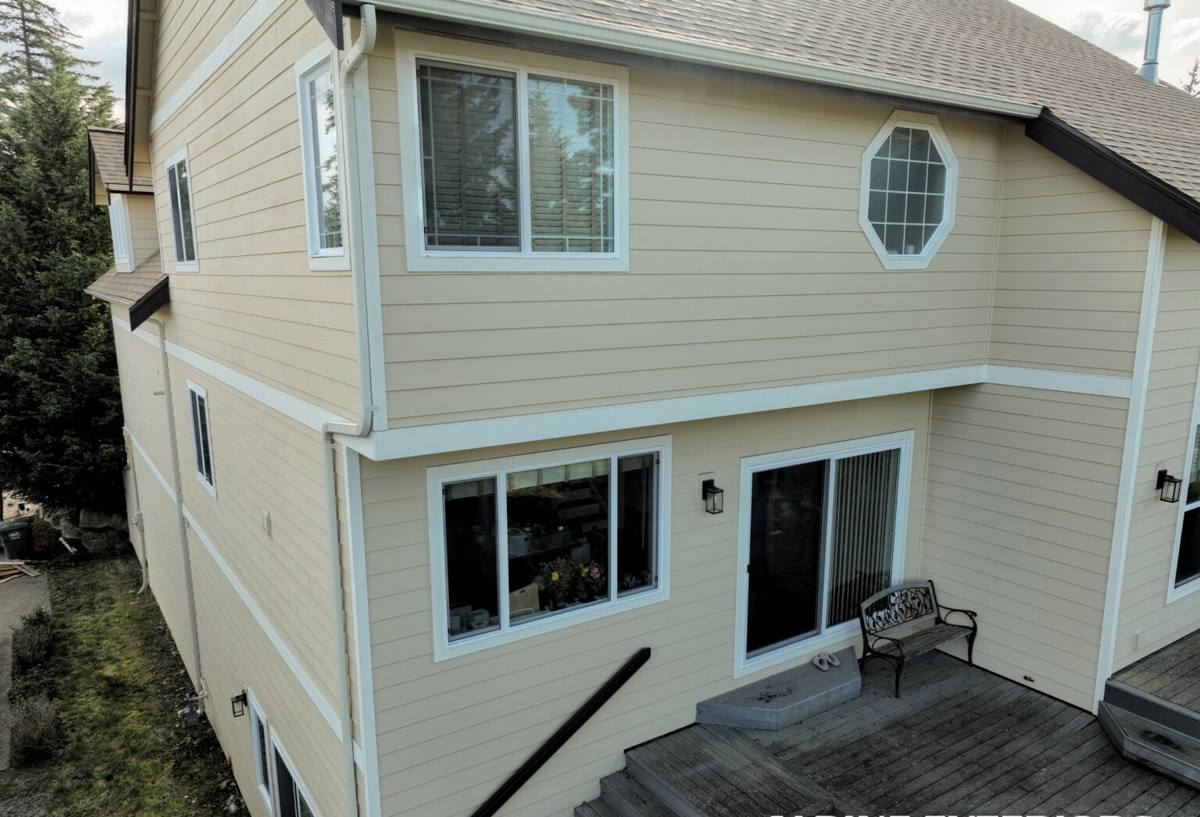
Why Composite Makes Sense Here — and Where It Still Needs Respect
Composite boards don't absorb water the way wood does, they won't splinter, and a good capped board resists staining from tannins, dirt, and organic debris far better than untreated lumber. That's a real advantage in a climate where a deck can sit wet more often than it sits dry. But composite isn't maintenance-free, and it isn't immune to the two things that define a Whatcom County deck's life span: standing moisture and organic growth.
Composite surfaces are non-porous, which means they don't feed mildew and algae the way wood does — but they also don't dry as quickly underneath, and spores still land and grow on any damp, shaded surface, composite included. A deck built low to the ground, tucked under trees, or without adequate airflow beneath the boards will grow moss and algae just like a wood deck would, even if the boards themselves never rot. The fix isn't a different product — it's a substructure and drainage plan that accounts for how wet this area actually gets.
Composite vs. Wood in This Climate
| Factor | Composite Decking | Pressure-Treated Wood |
|---|---|---|
| Moisture absorption | Very low (capped boards) | High — swells, checks, cups over time |
| Splintering / board failure | Rare with quality boards | Common as wood ages and dries unevenly |
| Surface mold/algae in shaded, damp areas | Still possible, but cleans off the surface easily | More prone to staining that soaks into the grain |
| Refinishing needs | None — no staining or sealing | Sealing/staining every 1-3 years to hold up here |
| Upfront cost | Higher material cost | Lower material cost |
| Long-term cost over 15-20 years | Lower — no refinishing labor | Higher once repeated sealing/repair is factored in |
What a Correct Composite Deck Installation Actually Involves
The board itself is the least interesting part of a good composite deck. What actually determines whether the deck holds up in this climate is everything underneath and around it.
Framing and Joist Protection
Composite boards are heavier than wood, so the substructure needs to be sized correctly — undersized joist spacing is one of the most common shortcuts we see on decks that develop bounce or soft spots. We also wrap or tape the top of every joist before boards go down. That strip of protection keeps rainwater that gets past the board seams from soaking directly into the framing lumber, which is where a deck actually starts to fail structurally, even when the surface still looks fine.
Ledger Board Flashing
Where a deck attaches to the house, the ledger board connection is the single most important flashing detail on the whole project. Water running down the siding needs a clear path away from that seam, not into it. Done wrong, this is how homeowners end up with hidden rot behind the rim joist or even into the house framing — a problem that stays invisible until it's expensive. We flash this connection properly on every deck we build, whether it's a full tear-off and rebuild or a composite resurface over existing framing.
Board Spacing, Fastening, and Airflow
Composite boards expand and contract with temperature more than people expect, and correct gapping at the ends and along hidden fastener lines matters for keeping the surface flat over time. Just as important in this climate is what's happening underneath: adequate ground clearance and airflow beneath the deck keep the space from turning into a permanently damp pocket where algae and moss get a foothold on the underside of the boards and the framing itself.
Choosing the Right Composite Board for a Lynden Property
Not every composite product is built the same way, and the differences matter more in a wet, moss-prone climate than they would somewhere dry. The biggest factor is whether a board is fully capped (a protective polymer shell on all four sides) or only capped on the top and edges. Fully capped boards resist moisture intrusion at the cut ends and screw points, which is exactly where lower-grade boards start to swell or delaminate after a few wet seasons.
| Board Tier | Moisture Handling | Typical Warranty | Best Fit For |
|---|---|---|---|
| Entry-level capped composite | Good on top surface; more vulnerable at cut ends | 10-15 years, limited | Budget-conscious projects, covered or low-exposure decks |
| Mid-grade fully capped composite | Strong all-around moisture resistance | 25 years, more comprehensive | Most Lynden decks — full sun and shade exposure |
| Premium fully capped composite | Best resistance to staining, mold, and fade | 25-50 years, often includes fade/stain coverage | Shaded, tree-covered, or high-moisture yards |
For a yard with mature trees, fence-line shade, or a north-facing exposure — common in Lynden's more established residential lots — we generally steer homeowners toward a fully capped, mid- or premium-grade board. It costs more up front, but it's the tier that actually earns back that cost by not needing early repair when it's the surface fighting moss and mildew for a decade or more.
Our Process, Start to Finish
Every composite deck project follows the same sequence, whether it's a full rebuild or a replacement of an aging wood deck:
- On-site assessment of the existing structure, ground drainage, sun/shade exposure, and how the deck ties into the house.
- A written estimate that spells out framing work, flashing, board tier options, and railing or stair scope — no vague allowances.
- Demo of the old deck surface (and framing, if it doesn't meet current structural or moisture-protection standards).
- Framing repair or rebuild, joist tape application, and ledger flashing.
- Composite board installation with hidden fasteners and correct expansion gaps.
- Railing, stairs, and trim work to match the board system.
- Final walkthrough where we go over basic care and answer questions before we consider the job done.
Permits, Setbacks, and Other Local Realities
Deck projects in Whatcom County — including Lynden — typically require a building permit once the structure exceeds a certain height or size, and there are setback rules from property lines that depend on your specific lot and zoning. Attached decks also need to meet current structural and flashing standards even when they're replacing an older deck built under different rules. We handle the permit process as part of the job rather than leaving homeowners to sort it out, and we won't cut a permit corner to save time — it's not worth the risk to you as the homeowner if the structure is ever inspected, sold, or insured.
Keeping a Composite Deck Looking Right Through the Wet Season
Composite decking cuts down maintenance dramatically compared to wood, but "low-maintenance" isn't "no-maintenance," especially with the moss and algae pressure this region sees for months at a time. A little seasonal attention keeps a composite deck looking new for decades instead of just holding up structurally while looking tired.
- Sweep off leaves, needles, and organic debris regularly — trapped debris holds moisture against the board surface longer than open rain exposure does.
- Rinse the deck with a garden hose every few weeks during the wettest months to keep spores from settling into the board texture.
- Use a soft-bristle brush and a mild soap-and-water solution for any surface algae or mildew film — avoid pressure washers on close settings, which can damage the board's protective cap.
- Keep gutters and downspouts near the deck clear so runoff isn't dumping directly onto or under the deck surface.
- Check underneath the deck once or twice a year for standing water, blocked airflow, or debris buildup against the framing.
- Trim back overhanging branches and nearby vegetation to cut down on shade and organic debris landing on the deck.
Why It Matters That We Already Work in Lynden
A composite deck built to a generic spec sheet and a composite deck built for a specific Lynden property aren't the same job. Sun exposure, tree cover, soil drainage, and how a particular lot handles heavy Whatcom County rain all change how we frame, flash, and space a deck. A crew that's already worked properties in this area has a feel for which details actually matter here — where moss takes hold first, which board tiers hold up under real shade conditions, and how the county's permit and inspection process works in practice, not just on paper. That local familiarity shows up in fewer surprises during the build and a deck that's still performing well well past the warranty period.
If you're weighing options for a new composite deck or replacing a wood deck that's finally lost the fight with the rain and moss, we're happy to walk the property with you and put together a straightforward, no-pressure estimate. Use the form below to get started.